Pochettino Promises No Fear. Anfield Will Test More Than United's Nerve.
GOATIFYMauricio Pochettino has offered Manchester United the simplest possible message before his first game: do not be afraid of Liverpool. It is a compelling way to introduce himself to a club desperate for a reason to believe. It also meets a brutal reality. United head to Anfield on Sunday, 22 November, in 18th place, while Liverpool are fourth. Their new manager will have had only three days with the squad. Courage is an attractive starting point, but there has scarcely been time to build the machinery that makes an attacking team coherent.
The former United States coach arrived in Manchester on Wednesday after his final international assignment and quickly began the process of meeting players and staff. He talks about restoring a culture that allows talent to emerge rather than leaving footballers paralysed by expectation. Yet there is no easy separation between that emotional challenge and United's practical problems. A shaky press, uncertain distances between teammates and a failure to regroup after mistakes can undermine even an inspired performance.
There is another pressure point. The club has reported £784.5 million in total borrowings and a larger quarterly net loss, figures that add a wider institutional backdrop to a bruising start to the Premier League season. None of that determines Sunday's result. It does make the distinction between a one-match bounce and a genuine recovery more important. The opening game can reveal whether Pochettino's bravery is becoming an organized team behavior—or whether it is still just a persuasive line in an interview.
Anfield Will Test the Plan, Not Just the Promise

Anfield does not give a new manager the luxury of treating his opening afternoon as a low-risk introduction. Liverpool arrive at Sunday's Premier League meeting in fourth place, Manchester United in 18th. That gap matters more than the familiar names on the fixture list: one side can approach the weekend from a position of relative stability, while the other is trying to arrest a collapse. Mauricio Pochettino's first instruction is essentially psychological. He wants United to attack the match rather than shrink inside it. The difficult part is turning an appealing message into an actual plan.
His coaching timetable is almost absurdly short. After finishing his work with the United States, Pochettino landed in Manchester on Wednesday and worked with the first-team group on Thursday. His assistants had begun preparations earlier, but the manager still has only a handful of sessions before the trip to Merseyside. He cannot install every pressing trigger, rest-defense rotation and buildup pattern from scratch. An ambitious approach therefore has to be selective, not reckless. A controlled press in specific phases is much more realistic than demanding ninety minutes of intricate, synchronized high pressure.
The key question is what United do immediately after losing possession. An attacking side can be aggressive without becoming stretched. If full-backs push forward and midfielders chase the second ball simultaneously, one pass through the first line can leave defenders running toward their own goal. Liverpool are precisely the sort of opponent that can punish a broken structure. The danger is not simply conceding from a counterattack; it is having to retreat over and over until a confident opening spell drains away into another exhausting game of recovery runs.
GOATIFY
GOATIFY Soccer
Anfield demands intensity and composure. Explore GOATIFY football designs.

Kylian Mbappe – GOAT Soccer Crewneck Football Sweatshirt
A football fan design for everyday wear.
Shop Now ↗

Kylian Mbappe Ninja Turtle Football Euro 2024 Tank
A football fan design for everyday wear.
Shop Now ↗
Harry Kane – GOAT Football Decal Gift Sticker
Add football personality to your favourite gear.
Shop Now ↗

Kylian Mbappe Ninja Turtles Real Madrid Soccer Hat
A football fan design for everyday wear.
Shop Now ↗That means Pochettino's most important pre-match message may be about distances rather than drama. Defenders need to know when to step out, the midfield has to protect the middle before flying toward the ball, and the forward line must identify which opponent is the cue for pressure. None of this guarantees a good result. It does, however, establish a standard United can return to after a difficult passage of play. An attacking identity is defined partly by what a team is prepared to risk, but more profoundly by what it has organized in advance to survive that risk.
The early minutes should offer clues. Are United able to pass forward with purpose after reclaiming the ball? Can their first two pressers force Liverpool toward the touchline without leaving a huge central opening? Do they retain enough composure to slow the game after a spell of pressure? Those are better indicators than possession percentage alone. A team can keep the ball and still look frightened of making a decision; it can also spend time defending and yet remain brave when its chance arrives.
There is a useful distinction between promising to win and pretending a win is inevitable. Pochettino's stance speaks to standards, not a guaranteed outcome. If United lose while showing coherent spacing, determination to play through pressure and a recognizable response to setbacks, they may still have gained something for the next fixture. If they chase headlines for fifteen minutes and then disintegrate, the slogan will have offered nothing. At Anfield, the first test of fearlessness is whether the team can stay rational when the noise gets loud.
Freedom Needs a Structure: Who Pochettino Can Trust

The most tempting interpretation of Pochettino's arrival is that United can simply turn the intensity dial and become a different side. The reality is harder. Intensity only helps when the players ahead of and behind the ball make compatible decisions. If the nearest forward presses while the supporting midfielder stays deep, Liverpool can find an easy angle into the space between them. If every player presses at once, United may leave the entire back line exposed. The manager therefore needs a limited menu of signals that everyone can recognize immediately, even when communication becomes difficult in a stadium as loud as Anfield.
The involvement of Bruno Fernandes illustrates the trade-off. United's captain can move the ball quickly into dangerous areas and take the responsibility that a nervous team may avoid. But if the creative midfielder is continually required to rescue possession from deep positions, the forwards lose one of their main suppliers near the penalty area. Conversely, asking him to stay high without building a reliable route into midfield risks isolating the team's most influential passer. The useful solution is not a rigid instruction to stand in one zone for the whole game. It is a sequence of repeatable shapes: a safe passing option behind the ball, another option between Liverpool's lines and clear support if the attack breaks down.
Bryan Mbeumo offers another practical example. His speed and willingness to attack space are useful whenever Liverpool's defensive line advances. Yet a single direct run is only a threat if United win the ball cleanly and release it early enough. That takes coordination from the midfield and an understanding of who provides cover when the winger stretches the game. Otherwise, a promising counterattack turns into an isolated sprint and the next Liverpool possession begins with United still scattered. An effective transitional team is not just fast; it is organized before the transition starts.
GOATIFY
GOATIFY Soccer
For fans who love the tactical side, browse GOATIFY soccer styles.


Fight Back Glazers Out - Manchester United Sticker
Add football personality to your favourite gear.
Shop Now ↗
Bottlers FC Tottenham Hotspur Parody , Spursy Sweatshirt
A football fan design for everyday wear.
Shop Now ↗


Glazers Out Manchester United / Cup with Mug
Add football personality to your coffee break.
Shop Now ↗It would be a mistake to treat these possibilities as a predicted starting eleven or a definitive tactical blueprint. Pochettino has not had the training ground time to make sweeping changes certain, and the availability and readiness of individual players can differ from their appearance in a session. Reports of players returning to training are encouraging, but participation does not automatically establish match fitness or selection. The first team sheet will tell us who is involved; the first twenty minutes will reveal far more about how they intend to operate together.
The bigger challenge is decision-making when the obvious pass disappears. United's recent problems have not been limited to lack of effort. A side under stress can rush its possession, invite pressure with poor spacing and then respond by trying to force an even harder pass. Pochettino has to give players permission to restart an attack without treating patience as cowardice. A controlled recycling pass can be the bravest choice if it preserves the structure for the next attempt. The opponent matters, too: Liverpool are capable of pressing aggressively, but the intervals when that pressure fails are precisely when a calm first touch can create a dangerous opening.
That is the standard to watch across the match rather than in one exciting burst. Do United recover their positions after a failed attack? Does the next player know where the safety option is? Are the forwards still connected to midfield late in the second half? A new coach can inspire a reaction in a dressing room. A convincing tactical change appears when the same right choices are made repeatedly, especially when the scoreline or the crowd gives players every excuse to abandon them.
A Culture Reset Is Measured After the First Mistake
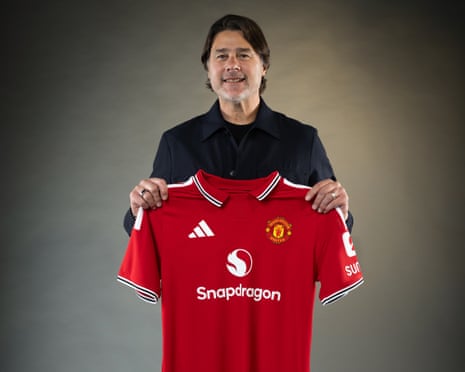
A managerial change often arrives with an unofficial promise: the players will suddenly feel lighter, the training sessions will become sharper and the mistakes of the previous months will disappear. The first two can happen quickly. The third almost never does. Pochettino inherits a Manchester United squad that has already endured the upheaval of Michael Carrick's dismissal, a painful run of results and the public embarrassment of sitting in 18th place. His language about belief and responsibility is not meaningless, but it needs to survive the first moment when the old anxieties return.
There is an important difference between playing without fear and playing without accountability. Fear makes footballers hide behind a marker, choose only the safest pass and stop demanding the ball after an error. Accountability asks them to show for the next pass anyway, recover quickly when they lose possession and keep following the collective plan. Pochettino's task is to create the second without feeding the first. That is particularly difficult in a fixture where a mistake becomes a viral clip within minutes and where every touch can be judged against a decade of Manchester United history.
The manager has emphasized his personal responsibility for the team's performances. That posture is useful because it can take some of the emotional heat away from individual players. But accountability from the touchline has to be matched by leadership on the pitch. When the first pass goes astray, the captain and the most experienced players must help restore the shape rather than point at one another. When Liverpool sustain a sequence of attacks, United need a collective decision about whether to press the next ball or settle into a more compact position. Those choices become culture in practice: repeated behaviors under pressure, not abstract declarations in a press conference.
GOATIFY
GOATIFY Soccer
From Old Trafford pride to rivalry nights, explore GOATIFY football apparel.


Ousmane Dembélé – Redemption GOAT Pullover Hoodie
A football fan design for everyday wear.
Shop Now ↗
Stop The Glazers From Ruining Manchester Mug
Add football personality to your coffee break.
Shop Now ↗
Trashford Marcus Rashford Manchester United Tank
A football fan design for everyday wear.
Shop Now ↗United's history makes the language especially loaded. Sir Alex Ferguson's teams were associated with refusing to accept a bad result, but simply invoking that tradition cannot restore the circumstances that made it possible. Modern Liverpool possess their own demands, tactical strengths and match rhythm; the Premier League does not reward historical entitlement. A newly appointed coach cannot manufacture years of trust in a few sessions. He can begin establishing small, visible agreements: what players do after losing the ball, who speaks when a structure breaks, and how the team reacts after conceding a chance.
The first significant setback at Anfield is therefore more informative than the first confident attack. If Liverpool score early, do United immediately become frantic, or can they build another controlled phase? If a forward misses a promising chance, does the side continue creating the same movements or retreat into hopeful long balls? If a defender loses possession, is there a teammate positioned to protect the space, or does the whole system collapse into individual emergency tackles? These are not romantic questions about courage. They are a straightforward way to see whether the coach's message has become a shared set of habits.
The danger for Pochettino is that a respectable opening performance may be mistaken for a completed transformation, while a heavy defeat could be treated as proof that nothing has changed. Neither conclusion would be justified after three training days. His more credible objective is to leave Liverpool with evidence of how this group can work together in the weeks ahead. Anfield can expose United's fragility, but it can also reveal whether their response is beginning to look different. The scoreboard will decide the result; the response to adversity will tell us whether the new manager has found a foundation.
£784.5m in Borrowings Makes the Long Game More Complicated
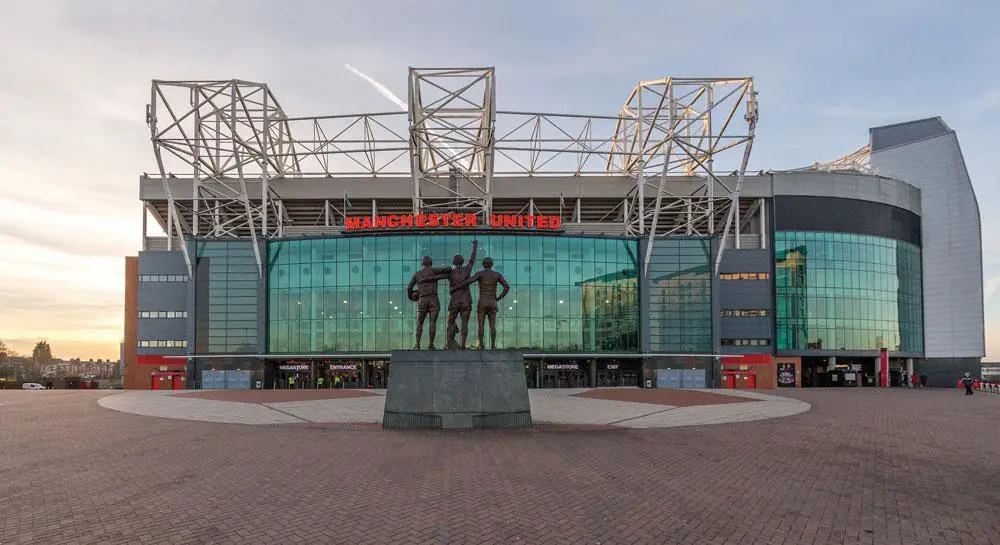
There is another reason Manchester United cannot treat a convincing press conference as the beginning of an uncomplicated rescue story. The club's financial results, reported as Pochettino was preparing for Liverpool, underline how much pressure exists beyond the touchline. Total borrowings have risen to £784.5 million. Long-term borrowings stood at £577.4 million at the end of September, compared with £481.2 million a year earlier. Cash reserves declined from £80.5 million to £55.5 million over that period. The figures do not tell us how the Liverpool match will unfold, but they help explain why the stakes of a prolonged league slump extend well beyond pride.
The first-quarter operating picture is mixed rather than uniformly disastrous. United recorded revenue of £146 million for the three months to 30 September, up 4% year on year. The reported quarterly net loss, however, widened to £18.1 million from £6.6 million in the comparable period. Those are different measures and should not be bundled into a simplistic claim that all spending is rising or that every pound of debt is immediately due. Borrowings are balance-sheet obligations; a net loss is a measure of performance across a defined accounting period. Falling cash, rising long-term borrowings and recurring losses nevertheless reduce the room for casual optimism about an easy rebuild.
GOATIFY
GOATIFY Soccer
A long season still belongs to the fans. Discover GOATIFY soccer gear.


OUTEOS INEOS OUT Manchester United Protest Sweatshirt
A football fan design for everyday wear.
Shop Now ↗
Kylian Mbappe – El Dictator Vintage Football Hoodie
A football fan design for everyday wear.
Shop Now ↗
Harry ''The Fridge'' Maguire Sheet Sticker
Add football personality to your favourite gear.
Shop Now ↗
OUTEOS INEOS OUT Manchester United Protest Mug
Add football personality to your coffee break.
Shop Now ↗
For the manager, the practical link is indirect but important. Football operations do not instantly change because a debt figure is published. Pochettino still coaches the players available to him, and the January transfer market will involve many considerations beyond the latest quarter. Yet a club that is struggling in the league and carrying significant financial obligations has less space for expensive misjudgments. Supporters are entitled to ask whether the recruitment strategy, contract commitments and coaching continuity can produce a team strong enough to justify the investment. Results matter not only to morale but also to commercial expectations and the credibility of future planning.
Relegation remains a risk rather than an outcome, and United's position in November does not predetermine where they will finish. That distinction is essential. It would be irresponsible to claim the reported figures prove a particular sale, budget cut, player departure or violation of any financial regulation is imminent. None follows automatically. But a team sitting 18th after one league win cannot simply assume the table will correct itself because of its history. The longer the club stays near the bottom, the more severe the sporting and financial questions become. Pochettino's first job is to make the immediate football response credible enough that the wider organization can plan without another crisis every weekend.
There is a philosophical tension here. The new manager wants players liberated from pressure, while executives and supporters are staring at a season that could carry enormous consequences. Those demands are not mutually exclusive. In fact, the answer may be to narrow what is asked of each player. When the system makes responsibilities clear, an individual can take a risk without feeling personally responsible for everything that might go wrong. The club's broader financial and strategic questions remain real, but they cannot be solved by asking a midfielder to shoulder them while receiving a pass under pressure at Anfield.
That is why Sunday's meeting can be a beginning without becoming a verdict. United should demand a plan, a coordinated team and evidence that the players are accepting responsibility. They should not mistake one result for a cure to their finances, recruitment, confidence and league position. Pochettino's longer test is whether the club can replace emotional lurches with dependable weekly performances. The balance sheet tells us how costly repeated instability can become; Anfield will offer the first glimpse of whether the football side is moving toward something more reliable.
There is no reasonable demand that Pochettino rebuild Manchester United in a few training sessions. There is, however, a reasonable demand that his first team show what it is trying to become. A brave side does not have to win every duel or dominate every spell. It has to keep offering passing options, protect itself when attacks break down, respond together after mistakes and make Liverpool work for the next opening.
The November league table makes Sunday urgent, while the latest financial results reinforce why United cannot afford an extended sequence of false dawns. Those stakes should sharpen the organization's decisions without making individual footballers afraid to play. That is the balance Pochettino says he wants to strike: freedom accompanied by shared responsibility.
If United emerge from Anfield with a result, supporters will celebrate it. If they emerge without one, there may still be useful evidence in the team's structure and reactions. The larger test begins after the noise subsides—when the same principles must survive ordinary league fixtures, fatigue, difficult selections and the pressure of climbing away from the bottom three. Pochettino's most important promise is not that he will produce one fearless Sunday. It is that United can learn to play that way consistently.
GOATIFY
GOATIFY Soccer
Explore six GOATIFY soccer picks before our next football stories.


Next Season FC Arsenal Parody Football London Sweatshirt
A football fan design for everyday wear.
Shop Now ↗

Manchester United Is Not A Cashcow Glazers Sticker
Add football personality to your favourite gear.
Shop Now ↗
Kylian Mbappe Ninja Turtles football/ soccer Mug
Add football personality to your coffee break.
Shop Now ↗