

Grimes Hit 10 Threes. The Lakers' 18-Point Escape Exposed a Flaw.
GOATIFYThe Lakers won their ninth consecutive game on November 17, but the strangest part of their 118-114 overtime victory over Charlotte was who had to save them. Luka Dončić scored 36, a total most teams would build a highlight reel around. It was Quentin Grimes, though, who supplied the night’s unforgettable moment: a tenth made three-pointer with 1.7 seconds left to force overtime, on the way to a career-high 47 points. Los Angeles came back from 18 down; Charlotte left wondering how a game it controlled for so long had escaped.
That is the irresistible headline. The uncomfortable analysis is that the Lakers needed a once-in-a-career performance just to survive a home game against a struggling opponent. With Austin Reaves and Walker Kessler injured, the rotation was stretched, defensive coverage was late and Dončić struggled with shot efficiency and foul trouble. A nine-game winning streak is an achievement, not an argument against inspecting the weak spots. The comeback illustrated both what makes Los Angeles dangerous and why it cannot live this way every night.
Forty-seven points, 10 threes, and the possession that refused to end
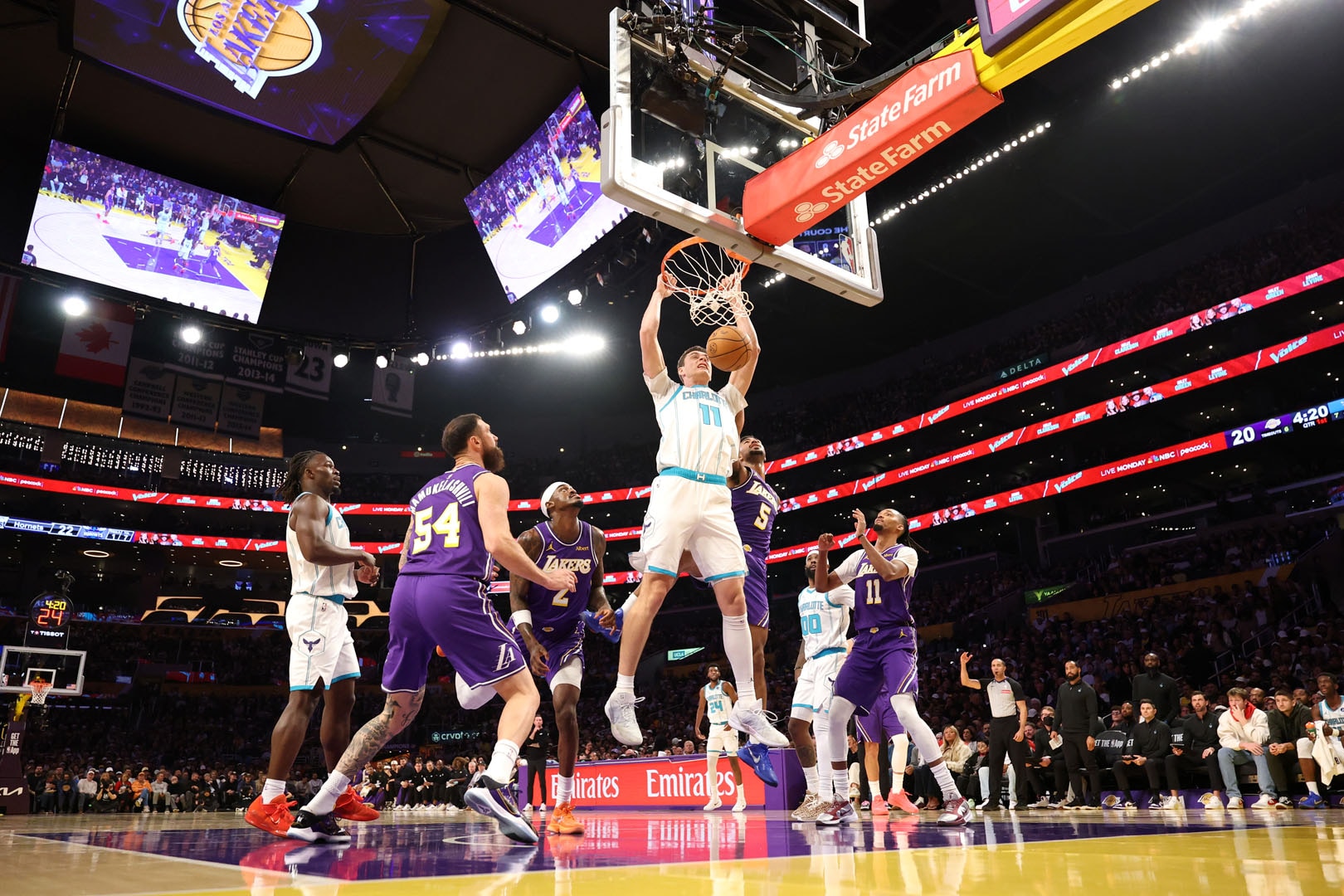
With the Lakers down three and the clock almost empty, everybody knew the obvious decision was to put the ball in Luka Dončić's hands. What made Tuesday extraordinary was what Dončić did after he received it. He located Quentin Grimes, who had already spent the fourth quarter dragging Los Angeles into striking distance, and trusted a teammate rather than manufacturing a contested superstar shot. Grimes released the ball from beyond the arc; his tenth made three dropped with 1.7 seconds remaining, and a game Charlotte had all but taken was suddenly going to overtime.
The shot finished a remarkable scoring sequence rather than creating one from nothing. Grimes produced 21 points in the fourth quarter alone, then added enough in overtime to finish with a career-high 47. He shot 16-for-24 overall and 10-for-14 from deep, an outrageous shooting profile for a player whose typical offensive job is to space the floor, defend, and finish advantages someone else has created. Ten threes on fourteen attempts represent about 71 percent accuracy from a distance at which even excellent NBA shooters are usually thrilled to clear forty percent over time.
The historical footnote is appropriately enormous. Grimes became just the second player in Lakers history to reach double digits in made threes during a game, joining Kobe Bryant. That does not put an entire career next to Bryant's, and it should not. It does show how rare a single-night perimeter eruption has been for a franchise defined by stars. A modern Lakers guard who usually supplies supporting offense briefly became the sport's loudest individual scorer, in a purple jersey, with an entire winning streak balanced on one shot.
The timing matters as much as the total. A forty-seven-point explosion in an easy blowout can be thrilling without changing the central story. Here each late three served a specific purpose: reduce an 18-point hole, force the Hornets to guard farther from the paint, punish a moment of hesitation, and finally manufacture five more minutes. By the last two minutes of regulation, Charlotte could not treat a normal Grimes catch as a normal role-player catch. The defense had to respond to the player who was actually hot, not merely the player most famous on the roster.
None of that means Los Angeles has found a dependable forty-point secondary scorer. There is a reason this is a career high. Grimes had struggled for offensive rhythm earlier in his new Lakers tenure, including an uneven long-range start, before heating up across his recent starts. Hot shooting is real as an in-game tactical condition; it is not a reliable nightly budget item. The useful discovery was the team's willingness to find him repeatedly, even as the safer, reputation-driven instinct would have been to clear out for Dončić.
GOATIFY
GOATIFY Basketball
Grimes had a night for the Lakers record book. Celebrate NBA hot hands, clutch shots and your favorite players with GOATIFY Basketball designs.

LeBron James – Retro Lakers GOAT Dunk Sweatshirt
A basketball fan design for everyday wear.
Shop Now ↗
Kobe Bryant – The GOAT Mamba Decal Sticker
Add basketball personality to your favourite gear.
Shop Now ↗
Stephen Curry GOAT Shooting Threes Pullover Hoodie
A basketball fan design for everyday wear.
Shop Now ↗
Jalen Brunson – Captain Clutch Muscle Shirt Tank
A basketball fan design for everyday wear.
Shop Now ↗

Fat Luka Doncic Los Angeles Lakers NBA Mug
Add basketball personality to your coffee break.
Shop Now ↗That distinction is the most encouraging part of the scoring record. If a defense loads up on Luka, a Lakers teammate must be ready to take the available shot without waiting for permission. Grimes proved he can do far more than stand stationary in the corner. He also proved the cost of waiting for an emergency: Los Angeles needed a near-perfect shooting outlier to cover for three quarters in which the opponent was allowed to dictate the game.
Dončić's best play was giving up the hero shot
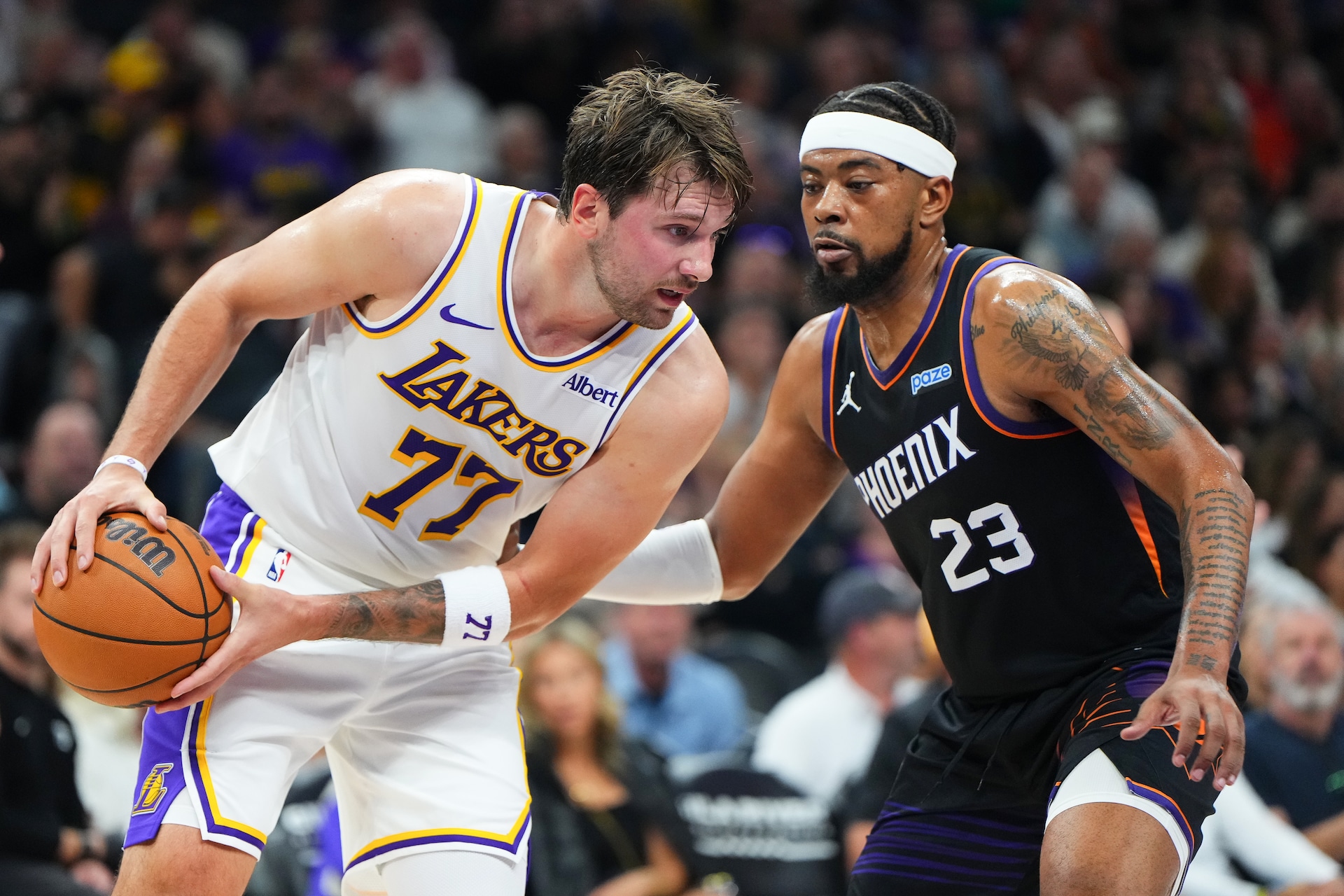
Luka Dončić's line looks commanding until you read the shooting column. Thirty-six points, six rebounds and seven assists is usually enough to describe a superstar doing his job. Thirteen makes on thirty-four attempts, however, tell a more complicated story. He needed volume to reach that number, battled early foul trouble, and spent significant stretches playing against the rhythm Charlotte wanted. In a game where Grimes caught fire, the smartest basketball Dončić played may have been recognizing that another player's shot had become the more dangerous option.
Los Angeles was not operating with its normal set of choices. Austin Reaves missed another game with a heel problem, and Walker Kessler was unavailable because of leg soreness. Those absences remove different kinds of stability. Reaves helps connect possession-to-possession offense when Dončić is pressured or sitting, while Kessler provides defensive size and an interior reference point. Replace both on the same night and an opponent can demand more work from the remaining ball handlers while challenging a less settled defense inside.
The Hornets were aggressive with Dončić early and tested his patience without needing a flawless scheme. He missed his first four shots, was pushed into difficult possessions, and had four fouls by halftime. Whether a whistle was fair on every individual play is less useful to this analysis than the cumulative result: one of the league's most gifted offensive organizers began making decisions under frustration rather than comfort. A defense can lose plenty of possessions to Luka and still succeed in its larger goal if he uses thirty-four field-goal attempts to get there.
Then came the adjustment that changed the closing minutes. Rather than insisting on the late-game hierarchy, Dončić started locating Grimes. The Lakers could still use Luka's threat as the initial trigger: Charlotte had to pay attention to his drive, his size in the lane, and the possibility of another deep three. But the actual winning opportunity developed away from him. The assist for the tying three was not an act of surrender; it was a star making the strongest read available once a teammate had altered the defensive math.
Coach JJ Redick's larger challenge is how to reproduce that unselfishness without requiring a rescue mission. The Lakers need an offensive structure where Grimes, Reaves when available, and the other perimeter options can act before the defense is fully organized. There is a difference between being a team with one superstar and being a team that allows every possession to become a referendum on its superstar. Tuesday showed the second model can be escaped, but it should never have been so hard to reach the first.
The injuries also explain why Los Angeles had to win ugly, not why it should accept the ugliness as a permanent identity. A backcourt missing Reaves can be thinner on creation; a frontcourt missing Kessler can be more exposed. Neither absence automatically excuses defensive breakdowns, sluggish ball movement, or allowing Charlotte to build an eighteen-point cushion. Winning despite a compromised rotation is impressive. Treating the compromise as an explanation for every shortfall would be a much less impressive habit.
GOATIFY
GOATIFY Basketball
The best stars know when to pass and when to shoot. Browse Lakers-era NBA fan art and basketball favorites in the GOATIFY collection.

Luka Doncic G.O.A.T. - Basketball Decal Sticker
Add basketball personality to your favourite gear.
Shop Now ↗


Chicago Bulls – Picasso Bulls Cubism Art Sweatshirt
A basketball fan design for everyday wear.
Shop Now ↗
Shrequille O'Neal - Shaquille O'Neal as Shrek Tank
A basketball fan design for everyday wear.
Shop Now ↗
Charlotte's 18-point lead was a defensive warning, not bad luck
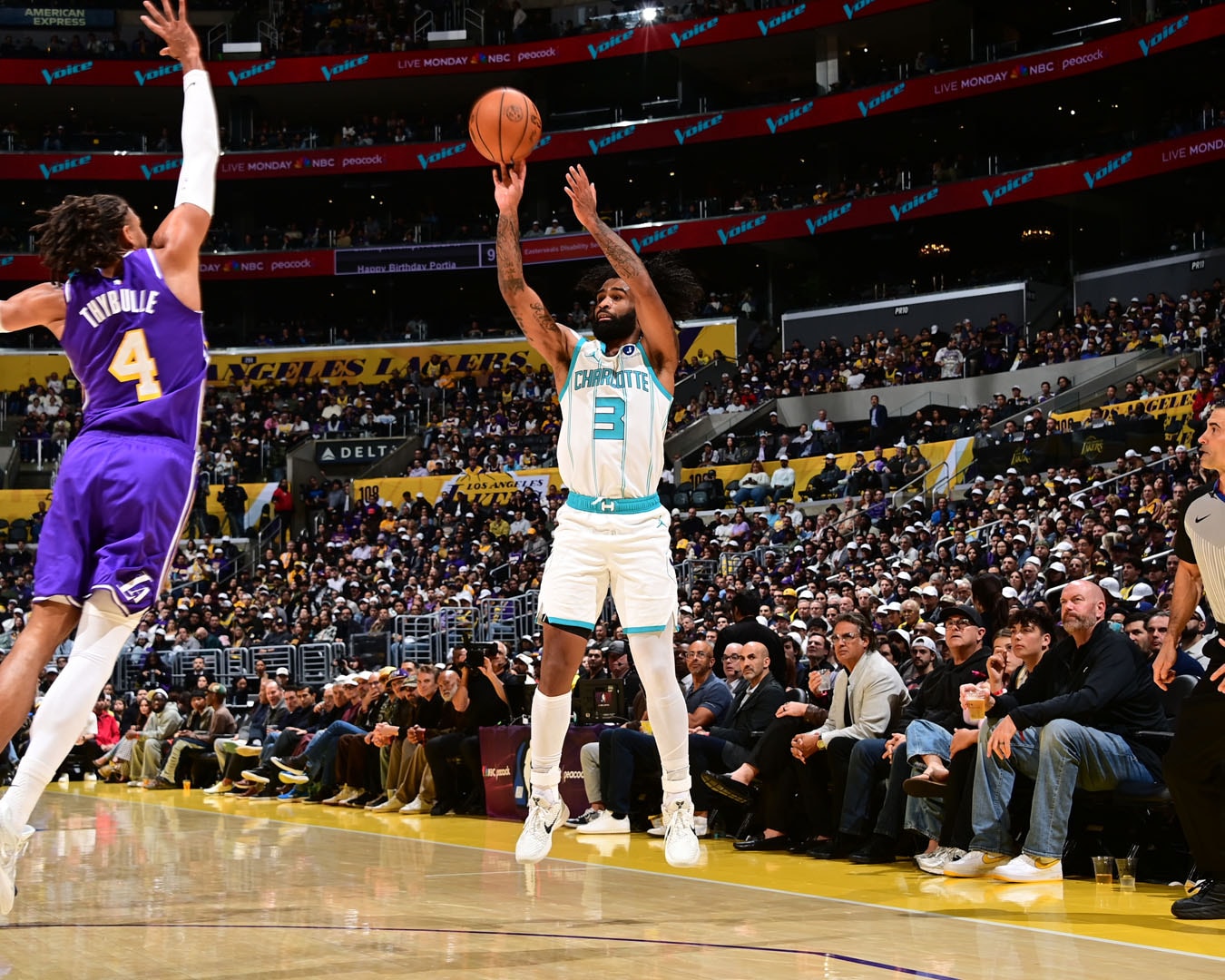
An 18-point hole against a team that entered the night struggling is not an unlucky bounce. It is a stretch of basketball in which one side repeatedly got the terms of engagement it preferred. Charlotte led 34-30 after the opening quarter and 66-59 at halftime, then took advantage of another uneven Los Angeles period to build its biggest margin in the third. The Lakers' third-quarter offense managed only twenty-two points while Charlotte kept finding enough daylight to punish failed coverage and late recovery.
Brandon Miller supplied difficult scoring, while Naz Reid stretched the defense with shooting and activity. Coby White helped move the offense and kept possessions alive when the Lakers threatened to close. The Hornets did not need every shot to be perfect; they needed the Lakers to be a step slow enough times for the advantages to accumulate. It is tempting to describe any hot opponent as a statistical fluke. But a defense that repeatedly concedes rhythm catches and struggles to contain the next action is actively helping produce that heat.
The missing Kessler piece matters most around the rim, where the Lakers' bigs and wings have to coordinate who confronts the ball and who protects the second chance. A photo of Charlotte attacking over a late-arriving defender can tell the story of an entire quarter, but the tactical issue is bigger than any one contest. If the first line of resistance is beaten cleanly, an undersized or scrambled back line has to choose between protecting the paint and staying attached to shooters. Charlotte was comfortable making the Lakers choose.
Los Angeles did find one tangible way to compensate: the offensive glass. Nineteen offensive rebounds were an important counterweight to a modest 41.4 percent team shooting night. They extended possessions that would otherwise have died on an awkward miss and provided opportunities to score without designing another pristine half-court set. Rebounding is effort, positioning and anticipation in a way that thirty-foot shooting often is not. There is a reason a miss followed by an offensive board can change both the scoreboard and the mood inside an arena.
Yet that strength comes with its own warning label. When you have to rebound so many of your own misses to stay in a game, the first-shot offense is not functioning at full capacity. When the opponent's offense can survive until the fourth quarter by attacking the same defensive weak spots, the comeback becomes a contest against both the other team's lead and the clock. Those can be dramatic conditions for a win, but they are not optimal conditions for building a reliable regular-season margin.
Charlotte's late collapse should not erase the first three quarters, either. Miller finished with 28 points, Reid supplied a strong inside-out contribution and White scored 19, yet the Hornets could not turn that production into a final victory. Their own limitations with late-game creation and their decisions about who was available in overtime were part of that story. Los Angeles can rightly credit its pressure and resilience while also conceding that a more settled opponent might not have allowed the escape.
Nine straight wins are real. So is the limit of this formula
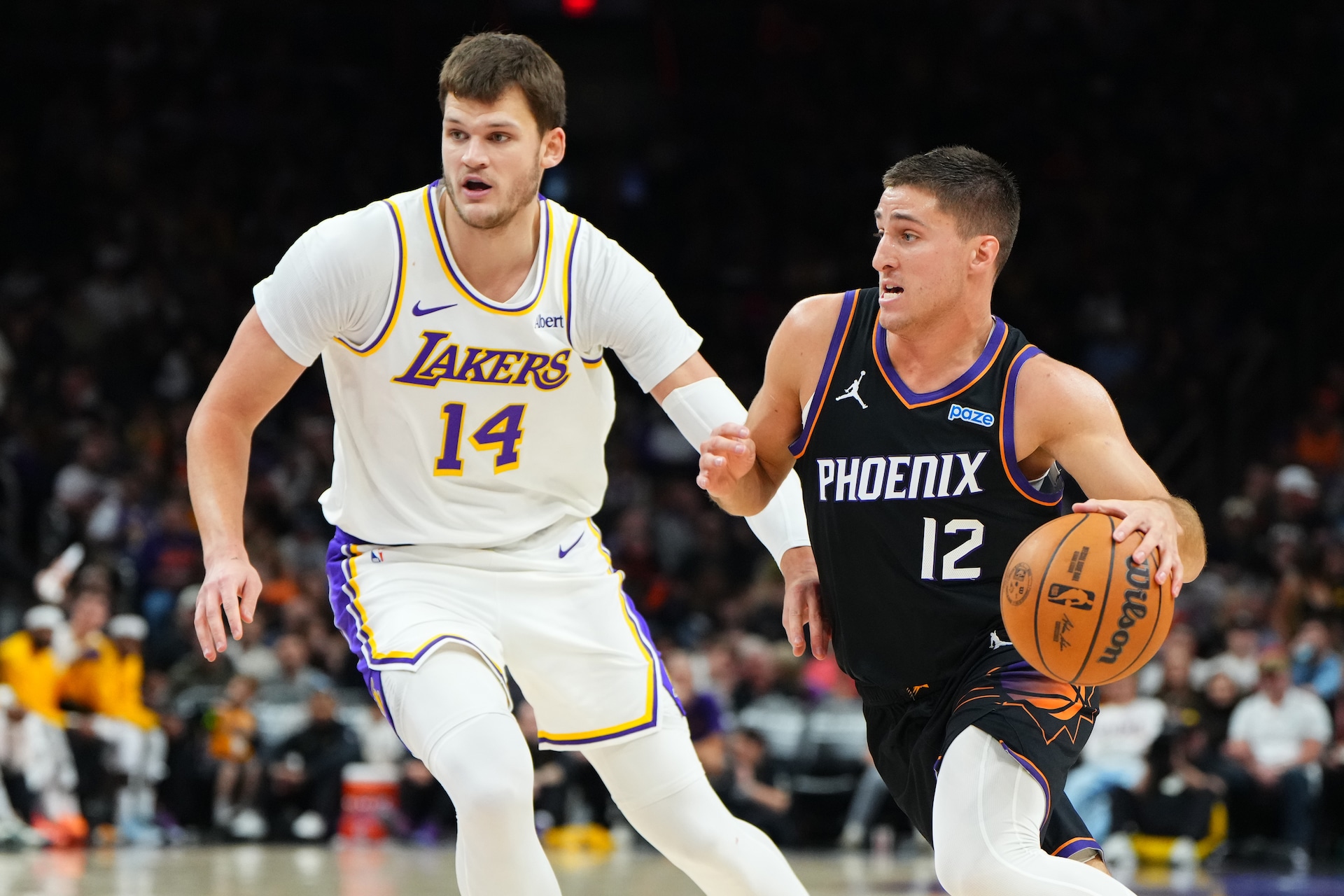
The loudest number after Tuesday was nine: the Lakers' ninth consecutive victory, an early-season run that lifted them to 13-2. The record is genuine, and no team reaches it merely by getting lucky. Winning through injuries, a poor shooting night from its star and a massive deficit suggests a level of collective belief that less stable groups do not possess. Dončić, Grimes and a rotating cast of defenders found a route out of a game that had slipped beyond the usual recovery margin.
GOATIFY
GOATIFY Basketball
Every comeback needs stops, boards and one more possession. Explore GOATIFY Basketball shirts, hoodies and stickers made for NBA fans.


Victor Wembanyama GOAT Basketball Decal
Add basketball personality to your favourite gear.
Shop Now ↗
Dwyane Wade G.O.A.T. - Basketball Casual Top Tee
A basketball fan design for everyday wear.
Shop Now ↗
Wilt Chamberlain G.O.A.T. - Basketball Muscle Tank
A basketball fan design for everyday wear.
Shop Now ↗
Magic Johnson G.O.A.T. - Basketball - Greatest Hoodie
A basketball fan design for everyday wear.
Shop Now ↗
Kobe Bryant G.O.A.T. - Settle the Debate Mug
Add basketball personality to your coffee break.
Shop Now ↗But the actual overtime was not an exhibition of unstoppable offense. After Charlotte scored early in the extra period, Los Angeles tightened its defense enough to keep the visitors off the board through the final minutes. There were messy misses and failed possessions on both sides. Grimes helped force a crucial late inbound turnover, converted the free throws that gave the Lakers breathing room, and Matisse Thybulle's pressure added one final interruption of Charlotte's comeback attempt. This was collective ball pressure, not simply one man repeating his greatest scoring night.
Context is essential to interpreting those stops. Charlotte kept Brandon Miller and Coby White out of overtime because of their minutes restrictions after recent injury absences, reducing the options available to organize its offense under pressure. Reid could make shots, and he did contribute, but asking him to replace two primary late-game decision makers against aggressive traps was a different task from benefiting from the team's normal rotation. Los Angeles deserves credit for attacking that weakness; it should not assume more complete opponents will offer it every week.
What scales into future games? Defensive urgency certainly can. More physical ball pressure, timely switches and opponents being forced into awkward late-clock decisions are repeatable objectives. Sharing the ball when one shooter is clearly thriving is another. So is finding second-chance possessions and remaining composed after an early deficit. Those are behaviors a coaching staff can reinforce in practice and film sessions, and they matter more than the emotional high of one impossible shot.
What does not scale is needing ten made threes from Grimes to beat a rebuilding opponent. Even if his role and confidence expand, the arithmetic is merciless: ten-for-fourteen from long distance is not a sensible nightly expectation. A team that counts on one role player delivering an historic scoring burst each time its defense underperforms has built a thrilling highlight machine, not an efficient playoff structure. The challenge is to use this game to improve the ordinary possessions between the spectacular ones.
Utah's scheduled visit on November 18 brings that challenge immediately, with Los Angeles moving into another game on little rest. Nobody should project that result from Tuesday's finish alone. A serious evaluation of the Lakers' status comes from their ability to defend earlier, protect the paint with whatever lineup is available, and create good perimeter looks before desperation strikes. The score against Charlotte goes in the win column. The lesson from how difficult it was to achieve should stay on the practice board.
The headline will endure because it should: Quentin Grimes scored 47, made ten threes, joined Kobe Bryant in a rare Lakers statistic, and hit the shot that saved an otherwise lost game. Los Angeles earned its ninth straight win rather than inheriting it. Dončić's final assist, the offensive rebounding, the pressure defense and the late stops each contributed to the result in ways that a single scoring figure cannot capture.
The more useful question is what remains when the impossible shooting cools. Does Dončić begin games with better rhythm and more easy options? Can the Lakers prevent an opponent from repeatedly attacking the same defensive gap? Will an available Reaves and Kessler restore the structure that was missing? The next scheduled challenge against Utah offers an early chance to answer. A contender celebrates games like this; a better contender learns how not to need them.
Perhaps the clearest coaching takeaway is that Los Angeles cannot wait for its fourth-quarter urgency to arrive on its own. A more balanced first half would have spared Dončić some forced shots, spared Grimes the need to hit nearly everything, and avoided placing the outcome in the hands of Charlotte's late-game rotation choices. The roster has enough shooting, passing and defensive length to create a more ordinary winning margin. Grimes' explosion should make the rotation more confident about using those pieces early, not more content to coast and hope for another impossible rescue. That is how an entertaining escape becomes a useful lesson in winning basketball.
GOATIFY
GOATIFY Basketball
Shop GOATIFY basketball shirts, hoodies and stickers.

Ja Morant Gun Basketball NBA Memphis Grizzlies Hoodie
A basketball fan design for everyday wear.
Shop Now ↗
Lauri Markkanen GOAT - Basketball Casual Top Tee
A basketball fan design for everyday wear.
Shop Now ↗
Yao Ming GOAT - Basketball Decal Sticker
Add basketball personality to your favourite gear.
Shop Now ↗

Pau Gasol G.O.A.T. - Basketball - Greatest Sweatshirt
A basketball fan design for everyday wear.
Shop Now ↗
Shaquille O’Neal GOAT - Shaq Basketball Coffee Mug
Add basketball personality to your coffee break.
Shop Now ↗















