

Shnaider Has Beaten Fernandez Three Straight Times — Tokyo Is Her Next Test
GOATIFYSunday's Tokyo final is not simply a meeting between two players who survived Saturday. It is a clash of left-handers whose recent seasons have taken very different routes, with Diana Shnaider carrying the head-to-head advantage and Leylah Fernandez arriving on a remarkable run of late-season form.
Shnaider defeated teenage wild card Mia Pohankova 6-4, 7-6(7), while Fernandez beat Kamilla Rakhimova 7-5, 6-3. Both scorelines look comfortable from a distance. Neither semifinal felt comfortable on court. Each finalist had to rescue momentum at precisely the moment it threatened to disappear.
The biggest question for the championship is whether Fernandez's new attacking confidence can finally disrupt a matchup Shnaider has controlled in their last three meetings.
Fernandez Turned Two Early Deficits Into Her Third Final of 2026
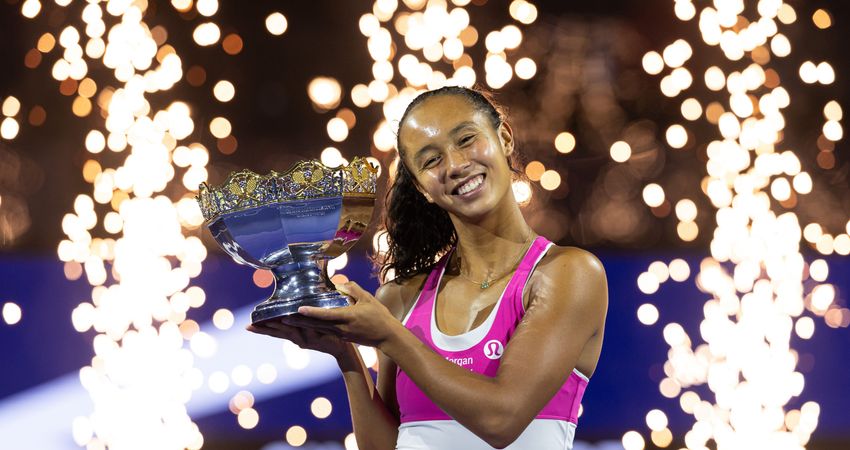
Fernandez entered her semifinal knowing that Rakhimova had beaten her in Beijing only three weeks earlier. That recent loss gave the match a sharper edge than the rankings or the draw alone suggested. She had to solve a player who already understood how to disturb her rhythm, and she had to do it without the luxury of a clean start.
The Canadian fell behind early in both sets but kept moving forward rather than accepting a defensive exchange. She recovered to take the opener 7-5 and then, from 2-0 down in the second, captured six of the final seven games. That run was more than a burst of momentum. It showed an ability to reset her patterns while the opponent still had the scoreboard advantage.
The statistical profile explains why this version of Fernandez is dangerous. She struck 41 winners against 20 unforced errors, delivered nine aces and won 14 of 20 points at the net. Those are not the numbers of a player relying exclusively on retrieving and waiting for mistakes. They suggest a willingness to end rallies on her terms, including by following aggressive groundstrokes into the forecourt.
That distinction matters against Shnaider. If Fernandez merely extends rallies, she gives the Russian more opportunities to impose a heavy left-handed ball. If she can combine her own lefty angles with timely changes of direction and forward movement, she can make the favorite defend uncomfortable spaces. The risk, naturally, is that the same attacking ambition can turn into rushed decisions when the return comes back deeper than expected.
Fernandez's recent form makes this approach credible. Her Asian swing record stands at 14-3, and she has won 16 of her last 20 tour matches. Her September Singapore title, secured after a difficult first half of the season, provided evidence that the resurgence was not a one-week illusion. She defeated a strong sequence of opponents there and closed the final by winning the last nine games.
Tokyo offers a different examination of that progress. In Singapore, she finished with a trophy and a sense of release. Here, she has reached her third final of 2026 within two months and is facing an opponent who has repeatedly denied her. The lesson from Saturday is not that Fernandez has suddenly become flawless. It is that her confidence now survives an imperfect opening, which is often the more valuable quality in a final.
One subtle measure of Fernandez's improvement is the way she chooses when to attack. A nine-ace afternoon can tempt a player to hunt outright power on every delivery, yet her success at the net shows a broader plan: create a shorter reply and then use positioning to finish. That distinction will matter against Shnaider, whose pace can make reckless aggression expensive. The Canadian needs controlled initiative, not simply a higher shot count, and her semifinal gave evidence that she can distinguish the two.

Shnaider Saved the Set When the Final Started Slipping Away
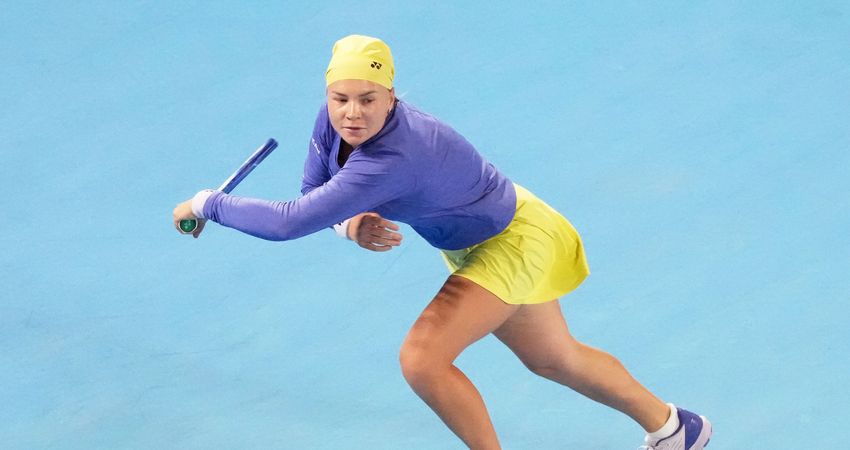
Shnaider's 6-4, 7-6(7) victory over Pohankova contained its own warning. She was one point away from being dragged into a deciding set when the teenager moved ahead 6-5 in the second-set tiebreak. The third seed instead won four of the final five points and shut the door before a potentially dangerous third set could begin.
That sequence is easy to reduce to experience defeating youth, but the explanation is more technical. Shnaider landed 72 percent of her first serves and won 80 percent of those points. When the serve is working at that level, it gives her a dependable opening shot and reduces the number of neutral rallies she must win under pressure. The first ball after the serve can be as decisive as the serve itself.
Her route to the semifinal had already demanded a different kind of resilience. In the quarterfinal against Alexandra Eala, Shnaider recovered from a set down and escaped a second-set tiebreak before winning 2-6, 7-6(5), 6-4. She saved multiple break points in a pivotal service game and found the extra precision needed in the deciding set. That match was a long test of problem-solving; the semifinal was a short test of nerve.
The contrast makes Shnaider difficult to read. She can win by building an advantage with a forceful first strike, yet she has also shown she can absorb a period when an opponent is playing cleaner tennis. Pohankova, only 18 and already responsible for eliminating Naomi Osaka in Tokyo, was not an opponent likely to hand over a set through intimidation alone. She forced Shnaider to earn the closing points.
Shnaider is now in her first final of the 2026 season despite having reached several semifinals. That creates a different pressure from a regular tour match. A player can be comfortable reaching the last four and still feel the weight of having to convert an entire week into a trophy. The first service game and the first tight tiebreak could reveal whether Saturday's escape has sharpened her or left some tension behind.
Against Fernandez, the service statistics offer a starting point rather than a guarantee. Fernandez is a left-hander who can attack second serves and take the ball early. If Shnaider's first-serve percentage drops, the Canadian may gain the initiative before the rally has settled. If it stays near Saturday's level, Fernandez will have to find creative returns and accept that some games may pass with very few opportunities.

Tokyo Has Turned a Late-Season Revival Into a Championship Test
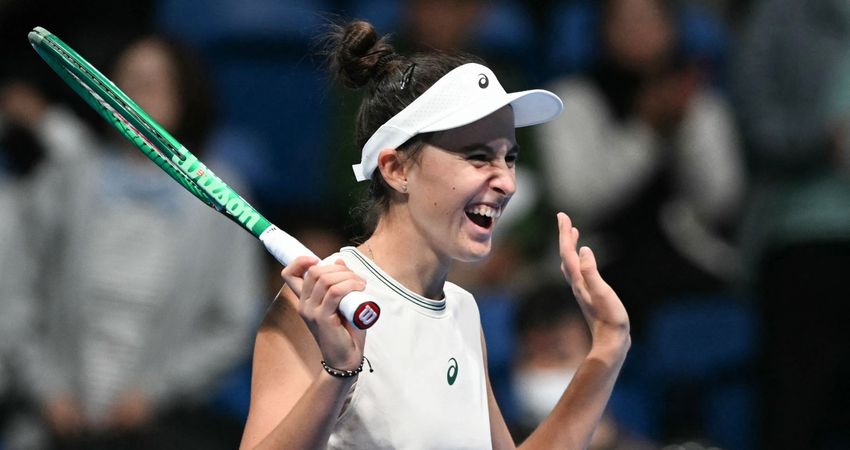
The tournament's semifinal lineup offered two different stories about opportunity. Fernandez arrived with a late-season surge that had already produced a Singapore title. Shnaider arrived after a series of deep runs without a 2026 trophy. On the other side of the net Saturday stood Pohankova, a teenage wild card whose week had made her one of the event's unexpected protagonists.
Pohankova's run deserves more than a passing mention. The Slovak defeated Osaka 6-3, 7-5 to reach the quarterfinals and then advanced again before meeting Shnaider. She had been ranked outside the top 600 roughly a year earlier and entered Tokyo at a career-high No. 144. Her ability to compete with established names helps explain why Shnaider's semifinal was not the straightforward assignment it may have looked like on paper.
Fernandez's own trajectory has been uneven enough to make her current streak meaningful. She began the Asian swing after a season in which sustained results were hard to find, then won the Singapore WTA 500 title. In that final against Talia Gibson, she recovered from pressure in the first set before taking nine consecutive games. Her game has increasingly looked built around aggressive intent rather than merely counterpunching.
Shnaider's campaign tells a different story. She has accumulated semifinal appearances in Adelaide, Roland Garros, Washington, Ningbo and now Tokyo. That consistency shows she can put herself in contention across changing conditions, but the absence of a title before this week also makes Sunday's opportunity unusually important. It is a chance to convert a broad pattern of good weeks into one complete week.
Neither player should be judged only by the trophy count. A single final can swing on a handful of points, and Shnaider's recent losses do not erase the work needed to reach those late rounds. Likewise, Fernandez's Singapore success does not automatically make her the stronger player here. The more useful comparison is how their current strengths intersect: Shnaider's reliable serve and heavy ball against Fernandez's improved willingness to finish points early.
Tokyo is also the last substantial chapter of the regular-season Asian swing for both players. The match carries rankings and confidence implications, but its immediate appeal is simpler. One finalist wants the missing title that would validate a season of deep runs. The other wants to show that a late resurgence can hold up against a familiar rival who has repeatedly exposed her weaknesses.
The final is also a test of what happens after a player escapes a close match. Shnaider cannot rely on Fernandez offering the same return patterns as Pohankova, and Fernandez cannot assume Saturday's winner-to-error balance will repeat against a familiar left-handed opponent. The most useful preparation may be identifying which of their recent strengths will still work when the first set becomes tight and neither player is willing to surrender the middle of the court.
Three Straight Shnaider Wins Make the Lefty Matchup the Real Story
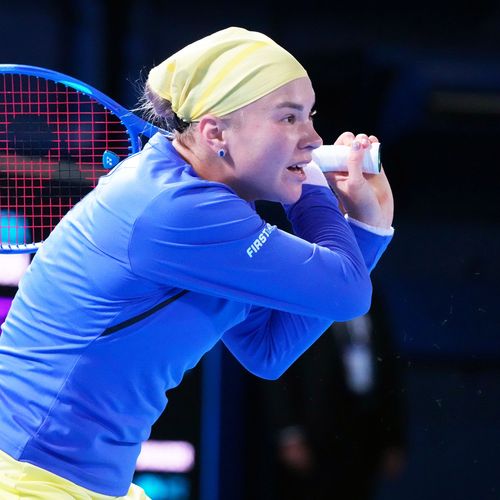
The head-to-head is the clearest piece of evidence favoring Shnaider. She leads Fernandez 3-2 and has won their last three meetings, including matches in Adelaide and Charleston earlier in 2026. All three recent victories came in straight sets, and the final set of their Charleston meeting ended 6-0. Those results are not a prediction, but they show that Fernandez has struggled to sustain the right patterns against this opponent.
Two left-handers create an unusual tactical picture. Both can move the serve away from a right-hander's backhand, but against each other the familiar advantage changes. The returner's forehand and backhand positioning, the direction of the first crosscourt exchange and the ability to redirect down the line all become important. The player who recognizes those patterns sooner can make the other look a step late without necessarily hitting harder.
Fernandez's best route is to prevent Shnaider from setting the same baseline exchange over and over. Her 14 successful net approaches from 20 attempts in the semifinal suggest one possible escape: drive the ball deep, step forward and force Shnaider to pass under pressure. That will require smart selection. Approaching behind a short or floating ball against a player with Shnaider's weight of shot is an invitation to be punished.
Shnaider, by contrast, can try to turn the final into a test of first-strike reliability. Her 72-percent first-serve rate against Pohankova would make it difficult for Fernandez to establish an aggressive return position. From there, she can use the first forehand or backhand to take control of court geography. She does not need spectacular winners on every point if she can repeatedly make Fernandez defend one extra ball from an awkward position.
The psychological contest may be just as important. Fernandez knows the recent history and does not need a reminder of the Charleston score. A slow start could revive that frustration. But Saturday also showed that she can recover from early breaks without abandoning the game plan. Shnaider knows the matchup has favored her, yet she also knows a title is still missing from her 2026 season. Both players therefore have a reason to feel confident and a reason to feel exposed.
The decisive indicators are likely to be simple: Shnaider's first-serve percentage, Fernandez's success attacking second serves, the quality of the Canadian's net approaches and the outcome of the first prolonged pressure game. If Fernandez makes the Russian defend and keeps her own error count under control, this can be much closer than their recent results suggest. If Shnaider repeatedly wins the opening two shots, the rivalry may continue to tilt her way.

The final has an obvious favorite on recent head-to-head evidence, but it is not a foregone conclusion. Shnaider has the serve, the matchup history and the ability to survive ugly moments. Fernandez has the sharper late-season surge and a semifinal performance that showed both aggression and composure.
Sunday will reveal which of those strengths translates into a championship under pressure. For Shnaider, the prize is a first title of 2026. For Fernandez, it is a chance to turn a resurgent autumn into a statement against the opponent who has had her number.
Shop GOATIFY tennis products from the Tennis-filtered collection scope.

















