

Hearn Questions Fury–Joshua Undercard. Cordina's Cardiff Snub Hits Hardest.
GOATIFYWith Tyson Fury and Anthony Joshua finally scheduled to meet in Cardiff on December 11, the undercard has become a fight of its own. Not in the ring, at least not yet: the argument is about which boxers deserve the enormous audience surrounding a contest that British fans have anticipated for more than a decade. Eddie Hearn, Joshua's long-time promoter, has publicly questioned the supporting lineup and the decisions behind it.
Three main-card fights are now attached to the heavyweight headliner. Deontay Wilder will face unbeaten Jai Opetaia, Martin Bakole is matched with Solomon Adebayo, and Da'Mazion Vanhouter meets Michael Essomba. Hearn sees one especially compelling contest but argues the remaining places should have gone to stronger names or more recognizable stories. He also wants to know why Cardiff's own two-time world champion Joe Cordina is not on the main televised bill.
That criticism is more than a promoter taking a swipe at a rival's show. It exposes a basic tension in staging a global boxing spectacle: a card can be designed to develop new talent, give established stars meaningful fights, appeal to a home crowd, or capture the widest possible international audience. It cannot maximize every one of those aims with the same limited slots.
Three supporting bouts, but only one has universal appeal
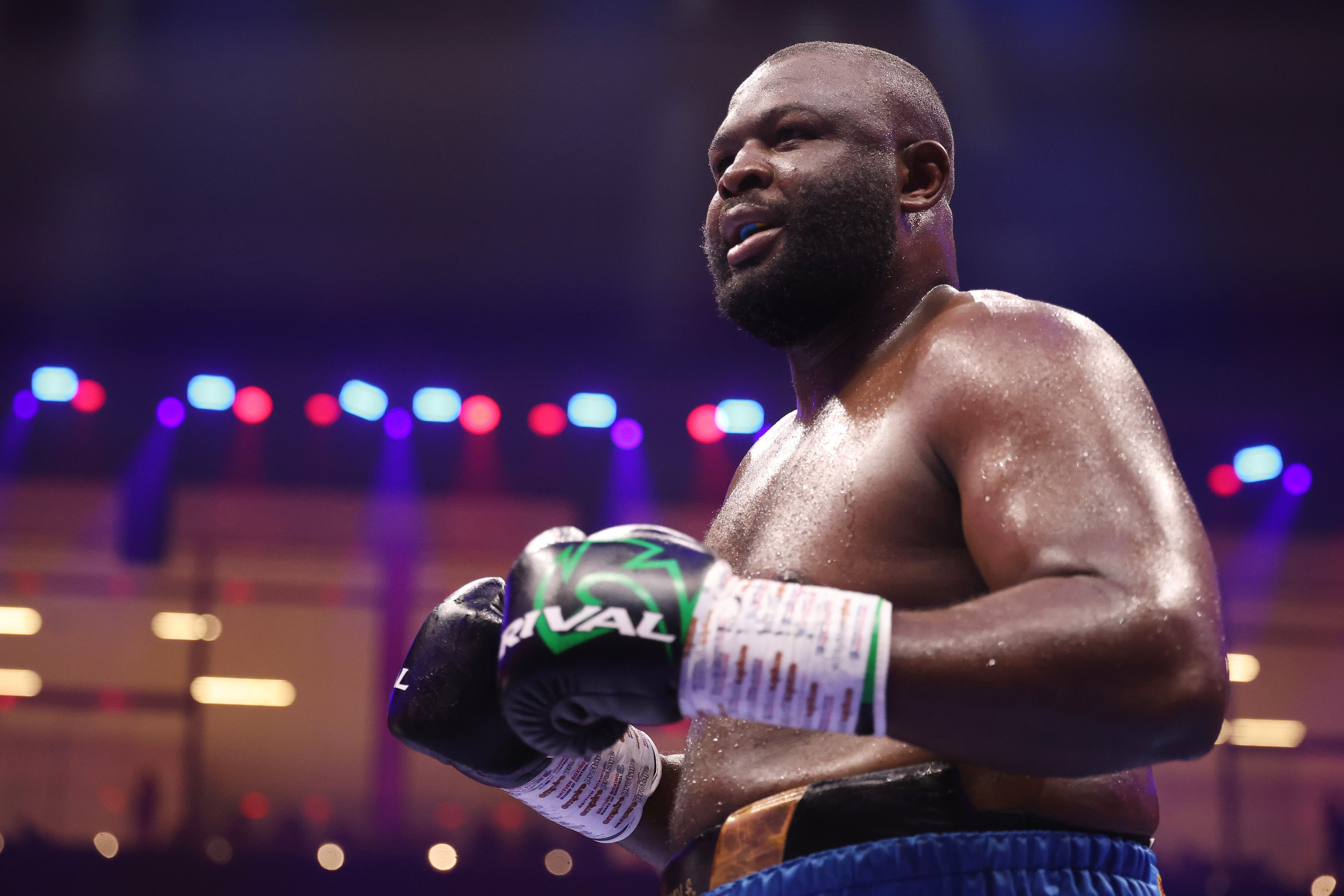
The supporting lineup is heavily weighted toward big men. Wilder and Opetaia meet at heavyweight despite Opetaia's success at cruiserweight. Bakole, an experienced contender from the Democratic Republic of the Congo, will take on Nigerian prospect Solomon Adebayo. The other confirmed supporting contest pairs American prospect Vanhouter with Michael Essomba. For a show headlined by two famous British heavyweights, the choice creates a clear thematic through-line: powerful fighters, high stakes and the possibility of dramatic stoppages.
Yet a recognizable weight class is not the same as recognizable fighters. Hearn's criticism focuses particularly on the latter two bookings. He believes a mega-event's main card should contain names that already resonate with the crowd or contests whose competitive importance is immediately apparent. Less-established boxers can benefit from a huge platform, but that development strategy competes for space with established champions and local favorites.
Bakole brings legitimate heavyweight experience. He was stopped by Joseph Parker on short notice in February 2025, then fought Efe Ajagba to a majority draw in Riyadh that May. Adebayo's unbeaten record and knockout reputation make this a real test, although moving from a domestic and regional circuit into an enormous global broadcast is an unusual jump. What looks like a fascinating scouting exercise to a dedicated boxing follower may not carry the instant appeal a casual viewer expects.
The Vanhouter–Essomba booking invites the same debate in sharper form. Vanhouter is a young unbeaten prospect who could become much better known after sharing this stage. That is a valuable opportunity for him, and the absence of household-name recognition is not a verdict on his ability. It does, however, make the organizers' priorities visible. They are using some of the biggest television exposure boxing can offer to showcase a future name rather than to feature a boxer whose reputation is already established.
Hearn has said he expects one or two of his fighters to appear on the preliminary portion of the event, but he has had no role in assembling the main card. That distinction matters. The final preliminary bill has not been fully announced, and criticism of the headline support should not be confused with a claim that all other fighters have been excluded from fight week.
GOATIFY
GOATIFY Boxing
Boxing's biggest main event invites an equally big debate about the undercard. Browse the GOATIFY Boxing collection for fight-night gear.


At this stage, the controversy is about programming rather than an accusation that any of the booked contests cannot deliver. Boxing repeatedly produces brilliant fights between unfamiliar athletes. The question for the December 11 show is whether the promoters should make that discovery process the centerpiece of the supporting broadcast, or whether this extraordinary main event calls for a different formula.
Wilder–Opetaia is a genuine fight with genuine risk

Wilder against Opetaia is the one pairing Hearn has praised as intriguing, and it is easy to see why. Wilder remains one of his generation's most dangerous punchers. His record stands at 45 wins, four defeats and one draw, with 43 knockouts among those victories. At 41, however, he is no longer the undefeated champion who terrorized the division during his long WBC title reign.
His trilogy with Fury, defeats to Joseph Parker and Zhilei Zhang, and subsequent attempts to rebuild have made the next chapter less predictable. Wilder did return to the win column and beat Derek Chisora in April 2026, but a close decision in a bruising veteran heavyweight fight does not answer every question about his timing, durability or the ability to dictate exchanges against a younger, quicker opponent.
Opetaia arrives from the other direction. The unbeaten Australian has built a 31-0 record and has been a leading force at cruiserweight. His 2026 campaign included a win over Brandon Glanton and a stoppage of Noel Mikaelian in September. Now he is accepting a high-profile heavyweight challenge, where the physical demands and consequences of a clean punch are different from the 200-pound class in which he established himself.
That makes the matchup unusually balanced in uncertainty. Wilder has the extensive heavyweight experience and proven one-punch threat; Opetaia has youth, sharper recent form and the technical tools of a world-class southpaw. Wilder needs to prove he can still set traps and unleash the right hand without being outworked. Opetaia needs to show that his movement, combination punching and punch resistance travel with him into the bigger division.
The bout also connects directly to the wider business dispute. Dana White has celebrated the Wilder–Opetaia announcement and is closely associated with Zuffa Boxing, the project involving Turki Alalshikh. Hearn has publicly questioned White's role in constructing the Fury–Joshua event, while White has asserted involvement. The precise extent of decision-making authority should not be treated as established merely because two prominent promoters disagree about it.
On sporting merit alone, Wilder–Opetaia earns its space. A notable veteran meeting an unbeaten star changing weight classes is the kind of high-risk, clear-stakes contest that can complement a historic main event. The real problem for Hearn is not that this fight exists. It is that the remaining supporting slots, in his view, have not met the standard that the co-feature sets.
Cordina and White reveal who this card is built to reach

The most emotional part of the dispute is Joe Cordina. The Cardiff boxer has been an IBF super-featherweight champion on two occasions and remains a familiar figure to Welsh boxing supporters. His earlier world-title victories are part of the history that gives a huge night at the Principality Stadium its local significance. A major event in his home city would be a natural stage for the next chapter of his career.
Cordina had been linked to several different possibilities. Discussions around a fight with Manny Pacquiao attracted attention, while other potential opponents and a renewed route toward a lightweight title were also discussed. None of those proposed pairings should be presented as an agreed bout on the current card. Hearn's latest public comments suggest he is looking to secure a significant assignment for Cordina in January instead.
GOATIFY
GOATIFY Boxing
Whether you back Wilder's comeback or Opetaia's move to heavyweight, GOATIFY Boxing has apparel and accessories for fans of big fights.
That situation has an understandable sporting complication. A boxer cannot simply be placed on a bill without an opponent, viable terms, training preparation and approval from the participants. But supporters are entitled to ask whether enough effort was made to find a meaningful spot for a local former champion while the promoters were assembling the main-event support. An event marketed around British boxing heritage creates expectations that extend beyond its two headline names.
Cardiff will not lack boxing altogether. A separate seven-fight show is planned for December 10 at the Vale Arena, with emerging Welsh talent including twins Garan and Ioan Croft. That offers valuable opportunities during fight week, but it is not equivalent to appearing on the main Netflix broadcast at the Principality Stadium. The distinction between a developmental showcase and the night's premium television slots is central to the debate.
Hearn has directed some of his criticism toward White's influence with Alalshikh, arguing that the people shaping the supporting bill may be prioritizing unfamiliar prospects over the sport's established local audience. That is Hearn's position, not an independently demonstrated account of who signed off on each match. It is also worth recognizing his own commercial and professional stake: as Joshua's longtime promoter and Cordina's backer, he has reason to advocate for his fighters and for a particular vision of the event.
The alternative vision is not without logic. Putting Vanhouter or Adebayo in front of millions may create a new star overnight. Boxing needs that kind of ladder, and an ambitious promoter may be willing to sacrifice familiar names to build a future roster. The counterargument is that a once-in-a-generation main event has a limited supply of premium minutes; giving those slots to new prospects can leave an established hometown fighter on the outside.
Ultimately, viewers will judge the card on what the fights deliver. A stunning performance from a lesser-known heavyweight would quickly change the tone of the discussion. Until then, Cordina's situation remains the clearest symbol of the disagreement: the local championship story that some fans expected to be present, versus the new names that the event's architects have chosen to put forward.
The headliner has enough history to sell itself. Fury and Joshua will finally share a ring after years of failed negotiations, with December 11 now carrying an emotional weight far beyond ordinary heavyweight rankings. Nothing about the undercard debate diminishes that moment. It does make the surrounding show more interesting, because promoters are revealing what they believe a global boxing event is supposed to accomplish.
Wilder and Opetaia offer a compelling sporting contrast. Bakole and Vanhouter offer different opportunities for fighters to make names or rebuild momentum. Cordina offers an immediately recognizable connection to Cardiff. Hearn's frustration arises from the fact that all three choices cannot receive equal treatment when main-card slots are scarce.
The final test will be in the ring, not in promotional interviews. For now, the fairest reading is that the undercard has a coherent heavyweight identity but is still vulnerable to criticism over star power and local representation. It can vindicate its makers with strong fights; until the bell rings, it also leaves a valid question hanging over Cardiff's biggest boxing night: who should get to share the stage?
GOATIFY
GOATIFY Boxing
Shop GOATIFY boxing shirts, hoodies and stickers.


















