

Chwalinska's First WTA Title Came at Wuhan — and Proved Paris Was No Fluke
GOATIFYMaja Chwalinska had already given the tennis world one extraordinary 2026 run by reaching the French Open final as a qualifier. On Sunday in Wuhan, she supplied the answer to the question that followed: could she turn that surprise into a sustained place near the top of the sport? Her response was a first WTA Tour title, and not at a small event. She won a WTA 1000, defeating Sonay Kartal 2-6, 6-4, 6-2 after falling a set and a break behind.
The 25-year-old Polish left-hander needed two hours and 43 minutes to overturn a final that initially belonged to the British underdog. The result made Chwalinska one of a tiny group of players whose first tour-level trophy came at the 1000 level. It also capped a remarkable week in which she beat Iga Swiatek, climbed toward the top 10 and showed that her unusual mix of spin, angles and defense can hurt elite opponents on hard courts as well as clay.
The final turned when Kartal's early control stopped being enough
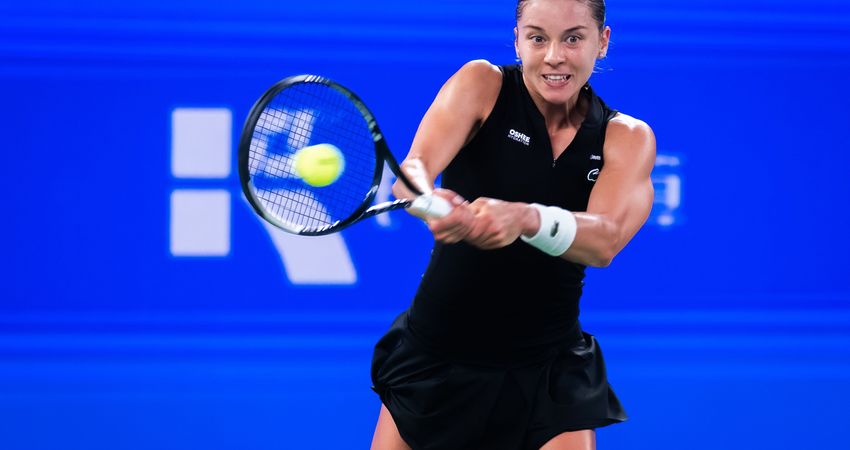
For the opening set, the match looked like another chapter in Kartal's improbable return. She attacked the second serve, took the ball early and made Chwalinska defend without the time to create her usual angles. The Briton broke repeatedly on the way to 6-2, turning a final between two first-time WTA 1000 finalists into a contest she appeared ready to control.
That impression grew when Kartal broke again for a 2-0 lead in the second set. Chwalinska was struggling to establish the depth that makes her defense uncomfortable to play against. Kartal saved four break points in her next service game, but the Pole kept extending rallies and converted her fifth chance to get back on serve. It was a small scoreboard recovery with a much larger tactical meaning: the match was no longer being played entirely on Kartal's terms.
Chwalinska's answer was not to try to overpower a player striking cleanly. She mixed higher, deeper balls with sudden changes of direction, used lobs to push Kartal away from the baseline and made the Briton hit extra shots under physical pressure. The second set lasted 71 minutes. At 4-all, the contest was balanced enough that either player could still dictate the finish; Chwalinska won the crucial late games and took it 6-4.
In the decider, the Polish player broke for 3-2 and did not surrender the momentum. She collected the final four games, combining her patient rally construction with sharper down-the-line attacks and a drop-shot-and-lob sequence that repeatedly disrupted Kartal's court position. There were no aces in the match. Kartal finished with more winners, 32 to 23, but also more unforced errors, 36 to 27. Those numbers capture the tension of the final: Kartal could hit through the court, while Chwalinska increasingly made her prove it on every point.
The last service game was hardly a formality. Chwalinska had to save three break points before closing out the championship. That made the ending an appropriate summary of her week: not flawless tennis, but a willingness to keep solving the next problem when the obvious route to victory had disappeared.

Kartal's No. 170 ranking never described her Wuhan level
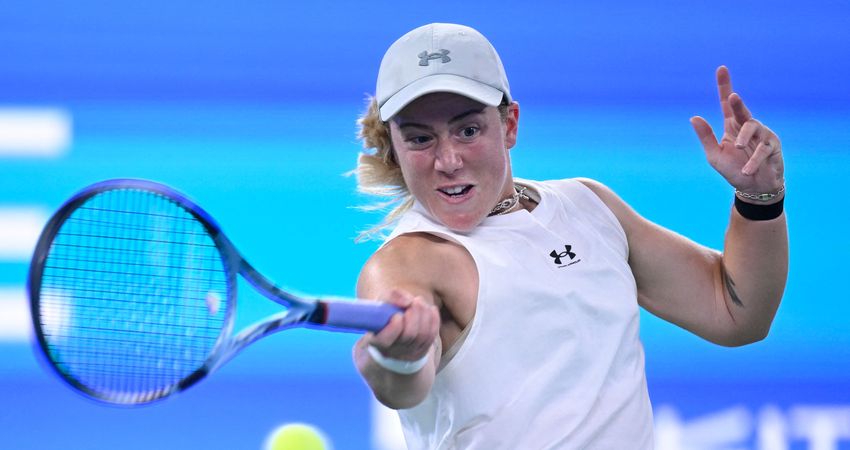
It would be easy to reduce Kartal's final to a missed opportunity, especially after the way she opened it. That would ignore the scale of what she had already achieved. She entered Wuhan ranked No. 170 after missing roughly six months with a back injury, a long absence that interrupted her momentum and removed her from major stretches of the season. Only weeks after returning, she reached the biggest final of her career.
The route was not padded with favorable draws. Kartal beat Belinda Bencic, Jasmine Paolini and Elina Svitolina before outlasting former French Open champion Jelena Ostapenko in two tense semifinal tiebreaks. Against Ostapenko, she saved multiple set points and recovered from breaks down. Those wins demanded both controlled aggression and the ability to keep competing when the score offered no comfort.
In the final, Kartal's clean opening set suggested that the same formula might deliver a historic trophy. She was comfortable redirecting pace and stepping into the court, and Chwalinska's slower changes of spin did not initially disturb her timing. But a 1000-level final is a different physical test when it arrives at the end of an intense week and so soon after an extended injury layoff. The increasingly long rallies placed a premium on movement, patience and repeated recovery between points.
That does not mean the injury automatically explains the result. Chwalinska made identifiable tactical changes, and Kartal continued to produce attacking tennis deep into the match. The better reading is that the champion found a way to make the final harder to control. Kartal's error count rose as the rallies lengthened, and the Briton could no longer rely on winning the first clean exchange as often as she had in the opening set.
The reward for Kartal is still significant: a projected jump to No. 50 and the British No. 1 position. Her previous WTA title came at the 250 event in Monastir in 2024; Wuhan demonstrated a ceiling far beyond a comeback story. The next challenge is sustaining this level over consecutive tournaments rather than asking one remarkable week to carry the whole argument.
Paris was the breakthrough; beating Swiatek made Wuhan a statement
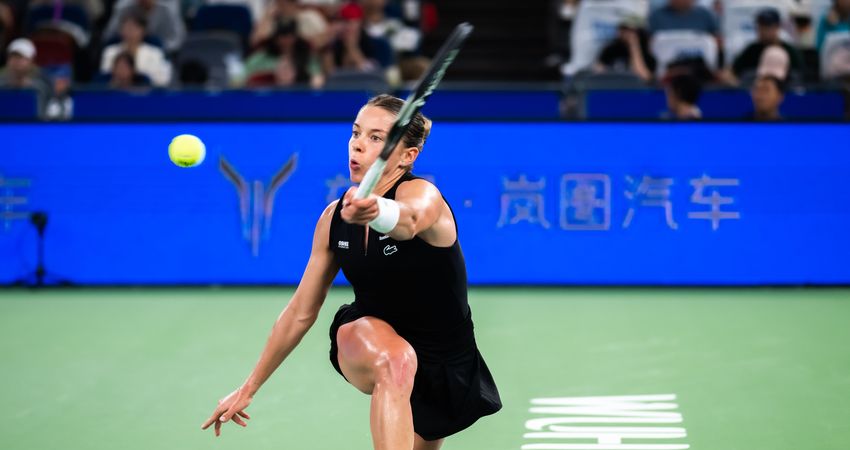
Chwalinska's year was already unusual before she arrived in China. She began the season outside the top 100 and then reached the Roland Garros final after coming through qualifying. That kind of run can change a career, but it also creates a difficult second task: proving that the conditions of one fortnight were not uniquely favorable. The months after Paris included setbacks and public expectations that were not always easy to absorb.
Wuhan supplied evidence of a more transferable game. Chwalinska recovered from a set down against Marie Bouzkova, defeated rising seed Iva Jovic and survived a three-set quarterfinal against Maria Sakkari. She did not simply find one hot serving day. She repeatedly changed the shape of rallies, defended difficult positions and stayed disciplined long enough for opponents to lose their preferred rhythm.
The semifinal carried a different emotional weight. Chwalinska and Swiatek had known each other since junior tennis and had even played doubles together as teenagers. Their all-Polish meeting was a major occasion, but the contest became complicated when Swiatek experienced a leg problem. The more established champion led 5-3 in the opening set before Chwalinska saved two set points and eventually won 7-5, 6-1. Swiatek's physical difficulty is part of the factual story; it should not erase Chwalinska's resilience or the pressure she applied while the first set remained live.
That sequence matters because the final required a similar mental response in a different form. Against Swiatek, Chwalinska refused to accept a nearly lost set. Against Kartal, she refused to accept that a poor opening hour had settled the championship. Both wins were built on the same competitive habit: making the opponent play one more demanding rally while she searched for the next adjustment.
There is also a historical marker. Chwalinska became the fourth woman since the WTA 1000 format began in 2009 to win her first tour-level singles title at that tier, joining Naomi Osaka, Bianca Andreescu and Victoria Mboko. She also became the first left-handed WTA 1000 champion since Petra Kvitova's Miami triumph in 2023. Those comparisons do not guarantee a future major title, but they show why this is a far bigger step than simply adding one trophy to a results page.
A projected No. 11 ranking changes the next conversation
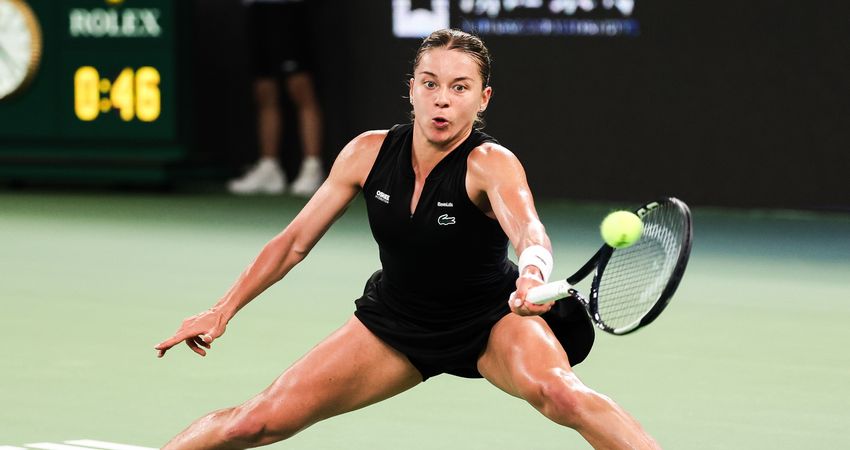
Chwalinska arrived at Wuhan ranked No. 22 and is projected to climb to a career-high No. 11 after collecting 1,000 ranking points. She began the year around No. 146. That is a remarkable rise, but the more meaningful change is the type of conversation her results now justify. Instead of asking whether the French Open final was a one-off, the tour must prepare for a player who has reached two enormous finals on very different surfaces.
The title also carried $665,000 in prize money, a major reward for someone whose qualifying run in Paris earlier this year exposed how financially precarious a breakthrough can be. The runner-up's $385,001 is substantial too, especially for a player returning from injury and rebuilding a ranking. These sums matter because tennis careers are not sustained by prestige alone: travel, support teams, medical care and a calendar of high-level competition all require resources.
For Polish tennis, the championship places Chwalinska alongside Agnieszka Radwanska and Swiatek as women from the country to have won a WTA 1000 title. That is an achievement in its own right, without forcing a comparison between players at very different stages of their careers. Chwalinska's game is also distinct. Her left-handed patterns, changes of height and reliance on anticipation can create uncomfortable matches for opponents who prefer to exchange flat pace.
There are still unanswered questions. Can she produce the same precision when opponents arrive with a specific scouting plan? Can her body withstand repeated deep runs after the physically demanding spring and autumn she has experienced? And can she turn the consistency shown in Wuhan into regular wins over top-20 opponents? Those questions are not reasons to diminish the title. They are the questions a new contender earns the right to face.
Kartal has a parallel challenge: protecting the physical progress that made this comeback possible while using a projected top-50 ranking to enter bigger draws more regularly. Sunday's final created a winner and a runner-up, but it also introduced two players whose positions in the women's game look different from a week ago. Wuhan was a result; the next stretch of the calendar will test how lasting that change becomes.

The defining image of Wuhan is Chwalinska holding a trophy she had never previously won at any WTA level. But the defining tennis was the work that came before it: digging out of a set and a break deficit, making Kartal hit from awkward positions, and finding a way through three break points when the finish line was finally in sight.
Paris showed that Chwalinska could rise for a major fortnight. Wuhan showed that she could repeat the feat on a different surface, against a different set of problems, and finish with the title. Kartal leaves with a new ranking and a comeback that deserves attention beyond the score. Chwalinska leaves with a WTA 1000 trophy and a stronger claim to belong among the sport's established contenders.
Shop GOATIFY tennis products from the Tennis-filtered collection scope.
















