Both Teams Landed Hours Before Tipoff. Memphis Hit Nine First-Quarter Threes.
GOATIFYBoth teams got to Memphis late. Only one of them played as though the disruption barely mattered. After Friday's nationwide FAA ground stop forced a scrambled travel itinerary out of New Orleans, the Brooklyn Nets and Memphis Grizzlies arrived in Tennessee on Saturday with their normal preparation severely compressed. The result was hardly an exhausted stalemate: Memphis opened by burying nine three-pointers in the first quarter, led 71-54 at halftime and beat Brooklyn 129-110 on November 14.
Brooklyn had the more forgiving schedule on paper. Memphis had scored 142 points against New Orleans on Friday night and was playing its second game in as many evenings, yet its passing, spacing and second-chance responses looked sharper from the opening possessions. Cedric Coward finished with 23 points and 12 rebounds; Taylor Hendricks added a career-high 22. Those figures describe the production, but the larger lesson sits in the way the Grizzlies created clean shots and stopped a third-quarter comeback.
The Nets briefly reduced a huge deficit to eight, then watched the game escape again. Travel explained the strange build-up; it did not explain all the defensive breakdowns, giveaways or lack of a sustained response. This was a revealing comparison of two teams handling nearly identical circumstances in sharply different ways.
Nine First-Quarter Threes Were a Defensive Test Brooklyn Failed
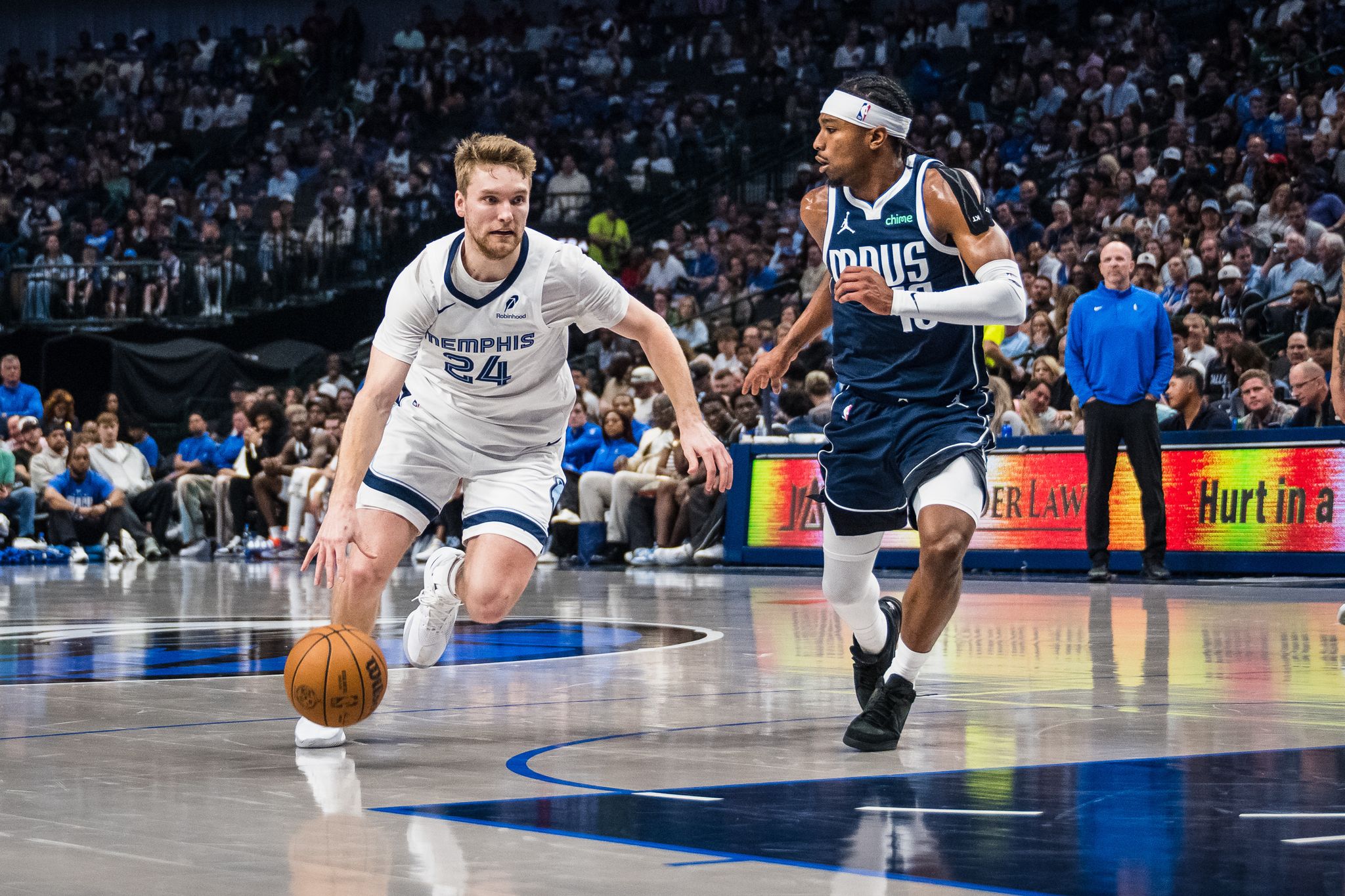
The decisive sequence began long before the box score looked ugly. Brooklyn briefly held a 7-5 lead, and then Memphis reeled off nine straight points. Jaylen Wells' early three forced a timeout with 7:55 left in the opening period and put the Grizzlies ahead 16-9. That was the first unmistakable sign that the Nets were responding to shooters rather than controlling the places those shooters wanted to reach. Memphis did not need a single player to manufacture every attempt. The ball traveled to space, and the defense arrived a step too late.
By the end of the first quarter, Memphis had hit nine threes and led 38-23. That is a 15-point hole after twelve minutes, created largely before either side could blame tired legs late in a back-to-back. Early in the game the Grizzlies were nine of eleven from beyond the arc. Even a team that makes the correct defensive decisions cannot count on an opponent missing open shots at that rate; when those decisions are late as well, a hot start becomes an avalanche. Brooklyn's problem was not merely that Memphis made tough jumpers. It was that too many possessions looked comfortable for the shooters.
There is an important distinction between extraordinary shot-making and an offense that has earned rhythm. Shooting percentages move around from night to night, while the quality of the initial advantage and the speed of the next pass are more repeatable. Memphis attacked the Nets with several players ready to fire, rather than waiting for one designated star to call every action. Coward, Cam Spencer and Wells established the perimeter threat early. The Nets needed to challenge the first action, recover to the next man and finish possessions with a defensive rebound. Too often their response was reactive.
GOATIFY
GOATIFY Basketball
Nine opening-quarter threes transformed the Memphis-Brooklyn matchup. Explore GOATIFY Basketball designs while examining the Grizzlies' perimeter advantage.

Ben Simmons GOAT - Basketball - Greatest Sweatshirt
A basketball fan design for everyday wear.
Shop Now ↗
Stephen Curry GOAT Shooting Threes Pullover Hoodie
A basketball fan design for everyday wear.
Shop Now ↗

Kobe Bryant – The GOAT Champion Decal Sticker
Add basketball personality to your favourite gear.
Shop Now ↗
Ja Morant Gun Basketball NBA Memphis Grizzlies Hat
A basketball fan design for everyday wear.
Shop Now ↗
Ben Simmons GOAT - Basketball Decal Sticker
Add basketball personality to your favourite gear.
Shop Now ↗The second quarter offered a small opportunity to cool the game down. Brooklyn's offense improved and the deficit stopped growing at the same breathtaking rate, but it could not complete the defensive half of a comeback. Spencer capped the period with a three as the horn sounded, Memphis' thirteenth of the half, to make it 71-54. That final possession mattered beyond the extra points. After spending a quarter trying to recover, Brooklyn had watched the home team leave the floor with another confident shot and a seventeen-point cushion. There was no clean psychological reset waiting at halftime.
Spencer's eight assists and seventeen points were a useful window into how this performance functioned. A guard who can deliver the ball quickly and also punish a defender for helping creates a difficult choice. Follow him too aggressively and another player receives the advantage; sag off and he becomes a shooting threat himself. Memphis benefited from having that connective passing alongside the finishing of Coward and Hendricks. The team did not depend on every individual possession being spectacular. It depended on making one correct decision after another before Brooklyn could organize.
It would be a mistake to assume Memphis will shoot like this every night. The sustainable part is the structure: quick identification of a defensive mismatch, a willingness to move the ball, and enough trusted options to punish hesitation. When those elements are present, one quarter of outstanding accuracy can be enough to determine the shape of an entire game. Brooklyn's failure was letting that accuracy arrive without sufficient resistance and then spending the remaining three quarters chasing the consequences.
Coward and Hendricks Turned Missing Starters Into Depth
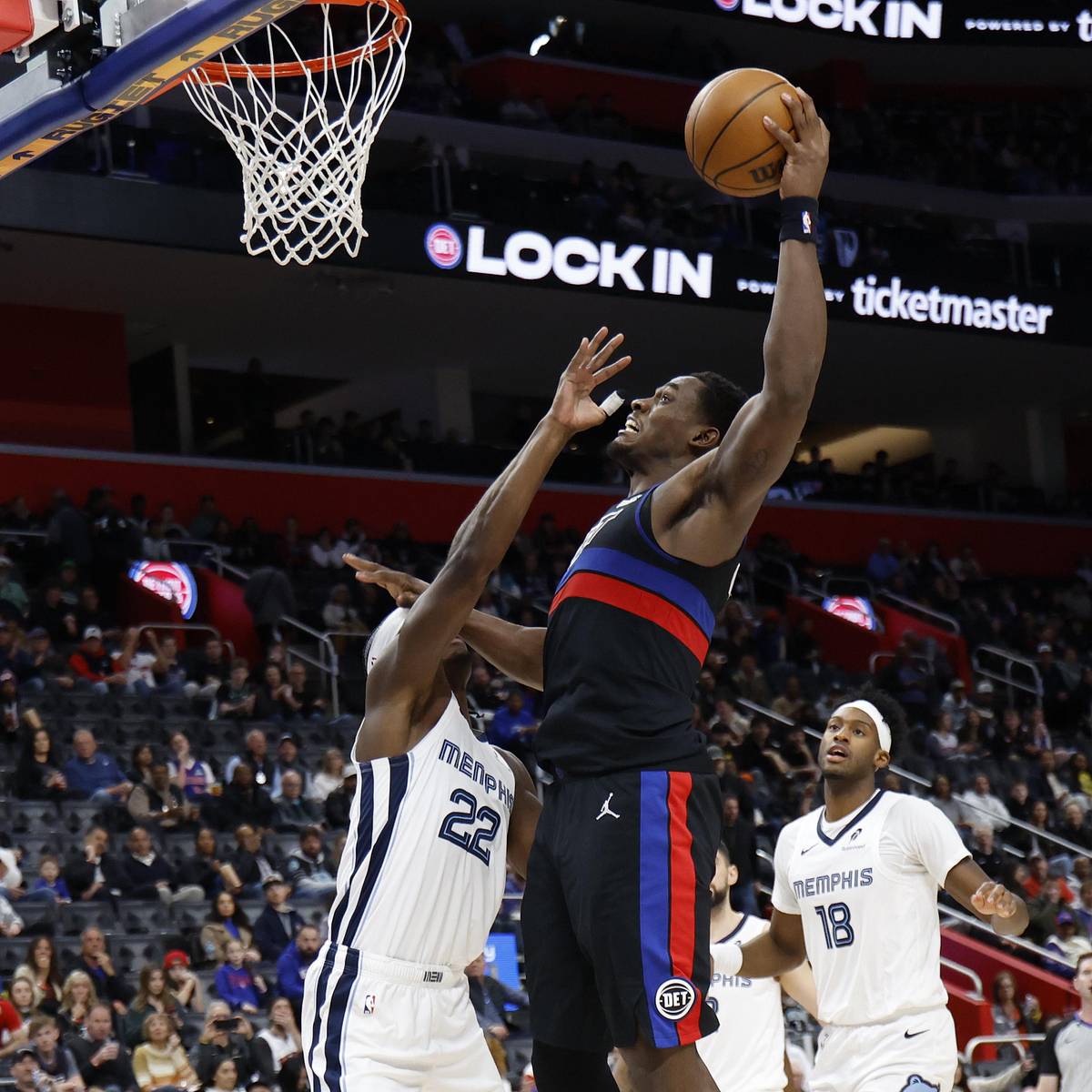
The night could have been framed around the names Memphis did not have. Ty Jerome, the team's leading scorer coming into the game, was unavailable, as was center Zach Edey. On the second night of a back-to-back, after a travel delay, those were meaningful absences. Instead, the Grizzlies produced another high-output night from a different combination of players. Coward supplied 23 points and 12 rebounds, Hendricks delivered 22 points for a career high, and seven Grizzlies players in total reached double figures. The leading names changed from Friday, but the shared workload remained.
Coward's line was more complete than a simple scoring headline. He shot seven of thirteen from the field, hit four of six attempts from three, added four assists, two steals and two blocks, and collected a dozen rebounds. That mixture matters because it gives Memphis useful contributions even when an opponent adjusts to his jumper. On a night when the Grizzlies' threes were the headline, his work on the glass helped keep possessions from becoming a contest of streaks. Rebounds and defensive activity are a practical way to stabilize a performance when long-range shooting eventually levels off.
For a developing wing, that breadth can be more valuable than a single explosive scoring total. A player who can close a possession with a rebound, initiate the next pass and defend more than one action is easier to keep on the court in different lineups. Coward has been showing that sort of all-around profile this season, not just in this win. The argument for a larger role is not that he is guaranteed to score twenty every night; it is that Memphis can use him in several ways while the offensive pecking order changes around him. Saturday's double-double gave that argument another data point.
GOATIFY
GOATIFY Basketball
Coward's double-double and Hendricks' career high showed the value of Memphis depth. Browse GOATIFY Basketball apparel and stickers.


Giannis Antetokounmpo G.O.A.T. - Basketball - Hoodie
A basketball fan design for everyday wear.
Shop Now ↗
Ja Morant Gun Suspension Memphis Grizzlies NBA Tee
A basketball fan design for everyday wear.
Shop Now ↗
Jalen Brunson – NBA Champion GOAT Decal Sticker
Add basketball personality to your favourite gear.
Shop Now ↗
Carmelo Anthony G.O.A.T. - Basketball Muscle Tank
A basketball fan design for everyday wear.
Shop Now ↗
LaMelo Ball G.O.A.T. - Basketball Coffee Cup Mug
Add basketball personality to your coffee break.
Shop Now ↗Hendricks' 22 points spoke to a slightly different development question. The forward has had to earn consistent opportunities and adapt his offensive game to a roster with several potential creators. A career high is encouraging, but its tactical significance is how it alters the opponent's choices. If a defender cannot simply leave Hendricks to shrink the floor around the ballhandler, there is more room for an entry pass, a drive or a cutter. His contribution helped make the night about collective spacing rather than an isolated heater by one Grizzlies guard.
Javon Small contributed nineteen points and Spencer added seventeen, with eight assists. Those contributions also explain why seven double-figure scorers can be more difficult to contain than a single thirty-five-point outing. Brooklyn could not fix the first-half breakdown simply by sending a second defender toward Coward, because the next pass was capable of finding a teammate willing and able to score. Memphis was coming off a 142-111 win over New Orleans in which ten players had scored at least ten points, matching an NBA record. The next game delivered a different kind of depth check: fewer scorers in double figures, but enough answers to win comfortably with key starters absent.
That does not make Jerome or Edey expendable, nor does it guarantee the same scoring distribution against the league's strongest defenses. Depth becomes valuable when it provides options rather than a mirage of interchangeable stars. Memphis is showing a useful early-season trait: if an opponent removes one route to the basket, it still has players who can change the angle of attack. The Grizzlies improved to 9-4 and earned their third victory in four games. The record is encouraging, but the process behind the wins is the more interesting sign.
Brooklyn Cut It to Eight. Its Next Possessions Told the Real Story
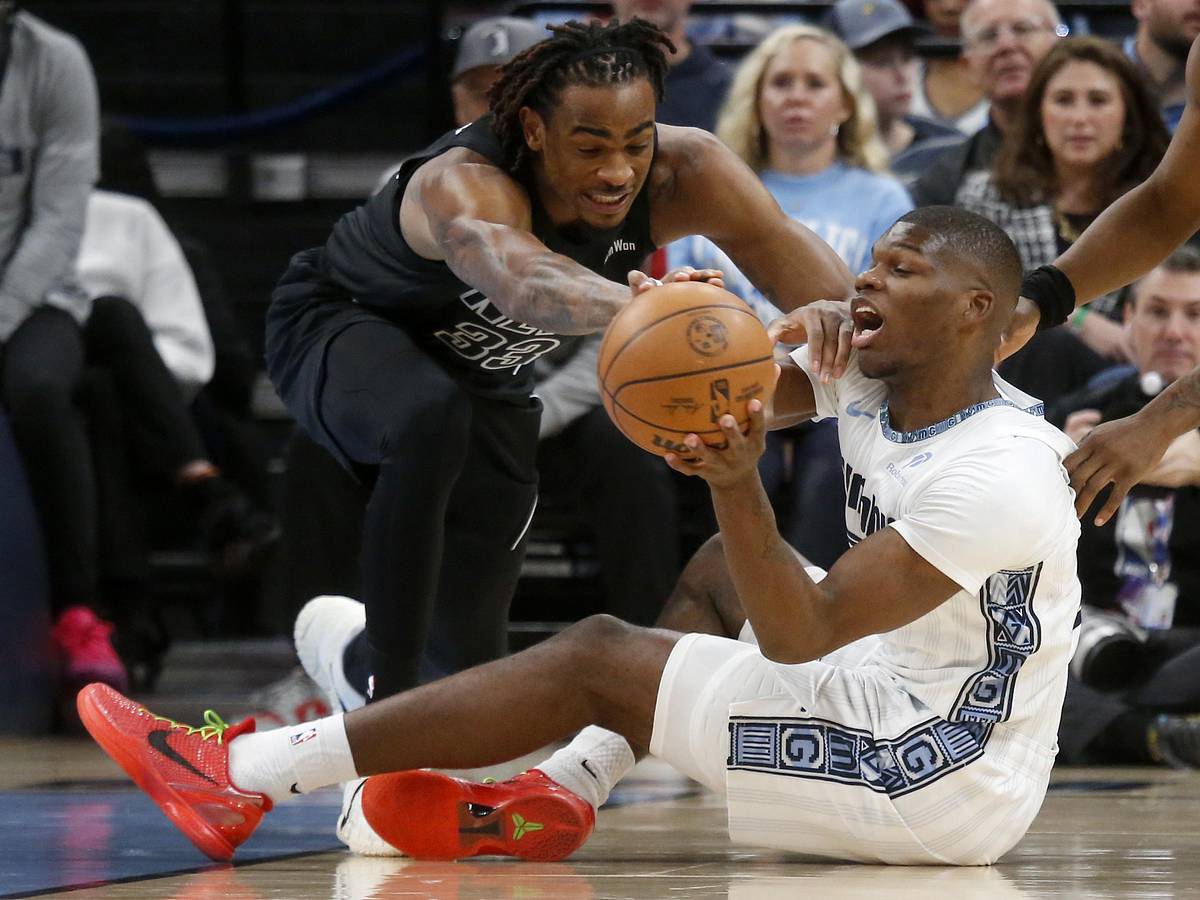
The Nets did have one spell that suggested a more competitive ending was possible. Noah Clowney, Day'Ron Sharpe and Julius Randle gave Brooklyn the kind of activity it had lacked in the opening half. The visitors narrowed the deficit to 85-77 with 5:12 remaining in the third quarter, an eight-point margin that would have transformed the final quarter if they had followed it with two or three solid defensive possessions. Instead, Memphis pulled away and led 103-84 entering the fourth. By early in the last period, the advantage had again grown beyond twenty.
That swing is the key to understanding why a big loss can still contain a misleadingly promising stretch. Brooklyn proved it could score against Memphis when its attackers got downhill and found opportunities near the basket. It did not prove it could string together stops while doing so. A comeback from twenty-plus points demands a different level of precision: no casual passes, no unnecessary fouls, no neglected shooters on the weak side and no sequence that gives the opponent two chances to score. The Nets managed part of that formula for a few minutes and then lost it.
Turnovers underline the problem. Brooklyn gave the ball away sixteen times, and Memphis converted those mistakes into thirty points. That is not simply a ballhandling footnote. Every lost possession is a chance Brooklyn never gets to test the opponent's half-court defense, while many of those mistakes lead directly to transition opportunities against an unbalanced unit. When a team is already chasing a deficit built by accurate three-point shooting, providing extra possessions is especially expensive. Brooklyn's recovery needed to be cleaner than its start; the turnover count shows how much work remained.
GOATIFY
GOATIFY Basketball
The Nets rallied to eight points before Memphis pulled away. Shop GOATIFY Basketball fan designs as the early NBA season develops.

Ben Simmons GOAT - Basketball - Greatest Hoodie
A basketball fan design for everyday wear.
Shop Now ↗
Ben Simmons GOAT - Basketball - Greatest Sweatshirt
A basketball fan design for everyday wear.
Shop Now ↗
Basketball Alien Wemby UFO Abduction Decal
Add basketball personality to your favourite gear.
Shop Now ↗
Crying LeBron – NBA Basketball Muscle Shirt Tank
A basketball fan design for everyday wear.
Shop Now ↗
Stephen Curry G.O.A.T. - Steph Curry Greatest Mug
Add basketball personality to your coffee break.
Shop Now ↗Randle led the Nets with twenty-two points, Sharpe added sixteen and eleven rebounds, and Clowney scored fifteen. Their production deserves to be noted because they were the players who made the third-quarter response credible. The roster context was difficult, too: Brooklyn's leading scorer Michael Porter Jr., who had been averaging 21.5 points and 7.5 rebounds, was absent for personal reasons. He attended the game, and coach Jordi Fernández declined to speculate publicly about his return. Brooklyn also welcomed rookie Mikel Brown Jr. back after two games out, but he managed six points and two assists in twenty minutes. None of those individual circumstances makes the larger team problem disappear.
After the loss, Fernández said Memphis had played harder and pressed his young players to become more consistent. Randle emphasized the missing sense of urgency and the need for better organization and attention to detail. Their comments were not merely reactions to one bad shooting night. Brooklyn fell to 3-9 and had suffered its fifth double-digit loss. A rebuilding team can live with missed jumpers and mistakes from inexperienced players; it cannot simply accept that its defensive concentration comes and goes for entire quarters. The internal standard has to be whether the group makes the next correct play when the previous one goes wrong.
Travel complications should be treated as context, not an all-purpose explanation. The FAA's Friday ground stop forced the Nets to leave New Orleans the following morning, arrive in Memphis around eleven and cancel their normal shootaround. Memphis had also needed a late journey after playing New Orleans the previous evening. Both teams faced a compressed game day. Brooklyn's coach said his group had been safe, rested and able to complete a walkthrough. Given the shared disruption, pointing only to logistics would miss the meaningful contrast: Memphis executed early; Brooklyn was not organized enough to match it for long enough.
Brooklyn returns home to face Philadelphia on Monday, November 16. Memphis heads to Washington that same day. Neither upcoming game will replay the extraordinary travel circumstances, but both will test the lessons from Saturday. The Grizzlies will try to reproduce the passing and depth without relying on another blistering start; the Nets will be looking for the consistent urgency their coach is asking for. Those are more durable indicators than the number of planes that were grounded before tipoff.
Memphis' 129-110 victory was memorable because of the nine early threes, yet the game was decided by more than one hot quarter. Coward and Hendricks supplied efficient finishing when established starters were missing. Spencer and the other role players made Brooklyn choose between covering the ball and covering the next pass. And when the Nets finally made a run, the Grizzlies answered rather than waiting for their shooting to rescue them.
The two clubs arrived in Memphis under the same disrupted travel schedule. Their performances were not equal. For Memphis, the encouraging takeaway is that its depth can sustain a clear attacking identity. For Brooklyn, the urgent question is not whether its young roster can produce five good minutes, but whether it can build forty-eight disciplined ones.
GOATIFY
GOATIFY Basketball
Shop GOATIFY basketball shirts, hoodies and stickers.
Ben Simmons GOAT - Basketball Decal Sticker
Add basketball personality to your favourite gear.
Shop Now ↗
Nikola Jokic G.O.A.T. - Basketball Casual Top Tee
A basketball fan design for everyday wear.
Shop Now ↗

Kareem Abdul-Jabbar G.O.A.T. - Basketball - Sweatshirt
A basketball fan design for everyday wear.
Shop Now ↗

Michael Jordan G.O.A.T. - Basketball Coffee Mug
Add basketball personality to your coffee break.
Shop Now ↗