

Honey Singh at 43: What His Muscular Transformation Says About Building Strength in Your 40s
UPLIFT IRON CLUBHoney Singh’s latest gym photos have attracted attention for an obvious reason: at 43, the rapper looks noticeably leaner, thicker through the upper body and far more muscular than many people expect from a man in his 40s. The useful part of the story, though, is not celebrity genetics or a dramatic before-and-after. It is that the basic machinery of building muscle does not suddenly switch off when you turn 40.
A professional athlete commenting on Singh’s recent physique made the same broad point: people in their 40s can still build an athletic-looking body through serious resistance training, adequate nutrition, sleep, technique and consistency. That is not a promise that everyone can look like a celebrity. It is a reminder that progressive training still works, but the margin for sloppy recovery and reckless programming tends to shrink.
Honey Singh’s transformation is impressive, but the lesson is bigger than one celebrity
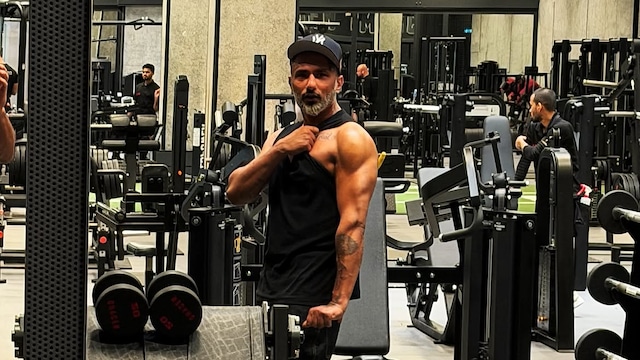
Singh has been documenting a long fitness swing rather than a neat twelve-week makeover. In earlier phases of his career he carried considerably more bodyweight; later he became markedly leaner, and recent posts show a more muscular version again. In September 2026, while preparing for a London Fashion Week appearance, he was publicly showing a lean, muscular gym look rather than simply chasing a lower number on the scale.
That distinction matters. Losing weight and building a better physique are not the same project. A person can become lighter without becoming stronger, more muscular or more athletic. The visual change people are reacting to in Singh is closer to body recomposition: retaining or adding muscle while controlling body fat. For recreational lifters in their 40s, that usually means making resistance training the center of the plan instead of treating weights as a small add-on to dieting and cardio.
The other useful reality check is time. Celebrity transformations are often presented as if one burst of motivation created the result. In practice, muscle is accumulated through months and years of repeated training blocks. Singh’s public fitness history itself is evidence of that longer process. If you are starting at 40, the target should not be to recreate somebody else’s dramatic social-media snapshot. The target is to become measurably stronger and better-conditioned across the next year.
Age is not irrelevant. Tendons and joints may be less forgiving of abrupt workload spikes, years of inactivity can reduce conditioning, and sleep can be harder to protect when adult responsibilities pile up. Those are programming constraints, not proof that muscle growth is over. The more useful question after 40 is how to keep enough high-quality training in the week to progress for years instead of weeks.
Muscle after 40 still responds to progressive overload

The core muscle-building rule remains boringly effective: give the body a training stimulus that it has to adapt to, recover, and then gradually demand a little more. Progressive overload does not mean adding weight to the bar every session forever. It can mean an extra repetition with the same load, better control, a larger safe range of motion, an additional set, or eventually a small load increase.
For a lifter in his or her 40s, the best progression is usually the one that can be repeated without constantly irritating joints or turning every workout into a test day. Most working sets can live one to three good repetitions away from failure. That is hard enough to create a growth stimulus while leaving enough room to repeat the pattern later in the week.
- Track a few anchor lifts. A squat or leg press, horizontal press, row, pulldown or pull-up, hip hinge and overhead press give you clear long-term markers.
- Use rep ranges. If a movement is programmed for 6–10 reps, earn the top end with clean technique before adding load.
- Keep volume recoverable. More sets are useful only while performance and recovery remain good.
- Deload when performance says so. A lighter week is productive when fatigue is masking strength.

The mistake is assuming that training like you are 25 means training harder. A better definition is training with the same ambition but better decision-making. You still need challenging sets. You simply become less willing to waste recovery on ugly reps, ego loading and random exercise changes.
Technique becomes more valuable when recovery is not unlimited

A well-executed set gives you a better stimulus-to-fatigue ratio than a sloppy one. That phrase matters more with age. If a chest press creates excellent pec tension but minimal shoulder irritation, it is doing more useful work than a heavier version that turns into a full-body wrestling match. The goal is not to make training soft; it is to make the hard work land where you intended.
Warm-ups also become more specific. Five minutes of movement can raise temperature, but the best preparation for a heavy lift is usually several progressively heavier practice sets of that lift. Start light, rehearse the range of motion, then climb toward working weight without exhausting yourself. Add mobility drills only when they address an actual restriction.
Exercise selection should be similarly pragmatic. A barbell back squat is excellent if it agrees with you. If a hack squat, safety-bar squat or leg press lets you train the target muscles harder with less joint annoyance, there is no medal for choosing the more traditional option. The same logic applies to dumbbell presses, chest-supported rows and machines. Muscle does not care whether an exercise looks hardcore; it responds to tension and progression.
Protein and calories have to support the physique you are trying to build

Singh’s preparation emphasizes the same nutrition fundamentals that work for ordinary lifters: sufficient protein, sensible calories, balanced carbohydrates and fats, and consistency. A leaner, more muscular look is difficult to build if the diet swings from aggressive restriction to uncontrolled overeating every few days.
For most people, a useful protein target is roughly 1.6 grams per kilogram of bodyweight per day, with somewhat higher intakes sometimes useful during a calorie deficit. You do not need to hit an exact number at every meal. Spreading protein across three to five meals tends to make the daily target easier and gives each meal a meaningful dose.
Calories depend on the starting point. If you have substantial body fat to lose, a moderate deficit combined with progressive lifting can improve body composition without crash dieting. If you are already relatively lean and want more size, a small surplus is more appropriate. People returning to training after a long break can often regain muscle surprisingly well around maintenance calories because muscle memory gives them an unusually favorable window.

Carbohydrates are not the enemy here. They support training quality, particularly when sessions involve multiple hard sets. Dietary fat also matters for health and makes meals sustainable. The strongest plan is usually less dramatic than the internet version: protein at each meal, mostly minimally processed foods, enough carbs to train hard, portions that match the goal, and the patience to let the trend develop.
Recovery is the part of 40-plus training you cannot bluff

Sleep, rest days and fatigue management are not glamorous, but they decide whether progressive overload actually continues. The problem is not that a 43-year-old automatically needs to train less than a 23-year-old. The problem is that a 43-year-old often has more total stress: work, family, travel, inconsistent sleep and years of accumulated aches. Training has to fit inside that larger recovery budget.
A practical default is to give the same muscle roughly 48–72 hours before demanding another hard session from it. That does not mean complete inactivity between sessions. Walking, easy cycling, light mobility and low-intensity cardio can improve general fitness without creating another large recovery bill.
Look for patterns rather than obsessing over one bad day. If loads and repetitions fall for several sessions, motivation crashes, joints ache more than usual and sleep deteriorates, reducing training volume for a week is smarter than trying to out-discipline accumulated fatigue. Recovery is not a retreat from progress. It is what allows the next productive training block to happen. If you can finish a hard week and still arrive at the next one eager to train, your recovery strategy is probably doing its job.

A realistic four-day muscle plan for your 40s

The best program is not a masters routine that treats 40 as old age. It is a normal hypertrophy-and-strength plan with enough frequency to progress and enough space to recover. Four days per week works well for many people because each muscle can be trained twice without turning the calendar into a full-time job.
| Day | Focus | Example work |
|---|---|---|
| Monday | Upper A | Bench or machine press, row, pulldown, lateral raise, curls, triceps |
| Tuesday | Lower A | Squat pattern, Romanian deadlift, leg curl, calves, abs |
| Thursday | Upper B | Incline press, chest-supported row, overhead press, pulldown, arms |
| Saturday | Lower B | Leg press or hack squat, hinge or hip thrust, split squat, leg curl, calves |
Start most exercises with two or three hard working sets. Add volume only when recovery and progression justify it. Two short cardio sessions can sit after upper-body training or on separate days, while daily walking handles much of the low-intensity conditioning work. This is enough structure to build muscle without making fitness compete with the rest of your life.
One more point matters when a celebrity transformation is involved: there is no need to copy an unverified diet, supplement stack or rumored drug protocol. The visible result does not tell you what somebody used, and speculation is not a training plan. For most recreational lifters, the highest-return variables are still brutally simple: repeatable lifting, enough protein, appropriate calories, good sleep, cardiovascular fitness and a program that does not injure you.
Honey Singh’s current look is a useful attention-grabber, but the takeaway is refreshingly ordinary: forty is not a deadline. Strength training still works. Protein still matters. Sleep still matters. Progressive overload still matters. The person who repeats those basics for a year has a much better chance of looking athletic than the person who keeps restarting an extreme transformation every six weeks.

Bodybuilding Shirts & Gym Gear
Funny bodybuilding shirts, pump covers and gym gear for lifters chasing strength and muscle.
EXPLORE COLLECTION










