

Harper Saved the Spurs' 12th Straight. Utah Almost Stole It.
GOATIFYSan Antonio's 12th consecutive victory looked certain only after it had spent most of the fourth quarter proving how easily a winning streak can slip away. On November 15, 2026, the Spurs left Salt Lake City with a 110–102 win over Utah, but not before the Jazz had turned a nine-point deficit into another tense closing stretch. Dylan Harper supplied the answer: 31 points, consecutive late three-pointers and the kind of controlled aggression that can make a developing team look older than its calendar says it should.
Victor Wembanyama remained the defensive reference point, Stephon Castle supplied the late steal and decisive dunk, and Keldon Johnson made two vital contributions around the basket. But this was not a simple case of San Antonio's stars cruising past a struggling opponent. Utah brought real pressure, led by Mo Bamba's perfect six-for-six shooting from beyond the arc, and repeatedly found ways to interrupt the visitors' rhythm.
The result gave San Antonio a 12–2 record and sent Utah to its own 12th consecutive defeat. Those matching streaks are the headline. The useful story is buried in the way they happened: one team kept creating another option when its first plan stalled; the other built a legitimate upset chance but could not close the final possessions. That distinction matters much more than the eight-point margin.
Harper turned a nervous fourth quarter into his game
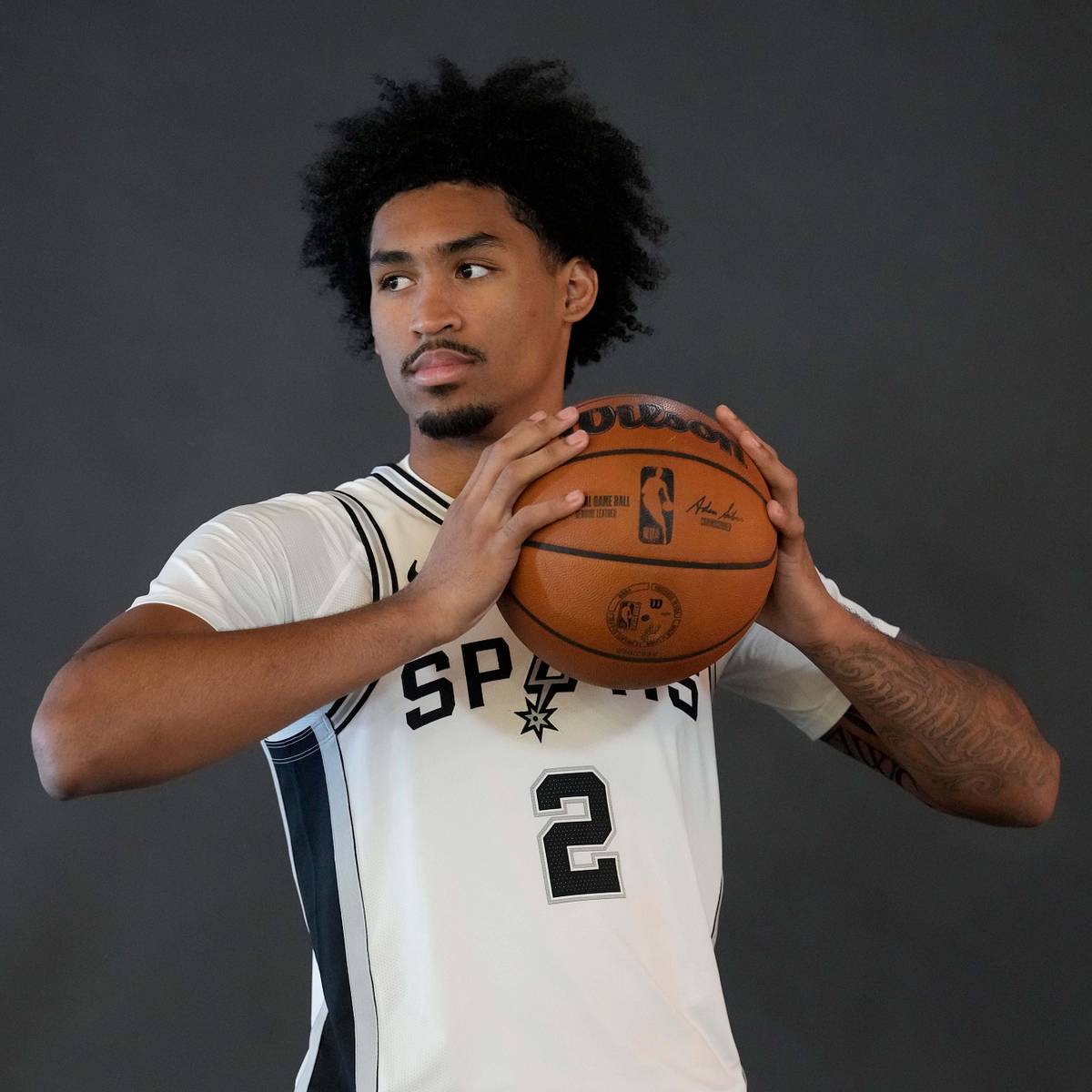
San Antonio entered the final period tied 81–81. The number itself tells you how little comfort the visitors had earned. They had briefly opened a meaningful gap in the third quarter, then allowed Utah to undo the advantage with an outside-shooting burst. Once the Jazz began edging in front again, San Antonio faced a question that good early-season records do not answer on their own: who could create a reliable shot when the system stopped generating easy ones?
Harper responded by attacking the moments when a defense is most vulnerable to hesitation. He was not merely collecting points while the outcome had been decided. With the Spurs trailing late, he hit back-to-back threes to pull them level at 100. That sequence forced Utah to reset from playing with a lead to protecting a tie, precisely when every switch and help rotation carries a greater cost. San Antonio then moved ahead on Castle's free throws. The lead was earned possession by possession rather than handed over.
The scoring totals explain the evening, but the distribution of the points explains the pressure. Harper was responsible for 16 of San Antonio's final 24 points, a concentration of offense that made his individual choices unusually important. A confident attempt late in a close game is not automatically a good attempt. What makes the run impressive is that San Antonio needed the possessions to produce something and Harper repeatedly gave the defense a new problem to solve.
That skill matters for a second-year guard growing alongside one of the sport's most unusual centers. Harper can reach useful areas off the bounce, manipulate a defender who expects him to drive and punish a late closeout with a shot instead of automatically searching for a pass. The Jazz had seen him earlier in the season, yet their familiarity did not remove his ability to alter the final few minutes. His progress is not measured only by the 31 next to his name. It is in his willingness to act when the margin is narrowest.
GOATIFY
GOATIFY Basketball
Harper's hot hand is exactly why basketball fans love a breakout performance. Browse GOATIFY Basketball shirts, hoodies and gifts.


Michael Jordan – Free Throw Line Dunk Sweatshirt
A basketball fan design for everyday wear.
Shop Now ↗
Basketball Screaming Alien Wemby Sci-Fi Decal Sticker
Add basketball personality to your favourite gear.
Shop Now ↗
LeBron James – LeGOAT Basketball Muscle Shirt Tank
A basketball fan design for everyday wear.
Shop Now ↗
Fat Luka Doncic Los Angeles Lakers NBA Mug
Add basketball personality to your coffee break.
Shop Now ↗There is also a necessary restraint in the verdict. One fourth quarter cannot prove that Harper should dominate every late possession, nor should the Spurs turn a varied offense into a permanent one-man audition. Wembanyama changes defensive geometry, Castle is a forceful downhill option and other guards can organize the half court. Harper's performance makes the menu larger. It does not require the kitchen to throw everything else out.
The more convincing takeaway is role flexibility. When Wembanyama draws several eyes and the ball finds Harper, the opponent cannot assume that possession will end in a reset. The young guard can finish it. In a postseason-style moment, the difference between another dependable creator and another player who needs the ball delivered in a perfect spot can decide an entire series. San Antonio got a small but revealing demonstration of that principle in Utah.
Wembanyama's presence kept the comeback within reach
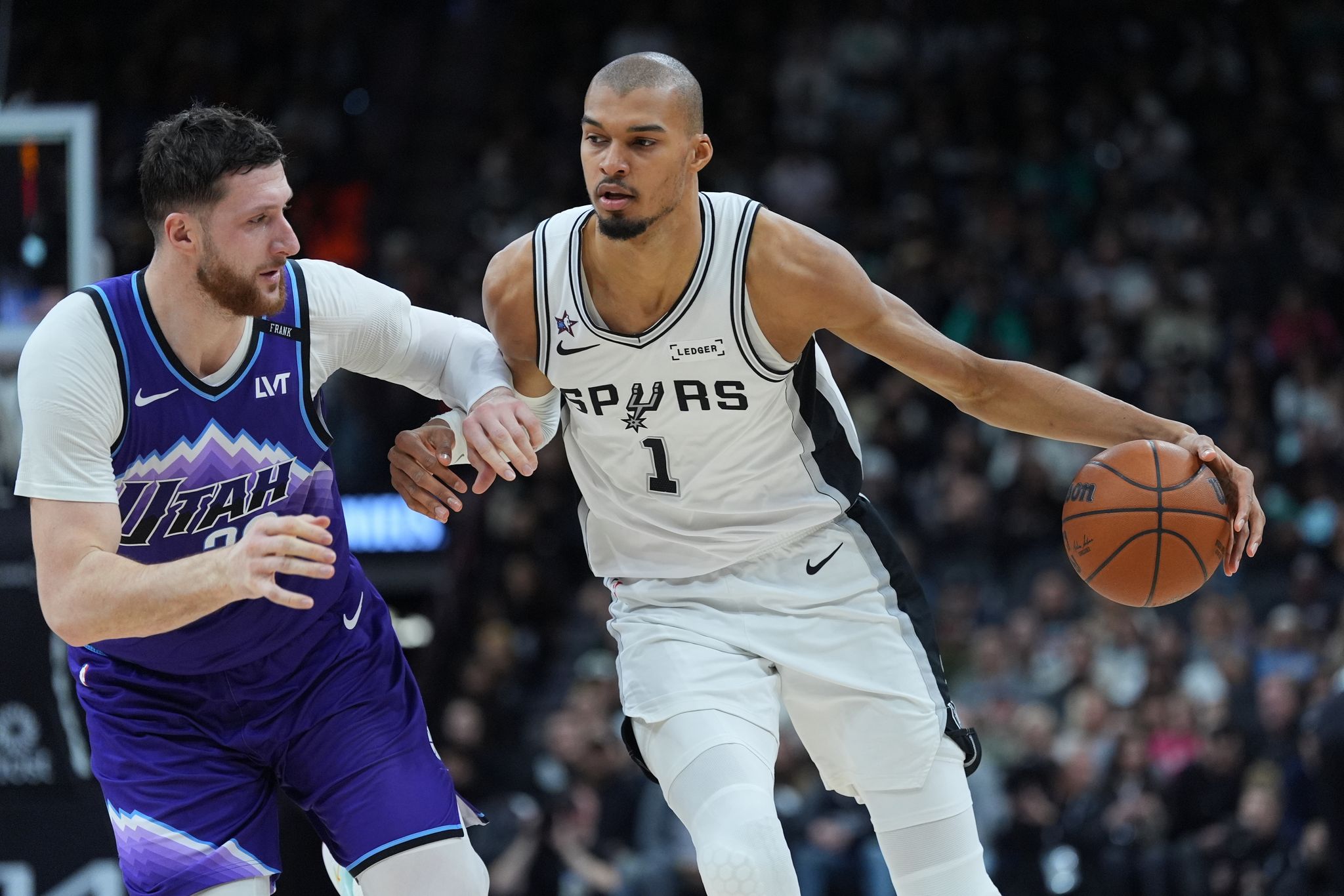
Any account of Harper's fourth-quarter heroics that treats Wembanyama as a bystander misses San Antonio's basic advantage. The Spurs are allowed to take chances on the perimeter because there is an extraordinary amount of height and recovery time waiting behind those choices. Defenders can pressure a passing angle or contest a shot knowing that a beaten first line does not always mean a layup. That luxury makes the entire perimeter group look more aggressive.
In this game, the size advantage did not automatically produce a comfortable victory. Utah's centers and wings spaced the court, and Bamba in particular made the Spurs pay for giving him a clean look. Wembanyama had to help against drives while keeping track of the big man who was hitting from distance. This is the difficult version of his job: erase mistakes without abandoning shooters who are performing well above their usual volume. There is no defensive scheme that turns every such choice into a guaranteed stop.
His value showed in the ending, when San Antonio needed an intervention rather than another beautiful offensive possession. After a late Wembanyama fadeaway, he challenged a Keyonte George attempt near the rim and blocked it. Johnson kept the resulting play alive, later grabbed another rebound at the offensive end and scored. A highlight reel can cut these into separate moments. In the game, they were connected: a contested shot became a stop, and the next possession became points that Utah could no longer casually answer.
The obvious temptation is to read every Wembanyama block as another isolated individual achievement. The deeper effect is what it does to the other team's shot selection. Drivers begin pulling up early or seeking a passing angle that might not be there; big men have to think about where he is before turning to shoot. Even when he does not touch the ball, the calculation can become less comfortable. Against a Jazz team that had found plenty of good shots, San Antonio needed exactly that uncertainty late.
The combination with Harper has an interesting tactical consequence. A guard willing to shoot at the end of a clock can survive a miss more easily when his team has an elite defensive recovery mechanism. Conversely, Wembanyama's blocks are more valuable when the next offensive possession is handled with confidence instead of hesitation. This is not an excuse for wild shot selection; it is a description of why the pairing may become unusually difficult to outlast.
GOATIFY
GOATIFY Basketball
From rim protectors to crafty creators, celebrate the game's different styles with the GOATIFY Basketball collection.

Kobe Bryant – Mamba Mentality Locker Room Hoodie
A basketball fan design for everyday wear.
Shop Now ↗
Basketball Alien Wemby UFO Abduction Design Sweatshirt
A basketball fan design for everyday wear.
Shop Now ↗
Wemby G.O.A.T. - Victor Wembanyama Basketball Tee
A basketball fan design for everyday wear.
Shop Now ↗


Victor Wembanyama Alien Wemby NBA Basketball Mug
Add basketball personality to your coffee break.
Shop Now ↗San Antonio's 12–2 start is still an early-season sample. Opponents will find ways to drag Wembanyama away from the basket and challenge the Spurs' rotations, especially if the team's point-of-attack defense breaks down. Yet the Utah finish offered a useful answer to a familiar question about star-heavy teams: does everything collapse when the top scorer isn't personally making every basket? Here the defensive star helped create the conditions for another player to win the offensive battle.
Castle and Johnson supplied the possessions that do not trend
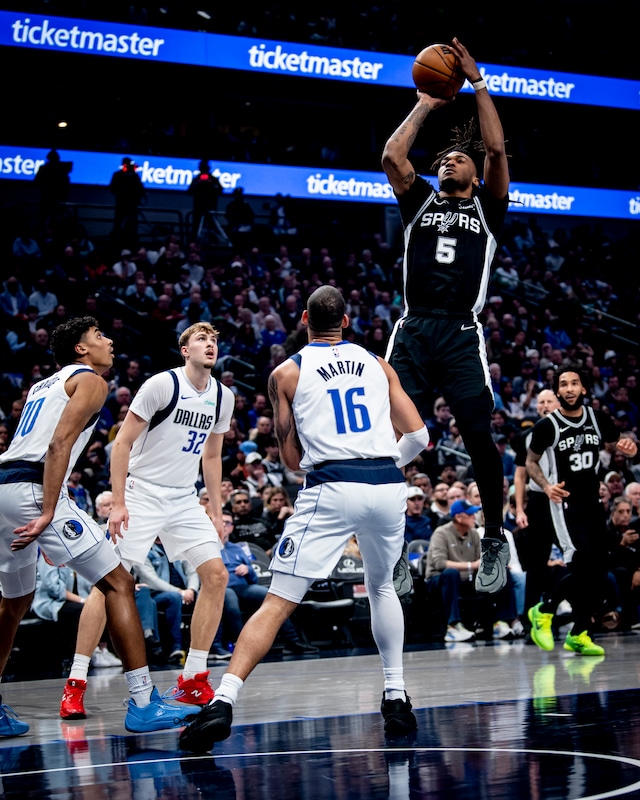
The final score will attach itself to Harper's name, but the game did not become an eight-point win through scoring alone. After Harper tied it, Castle made two free throws to put the Spurs in front. With 47.2 seconds left, he stole the ball and dunked, stretching the margin to 108–102. That is a compact description of why a guard who can score, defend and apply pressure on the break can remain useful even when someone else has the hot hand.
Castle's contribution was not limited to that steal. His 20 points and nine assists reflected the different ways he could affect possessions across the game. The ability to pass into advantage matters when a defense overcommits to the most obvious threat; the ability to finish matters when the pass is not there. A high-volume creator needs teammates who understand that difference, because too many players waiting to watch a hero ball-handler can make even a talented offense static.
Johnson offered another kind of correction. His 11 points and ten rebounds do not compete with Harper's scoring burst for attention, but his decisive work on the glass was the kind of effort that changes a close-game equation. A shot can be contested beautifully and still leave a loose ball; a defensive rebound can turn into a scramble; an offensive board can remove the opponent's last practical chance. Johnson's activity at both ends converted individual plays into completed possessions.
The third-quarter surge also showed the value of that balance. A pair of Johnson baskets helped San Antonio build a lead, and his pass set up Luke Kornet for an alley-oop during a 10–0 run. It was not a quarter of flawless Spurs basketball. Utah answered, and the lead disappeared. But San Antonio had several ways to generate momentum without demanding that Wembanyama force every finish or that Harper produce a difficult jumper on every trip.
One of the game's clearest team-wide contrasts was the fast-break scoring: the Spurs held a 27–5 edge. Those 22 extra points did not materialize from a single superstar skill. They came from pressure, rebounding, decisions and the willingness to move before the defense became organized. In a half-court contest, eight points might feel like an enormous distance; when one team turns stops into open-floor chances and the other does not, that distance can be covered quickly.
The bigger point is that winning streaks are usually built by role clarity more than by one perfect night. One player carries the shot creation, another makes the essential defensive play and a reserve survives the minutes when a starter is resting. De'Aaron Fox's absence in this matchup provided another test of that depth, not proof that the Spurs never need him. A healthy roster will give coach Mitch Johnson decisions about minutes and hierarchy. This win demonstrated that several young guards can contribute to the same positive result without all asking for the same job.
GOATIFY
GOATIFY Basketball
Castle's steal and Johnson's extra possessions helped San Antonio finish the job. Explore basketball-themed apparel and gifts from GOATIFY.

Magic Johnson G.O.A.T. - Basketball Decal Sticker
Add basketball personality to your favourite gear.
Shop Now ↗

Magic Johnson G.O.A.T. - Basketball - Greatest Hoodie
A basketball fan design for everyday wear.
Shop Now ↗

Magic Johnson G.O.A.T. - Basketball Casual Top Tee
A basketball fan design for everyday wear.
Shop Now ↗
Kevin Durant G.O.A.T. - Basketball Coffee Cup Mug
Add basketball personality to your coffee break.
Shop Now ↗Utah's 12th loss was more competitive than the streak suggests
Utah will not celebrate a 12th straight defeat, and it should not pretend that an entertaining loss is the same thing as progress that has already been secured. But this particular opponent gave the Jazz a genuine chance to change the narrative. The Spurs arrived with eleven consecutive wins, recent confidence and an enormous defensive presence. Utah led at several points, erased deficits and entered the last quarter level. That is a much harder assignment than the standings made it look.
Bamba was the most unusual problem on the floor. He finished with 26 points and made all six of his three-point attempts. A center shooting perfectly from distance pulls a rim protector toward spaces he would rather leave to guards and wings. If San Antonio stayed close to the basket, Bamba had open room to fire. If it followed him out, Utah could try to attack a lighter interior. That dilemma is part of what made the matchup so uncomfortable for the visitors, especially when the Jazz began stringing threes together.
Rookie Darryn Peterson added 17 points, with several important possessions helping Utah answer San Antonio's runs. George contributed 13 points and eight assists, and Sensabaugh supplied 14 points and seven rebounds from the bench. That is not the empty stat sheet of a team with no offensive ideas. It is evidence of several players capable of making difficult shots or keeping an offense moving even when its more established options are unavailable.
The season context matters. Utah has been operating without Lauri Markkanen, whose right-hand injury disrupted a roster already trying to find reliable combinations. An undermanned team can still create advantages for stretches, but sustaining them in the last two minutes is a different requirement. Against San Antonio, defensive possessions ended with extra Spurs chances, Harper found room to make consecutive threes and Castle turned a mistake into an emphatic dunk. The margin between competing and finishing remained visible.
A perfect six-for-six from deep by a center is not an offense any team can plan to reproduce every night. When shots are falling that efficiently, coaches need to translate the temporary advantage into enough stops, rebounds and structured possessions to withstand the inevitable cooling. Utah nearly did. The late breakdown does not erase the trouble it caused. Yet it points to why long losing streaks persist even when the individual performances inside them look respectable.
The next tests will have different stakes. San Antonio heads home to face Detroit, where another physical opponent can probe the guards' decisions and the team's spacing. Utah travels to face the Clippers still searching for a finish that rewards its competitive stretches. For both, the fourth quarter in Salt Lake City is a more useful study than the streak column. It showed which possessions each team could trust when its normal offensive script began to fray.
The numbers read like opposites: 12 wins in a row for the Spurs, 12 losses in a row for the Jazz. Yet for much of Sunday the actual basketball was played on a knife-edge. Utah had enough shotmaking to threaten an upset; San Antonio had enough individual brilliance and collective defensive effort to protect the win when its lead vanished.
Harper's 31 points and late threes will take the headlines, rightly. Wembanyama's rim protection, Castle's steal, Johnson's rebounding and an overwhelming fast-break advantage are what made those shots count toward another victory. This was not the night San Antonio looked invincible. It was the night the Spurs showed they can be vulnerable for three quarters and still find the right people, in the right sequence, to win the fourth.
GOATIFY
GOATIFY Basketball
Shop GOATIFY basketball shirts, hoodies and stickers.

Lauri Markkanen GOAT - Basketball - Greatest Sweatshirt
A basketball fan design for everyday wear.
Shop Now ↗

Lauri Markkanen GOAT - Basketball Decal Sticker
Add basketball personality to your favourite gear.
Shop Now ↗

Lauri Markkanen GOAT - Basketball Casual Top Tee
A basketball fan design for everyday wear.
Shop Now ↗



















