

White Would Run Harrison–Nunes Back. But Where Is the 145-Pound Division?
GOATIFYThe night after Kayla Harrison submitted Amanda Nunes, the UFC's biggest women's rivalry acquired a strange new question: not whether the champion had won, but whether their next fight might need a weight class that barely exists. Harrison retained the bantamweight title at UFC 334 on November 14, 2026, finishing the returning former two-division champion with a fourth-round rear-naked choke in New York. That should have settled the matchup, at least for now. Instead, Dana White has left room for a sequel at 145 pounds.
Asked at the post-fight press conference about an immediate featherweight rematch, White answered, “I'd do it again.” It was an expression of willingness, not a contract announcement. There is no confirmed date, no signed fight and, crucially, no active UFC women's featherweight title for anyone to win. Harrison herself has spoken about the physical cost of cutting to 135 and the possibility of walking away, while Nunes has not committed to another comeback bout.
That makes the prospective rematch a more complicated story than the familiar promotional promise of unfinished business. Harrison already won convincingly. The UFC must decide whether a second fight solves a sporting problem, a weight-management problem, a commercial problem—or merely creates a new championship with no division to defend it in.
White Opened the Door, Not a New Division
A short answer from the UFC chief executive can travel faster than the details surrounding it. White was asked a hypothetical: would he stage Harrison against Nunes again at featherweight? He indicated he would. That does not establish that both fighters want the fight, that contracts have been offered, or that the promotion is formally bringing back a division. Those are three separate decisions and none follows automatically from a press-conference exchange.
There is an obvious business case for keeping the option alive. The first meeting was billed as a confrontation between an Olympic judo great turned MMA champion and a former double champion widely considered one of women's MMA's defining fighters. A comeback attempt by Nunes gave the matchup a sense of historical scale rather than the feel of an ordinary mandatory challenger. Harrison's submission produced a clear winner, but it did not erase public curiosity about whether Nunes could perform differently in a second camp or whether Harrison could dominate at a heavier weight.
A rematch can also be sold around a single visible change: ten additional pounds on the scale. That is a simple hook, especially when Harrison has repeatedly described the bantamweight cut as brutal. Yet the fighters would have to compete at 145 because it makes sense competitively, not simply because the number helps market the sequel. If Nunes loses a second time, the event may provide closure; if Nunes wins, the UFC could be left looking at a trilogy and an unpopulated division.
GOATIFY
GOATIFY UFC & MMA
See original GOATIFY MMA fan apparel and fight-night designs while White's potential 145-pound rematch generates debate.


MMA GOAT Gold Middle Finger Fight Crewneck Sweatshirt
A MMA fan design for everyday wear.
Shop Now ↗

UFC GOAT Gold Middle Finger Fight Decal Sticker
Add MMA personality to your favourite gear.
Shop Now ↗There is a reason the word 'open' matters here. Promoters often discuss possible opponents in the excited aftermath of a major event. Medical assessments, recovery, negotiation and the athletes' personal preferences come later. Harrison has reported injuries and said she needs time to make decisions at home. Nunes was coming back after more than three years out and has not publicly pledged another fight following the loss. Treating White's comment as a confirmed booking would get the chronology backward.
So the immediate development is narrow but meaningful: the organization is not dismissing the idea. A champion who has just beaten her challenger does not normally need to prove herself in a sequel. This version would have to be justified by conditions that were not present in the first fight—and by two fighters choosing to step back into it.
The Fourth-Round Choke Changed the Rematch Argument
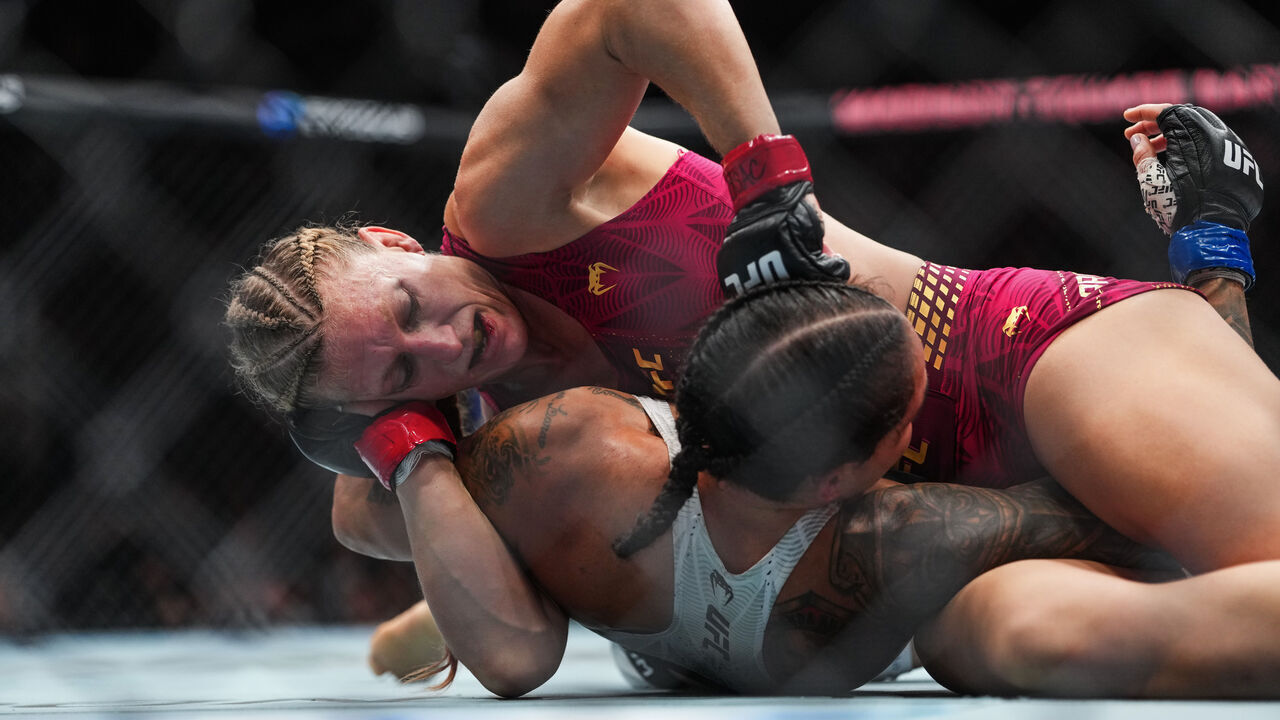
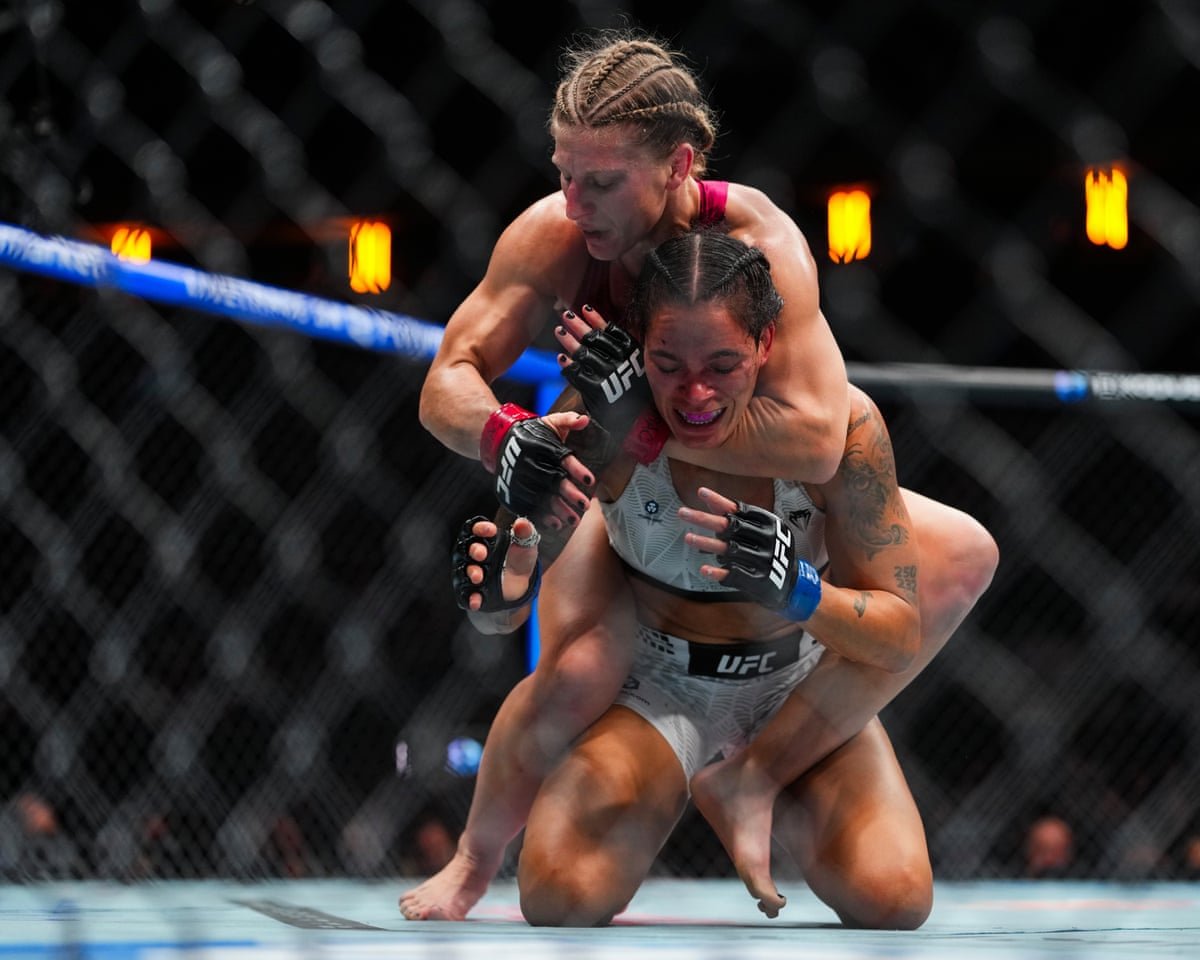
The strongest objection to a quick rematch is written into the official result. Harrison submitted Nunes at 1:29 of round four with a rear-naked choke. It was not a controversial split decision, an accidental foul or a stoppage that left the winner uncertain. The champion used her best area—close-range control and grappling—to end the contest decisively. Whether that proves she would win every meeting is unknowable, but the first meeting did produce the kind of finish normally expected to send a champion toward a fresh challenger.
The match itself was not a four-round procession. Nunes found room to box from distance and showed moments of success against Harrison's forward pressure. That matters because it provides a plausible technical pathway for a more competitive second fight. Striking on entry, choosing when to disengage and staying off the fence would all feature on a responsible rematch game plan. Those are possible adjustments, not evidence that a different outcome is due.
Harrison's route to victory is equally clear. As the range closed, her ability to move an opponent from the clinch to top position became the central problem. Nunes had offensive moments and even reversed positions, but Harrison repeatedly kept the fight in grappling phases that favored the judoka. In the fourth, she took Nunes's back and completed the choke. The mechanism was not a lucky punch in a chaotic exchange; it was an extension of a sustained battle for control.
Moving up a weight class does not erase either fighter's technical habits. If Harrison reaches 145 without the same final cut, she might feel better prepared to sustain pressure, but that remains a projection until it is tested. Nunes would also have the opportunity to prepare for the same opponent with more recent cage experience under her belt. A second camp could be useful after a three-year retirement, although an extra ten pounds does not by itself create a tactical answer to the clinch.
GOATIFY
GOATIFY UFC & MMA
From grappling to championship striking, explore GOATIFY UFC and MMA shirts, hoodies and stickers for fans of both fighters.


This is why the rematch argument should not turn into an exercise in rewriting UFC 334. Harrison's victory deserves its full weight. Nunes's career deserves its historical respect. A sequel could be intriguing because both still have meaningful choices and adjustments available, not because Saturday night's submission somehow failed to count. In a sporting sense, the challenger—not the champion—would need to demonstrate why the same pairing merits immediate repetition.
The Missing 145-Pound Title Is the Real Complication

The UFC once presented Nunes as champion at both 135 and 145 pounds. She retired in June 2023 while holding the bantamweight and featherweight championships. The 145-pound women's category did not develop into the kind of continuous title race fans recognize elsewhere in the promotion. No new featherweight champion was crowned after her retirement, and there is no established, current UFC women's featherweight ranking or regular queue of contenders.
Harrison had floated an automatic 145-pound rematch before UFC 334 and spoke about taking the other belt. It is a powerful line for a fight promotion, but the wording moves faster than the competitive infrastructure. To award a featherweight championship now, the UFC would have to make an explicit choice about reinstating that title. White's post-fight willingness to stage a rematch did not include such an announcement. A fight scheduled at featherweight and a title fight for a revived featherweight belt are different products.
There is also a practical matchmaking question. If Harrison and Nunes contest a one-off championship at 145, who is next? A division needs more than two famous names. It needs athletes regularly competing at the weight, credible routes to contendership and a plan for defenses if a champion does not retire. Creating a belt for one event and then leaving it idle again might deliver a spectacular headline while doing little to establish a sustainable women's featherweight division.
The counterargument is that a genuinely high-profile event can give a dormant division a first reason to rebuild. A crossover star in Harrison and a returning legend in Nunes are unusually capable of attracting attention from fighters who currently compete in neighboring divisions or outside the UFC. Such a strategy would need recruits, announced competition and future bookings, not merely social-media demand. It should be judged against the athletes the promotion actually signs and schedules.
For Harrison, 145 carries an obvious individual attraction independent of belts. She spent years fighting in heavier categories before competing at UFC bantamweight, and the final stretch to 135 has become part of her public story. A higher limit could remove some of that burden. But even if her next contest lands at featherweight, fans should resist treating an organizational championship as automatic. The more honest conversation is whether the UFC wants a sustainable division or simply a special event between two extraordinary fighters.
Harrison and Nunes Still Have to Say Yes

Neither athlete's next career decision was made during White's media scrum. Harrison emerged from UFC 334 with the belt, a huge historical win and physical issues to address. She said she had decisions to make at home and that she needed time to recover from injuries. Since a champion cannot train, negotiate and perform a safe weight cut by headline alone, recovery and medical clearance would need to come before any credible timetable. Any exact date proposed now would be conjecture.
GOATIFY
GOATIFY UFC & MMA
The featherweight title debate will keep fight fans talking. Browse GOATIFY's MMA-inspired graphics and fan gear.

Rogainz Joe Rogan UFC MMA Martial Arts Sticker
Add MMA personality to your favourite gear.
Shop Now ↗Her public remarks also leave room for a genuine ending. The two-time Olympic judo champion has collected major accomplishments across judo, the PFL and now the UFC. She has previously suggested she could leave combat sports satisfied with what she achieved. Winning over Nunes might increase her desire for one last major challenge, or it might remove the last reason she had to keep competing. Those opposite interpretations are precisely why her own next decision matters more than promotional enthusiasm.
For Nunes, UFC 334 was the first fight after a retirement that began in June 2023. The result raises a different set of questions. Does she want a second camp and a chance to correct the grappling mistakes, or was the return designed around the opportunity to face Harrison once? At 38, a lengthy absence followed by a difficult fourth-round defeat makes commitment a personal sporting judgment. No credible report has established that she has accepted a rematch or that another retirement announcement is imminent.
There are competitive alternatives, too. If Harrison remains at bantamweight, the normal structure would be to evaluate the next eligible contenders in a live title picture rather than immediately book the same opponent. If she prefers featherweight, the promotion can explore a non-title matchup or recruit enough competition to justify a proper division. For Nunes, a fight outside a championship pairing would require its own rationale after such an enormous comeback. None of these possibilities has yet been agreed.
Fans may understandably want the sequel. The personalities, contrasting styles and potential change of weight make it intriguing. But the most important next information will be straightforward: statements from both fighters, an update on Harrison's recovery, an official proposed weight and clarity on whether a 145-pound championship is being revived. Until those facts arrive, White has floated an option—not resolved a sports calendar.
The UFC could eventually market Harrison–Nunes II as a rematch, a new title fight, a final chapter or the launch of a revived division. At the moment those are four distinct possibilities, not four descriptions of the same confirmed event. Dana White said yes to considering another meeting at 145 pounds. He did not announce a new women's featherweight champion, a contract or a date.
That distinction should survive the noise after UFC 334. Harrison owns the clean first victory; Nunes owns one of the sport's defining résumés. Any second fight would need both women healthy and willing, and a real answer to what the weight class represents. Until then, the most defensible headline is the simplest one: the door is open, but the ring on the other side has not been built.
GOATIFY
GOATIFY UFC & MMA
Shop GOATIFY UFC and MMA shirts, hoodies and fight fan gear.
UFC GOAT Gold Middle Finger Fight Decal Sticker
Add MMA personality to your favourite gear.
Shop Now ↗MMA GOAT Gold Middle Finger Fight Crewneck Sweatshirt
A MMA fan design for everyday wear.
Shop Now ↗


















