

Lawson's P8 Erased: Mexico Disqualification Sends Racing Bulls Driver to Last
GOATIFYLiam Lawson had done the hard part. At a circuit where the midfield was separated by fractions of a second, the Racing Bulls driver had put his car eighth in qualifying for the 2026 Mexico City Grand Prix, ahead of team-mate Arvid Lindblad and a crowded pack of rivals. A penalty from Friday practice meant he was already expecting to start ninth. Then, after the session was over, the entire result disappeared.
Stewards disqualified Lawson from qualifying for an electrical power-deployment infringement on his fastest Q2 lap. Racing Bulls argued that the breach brought no competitive advantage and had itself reported the problem, but neither point saved the classification. The New Zealander now faces Sunday's race from the rear of a 22-car grid rather than from the front of the midfield. That is a brutal swing in track position, especially on a weekend when every point matters to the team and every convincing drive matters to Lawson's future.
From Eighth to Last: The Qualifying Result That Vanished
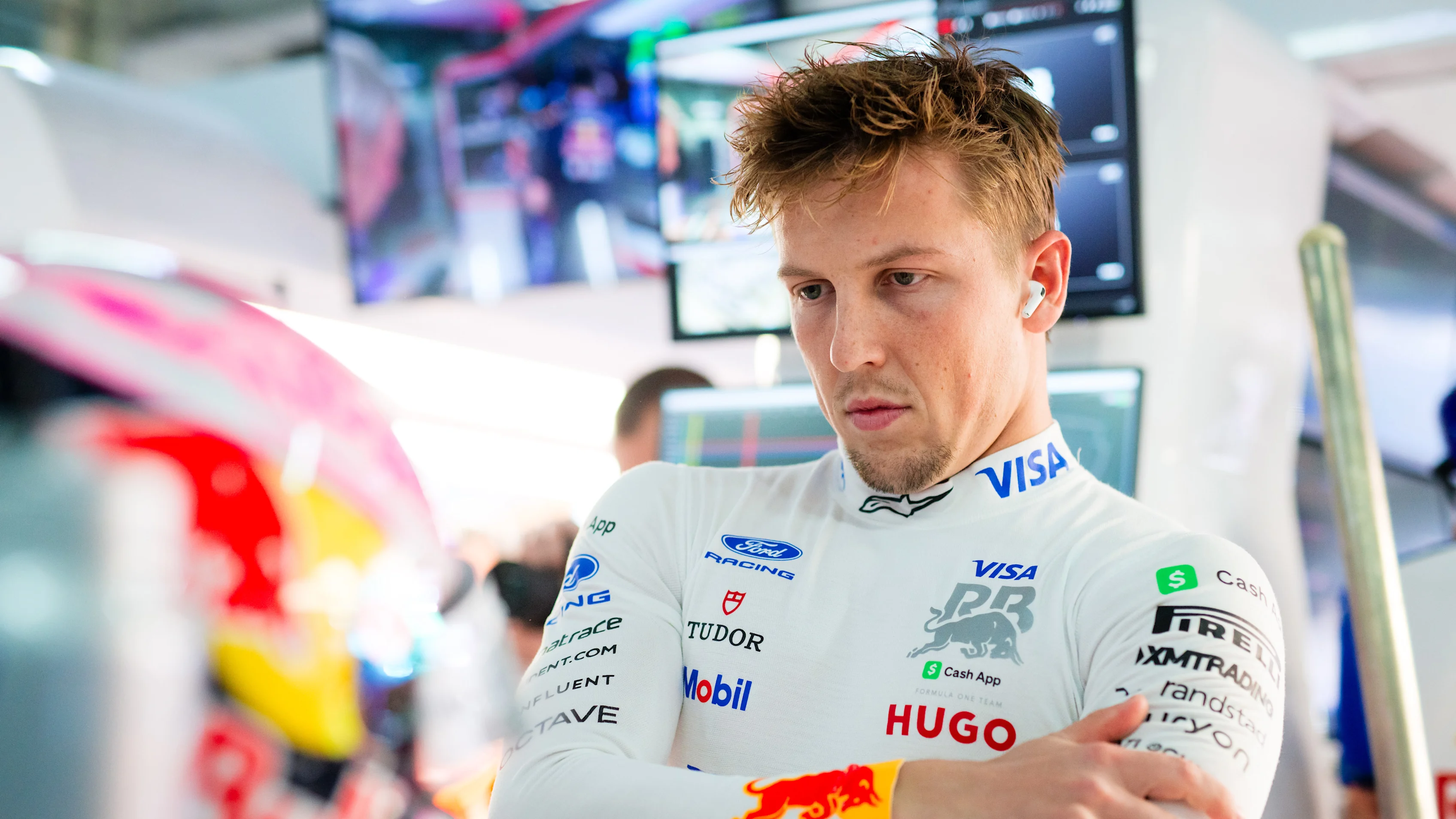
Before the technical ruling, Saturday looked like a genuine success for Racing Bulls. Both drivers had reached Q3, an outcome that requires pace, clean execution and enough tyre performance to survive two extremely tight elimination rounds. Lawson's 1:17.029 placed him eighth on the timing sheet; Lindblad's 1:17.117 put the second car ninth. The gap between them was just 0.088 seconds. In a midfield where that margin can change several positions, getting both cars through was significant.
Lawson was not actually going to line up eighth. He had already received a one-place grid drop for contact with Max Verstappen during Friday's second practice session. The expectation after qualifying was therefore a ninth-place start, with Lindblad moving ahead. That was a manageable punishment. Lawson would still have been close to the points, close to his team-mate and well positioned to take advantage of incidents among the frontrunners.
The post-session investigation changed the entire equation. Instead of a single-place adjustment, Lawson was excluded from the qualifying classification. His lap times no longer established a normal starting position. With permission to take part in the race, the revised grid places him at the back, 22nd, behind cars he had comfortably outqualified on raw pace. The contrast is what makes the decision so consequential: a driver can perform strongly over a timed lap and still lose all of the competitive value of that performance if the car does not meet the technical regulations.
For Racing Bulls, this is not simply a cosmetic change to a results table. Qualifying eighth or ninth gives a driver options. A good launch can bring a place or two; a clean first stint can protect tyre life; a strategy call can be made from relative strength. Starting last means those decisions are dictated by traffic and the cars ahead. The team must now solve a recovery problem it did not expect to have when both cars entered Q3.
The distinction between Lawson's pace and his official starting position is worth preserving. The disqualification does not establish that he lacked speed, and the stewards did not say he deliberately cheated. It establishes that the car's operation on the relevant lap breached a mandatory technical requirement. Motorsport's rulebook can be unforgiving precisely because performance and compliance are separate questions.

The MGU-K Step-Down Rule: Why 'No Advantage' Did Not Save Him
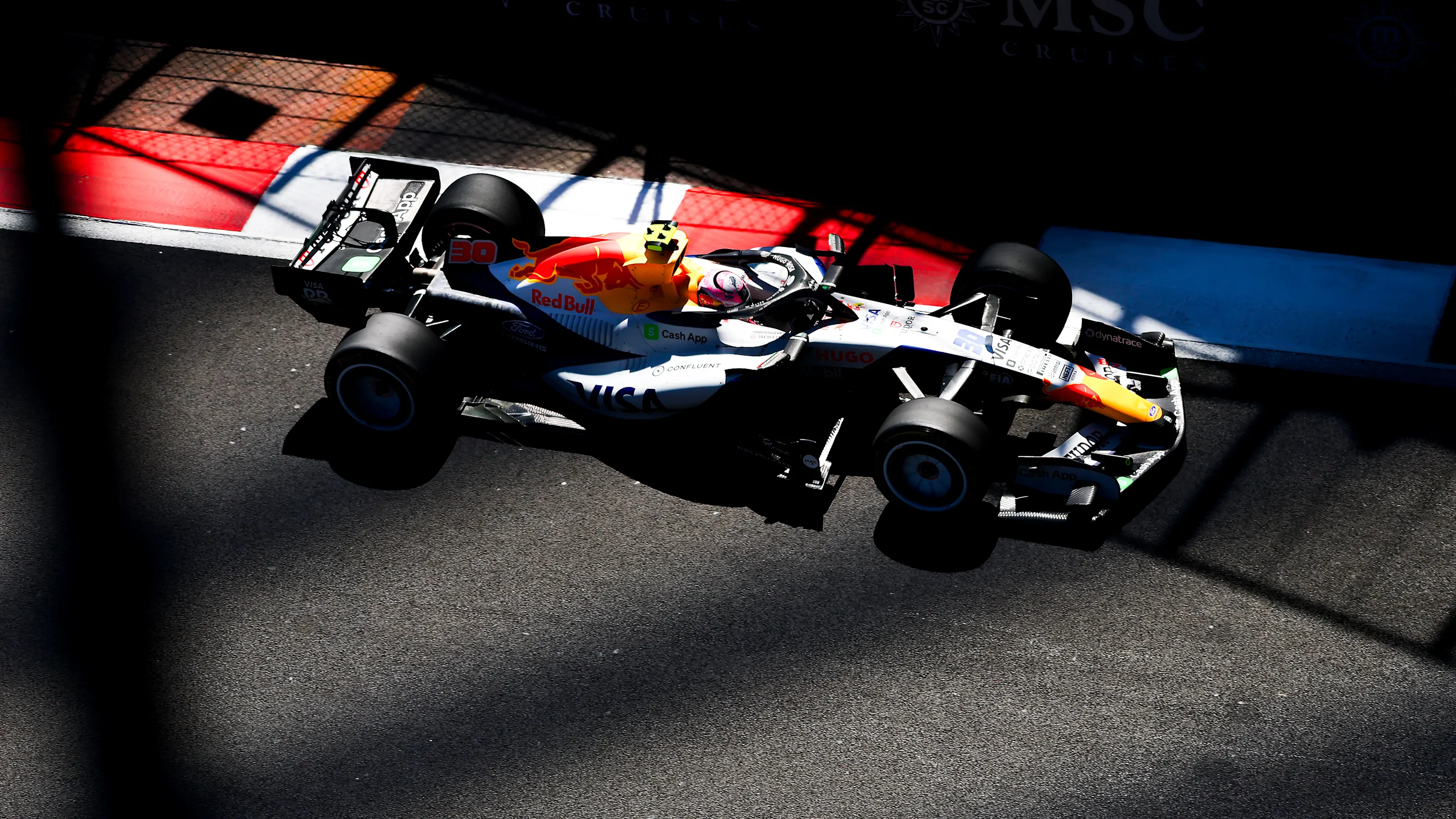
The infringement was not a conventional speeding offence or an allegation that Lawson used an illegal engine setting to produce a faster sector. It concerned the way electrical power deployment was reduced after the control line at the end of his quickest Q2 lap. Formula 1's MGU-K, the motor-generator unit linked to the car's kinetic energy recovery system, is governed by limits on both deployment and the rate at which power demand can change. Those requirements matter even when the timed portion of the lap has ended.
The stewards' decision identified breaches of Articles C5.12.6 and C5.12.7 of the technical regulations. The evidence accepted at the hearing showed that Lawson did not lift off the power immediately after the control line. As a result, the prescribed reduction in MGU-K deployment — often described as the power 'step-down' — did not happen at the required rate. The technical delegate had also reported that the driver's maximum power demand and electrical output were reduced faster than permitted.
That detail makes the case more unusual than the headline suggests. Fans often associate a power-unit breach with a car gaining extra speed. Here, Racing Bulls argued that the failure did not confer a performance benefit. But the regulations were not written as a test of whether a driver gained a tenth of a second. They prescribe how the system must behave. Once the measured behaviour fell outside that requirement, the stewards were dealing with technical non-compliance, not a debate about whether the lap would have been faster without it.
There was a mitigating circumstance: the team reported the problem itself. Self-disclosure can matter when officials assess intent, cooperation and the credibility of a technical explanation. It did not change the outcome. The stewards explicitly pointed to precedent and to the principle that a car must meet technical regulations throughout an event. Their decision therefore removed Lawson from the provisional qualifying classification, even while acknowledging the circumstances presented by Racing Bulls.
That is the wider lesson of this case. Modern Formula 1 cars are controlled by a complex set of software, electrical and mechanical systems. The rules govern not just headline maximum outputs but the transition between operating states. A moment after a lap has been completed can still be within the regulatory window. Teams have to manage that entire sequence, because a clean lap time alone cannot guarantee a valid result.
None of this means the team has been shown to possess an unfairly quick car. It means a specific operational sequence failed a technical test. That difference matters when judging Lawson's driving, the team's engineering responsibility and the severity of the sporting consequence.

The Verstappen Collision Made an Already Tense Weekend Worse
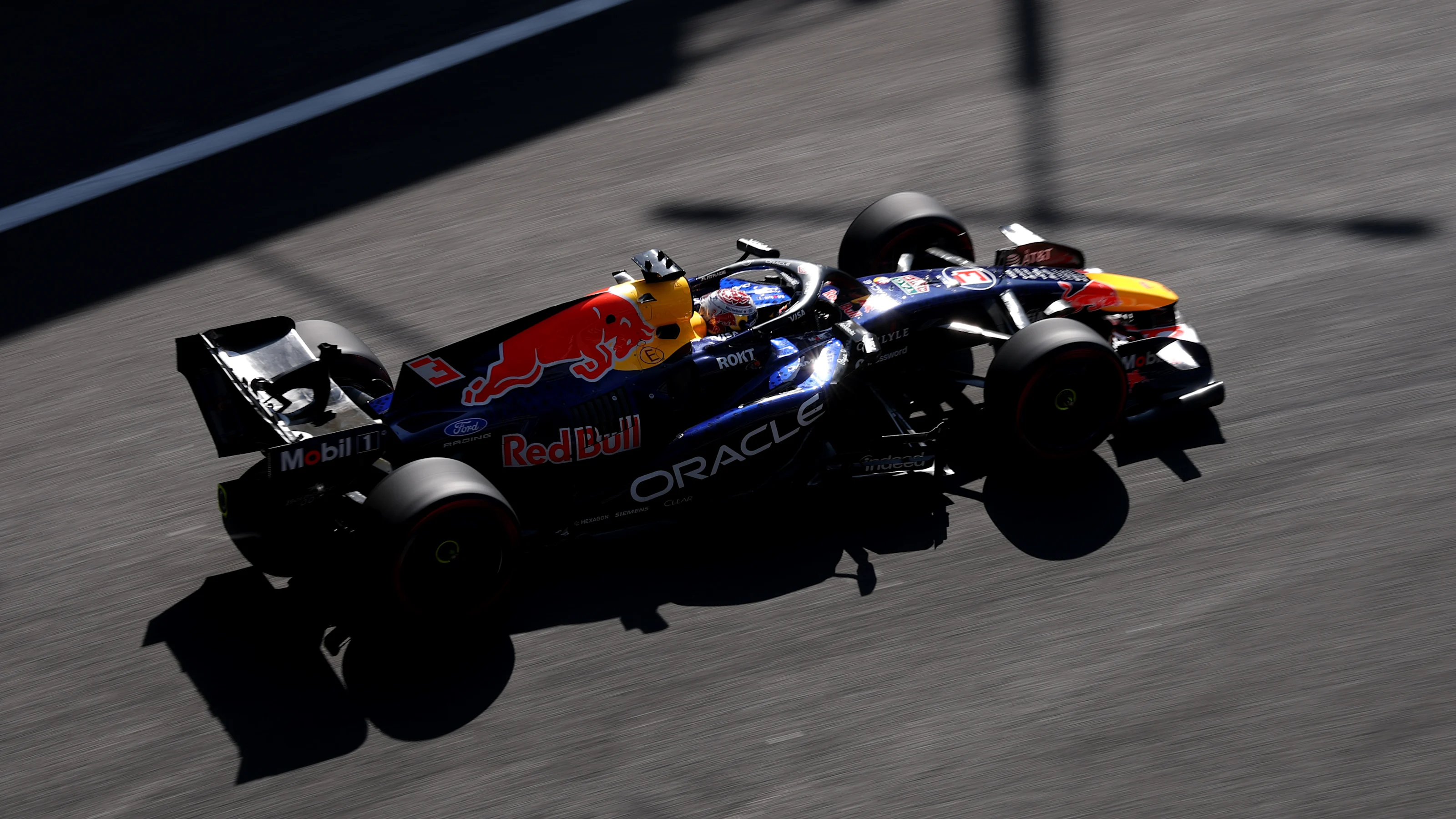
The disqualification landed on top of another controversy rather than replacing it. On Friday, Lawson and Verstappen came together during second practice in the stadium section of the Autódromo Hermanos Rodríguez. Verstappen moved toward Lawson at Turn 12, Lawson tried to regain position at the following corner, and the two cars made contact. The incident damaged the Red Bull's floor and the Racing Bulls front wing, with debris prompting a red flag.
Officials reviewed the encounter and punished both drivers. Each received a one-place grid penalty and a penalty point on his super licence. That matters because the responsibility was shared: the decision was not simply a finding that Lawson had obstructed Verstappen. The stewards considered the moves unnecessary in a practice session, particularly after drivers had been warned about this kind of conduct. For two drivers linked by the Red Bull development system, the optics were especially awkward.
Lawson subsequently said he had spoken to Verstappen and apologised for the contact. The apology addressed the Friday incident; it did not relate to the later MGU-K disqualification. Keeping those two episodes separate is essential. One was a driving standards judgment involving two cars and an on-track collision. The other was a technical-compliance decision about the behaviour of Lawson's power deployment at the end of a qualifying lap. They happened in the same weekend, but they have different causes and different rules.
Verstappen's own grid penalty pushed him from fourth in qualifying to fifth on the starting grid. Lawson's technical exclusion was vastly more expensive. It also created a striking contrast in the paddock: Verstappen remained in the leading group, close enough to fight for a podium, while Lawson was sent behind the entire field despite reaching Q3. The combined consequences underline how quickly a strong race weekend can unravel through incidents that are not reflected in a driver's best lap time.
There is also a human dimension. Lawson is trying to establish the consistency that keeps a driver in Formula 1, with his 2027 seat not yet confirmed. A strong qualifying performance would have strengthened his case; a recovery drive from the back could still do so, but the probability of scoring points is plainly lower. It would be unfair to interpret the disqualification as proof of poor driving, just as it would be unfair to pretend the weekend's accumulation of penalties carries no reputational cost.

Lindblad Gains the Grid Spot — Lawson Must Build a Race From Nothing
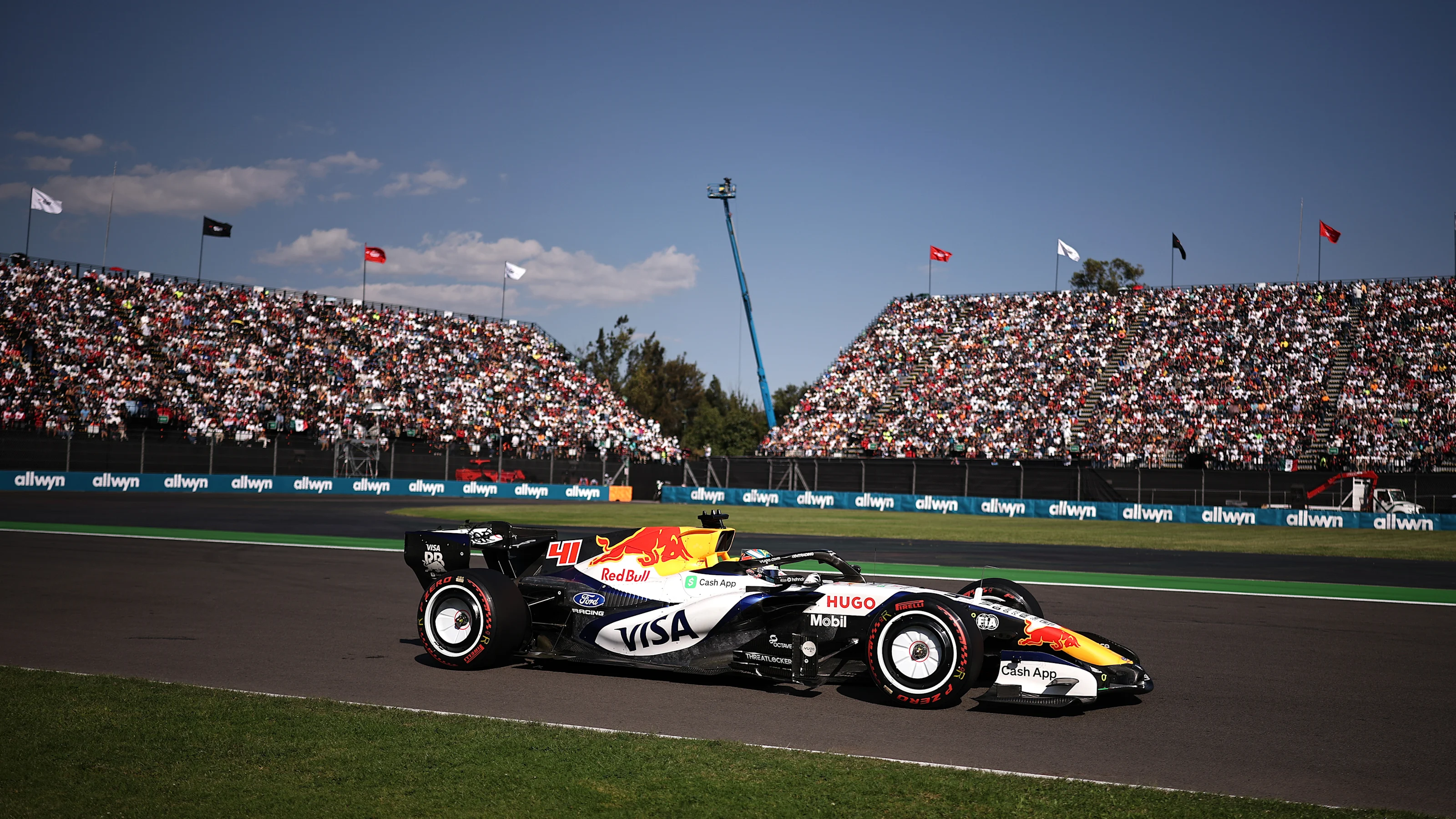
The immediate beneficiary within Racing Bulls is Arvid Lindblad. He was already due to move ahead of Lawson because of the Friday penalty, but the disqualification removes any ambiguity about which driver begins Sunday's race from the stronger position. Lindblad is eighth on the revised grid, directly behind the leading Red Bull of Isack Hadjar and ahead of Pierre Gasly's Alpine. For a young driver trying to establish himself, that is a useful place to start a Grand Prix.
Gasly moves into ninth and Nico Hülkenberg into the top ten. Those gains matter because midfield points are often decided by a single position and a single well-timed pit stop. A team that starts ninth rather than tenth has one fewer rival to pass. A team that begins with both cars in the top ten can pursue complementary strategies; Racing Bulls now has one car near the front of the midfield and another forced to recover through traffic.
Lawson's path back is difficult but not automatically hopeless. Mexico City's long approach to Turn 1 can produce dramatic opening-lap changes, although it also raises the risk of contact. The circuit's altitude complicates cooling and power-unit management, and following other cars can make temperature control harder. A driver starting last needs a car with enough straight-line performance to complete overtakes, but he also needs patience: losing a front wing in a desperate first-lap move would turn a bad grid position into an even worse race.
Strategy can create opportunities if the timing of a safety car, tyre degradation or a rival's pit stop changes the order. Yet none of those variables can be assumed in advance. A recovery drive is not a guaranteed procession through slower cars. Lawson will have to judge which battles are worth taking, preserve the tyres when stuck in a train and be ready for a window that may not open until the second half of the race.
For Lindblad, the challenge is almost the reverse. He must convert a promising grid position into a disciplined result, rather than being dragged into the midfield by a poor start or an unnecessary duel. Racing Bulls' original qualifying pace suggests the car has the speed to compete there. The team will now learn whether that speed can translate into points with one driver protecting track position and the other trying to regain it.
Sunday's result cannot erase Saturday's ruling, but it can change how the weekend is remembered. If Lawson makes meaningful progress and Lindblad scores, the team's pace will remain a positive. If traffic traps Lawson and the points disappear, the post-qualifying technical failure will look even more costly. Either way, the most important question is no longer how Lawson found eighth place. It is how much of that lost opportunity he can recover over race distance.
Lawson's Mexico City weekend now contains two separate penalties and one unmistakable lost opportunity. The Friday clash with Verstappen cost a grid place; the later MGU-K step-down infringement erased his qualifying classification altogether. Racing Bulls' argument that the breach brought no advantage did not override a mandatory technical rule, and the team's own disclosure did not change the sanction.
The speed that took Lawson into Q3 remains real. So does the task of starting last. Lindblad has a genuine opening to deliver for Racing Bulls, while Lawson must turn a promising Saturday that vanished in the stewards' room into a Sunday recovery. The race, not the qualifying timesheet, will now decide how much value the team can salvage.

















