

Bauers Got $58 Million. Boston Still Has to Find Him a Position.
GOATIFYA $58 million commitment is a strange way to create a playing-time puzzle, but that is exactly what Boston appears ready to do. The Red Sox have reached a reported four-year agreement with Jake Bauers, the left-handed hitter whose unlikely 2026 transformation helped Milwaukee win its first World Series. The agreement, first reported Friday, November 13, remains pending a physical and had not been formally announced by Boston at the time of the report. The financial commitment is real enough to change how the club's offseason is being viewed, even if the depth-chart answers are not yet clear.
Bauers arrives with a compelling resume: 26 home runs, 86 RBIs, a .389 on-base percentage and the National League Championship Series MVP award. Yet his main defensive home is first base, where the Red Sox already have Willson Contreras. The designated hitter role also has an incumbent, Masataka Yoshida, while the outfield has several established options. Boston is buying a better hitter before deciding which existing player will surrender the most opportunities.
That inversion reflects the predicament the Red Sox faced after another season ended in the Wild Card round. Their pitching was strong enough to imagine a deeper October run, but the offense lacked consistent authority. Bauers' surprise improvement gives Craig Breslow a chance to address that weakness immediately. It also asks Boston to decide whether one extraordinary season is durable enough to justify four years of playing time, roster maneuvering and a meaningful salary.
Boston needed a tougher at-bat, not another first baseman

The Red Sox did not finish 2026 looking for just any veteran hitter. They ranked 26th in the majors in home runs and 20th in slugging percentage, a mismatch for a club built around competitive pitching. Those standings describe two related problems. Boston struggled to turn baserunners into quick, decisive scoring opportunities, and opposing pitchers could too often work through parts of the order without fearing a ball over the fence. A good batting average alone would not solve both problems.
Bauers provides an unusual answer because his value comes from controlling a plate appearance as well as punishing mistakes. During his breakthrough with the Brewers, he hit .266 with a .389 on-base percentage and .484 slugging, producing an OPS around .873. That on-base figure was among the best in the National League. His 26 home runs and 86 RBIs supplied the obvious highlights, but his walk rate was just as important to the profile. At 16.3%, it ranked in the 98th percentile of qualified major league hitters, meaning he was repeatedly reaching base even when pitchers declined to give him a strike he liked.
For a Boston lineup looking for a more sustainable attack, that skill changes the beginning and middle of innings. A patient hitter can put an opponent into the stretch, lengthen a starter's workload and give the next batter a chance to drive in someone who did not have to hit his way aboard. On a night without home-run power, a walk can still keep an inning alive. That is not a guarantee of better run production, but it offers another way to create pressure on the mound.
There is also evidence that Bauers' power surge had physical substance rather than being explained only by a few well-placed fly balls. His 2026 average exit velocity reached 92.1 mph, his hard-hit rate climbed to 51.9%, and his barrel rate reached 14%. Each figure points toward a hitter striking the ball with greater force and lifting more of the right pitches at damage-producing angles. His underlying quality of contact and ability to avoid chasing helped reinforce the idea that the season was more than a short stretch of favorable luck.
GOATIFY
GOATIFY Baseball
Shop GOATIFY baseball shirts, hoodies and stickers.


White Baseball GOAT Sticker
A white baseball GOAT decal for your bottle, laptop or game-day gear.
Shop Now ↗
White Baseball GOAT Sweatshirt
Rep baseball’s greatest with a white GOAT graphic sweatshirt.
Shop Now ↗Those numbers do not make him risk-free. He still struck out in 27% of his plate appearances, and several years of modest offense preceded the breakout. Boston is effectively making a prediction that better discipline and harder contact will survive the move to a new division, a different home park and a new role. Pitchers will adapt after seeing a full season of evidence that they cannot simply challenge him over the middle. The next step is Bauers proving he can adjust to the adjustments.
Fenway Park offers its own fascinating complication. The short distance to the Green Monster means a left-handed hitter who can drive the ball toward left field may collect doubles on swings that would become routine outs elsewhere. Bauers' home runs have generally favored his pull side, yet he also produced hits toward the middle and opposite field in Milwaukee. Boston does not need him to reinvent that approach. It needs him to remain selective, punish balls he can pull and accept the available gap when pitchers take the inside half away.
The deal therefore says something about Breslow's priorities. Rather than waiting to find a perfect position on a depth chart, Boston appears to have identified a hitter it believes can help fix an identifiable weakness. That is the optimistic interpretation. The harder question is whether the defensive and roster sacrifices needed to keep his bat in the order will cancel out some of the advantage he brings.
Twenty-three pitches turned a journeyman into October's star
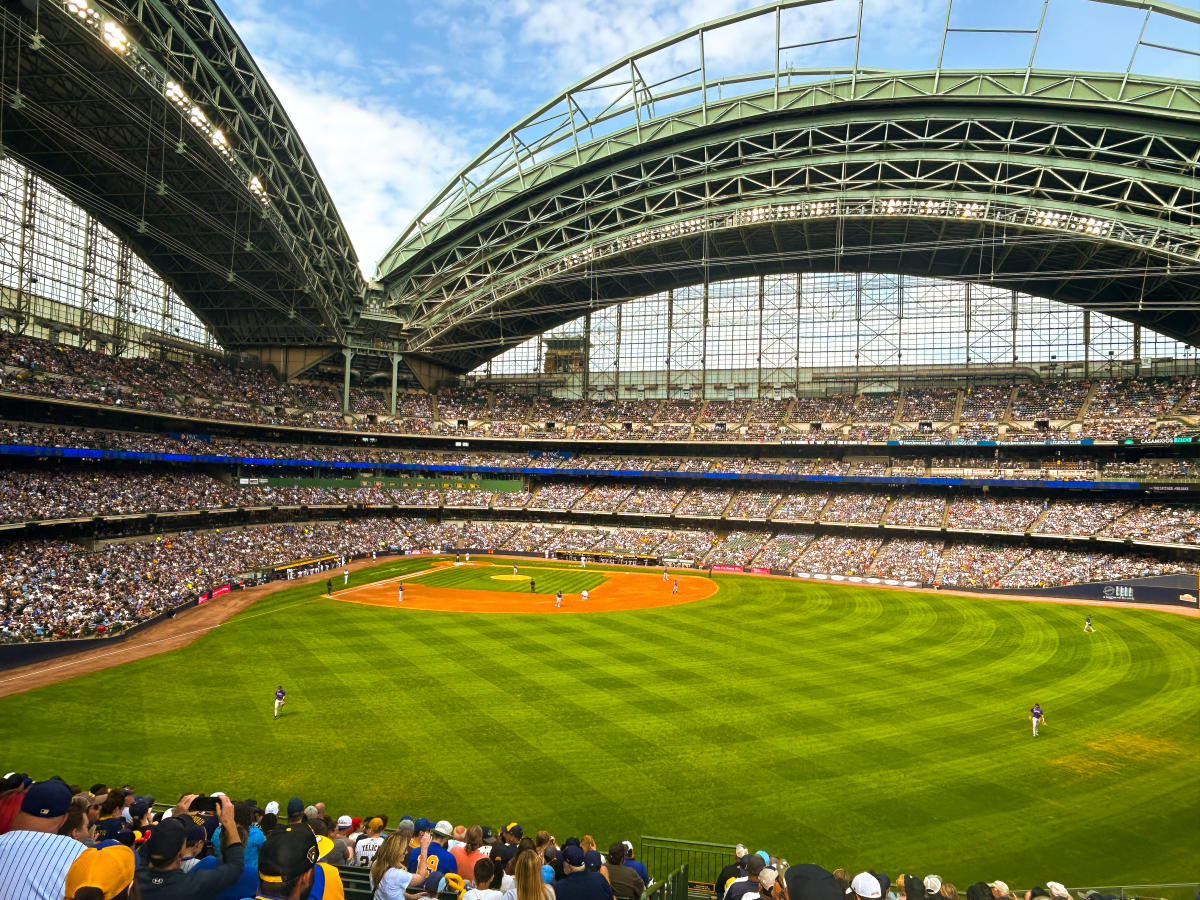
The $58 million reported agreement looks extraordinary when placed beside Bauers' situation at the end of 2024. After hitting .199 with a .662 OPS that season, he was so discouraged that retirement crossed his mind. His wife, Lauren, was expecting a child, and the family's circumstances gave him a reason to keep playing. What followed was not a seamless ascent. He needed another chance in Milwaukee, spent time in the minors and gradually earned the trust required to get regular major league opportunities.
His early career had provided plenty of reasons to doubt a star turn was coming. A seventh-round Padres draft pick in 2013, Bauers emerged on prospect lists before reaching the majors with Tampa Bay in 2018. Subsequent stops with Cleveland, Seattle, the Yankees and Milwaukee kept changing both his environment and his opportunity. Before the 2026 season, his major league batting average was .211 and his career OPS was .672. Players can improve substantially in their late twenties and early thirties, but few can count on a surge this dramatic after so many unsettled years.
In Milwaukee, the improvement happened across an entire regular season rather than one big week. After a more respectable .235/.353/.399 line in 86 games during 2025, his 2026 performance produced career highs in nearly every category that matters to an offensive player. More hard contact made him dangerous, more patience forced pitchers to work, and the consistency of those traits won him a central role on a championship team. The story matters to Boston because it shows the adaptation did not begin in October; October simply made the results impossible to ignore.
The defining postseason moments were separated by less than twenty-four hours of baseball, and together they explain why front offices noticed. Against Yoshinobu Yamamoto in Game 2 of the National League Championship Series, Bauers stretched a plate appearance to twelve pitches before taking a walk. Christian Yelich followed with the two-run hit that put Milwaukee ahead. A box score records that as a base on balls, but its real value was forcing an elite starter to execute again and again while a rally gathered momentum.
GOATIFY
GOATIFY Baseball
Shop GOATIFY baseball shirts, hoodies and stickers.


White Baseball GOAT Dad Hat
A white baseball GOAT design for ballpark days and everyday fan style.
Shop Now ↗


Gold Baseball GOAT Sticker
A gold baseball GOAT decal for your bottle, laptop or game-day gear.
Shop Now ↗
In Game 3, the confrontation with Blake Snell went one dramatic step further. Bauers stayed alive through a long sequence and sent the eleventh pitch of the at-bat over the right-field wall for a go-ahead two-run homer. A player once considering whether he belonged in professional baseball had just turned an extended battle against a decorated pitcher into the signature swing of a pennant run. Milwaukee completed a four-game sweep of Los Angeles, and Bauers finished the series with a home run, six RBIs and the NLCS MVP award.
His contributions were not limited to the famous homer. In the clinching Game 4, a two-run double helped erase part of an early deficit, and he brought in the tying run on a bases-loaded walk. His six RBIs matched the most by a Brewers hitter in a single postseason series. There is a strategic through line between the patience in those at-bats and the regular-season walk rate: Bauers became valuable partly because he stopped treating every pitch as a chance he had to swing. He could make an opposing pitcher win the argument pitch by pitch.
Milwaukee subsequently defeated Tampa Bay in five games for the franchise's first World Series championship. Bauers himself was quieter at the plate during that final series, a reminder that no hitter can expect October success to arrive in every matchup. Boston is not paying $58 million for the NLCS trophy or for two famous at-bats. It is betting the approach that created them can translate into another full season of run creation.
That distinction is vital to evaluating the contract. The inspirational journey does not remove the statistical uncertainty attached to a 31-year-old coming off his first truly elite offensive year. Nor should that uncertainty erase what he demonstrably changed. The new version of Bauers worked counts, hit the ball with authority and produced under immense pressure. The Red Sox must judge whether those are lasting skills and then create enough starts for him to demonstrate that they are.
Contreras, Yoshida and a lineup with nowhere obvious to move
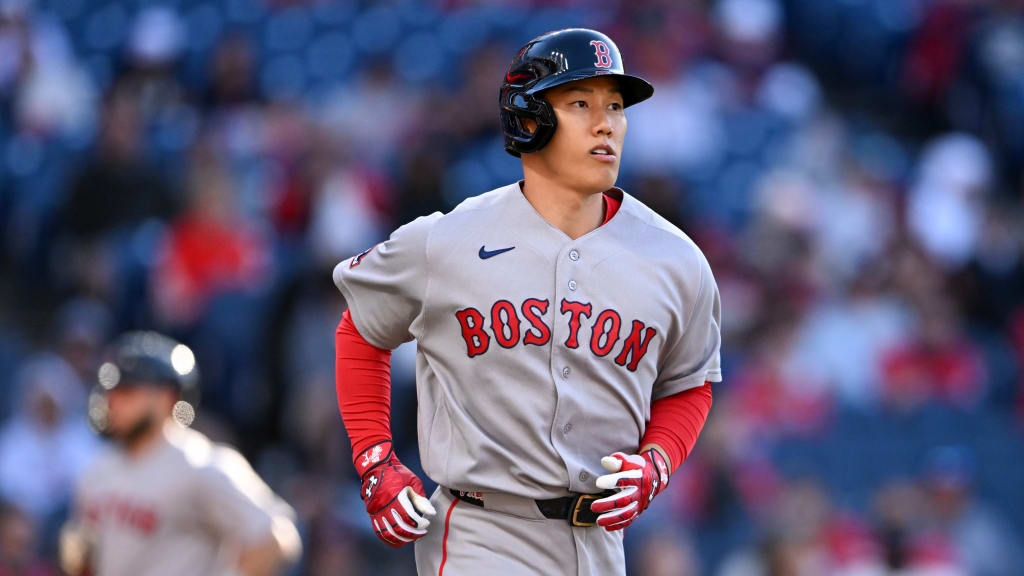
The immediate roster question is straightforward to ask and difficult to answer: which regular loses at-bats when Bauers enters the lineup? Willson Contreras remains Boston's established first baseman and a valuable defender. Bauers played first base most often in 2026, although he also appeared in the corners of the outfield. Moving Contreras away from his primary position merely to accommodate the new signing would sacrifice some of the defensive stability Boston already has.
The obvious alternative is designated hitter, but Yoshida is projected to occupy that role. He is entering the last season of the five-year, $90 million agreement he signed when he arrived from Japan, and his recent time in Boston has included injuries and insufficient power output for an everyday DH. The Red Sox were tied for 21st in home runs from the position during 2026, which makes a more productive alternative attractive. Yet the club still has to decide whether that means a straight competition, a platoon, or a more substantial move involving an incumbent.
Bauers' ability to handle some corner-outfield innings offers flexibility rather than an easy solution. Roman Anthony, Ceddanne Rafaela, Wilyer Abreu and Jarren Duran were all in the projected outfield picture, with Eli White providing another right-handed option. There is only one baseball, only nine defensive spots and only so many plate appearances. Adding Bauers without changing the group would force the manager to distribute opportunities based on matchups, health and defense rather than simply writing the same nine names on the lineup card.
GOATIFY
GOATIFY Baseball
Shop GOATIFY baseball shirts, hoodies and stickers.


Gold Baseball GOAT Dad Hat
A gold baseball GOAT design for ballpark days and everyday fan style.
Shop Now ↗
White Baseball GOAT Sticker
A white baseball GOAT decal for your bottle, laptop or game-day gear.
Shop Now ↗That can be a strength over a long season. A player coming back from a minor injury may benefit from an easier DH day; an outfielder facing an unfavorable pitcher might sit; first base can offer a veteran scheduled rest while keeping a strong bat active. A roster with multiple capable hitters is more resilient to slumps and injuries than one with a single rigid starter at each position. But flexibility works best when roles are communicated clearly and the defense remains intact. A nightly shuffle can become a problem if no one settles into an effective routine.
There is a handedness issue as well. Bauers is left-handed, and Boston already had several left-handed bats competing for premium offensive slots. That does not invalidate his production: an excellent left-handed hitter still improves a lineup. It does limit how much balance the move creates by itself. Against a tough left-handed starter, manager Chad Tracy may want a different combination than he would use against a right-hander who struggles to finish a lefty at-bat. Boston will need a plan for the weaker matchups without turning the signing into an expensive part-time arrangement.
His salary also creates a useful test of the club's expectations. Spread evenly across four seasons, the reported $58 million equals an average of $14.5 million per year. That is not the sort of number that automatically requires a player to bat third every night, but it is a significant multiyear wager on an offensive breakout. If he offers near his 2026 level of patience, power and all-around production, the deal can look like efficient spending. If his contact quality slips or the strikeouts rise, the overlap with Contreras and Yoshida becomes much harder to justify.
Another factor is Milwaukee's qualifying offer. The Brewers extended one to Bauers after the championship season, so his departure should bring Milwaukee draft compensation under the applicable rules. Boston's acquisition consequently carries an opportunity cost beyond dollars, with the exact draft and international implications depending on the club's status under the competitive-balance-tax system. That is another reason the front office has to believe in the larger body of evidence behind his breakout, not simply the postseason highlight reel.
The club's next moves may settle some of these questions. Carrying the current group into spring training would create a crowded but adaptable camp; moving an outfielder, changing how Yoshida is used or adjusting the first-base rotation could open a clearer path. Nothing in the reported agreement alone proves a trade is imminent. It does make the status quo less comfortable and increases the value of a coherent roster plan.
Boston's challenge is to preserve what already worked. The pitching staff gave the team a chance in 2026, and Contreras provides a reliable first-base foundation. Bauers is meant to make that roster more dangerous, not force defensive compromises that make it less complete. An upgrade measured only by the newest player's numbers will miss the bigger question: how many additional runs can the lineup create after the playing time is redistributed?
For Bauers, the agreement is a remarkable reward for refusing to let an uneven career end at its lowest point. For Boston, it is a much more practical calculation. A lineup that ranked near the bottom of the league in home-run production is adding a hitter who just combined rare patience with legitimate power on a championship club. A strong offensive bet does not automatically create a tidy depth chart.
Once the physical is complete and the club confirms the deal, the next phase is not another announcement. It is deciding how Bauers, Contreras, Yoshida and the outfield group can coexist without letting defensive value or rhythm evaporate. If his hard contact and disciplined approach carry into Fenway, the four-year price may look sensible. If the breakout regresses, Boston will have purchased an expensive puzzle. The most revealing part of the signing may be what the Red Sox do next to make the pieces fit.
GOATIFY
GOATIFY Baseball
Shop GOATIFY baseball shirts, hoodies and stickers.

Gold Baseball GOAT Sweatshirt
Rep baseball’s greatest with a gold GOAT graphic sweatshirt.
Shop Now ↗
White Baseball GOAT Dad Hat
A white baseball GOAT design for ballpark days and everyday fan style.
Shop Now ↗White Baseball GOAT Sweatshirt
Rep baseball’s greatest with a white GOAT graphic sweatshirt.
Shop Now ↗


















