

Zverev Finally Reaches No. 1 — But the Hardest Part Starts Now
GOATIFYAlexander Zverev did not need to win the Vienna Open to make history. He needed to survive one more match, and on Thursday, October 29, he made that particular piece of history look almost routine. A 6-4, 7-5 victory over Tallon Griekspoor guaranteed the 29-year-old German the ATP world No. 1 ranking when the new list is published on Monday, November 2. It is the first time Zverev has reached the summit, and the first time a German man has done so since Boris Becker in 1991.
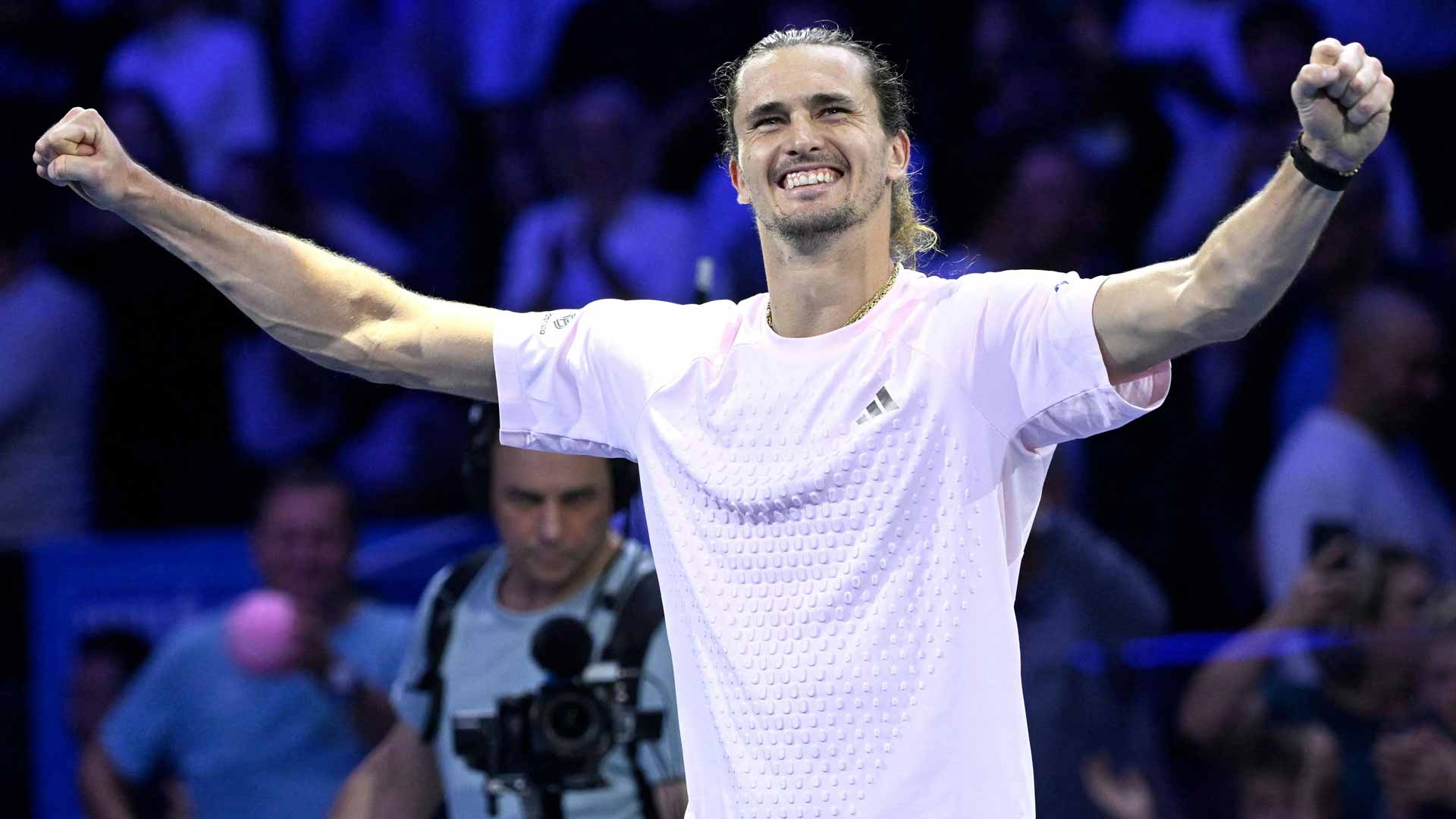
The moment was anything but routine to Zverev. He celebrated with his family, his long-standing team and former world No. 1 Thomas Muster on the Vienna court. After a career marked by spectacular breakthroughs, brutal near-misses and a devastating ankle injury, the last major item missing from his résumé finally has a date attached to it. The bigger question is what kind of reign begins after the celebrations stop.
The 95-minute win that finally settled the No. 1 race
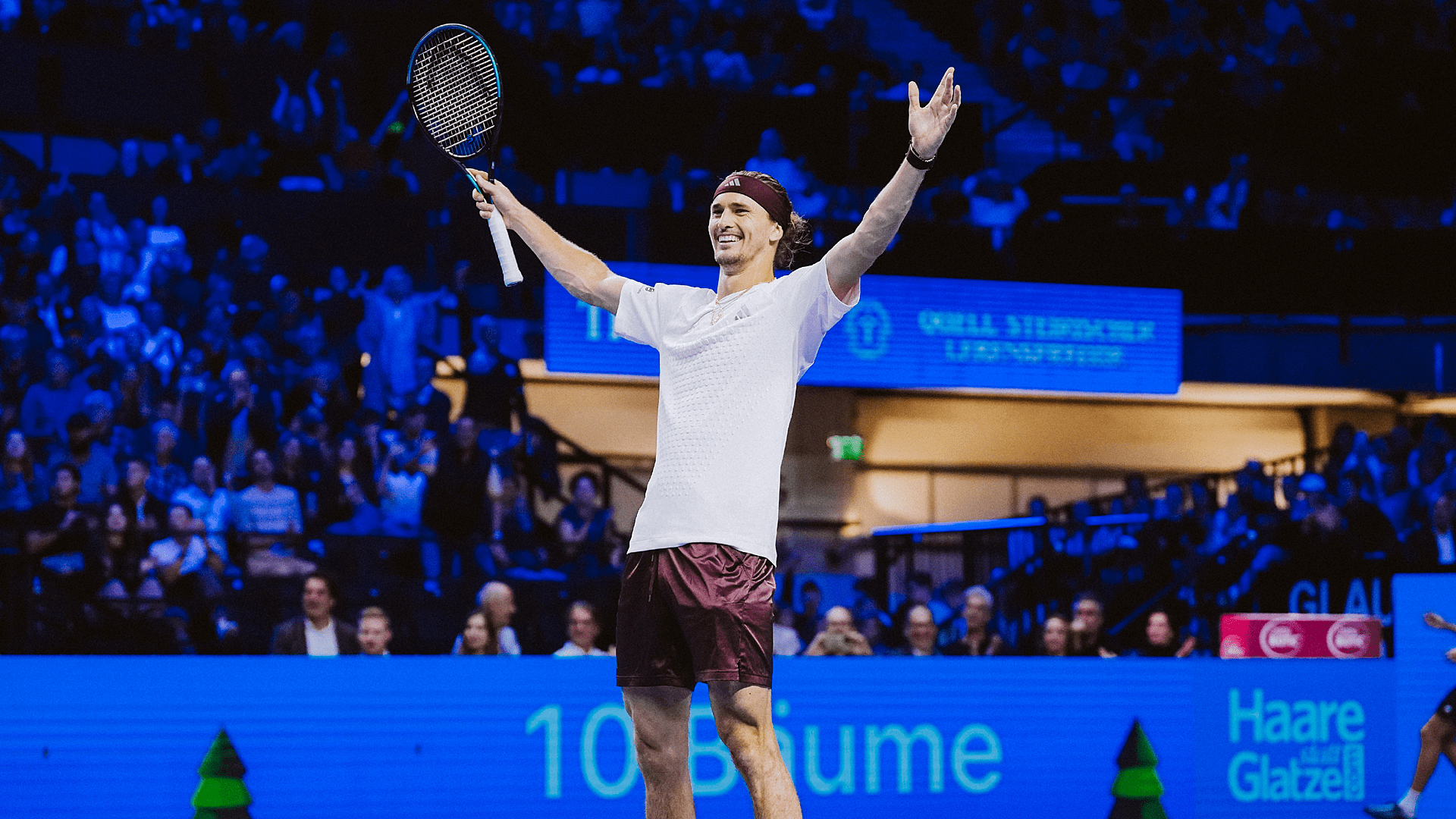
The scoreline, 6-4, 7-5, barely hints at the stakes. Zverev arrived for the last-16 meeting knowing that a quarter-final place would guarantee his ascent to world No. 1. He was also facing a dangerous opponent with reason to believe an upset was possible: Griekspoor had won the Brussels title the previous week and had beaten Zverev in Montreal earlier in the season. The Dutchman was not merely a name standing between the German and a ceremony.
Yet Zverev established control immediately. He broke in Griekspoor's opening service game, protected that advantage through the first set and finished the set with an ace. He did not need a succession of spectacular returns because his own delivery kept the scoreboard moving in the right direction. The match became a test of whether Griekspoor could force a genuine crisis on return. He never did.
The most revealing statistic was not simply Zverev's eleven aces. He won 35 of 39 points behind his first serve, a remarkable 90 percent, and did not face a break point. That meant Griekspoor was forced to defend almost every service game knowing the slightest lapse could decide the set. The pressure was asymmetrical: Zverev could attack a return game without the burden of immediately repairing damage on his own serve.
At 5-5 in the second set, that pressure produced the decisive opening. Zverev broke, then served for the match and sealed the contest with another ace. The official tournament timing was one hour and 35 minutes. There was no drawn-out final-set rescue, no prolonged argument with his box and no need for a tiebreak. After saving four match points against Martin Landaluce in his previous Vienna outing, the contrast could hardly have been sharper.
The head-to-head improved to 10-3 in Zverev's favour. It was the first opponent against whom he had recorded ten tour-level victories, a small statistic overshadowed by a far larger one: he will be the thirtieth man to occupy the top ranking since the system began in 1973. One more clean serving performance had turned the complicated ranking scenarios of recent weeks into a confirmed outcome.
The result also extended his 2026 record to 64 wins and 16 defeats and delivered a tour-leading thirteenth quarter-final of the season. Those figures matter because a ranking is not awarded for one inspired night. It is the cumulative reward for repeatedly reaching the business end of tournaments, even when individual matches do not become headline-making classics. Thursday's match was a fitting miniature of that wider achievement: efficient, disciplined and played with unusually little room for doubt.

From the 2022 ankle injury to a two-Slam season
To understand why Zverev's reaction was so emotional, the clock has to run backwards. In 2022 he was competing with Rafael Nadal in the French Open semi-finals when he suffered a serious ankle injury that ended his campaign and kept him away from the tour for months. At the time he was close to the highest ranking of his career and seemed capable of forcing his way into the conversation at the very top. Instead, the path abruptly disappeared beneath him.
The comeback was not a straight line. Zverev had to rebuild his movement, endurance and confidence, then rediscover the consistency that had once made him a fixture in the latter rounds of major tournaments. He had already won Olympic gold and ATP Finals titles, so his ability was never in serious doubt. What remained unanswered was whether he could turn sustained excellence into the Grand Slam trophies and top ranking that define the very highest tier of men's tennis.
In 2026 those unanswered questions have been dealt with in unusually emphatic fashion. Zverev claimed his first major title at Roland Garros, added the US Open championship and also reached the Wimbledon final and Australian Open semi-finals. A Madrid Masters final reinforced that the results were not restricted to the four biggest events. He has accumulated a season of deep runs rather than relying on a single magical fortnight.
That distinction is important. A Grand Slam title can be won in seven matches; the No. 1 ranking requires the accumulation of results over a far longer stretch. It punishes prolonged absences and repeated early exits. Zverev has spent years being discussed as a player who possessed the tools but had not collected the ultimate prizes. Two major trophies and the ranking summit in the same year make that old description obsolete.
He will become the second German man to reach No. 1, following Becker's achievement in January 1991. Germany has produced numerous great players, but the men's top spot has remained an exclusive historical club. Zverev also becomes the second-oldest first-time No. 1 in ATP history, at 29 years and roughly six months, behind John Newcombe. Those are not records of a prodigy arriving ahead of schedule. They are the markers of a long pursuit finally completed.
The emotional images in Vienna were therefore as revealing as the statistics. Zverev embraced his father and coach, Alexander Zverev Sr., and celebrated with people who have travelled through the setbacks with him. His team has remained unusually stable across a career in which the results, physical challenges and public expectations have changed repeatedly. He has described the ranking as a different kind of achievement from winning a title: an acknowledgement of the work that stretches between tournaments.
He is entitled to enjoy that distinction. But the most compelling part of his story may be that reaching the summit has not required him to become a completely different player. The serve, baseline depth and capacity to survive demanding matches were always there. The transformation has been the reliability with which he has converted those tools into major results when the pressure has been greatest.

Sinner's absence matters — but it does not erase Zverev's season
Any discussion of the 2026 ranking must acknowledge the two names that have dominated the sport's recent narrative: Jannik Sinner and Carlos Alcaraz. Between them they collected every men's Grand Slam title across the 2024 and 2025 seasons. Sinner then spent much of the second half of 2026 sidelined by a knee problem and ended his season early in October. That absence has removed one of the strongest possible obstacles to Zverev's ascent.
Alcaraz has had his own interrupted season, although he was back on court in Vienna on Thursday. The Spaniard defeated Nikoloz Basilashvili 6-1, 7-6, saving four set points in an unusually dramatic second-set tiebreak. He remains a major threat whenever he is healthy and competing. It would be simplistic to suggest that the balance of power has been permanently decided merely because the next rankings update will display a different name at the top.
But the reverse argument is equally weak. A ranking cannot be constructed around hypothetical matches that injured players might have won. It is based on actual results and the points attached to them. Zverev did not receive the French Open or US Open trophies because someone else was missing; he won those tournaments. Nor did he reach thirteen quarter-finals by accident. The ability to stay competitive through the calendar is part of the achievement being measured.
That is why the distinction between 'best player on any given day' and 'No. 1 in the rankings' matters. The former is an argument that changes with surface, fitness and match-up. The latter is an objective accounting of performance across the ranking period. Both are meaningful, but they are not interchangeable. Sinner may return and immediately look like the most formidable player on a hard court. Alcaraz may produce the highest level at a major. Neither possibility changes who earned the ranking on November 2.
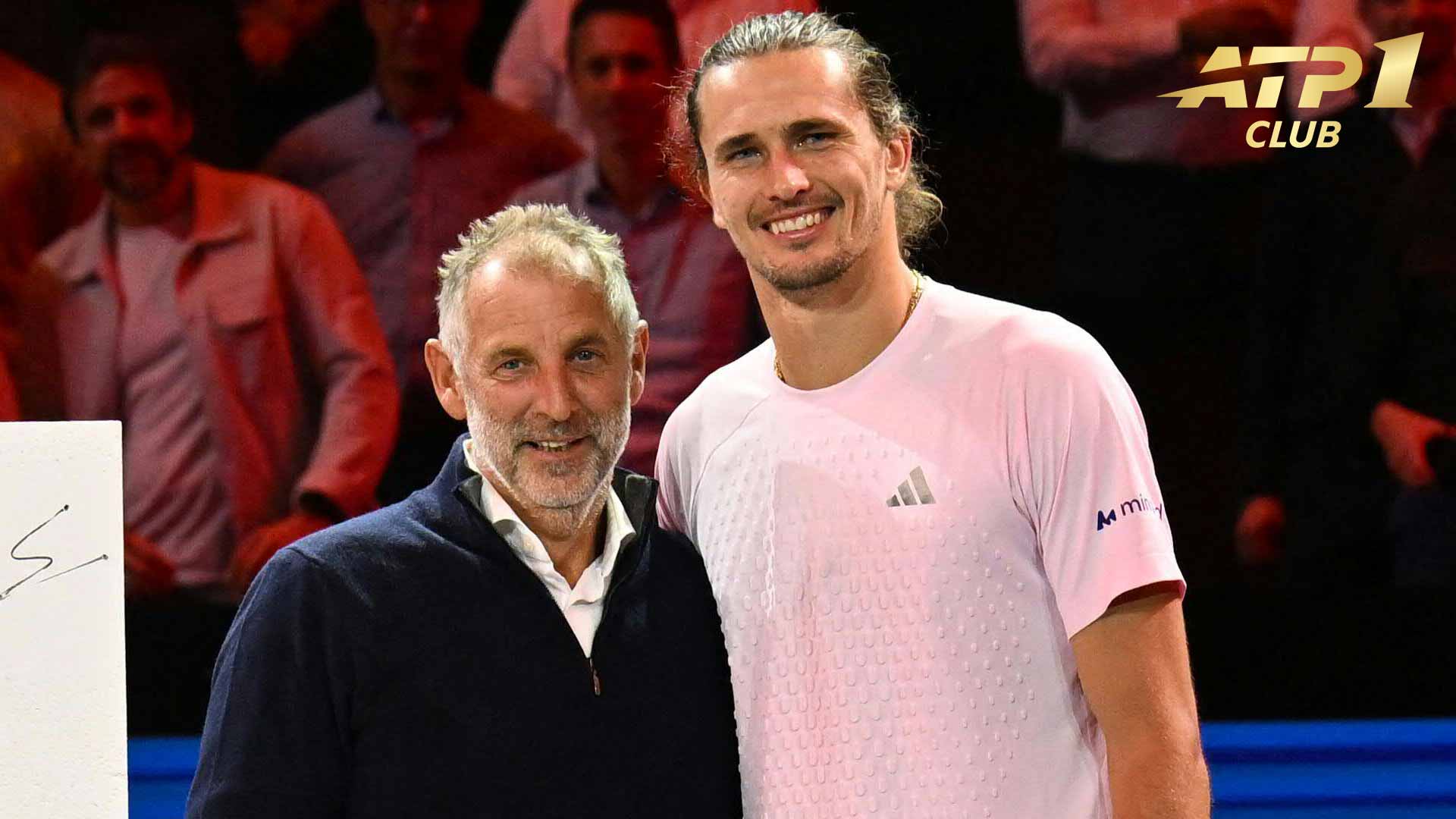
Vienna's ceremony made the historical side of the achievement tangible. Former world No. 1 Thomas Muster joined Zverev on court to welcome him to the ATP No. 1 Club. Muster, the only Austrian man to reach the summit, spent six weeks there after first rising to the top in 1996. The contrast was a reminder that getting to No. 1 and staying there are separate accomplishments, each shaped by opponents, scheduling and physical resilience.
There is also a generational shift hidden inside this moment. Zverev joins the active group of players who have occupied the top spot, alongside Sinner, Alcaraz, Novak Djokovic and Daniil Medvedev. The ranking has become a shared battleground rather than the property of one untouchable champion. That makes the next few months more interesting, not less. With the major titles finally on his résumé, Zverev can approach those rivalries from a position he has never occupied before.
None of this guarantees a lengthy reign. The 2027 season will bring a fresh set of points to defend, opponents returning from injury and new pressure attached to every early-round match. The most persuasive defence of Zverev's ranking will not be an argument about what happened to his rivals in 2026. It will be the quality of tennis he produces when those rivals are back across the net.

Arthur Fery, Paris and Turin: the work begins immediately
The awkward feature of becoming world No. 1 in the middle of a tournament is that there is almost no time to enjoy it. Zverev's next opponent is Arthur Fery, the 24-year-old Briton who eliminated Lorenzo Musetti in Vienna's last 16. Fery came through 6-4, 5-7, 6-4 after two hours and 44 minutes, saving seven of the nine break points he faced. It was the kind of result that should discourage anyone from treating the quarter-final as a ceremonial lap.
Fery has already demonstrated that he can compete under sustained pressure against a higher-ranked opponent. His victory over Musetti was not a quick upset built on a handful of reckless winners; it required the patience to withstand difficult service games and recover after losing the second set. Zverev's task will be to keep his own first-serve advantage while preventing the Briton from settling into extended exchanges.
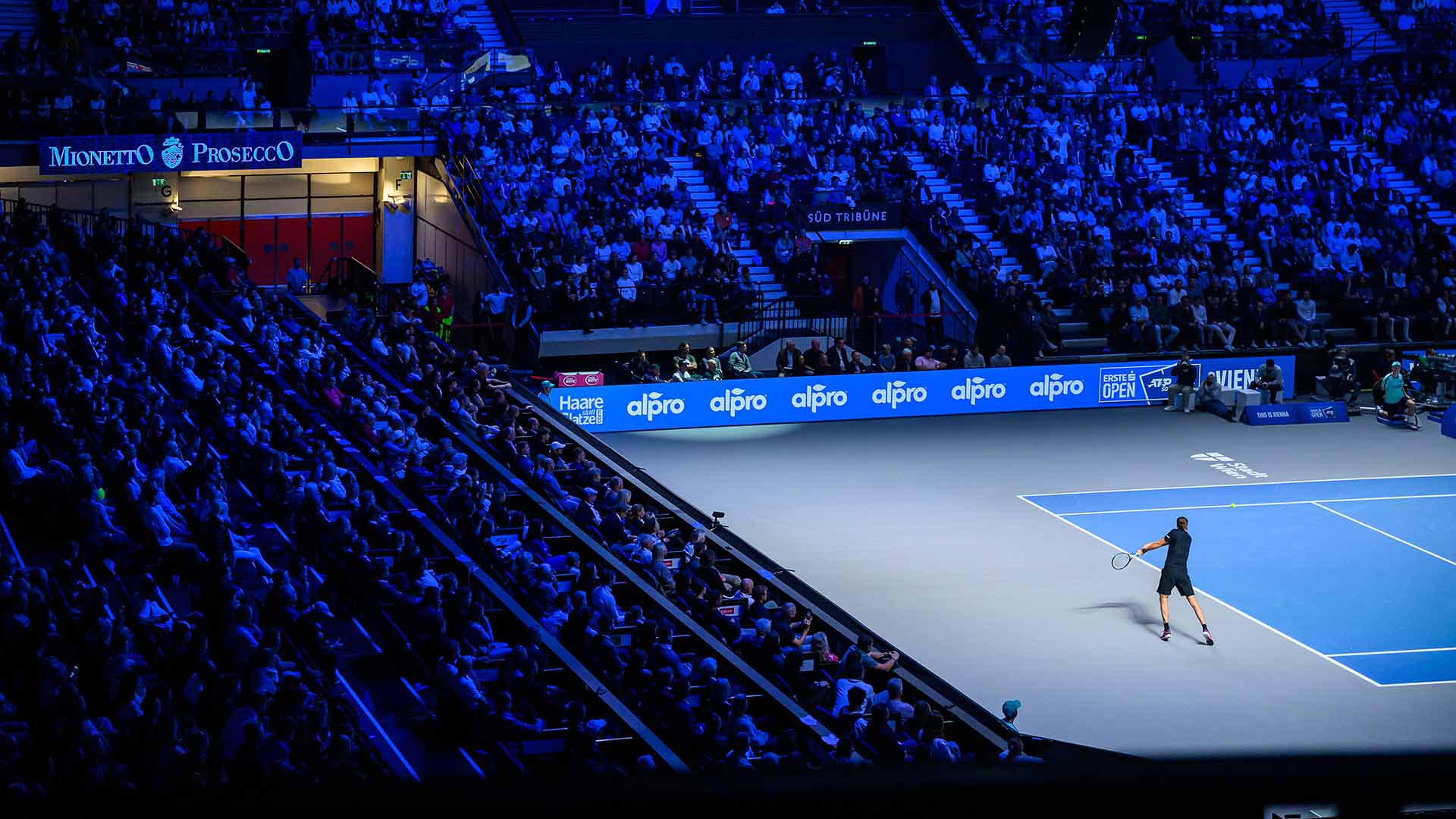
The Friday quarter-final is scheduled for no earlier than 5:30 p.m. local time at the Wiener Stadthalle. That detail matters because the ranking celebration happened less than a day before Zverev must prepare to play again. A player can spend years chasing a milestone and then discover that professional tennis gives him barely one evening to absorb it. Recovery, tactical preparation and focus do not disappear because the photographs are historic.
The broader calendar is equally unforgiving. The Paris Masters follows the indoor European swing, and the ATP Finals in Turin will bring the strongest qualifiers together in a compact, high-pressure format. Zverev has already secured the year-end No. 1 distinction, but he still has meaningful competitive objectives ahead of him. Another title would reinforce the idea that his best tennis has not been exhausted by the chase for the ranking.
There is a physical calculation, too. Sixty-four victories before the end of October represent a formidable workload. Zverev has been through long Grand Slam campaigns, high-intensity matches and the mental strain of carrying expectations across several surfaces. The challenge now is not simply whether he can hit enough aces to win another match. It is whether he can keep producing that level without accumulating the fatigue that has derailed other late-season title pushes.
Friday's wider Vienna draw provides its own intrigue. Alcaraz is due to face Tommy Paul, while Daniil Medvedev meets Adrian Mannarino. A potential meeting with another established contender would provide a sterner test of Zverev's current level than the ranking arithmetic that brought him to No. 1. The tournament remains alive as a sporting contest, even though its most memorable photograph may already have been taken.
The final lesson of Thursday is that milestones do not finish careers. Zverev has crossed a threshold that once seemed uncertain after his 2022 injury, and he has done it by putting together the most complete season of his life. His reward is a new kind of scrutiny. Opponents will want to beat the world No. 1; spectators will expect the world No. 1 to justify the title. The next chapter starts not with a ranking announcement but with another ball to serve.
There is no asterisk next to the No. 1 ranking. Zverev earned the points, won two majors and secured the result required to make the change official on November 2. The injuries of his rivals are part of the context, not a reason to pretend his own results did not happen. But rankings reward what has already been accomplished; the next few weeks will test how much energy remains after the climb.
Vienna gave Zverev the moment he spent years chasing. Arthur Fery, Paris and Turin will help reveal whether reaching the summit is the closing chapter of his extraordinary 2026 or the opening chapter of something even bigger.
Shop GOATIFY tennis products from the Tennis-filtered collection scope.

















