The Predator’s Arms: How Kai Greene Built Biceps and Triceps That Matched His Massive Torso
UPLIFT IRON CLUBWhy Kai Greene’s arms looked huge even next to a massive torso

Kai Greene’s arms were never impressive in isolation only. They had to hold their own against one of the thickest backs, roundest shoulders and most dramatic overall physiques of his era. That context matters. A bodybuilder with a smaller torso can make average arms look bigger through proportion; Greene had the opposite problem. His biceps and triceps had to remain visually dominant beside enormous delts, lats and chest.
The solution was not simply chasing the heaviest curl possible. In interviews and training features, Greene repeatedly framed bodybuilding around controlling the target muscle rather than worshipping the load. That philosophy fits what his physique showed: full biceps from multiple angles, dense triceps, thick brachialis and forearms that made the entire upper arm look larger.
For ordinary lifters, the useful lesson is that “big arms” are a system. Biceps peak matters, but so does brachialis thickness, triceps long-head mass, lateral-head detail and shoulder development. If one piece lags, the arm looks flatter. Greene’s training style treated the arm as a structure to sculpt rather than a number to post.
Biceps: control the arc instead of just moving the dumbbell
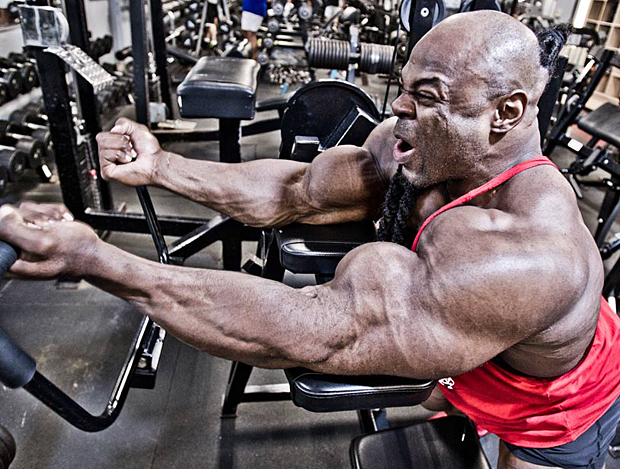
One of Greene’s recurring themes was deliberate contraction. In the Muscle & Fitness “Greene Screen” feature, his hammer curls were described with the elbows held close while he focused on initiating the movement through the elbow flexors instead of swinging the dumbbells upward. He also used reverse-grip curls and other variations to involve the brachioradialis and forearms.
That matters because arm growth is easy to sabotage with momentum. A curl that turns into a hip hinge and front raise can still move a large dumbbell, but the biceps no longer own the entire rep. Greene’s style was more about creating a repeatable path, squeezing hard near peak flexion and controlling the lowering phase. The load could still be heavy, but only as heavy as the target muscle could manage honestly.
A useful structure is to begin with a neutral-grip or hammer curl, then move to a supinated curl where the palm turns up strongly, and finish with a supported curl such as a preacher or incline variation. Three movements are enough if the sets are hard and the technique remains stable. The goal is not exercise collecting; it is exposing the elbow flexors to slightly different positions while keeping tension where you actually want it.

Triceps make the arm look big before you even flex

If biceps get most of the visual attention, triceps provide more of the upper arm’s actual mass. Greene’s arm look depended heavily on that. The long head adds thickness from the side and rear, while the lateral head creates the sharp outer horseshoe that makes an arm look muscular even when relaxed.
That is why a complete triceps session should include more than pushdowns. Cable work is excellent for controlled reps and constant tension, but an overhead movement helps train the long head in a lengthened position. A pressing pattern such as close-grip benching or a machine press can then add a heavier loading option without requiring sloppy elbow extension.
The practical sequence is simple: one heavier press or dip pattern, one overhead extension, and one pushdown. Keep the elbows reasonably stable, let the triceps lengthen, and finish the rep by extending the elbow rather than leaning your whole body onto the cable. Greene’s physique is a useful reminder that arm size is not created by curls alone. If the back of your arm is undertrained, the entire limb will look smaller no matter how good the biceps pump feels.
The Predator approach was flexible, not random

Greene was famous for long, instinctive sessions, but “instinctive” should not be confused with careless. In another Muscle & Fitness feature, he argued against rigidly copying one fixed biceps workout forever. The point was to pay attention to what the muscle needed on that day and to adjust exercises or emphasis when circumstances changed.
That is useful advice once a lifter has enough experience to make good decisions. It is less useful for a beginner who changes every exercise every week. The sensible middle ground is to keep a stable core of movements long enough to measure progression, while allowing smaller changes when joints hurt, equipment is occupied or a particular angle no longer produces a good stimulus.
You might keep hammer curls and an overhead triceps extension for eight weeks, while rotating the second curl or pushdown handle. You can also change rep ranges without changing the movement itself: heavier sets of six to ten on one exercise, then controlled sets of ten to fifteen or fifteen to twenty on the next. That gives variety without losing the ability to track whether you are actually stronger or doing more quality work.

How to borrow Kai’s arm philosophy without copying a pro bodybuilder’s volume
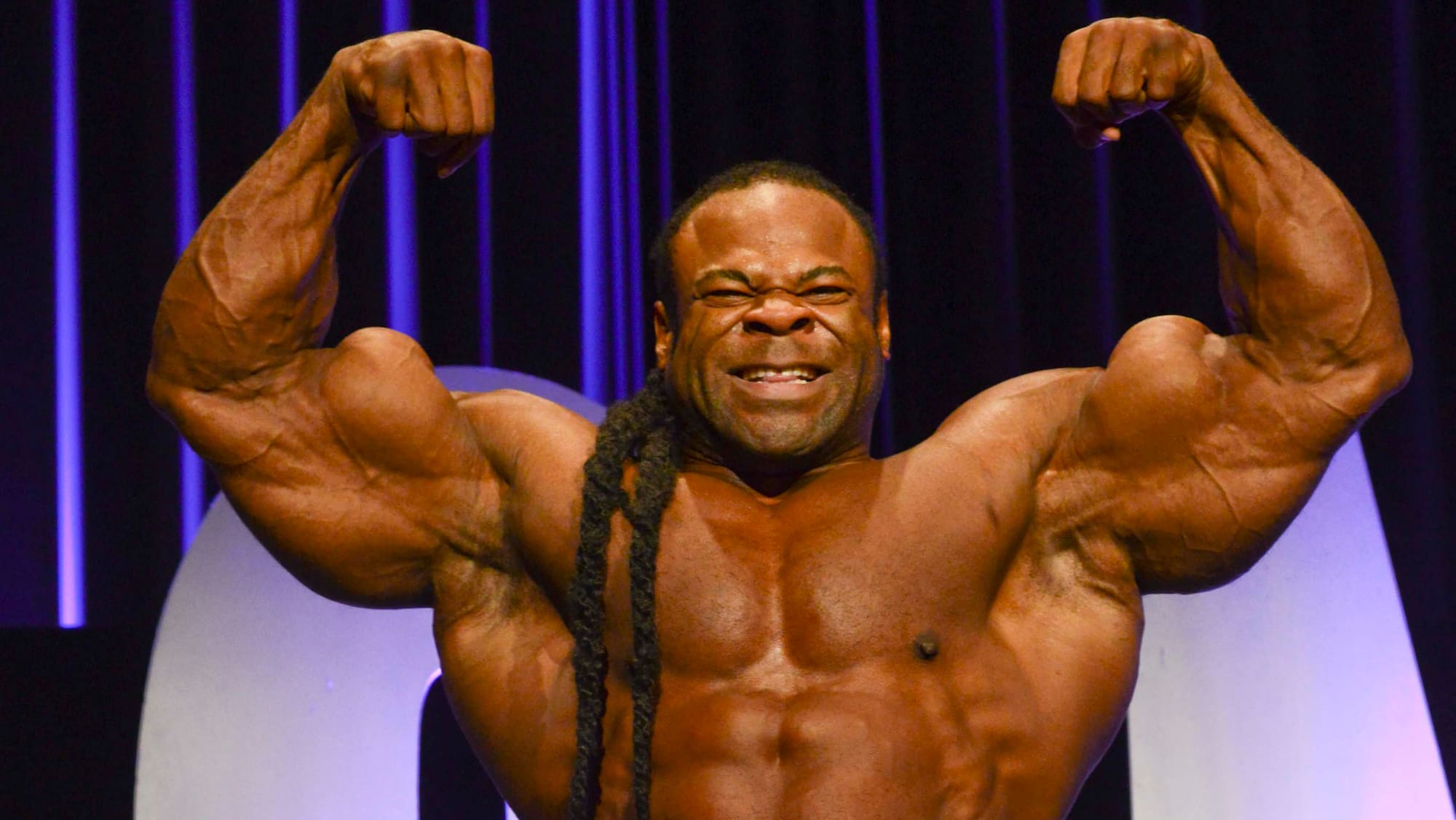
The mistake would be to see Greene’s enormous workload and assume that more sets are automatically the secret. Elite bodybuilders often tolerate and require training volumes that are unnecessary for recreational lifters. The useful part is the execution standard: target the muscle, use multiple useful positions, train hard enough to create a reason to grow, and progress over time.
A practical arm session could use five movements total: hammer curl, preacher curl, close-grip press, overhead cable extension and rope pushdown. Perform two to four hard working sets per movement, mostly in the eight-to-fifteen-rep range, with occasional higher-rep finishers. Stop most sets with roughly one or two good reps left, then take selected isolation sets closer to failure when technique is stable.
Place the session after a rest day or after a lighter torso session if arms are a priority. Remember that rows, pulldowns and presses already contribute arm volume, so direct work should fit around the rest of the week rather than bury recovery. The real “Predator” lesson is not to imitate every set Kai Greene ever performed. It is to train the target muscle so deliberately that every rep has a purpose.

Bodybuilding shirts, tanks and gym gear for lifters chasing muscle, size, symmetry and the pump.
EXPLORE COLLECTION