

Alcaraz Gets Khachanov, Zverev Eyes No. 1 — Vienna’s Draw Has Two Traps
GOATIFYVienna's draw has handed Carlos Alcaraz the sort of opening assignment that can turn a late-season tune-up into a serious examination. The seven-time Grand Slam champion returns to the Erste Bank Open for the first time since 2021, but he will not be able to ease into the indoor courts against a low-profile opponent. Karen Khachanov, a former top-10 player and recent US Open semifinalist, is waiting in round one.
At the opposite end of the bracket, Alexander Zverev has a different prize in sight. The German is seeded first and can guarantee a climb to world No. 1 on November 2 by reaching the Vienna quarterfinals. That makes the opening days more consequential than the usual ATP 500 warm-up. With Jannik Sinner absent through injury and several ATP Finals contenders packed into the draw, this tournament offers two overlapping stories: Alcaraz trying to rediscover his indoor rhythm, and Zverev trying to turn a favorable-looking opening into a rankings milestone.
Alcaraz's 6–0 record is reassuring — until the first indoor set begins
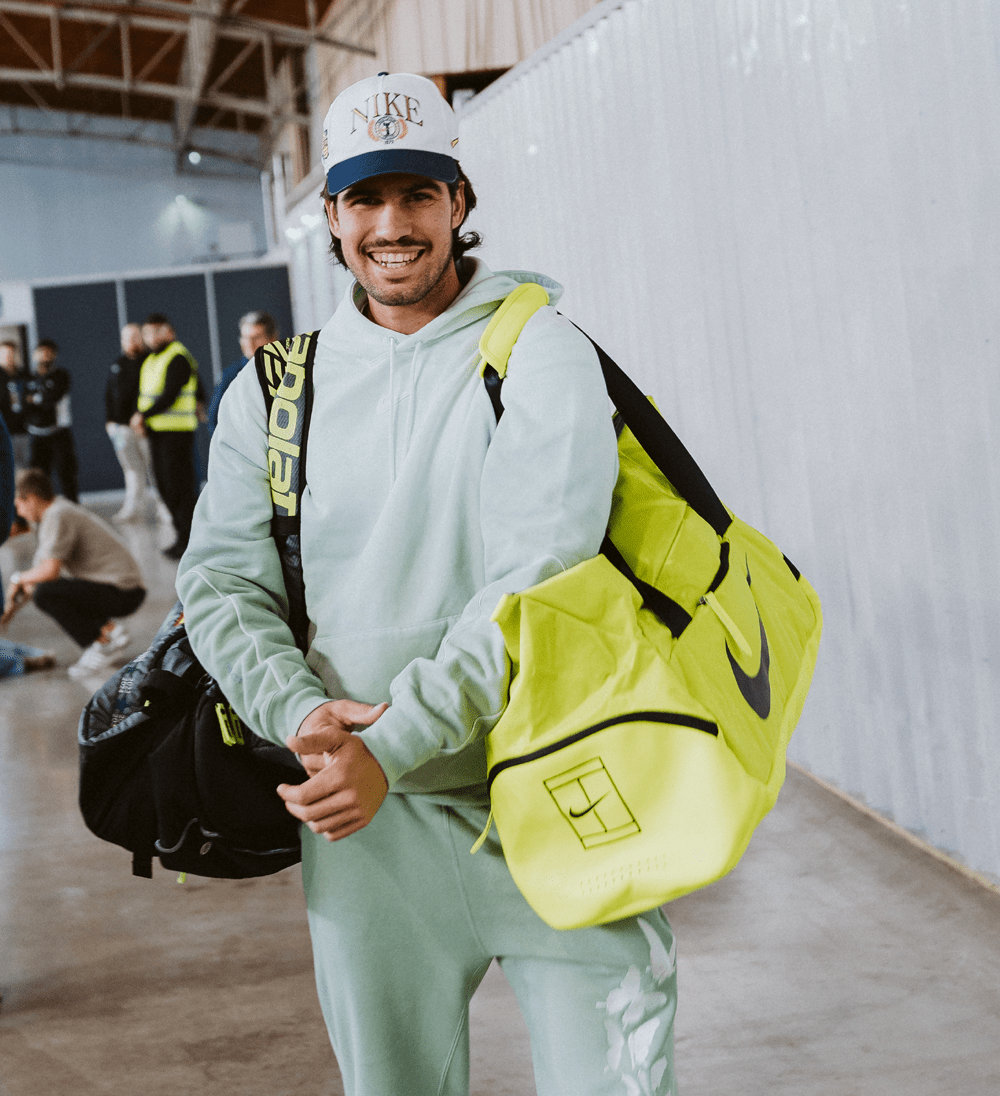
On paper, Alcaraz owns the matchup. He has beaten Khachanov in all six of their previous tour-level meetings, and that record matters because it shows he has repeatedly found ways through the Russian's first-strike tennis. But a head-to-head record is not a free opening-round win. The first set in Vienna will be played on a different day, in different conditions, with a player who can hold serve long enough to make a few points decisive.
Khachanov brings a powerful serve, a heavy forehand and enough experience on big stages to prevent Alcaraz from settling into a comfortable rally pattern. The Spanish star's variety is the obvious counter: change the height of the ball, open angles with the forehand, and use the drop shot only when he has already pushed Khachanov behind the baseline. On an indoor hard court, though, the cost of one rushed service game can be higher than on slower outdoor surfaces. That is the real trap hidden behind the 6–0 number.
Alcaraz is also arriving after a surprise third-round defeat to Zizou Bergs in Shanghai. His 2026 season still includes titles at the Australian Open, Doha and Tokyo, but the Shanghai loss made his return to competition more interesting. A player can be a favorite and still need time to rebuild timing against opponents who take the ball early. Vienna offers little time for experimentation, especially when the opening opponent has genuine top-level weapons.
If Alcaraz gets through, the next opponent will be either Nikoloz Basilashvili or Austrian wild card Jurij Rodionov. Seventh seed Tommy Paul is a possible quarterfinal opponent. Those are projections, not guaranteed meetings, and the distinction is important: the bracket only becomes an easy path after the favorite has actually won the matches. For Alcaraz, the first objective is not the title or a potential semifinal with Daniil Medvedev. It is making his first indoor match feel like a normal competitive performance rather than a scramble for rhythm.

Zverev needs only two wins to put world No. 1 within reach
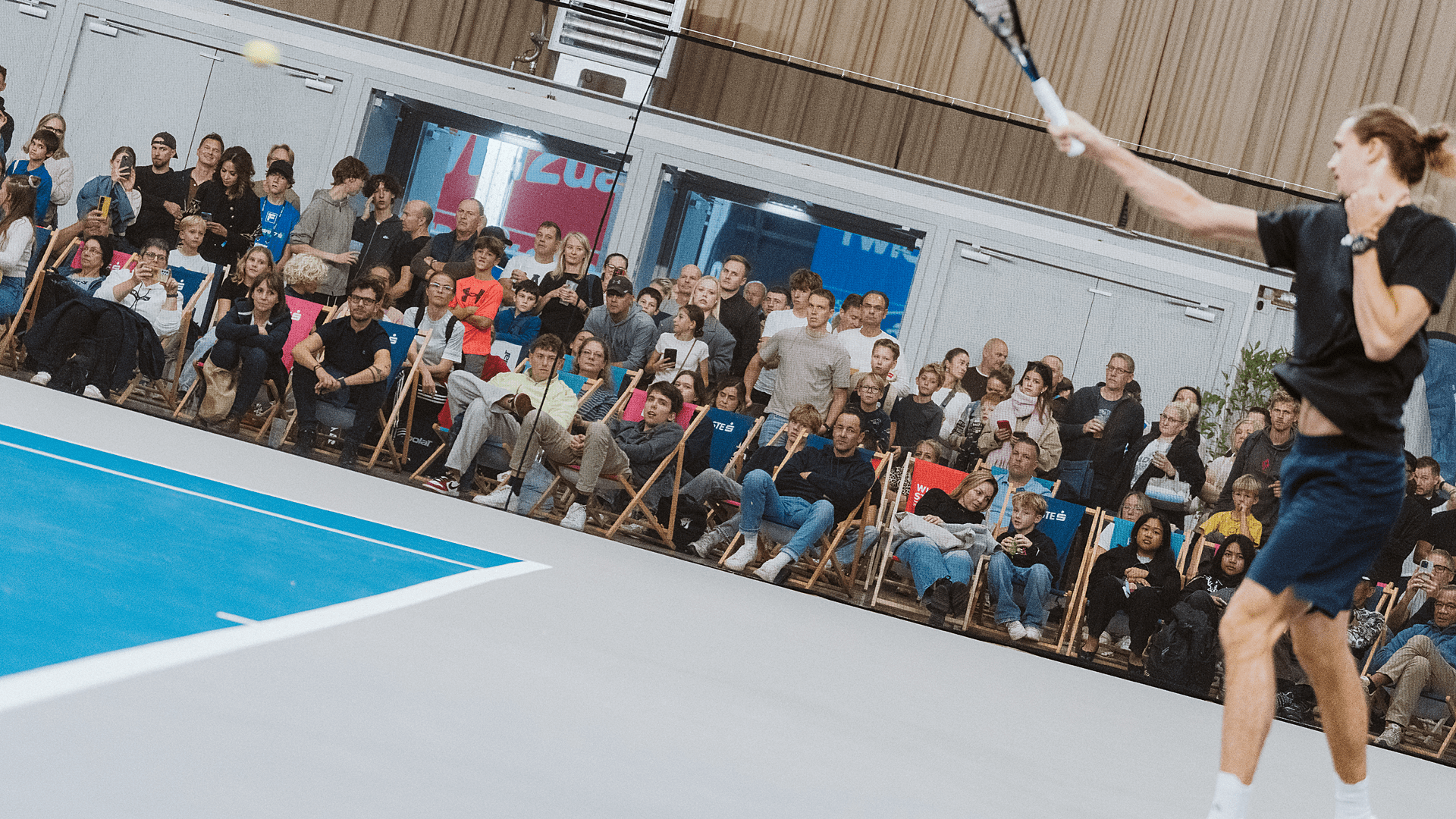
Zverev's draw carries an unusually clear mathematical incentive. The tournament's official preview says that a place in the quarterfinals would guarantee the German the No. 1 ranking on November 2. He is currently second in the published rankings and top seed in Vienna, so two victories could produce a career landmark before the event has even reached its decisive weekend.
His opening opponent, Spanish wild card Martin Landaluce, is the sort of young player who arrives with little to lose and an enormous opportunity. The experience gap favors Zverev, but a match against a rising talent is not automatically straightforward. A younger opponent can swing freely on return, take chances on second serves and generate an awkward first hour if the favorite begins passively. Zverev's priority should be to establish a high first-serve percentage and make Landaluce win extended exchanges instead of giving him short points.
The second round would bring either Tallon Griekspoor or Brandon Nakashima. Both are capable of using serve placement and early baseline strikes to keep a match tight, which means the road to the quarterfinals is shorter than a Grand Slam campaign but not necessarily softer. Zverev's edge is his ability to absorb pace from deep in the court and turn defense into neutral rallies. The risk is allowing the score to remain close enough for one tiebreak or one loose game to decide the evening.
Reaching the quarterfinals would settle the immediate ranking objective, not the title. Frances Tiafoe is the projected opponent in the last eight, and Flavio Cobolli is a possible semifinal opponent. Those names matter because the tournament's competitive pressure does not disappear after the ranking milestone. The moment Zverev becomes the man everyone is chasing, the question shifts from whether he can reach No. 1 to whether he can play with the authority expected of it. Vienna could deliver the first answer in a matter of days.

Medvedev, Rublev and Musetti make the middle rounds dangerous
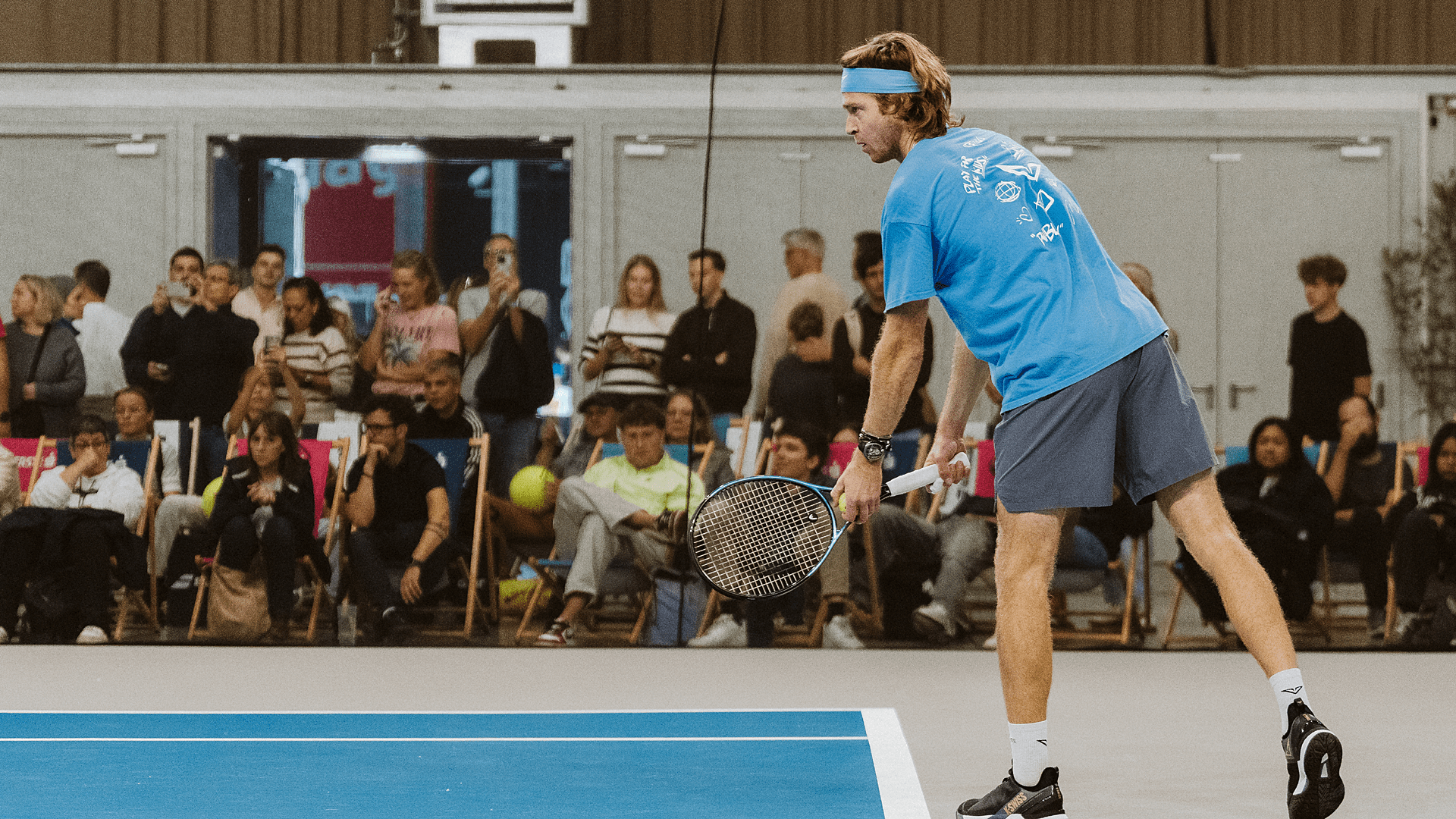
The most interesting part of the Vienna draw may be what happens between the headline matches. Tommy Paul must face Andrey Rublev in the first round, while Frances Tiafoe opens against Lorenzo Musetti. Those are not routine early-round assignments. Each matchup contains a player with enough shot-making or defensive skill to disrupt the expected seeded path, and each can alter the bracket before the biggest names have settled into the tournament.
Paul and Rublev offer contrasting routes to control. Paul is comfortable redirecting pace, moving through the court and changing the shape of a rally. Rublev wants the ball on his forehand and prefers to dictate before an opponent can stretch the point. On an indoor surface, a handful of aggressive returns could make that match look very different from its seeding. For Alcaraz, the result matters because Paul is his projected quarterfinal opponent. A Rublev win would redraw the tactical challenge without changing the official bracket.
Tiafoe and Musetti is just as significant for Zverev's side. Tiafoe can use his serve and willingness to improvise to shorten exchanges; Musetti can vary spin, defend creatively and force a hitter to generate pace repeatedly. The winner may gain momentum from surviving a difficult opener, but also has to recover quickly enough for the next round. A strong draw creates an entertaining tournament precisely because the top seeds cannot assume the seeded names will survive.
Medvedev adds a separate layer. He is seeded third and placed in Alcaraz's half, where a semifinal meeting is possible. He begins against Daniel Merida and is still trying to strengthen his position in the race to the season-ending ATP Finals in Turin. The opportunity to earn ATP 500 points is valuable, but the same incentive applies to Cobolli, Alex de Minaur and Tiafoe. Every upset can change the shape of that race. Vienna is not merely a tournament where the established stars defend reputations; for several players, it is a chance to convert one good week into a substantially better November.
Sinner's absence opens the title race, but Vienna still demands a complete week
The defending champion will not be on court. Jannik Sinner has ended his 2026 season because of a knee injury, leaving the Vienna title available to a field that still includes several of the biggest names in men's tennis. That changes the tournament's balance without making it predictable. Removing one favorite increases the number of plausible champions, but it does not erase the difficult first rounds or the physical demands of playing repeatedly indoors.
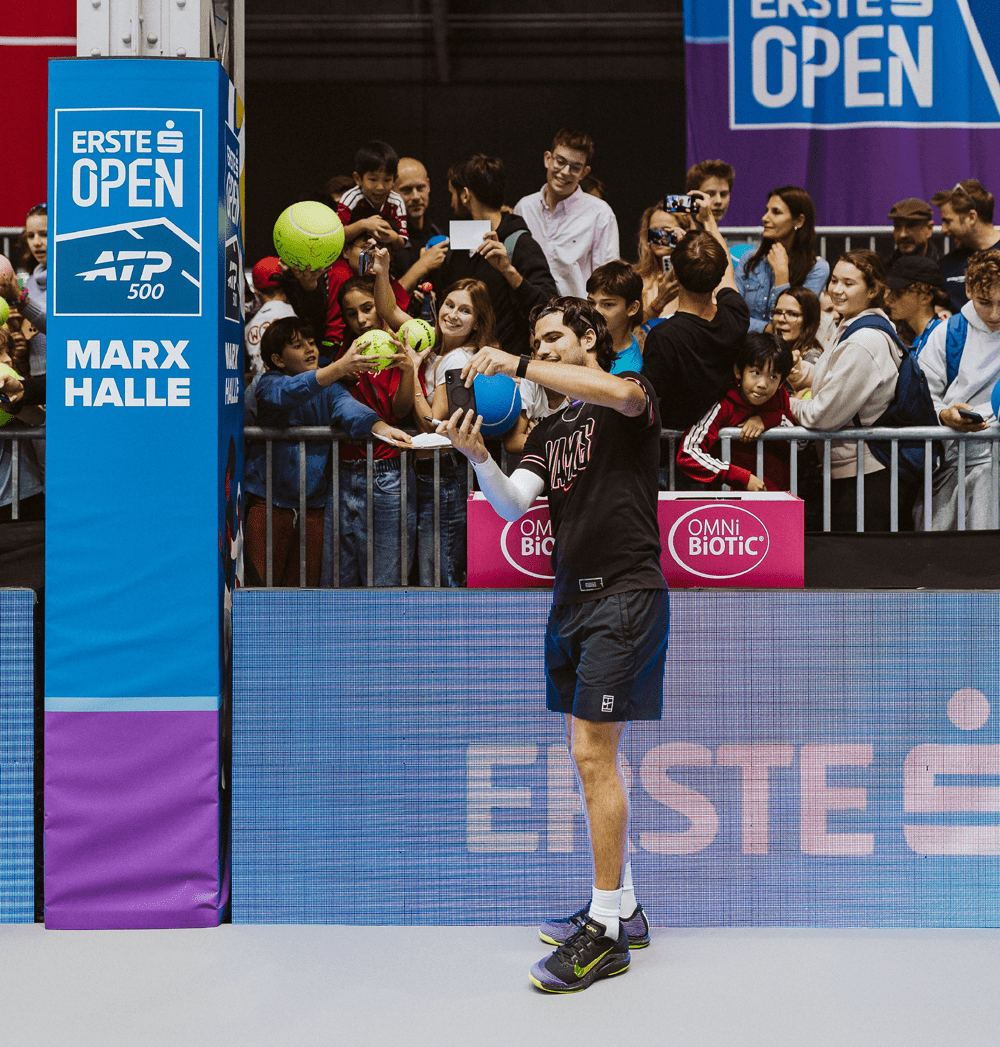
Alcaraz's late addition has also changed the event's atmosphere. He accepted a wild card after the Six Kings Slam exhibition was moved to late December, and the Vienna organizers confirmed his return five years after his 2021 semifinal appearance. On October 24, he joined Zverev and other players on the Marx Halle practice courts in front of packed stands. That public enthusiasm matters commercially and emotionally, but it will not win a return game against Khachanov. The crowds are part of the occasion; the tennis still has to be earned.
The main draw begins Monday, October 26, with the final scheduled for Sunday, November 1. Alcaraz's first match is scheduled for Tuesday, October 27. A player trying to find rhythm cannot afford to think only about Sunday, while a player pursuing a ranking milestone cannot afford to treat the first two matches as a formality. The best way to approach the event is to break it into smaller problems: serve well enough to avoid unnecessary pressure, protect second-serve points, and adjust to the speed of the court before the draw becomes unforgiving.
There is also a distinction between ranking stakes and championship stakes. Zverev can achieve something historic by making the last eight, but the title requires three more victories after that. Alcaraz may be able to reestablish his confidence with a strong opening performance, yet the route through Paul, Medvedev or an unexpected challenger could demand different solutions each day. Vienna's bracket is compelling because it offers multiple ways for the story to change. A single upset might end the expected final, while a run by an ATP Finals contender could transform the Turin conversation.
The draw is set, but the outcomes are not. Alcaraz's perfect record against Khachanov makes him the favorite, not the automatic winner. Zverev's quarterfinal ranking opportunity gives his opening matches unusually high stakes, but a young wildcard and two dangerous potential second-round opponents stand between him and that target. Around them, Medvedev, Rublev, Musetti, Tiafoe and others have reasons to treat every round as essential.
That is why Vienna feels larger than a routine late-October ATP 500. The event offers Alcaraz a test of indoor form, Zverev a route to No. 1 and the chasing group a chance to influence the ATP Finals race. The strongest headline may come from the final, but the decisive twist could arrive much sooner — on the very first afternoon one of the favorites steps onto the court.
Shop GOATIFY tennis products from the Tennis-filtered collection scope.

















