

Alcaraz Crushed Tiafoe 6–2, 6–2. Turin’s Bigger Test Starts Now.
GOATIFYCarlos Alcaraz arrived at the 2026 ATP Finals with an unfinished piece of business: he had reached the championship match in Turin before, but had never lifted its trophy. His opening statement on Monday, November 16, was about as emphatic as a group-stage match can be. The 23-year-old Spaniard swept Frances Tiafoe aside 6–2, 6–2, reached 10 straight wins and gave his rivals precious little time to settle. The score was straightforward. The way it happened was more revealing.
Alcaraz had required five sets to get past Tiafoe at the 2022 US Open and again at Wimbledon in 2024. This time he grabbed a 4–0 first-set lead, finished that set in just 28 minutes and finished the match in a little over an hour. His 21 winners nearly doubled Tiafoe's 12, but the most brutal number was on the American's serve: Alcaraz won all 12 points played behind Tiafoe's second delivery.
That is a startling start, not a championship coronation. The season-ending event uses round-robin groups before the knockouts, and the Ivan Lendl Group still contains Daniil Medvedev and Flavio Cobolli. The interesting questions now are whether Alcaraz can reproduce this level when opponents serve better, how his late-season surge fits his long injury absence, and what Tiafoe must fix before his own tournament gets away from him.
Four games in a row, 28 minutes for a set: Alcaraz took away Tiafoe's runway
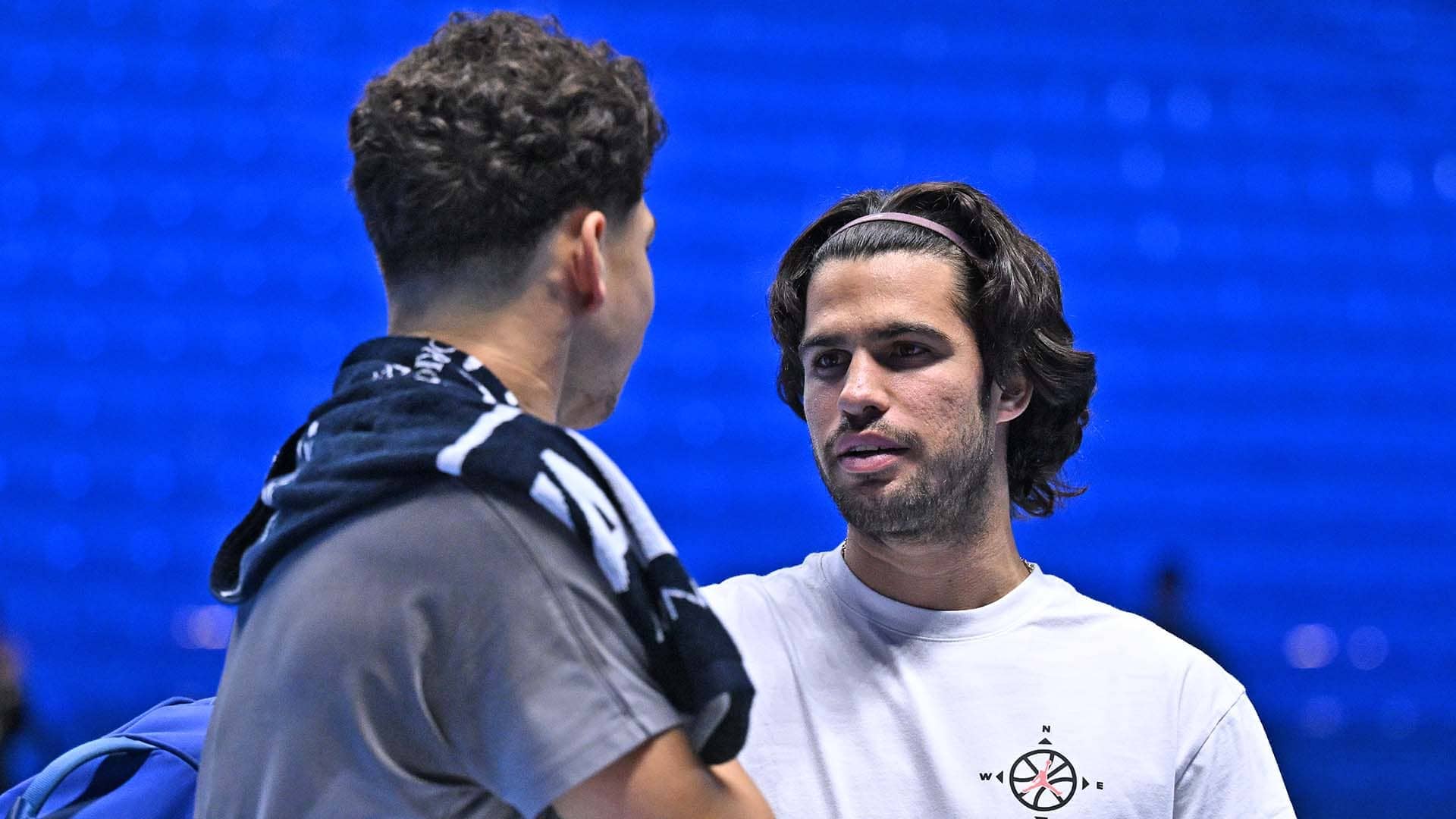
The first tactical fact was the absence of a feeling-out period. Against an opponent capable of generating a rush of momentum on a big stage, Alcaraz was already up 4–0 before the opening set had developed into anything resembling a contest. Twenty-eight minutes after the first ball, he owned the set 6–2. The scoreboard reflects breaks of serve; the broader effect was psychological. Tiafoe never had the luxury of building a comfortable serving rhythm or making the Spaniard prove his patience over two dozen long games.
That matters because the history between them had suggested exactly the opposite scenario. In the 2022 US Open semifinals, Tiafoe stretched Alcaraz across five sets. Two years later, at Wimbledon, the American again pushed him to a deciding set. Each of those matches generated enough pressure for a single nervous service game to become a dramatic event. Turin offered no comparable opening. Alcaraz forced the first adjustment rather than making it himself.
The conditions helped clarify the contrast. Indoor hard courts remove wind, variable sunlight and most of the environmental interruptions that complicate ball striking. For a player entering with titles in Vienna and Paris, those conditions are no longer an awkward special assignment. They allow Alcaraz to use his early timing, speed to the ball and quick changes of direction without waiting for the match to become a brawl. Tiafoe would have wanted cheap points and quick holds; instead, the first set became a test of how much pressure he could absorb.
Alcaraz finished with 21 winners against 12 from his opponent. A winner total alone does not tell us where each player stood or how long rallies lasted, and it would be a mistake to reverse-engineer every point from one box-score line. Combined with the quick first set and the return figures, however, it supports the central picture: Alcaraz was not merely waiting for a bad day from across the net. He was actively dictating the terms and shortening Tiafoe's opportunities to respond.
GOATIFY
GOATIFY Tennis
Alcaraz took control before Tiafoe found a rhythm. Explore GOATIFY's tennis apparel and gifts as the 2026 Turin tournament heats up.


Tennis GOAT Golden Racket & Ball Crewneck Sweatshirt
A tennis fan design for everyday wear.
Shop Now ↗

Perhaps the most important development was what did not happen. There was no familiar sequence of Alcaraz brilliance followed by enough loose games to restart the contest. He did not gift his opponent a set of free entry points. For someone who has sometimes made spectacular wins more complicated than necessary, clean efficiency is a more ominous sign than one impossible highlight-shot. It suggests a player learning how to separate his entertainment value from his decision-making.
Tiafoe's second serve became the most expensive shot in the match
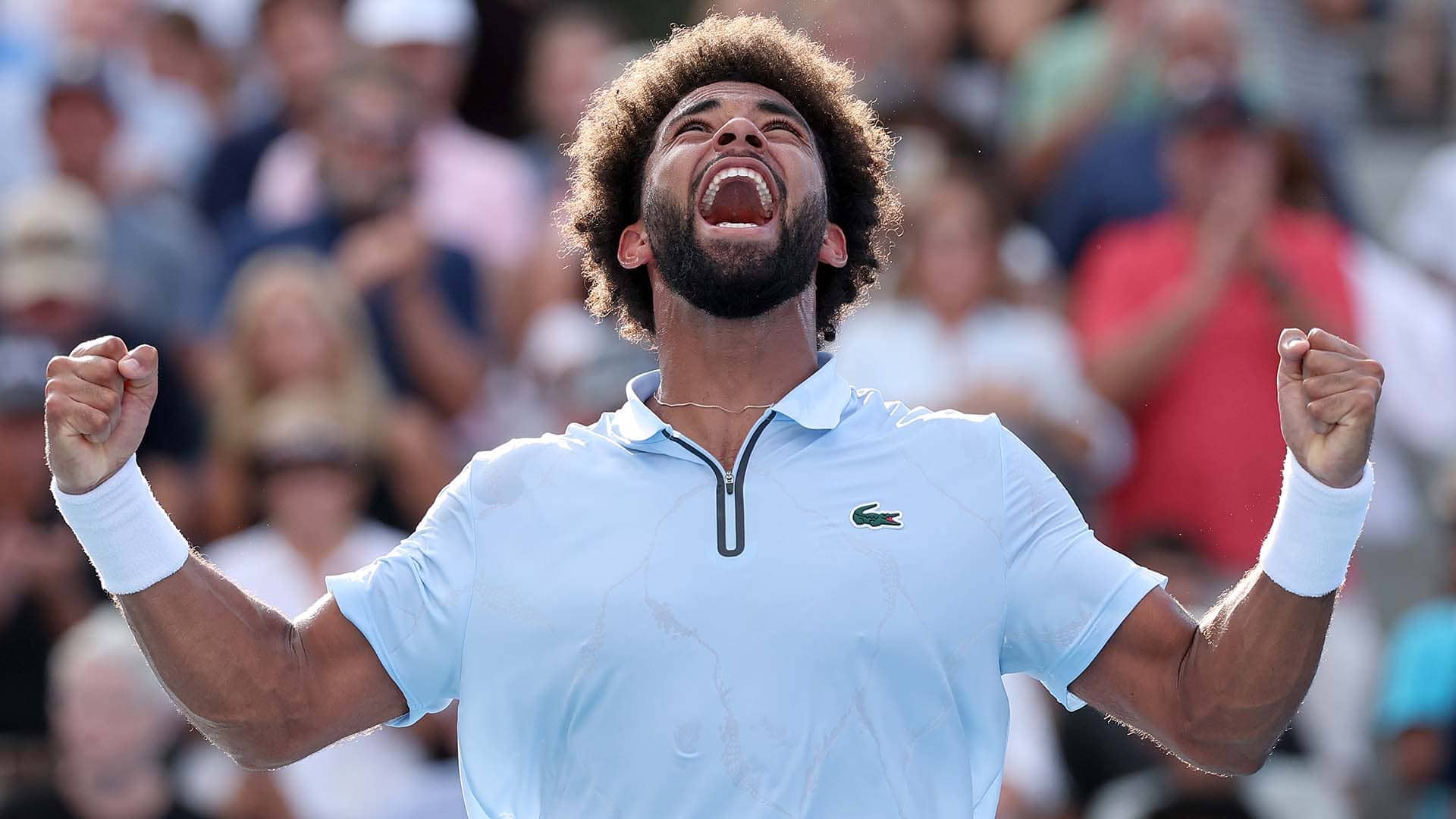
The harshest single statistic from the Alcaraz–Tiafoe opener was not the margin in games. It was the return ledger. Every time Tiafoe had to hit a second serve and the point was recorded, Alcaraz won it: 12 out of 12. That does not automatically mean all 12 were return winners, nor that every delivery was poor. It means Tiafoe did not win a single point from one of the most common and unavoidable positions in a tennis match.
Second serves already start at a disadvantage. A player must protect against the double fault while still hitting deep enough or with enough kick to prevent the returner from taking an immediate swing. When the returner has Alcaraz's anticipation, movement and ability to transition from defence to attack, the margin narrows further. The pressure also compounds: miss a first serve, hear the crowd recognize the opening, then feel forced to make the next ball exceptionally good just to get back to neutral.
That cycle explains why a close recent head-to-head did not guarantee another thriller. Tiafoe possesses the athleticism and shot-making to disrupt Alcaraz, but his game needs sufficient first-serve security to get a foothold. Against a returning performance this severe, he could not reliably start points on his own terms. And once a rival has broken early, the temptation to aim for more on the first delivery can make the second-serve exposure even worse. That is an interpretation of the pressure, not a claim that every individual miss followed that pattern.
The result should not erase what Tiafoe did to reach Turin. His 2026 campaign included a title in Halle, finals in Acapulco and Cincinnati, and another US Open semifinal. His Cincinnati final against Arthur Fils was a different kind of test: he recovered from a slow opening, forced a third set and still finished runner-up. At 28, he entered the ATP Finals for the first time on the strength of a sustained season, not a lucky draw or a single hot week.
There was also a sliver of resistance in this match. Tiafoe created three break opportunities in the second set, according to reporting from the event, but he could not convert them. That matters because the 6–2, 6–2 result risks suggesting that he never made Alcaraz defend his own delivery. He did. The difference was that these rare openings vanished, while the American's vulnerabilities on second serve remained open almost every game. The next group match should begin with a practical priority: win some lower-risk second-serve points, make the first serve count, and stop asking your best shots to rescue every service game.
GOATIFY
GOATIFY Tennis
Return pressure defined this match, but Tiafoe's 2026 breakthrough deserves context. Browse GOATIFY Tennis designs for fans and players.


Tennis GOAT Golden Racket & Ball Decal Sticker
Add tennis personality to your favourite gear.
Shop Now ↗
A four-and-a-half-month layoff has produced a strangely fresh November Alcaraz
To understand why Monday's performance felt so sharp, it helps to rewind to the part of the calendar Alcaraz did not play. A right-wrist injury interrupted his 2026 season for about four and a half months. Instead of grinding through the middle months, he spent a long stretch away from tour matches and returned at the US Open. That interruption was costly in opportunities and rhythm, but the late-season consequences have not been uniformly negative.
After returning, the Spaniard climbed back toward his most dangerous level. The title in Tokyo came first, followed by Vienna and Paris. The last two of those were indoors, a surface and setting that once looked less natural for a player associated with spectacular court coverage and improvisation. The Vienna–Paris sweep offered a credible reason to believe his timing was transferable to the conditions in Turin. Beating Tiafoe now adds a tenth consecutive victory, not merely one encouraging practice report.
There is an important difference between freshness and proof of perfect health. Alcaraz had tape around his right knee against Tiafoe. Contemporary match reporting said he moved freely and showed no obvious discomfort, but a visible wrap does not tell us what was being treated, whether it was precautionary or whether his condition will be unchanged by the weekend. Nothing in the match evidence justifies inventing a medical diagnosis. His return from the wrist issue is documented; the knee observation is an observation.
The player's own description of his mood was more revealing than any speculation. He explained that the unusual months away had left him eager to play, compete and chase more opportunities. A season can sometimes empty a top player before November even arrives. This one has apparently left Alcaraz with the opposite sensation: unfinished business and energy to spend. Psychological momentum can never replace sound execution, but it helps explain why an elite player might be embracing the season finale rather than merely surviving it.
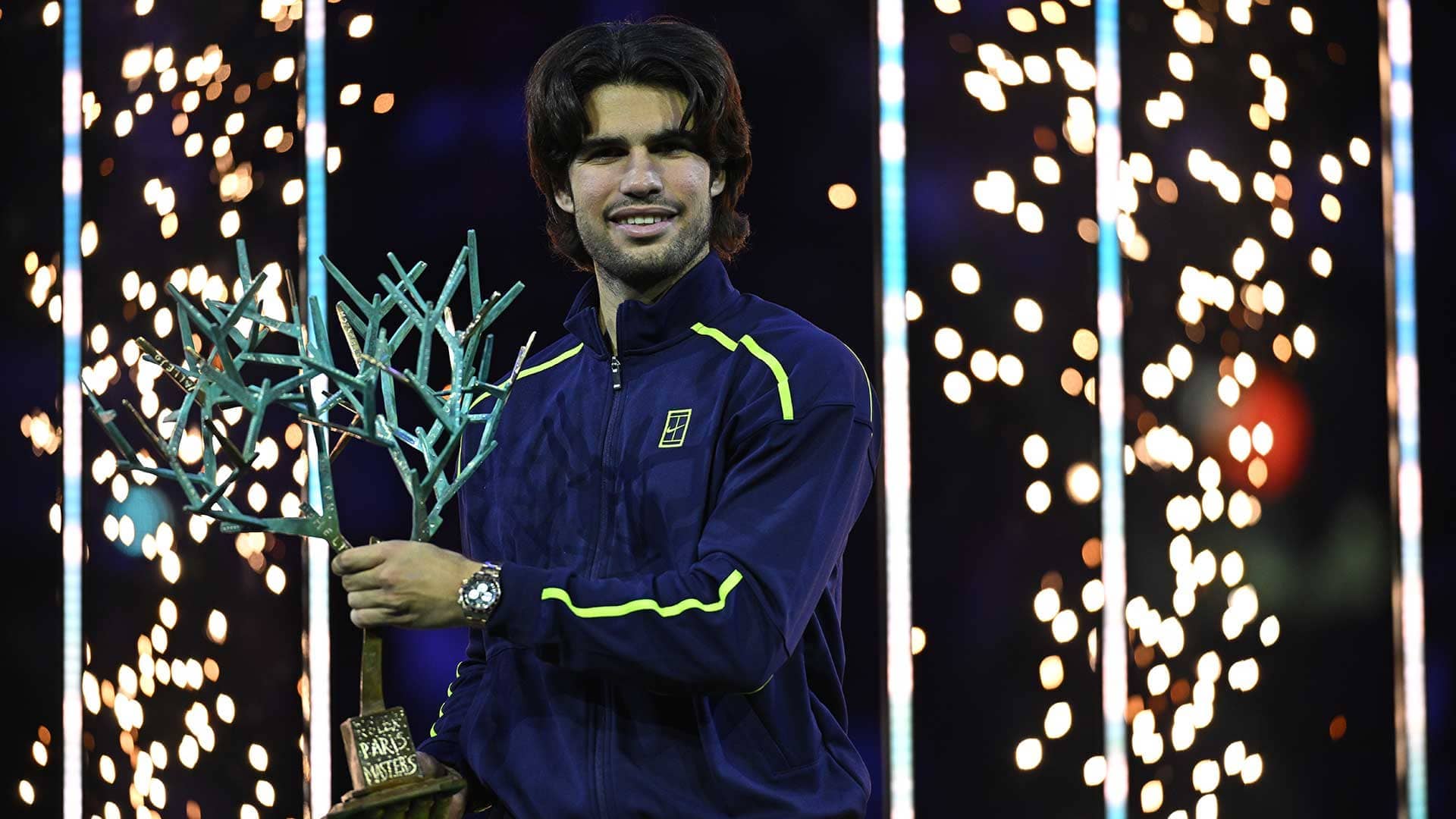
The Paris title is especially useful context. On November 8, Alcaraz defeated Ben Shelton 7–6, 7–5 to lift his first Rolex Paris Masters crown. That final demanded patience through a tight opener and an opponent whose serve could take entire games out of his control. Eight days later he beat Tiafoe by not allowing the contest to become tight at all. Different solutions, similar result. The developing story is not that Alcaraz has discovered one tactic. It is that he appears increasingly comfortable using the right one for a particular opponent.
One more distinction matters. Jannik Sinner, who defeated him in the 2025 Turin final and had won the previous two editions, is absent after ending his season with a knee injury. The defending champion's absence changes the field, but it does not hand Alcaraz the trophy. Zverev, Medvedev, Shelton and the rest have their own routes to the knockouts. The Spaniard's fresh legs and recent titles make him a contender; they do not make the next four matches formalities.
One dominant win buys Alcaraz leverage, not a semifinal ticket
The tournament format is the reason the distinction between a brilliant start and a finished job cannot be overstated. Turin begins with two four-player groups. Each player faces the other three in his group, and the best two advance to the semifinals. A convincing straight-sets win improves a player's position, particularly if tiebreak calculations eventually become relevant, but it is not an automatic place in Saturday's knockout draw. Two further group matches still have to be negotiated.
GOATIFY
GOATIFY Tennis
Alcaraz's comeback, Vienna and Paris titles have changed his late-season story. Discover GOATIFY Tennis gear alongside the analysis.


Tennis GOAT Golden Racket & Ball Decal Sticker
Add tennis personality to your favourite gear.
Shop Now ↗For Alcaraz, those opponents come from a varied Ivan Lendl Group. Daniil Medvedev is a former ATP Finals champion whose patient baseline patterns and changes of pace demand a different form of discipline. Flavio Cobolli has the benefit of Italian support and the energy of a breakthrough season. Neither should be judged through the lens of what happened to Tiafoe's second serve. A match that rewards taking cuts at slow second deliveries does not necessarily predict how to attack a more secure service pattern or a player who thrives when rallies become awkward.
Medvedev's profile offers an especially important stress test. He is comfortable absorbing pace, constructing long points and inviting opponents to choose between forcing a low-percentage shot and tolerating another ball. Against that kind of counterpunching, Alcaraz's first-set efficiency might mean playing more patiently rather than hitting more winners. Cobolli brings a different challenge: a debutant on home soil has less institutional expectation but considerable emotional upside. Alcaraz will need to adjust his return position, point construction and risk tolerance to each opponent rather than chase the same 6–2 pattern.
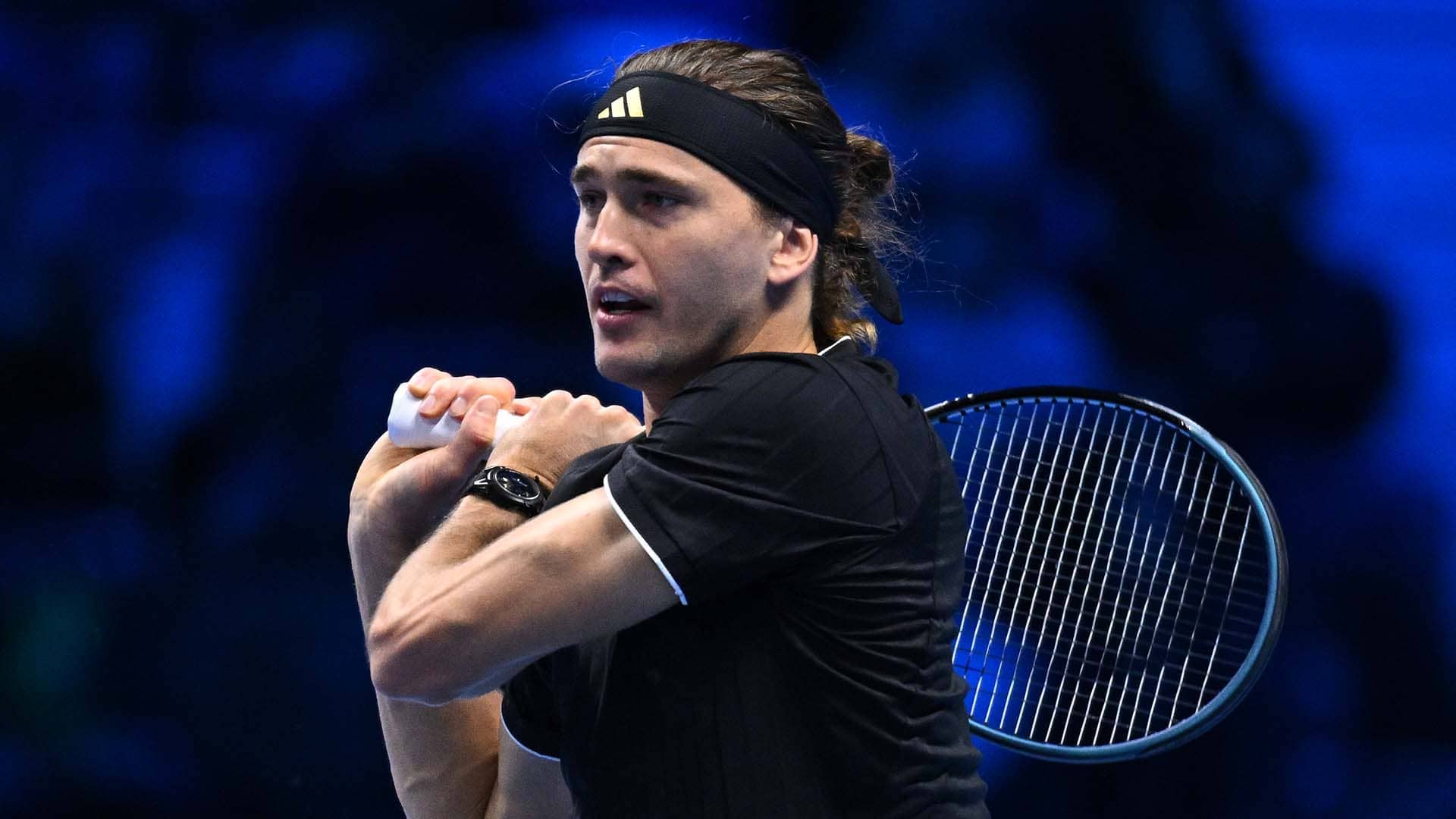
The other half of the draw is hardly empty. Alexander Zverev, the world No. 1 and a two-time Finals champion, opened Sunday by defeating Rafael Jódar 6–4, 6–4. Ben Shelton also started with a win in the John McEnroe Group, which includes Arthur Fils. Zverev's serve and backhand make him formidable indoors, and Shelton's explosive left-handed power already tested Alcaraz in the Paris final. The potential semifinal and final opponents are therefore capable of asking very different questions.
For Tiafoe, the round robin is a lifeline as well as a source of urgency. A first-match defeat is not elimination. He can still respond against Medvedev and Cobolli, although the heavy scoreline gives him little margin to waste. The instinct after being comprehensively outplayed may be to tear up the game plan. That would ignore the strong 2026 season that earned him a berth. More productive is to identify the few things that must change immediately: a second serve that prevents the returner from dictating, more cheap points on the first serve, and greater efficiency when break chances arrive.
The wider context makes the next days unusually compelling. Alcaraz is chasing the one major season-end trophy he still lacks, Zverev is pursuing another, and several debutants are learning what it feels like to have every match count. On November 16, Alcaraz made the most persuasive opening argument. The competition's structure ensures that everyone still has the opportunity to answer it.
Two numbers define the opening match: 6–2, 6–2 and 12–0 on Tiafoe's second-serve points. The first tells you who won; the second helps explain why Tiafoe never managed to turn this into another five-set-style struggle. Alcaraz's willingness to attack without rushing, combined with the momentum from Vienna and Paris, was overwhelming on Monday.
The next standard is higher. A true ATP Finals title run requires different solutions over several days and against opponents who will not all offer the same vulnerability. Alcaraz has regained the sharpness that injury threatened to interrupt, and the absence of the defending champion removes one familiar obstacle. But Medvedev, Cobolli and whatever follows still have to be beaten on the court. Turin's opener looked like a statement. The next matches will determine whether it becomes a championship.
GOATIFY
GOATIFY Tennis
Shop GOATIFY tennis products from the Tennis-filtered collection scope.
Tennis GOAT Golden Racket & Ball Crewneck Sweatshirt
A tennis fan design for everyday wear.
Shop Now ↗


















