

Canelo's Team Is Studying Willy Hutchinson — Is Another 175-Pound Title Shot Worth the Risk?
GOATIFYSaul “Canelo” Alvarez has barely had time to enjoy reclaiming a world title, and his team is already looking one division higher. On November 10, trainer and manager Eddy Reynoso identified newly crowned WBC light-heavyweight champion Willy Hutchinson as a possible next opponent. It is a striking idea: one week after Alvarez beat Christian Mbilli to restore his standing at 168 pounds, the possibility of another championship challenge at 175 is suddenly in public view.
There is an important distinction between a trainer studying a matchup and two camps signing a contract. Reynoso has acknowledged the option, not announced an agreement. No confirmed date, venue, weight stipulation or signed deal has been presented. But the choice of name tells a story about Alvarez's ambitions and about the speed with which Hutchinson's career changed after his November 7 victory over Joshua Buatsi.
This is not merely an established superstar picking a convenient opponent. Hutchinson carries a genuine WBC belt, brings natural light-heavyweight dimensions and has a fresh result that puts him in the conversation. Alvarez brings far more big-fight experience, elite counterpunching and a previous victory at the same weight. He also carries the memory of a clear defeat when he last tried to conquer a leading light heavyweight. The possibilities and dangers are inseparable.
Reynoso is studying Hutchinson — but a fight is not signed

Reynoso's public comments are meaningful because he did more than mention Hutchinson in a long list of potential names. He said the Scot is an option and explained that he has reviewed the Buatsi fight and followed Hutchinson over several bouts. The trainer believes his fighter could be competitive and successful against the new champion. That is an expression of technical confidence, though it stops well short of confirmation that negotiations are underway.
The timing matters. Alvarez returned from an extended absence and defeated previously unbeaten Christian Mbilli on October 31 in Riyadh to regain the WBC super-middleweight title. The unanimous decision was built around control, timing and accurate counters rather than a frantic battle at Mbilli's preferred tempo. The scores were 115-112, 116-111 and 117-110, according to contemporary fight reports. It did not erase Alvarez's 2025 loss to Terence Crawford, but it showed that his defensive reading and punch selection remained high-level weapons after a long break.
That changes the shape of the next decision. A fighter trying to recover momentum might take a straightforward defense at his comfortable weight. A newly restored champion with enormous drawing power can instead ask whether another division offers a more compelling achievement. Hutchinson is attractive in that context because his title is both prestigious and newly acquired. The WBC connection would make the stakes simple for viewers: Alvarez holds the organization's 168-pound belt and could try to win its 175-pound championship as well.
At the same time, a championship in one division does not automatically settle the conditions for moving into another. A team would still need to agree on weight, timing, financial terms, sanctioning details and the champion's own priorities. Hutchinson has a career to build independent of Alvarez, and contenders in the light-heavyweight division will have their own plans. The best reading of Reynoso's comments is that a serious candidate has entered the discussion, not that the rest of boxing has been told to clear its calendar.
Reynoso also has a different kind of credibility in this discussion: he has guided Alvarez through multiple changes in weight and style. That experience can help a smaller man choose the right rounds and distances. It cannot supply extra reach or remove the physical demands of absorbing shots from a natural light heavyweight. His homework on Hutchinson is only the beginning of that calculation.
GOATIFY
GOATIFY Boxing
Canelo's pursuit of another championship puts boxing's competitive spirit in focus. Explore GOATIFY boxing shirts, hoodies, tank tops, caps and stickers for fight fans.


Hutchinson earned his leverage by beating Buatsi in the rematch
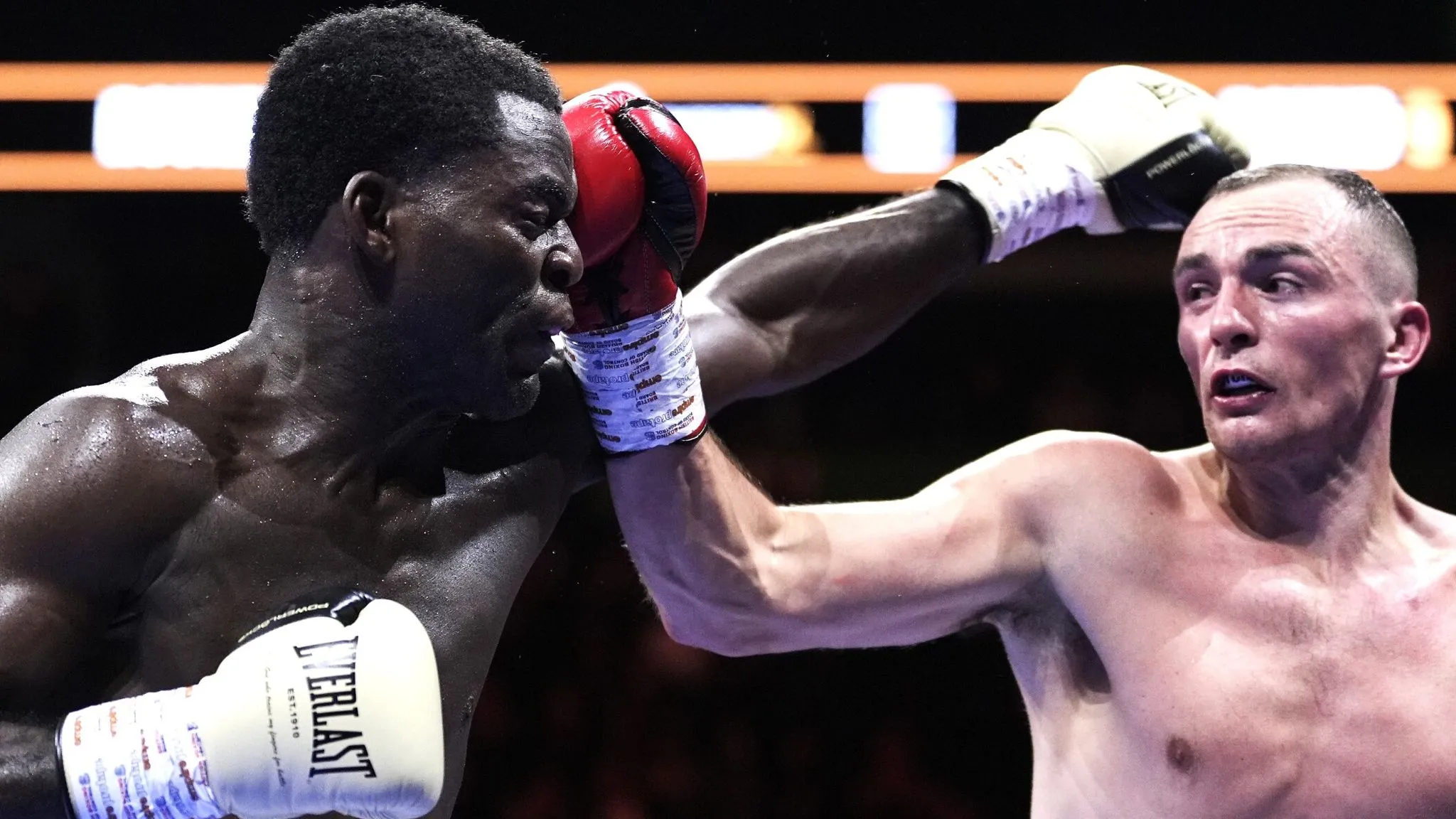
Hutchinson's place in the conversation was earned in Manchester, not created by the Canelo rumor. On November 7, he beat Joshua Buatsi by unanimous decision to win the vacant WBC light-heavyweight title. The scorecards read 117-112, 115-113 and 115-113. A title-winning performance against a familiar opponent is an especially powerful statement when the opponent has already beaten you.
In September 2024, Buatsi had edged Hutchinson by split decision. The rematch gave Hutchinson the opportunity to demonstrate progress over twelve rounds rather than simply argue that the first verdict was too close. Their second meeting remained competitive, with stretches of success for both men, but the judges agreed on the winner this time. Hutchinson came away not just with revenge but with one of the division's most recognizable belts.
The result makes him unusually interesting for a major 2027 matchup. He is not an untested prospect whose profile depends on one impressive knockout clip. He has experienced defeat at a high level, returned to the opponent responsible for it and produced a successful correction. Those are relevant details when considering how he might respond to an opponent who is superb at making adjustments during a fight. Against Alvarez, early success would not guarantee anything; the problem is maintaining a plan after the Mexican starts reading the rhythm and punishing predictable entries.
There is also a tactical difference that fans should not miss. Hutchinson has been operating at 175 pounds and is naturally accustomed to the division's range and physicality. Alvarez, by contrast, would be the fighter arriving from 168. The larger man could seek to work behind distance, keep Alvarez resetting his feet and force exchanges on terms that do not allow the challenger to counter comfortably. But controlling range against Alvarez is easier to describe than to accomplish. Giving him a repeatable jab or becoming stationary after combinations is exactly how a tactical advantage can disappear.
A proposed Canelo fight would unquestionably be a transformative commercial opportunity for Hutchinson. It could also disrupt a division in which other contenders are positioning themselves for the WBC champion. Names such as Anthony Yarde have already been connected to his future following the Buatsi result. Hutchinson's fresh title gives him options and bargaining power, not an obligation to accept whichever superstar comes calling. For now, the confirmed achievement is the Buatsi win; everything about a Canelo challenge remains conditional.
Kovalev proved Canelo could win at 175; Bivol exposed the danger
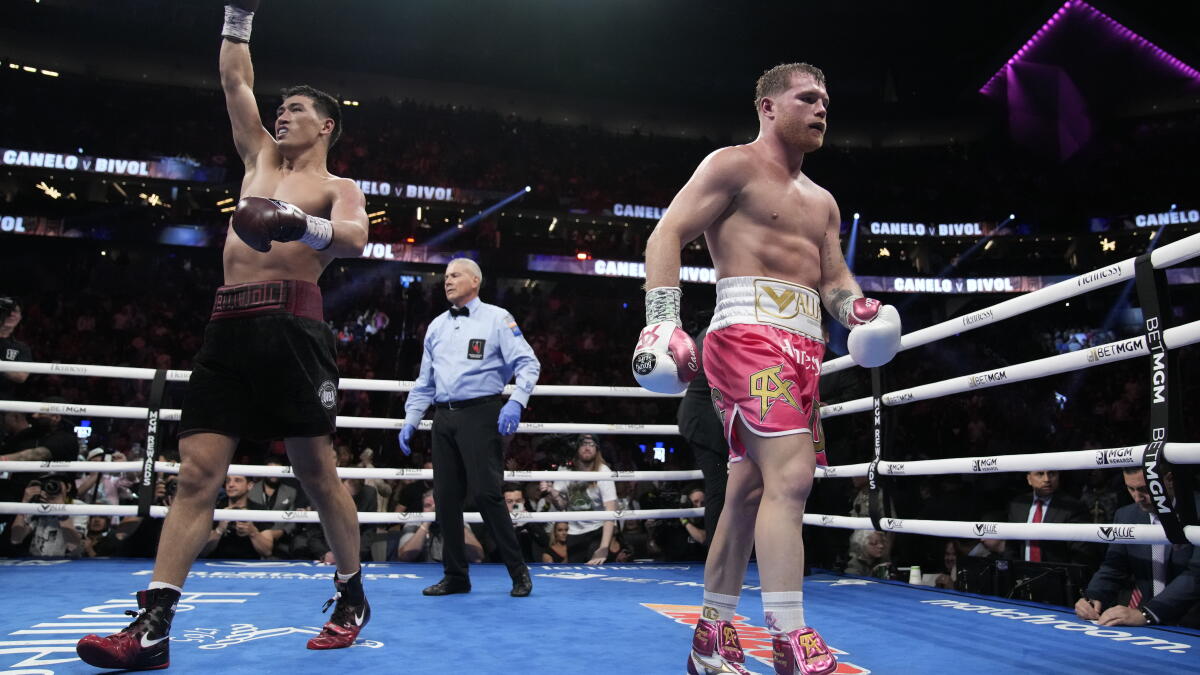
Alvarez's history at 175 pounds explains both why the Hutchinson suggestion is plausible and why it should not be treated as an easy extra belt. In 2019 he stepped up and stopped Sergey Kovalev in the eleventh round to claim the WBO light-heavyweight championship. It was proof that his timing, body work and finishing instincts could travel into a heavier class even against a tall, established champion.
His next major light-heavyweight test did not end the same way. Dmitry Bivol outpointed Alvarez over twelve rounds in 2022, demonstrating how a disciplined, mobile bigger opponent could take away comfortable countering opportunities. The contrast between those two fights is more informative than a blanket claim that Alvarez either can or cannot win at 175. Styles, footwork, work rate and the ability to reset after exchanges may matter as much as the numbers on the scale.
Hutchinson is not Kovalev and he is not Bivol. His Nov. 7 bout with Buatsi offers more useful contemporary evidence than simplistic comparisons to famous names. Does he stay responsible after attacking? Can he keep his jab active without becoming predictable? Does his pace hold late against a fighter who takes away obvious openings? Those are the questions a Canelo camp would be examining. The likely betting favorite would be Alvarez because of his championship experience and proven level, but an older superstar moving up cannot assume that experience alone neutralizes reach, output and strength.
The wider matchmaking picture is still open. Reports have connected Alvarez with other opponents at super middleweight, including Lester Martinez and Hamzah Sheeraz, while a future date in Saudi Arabia has been discussed without being formally fixed for Hutchinson. Selecting the Scot would put a different prize on the table: an immediate attempt to reclaim a world title at 175. Staying at 168 could mean defending the belt he just won and keeping more of the size equation on his own side. Neither route is inherently cowardly or courageous; the sporting case depends on who is actually available and on what terms.
It is also worth remembering the uncertainty around championships and sanctioning arrangements. A WBC title at 168 does not make a 175-pound contest official, and holding belts across divisions can produce scheduling and mandatory-defense complications. Those are matters for the fighters, teams and governing bodies to clarify if negotiations ever become concrete. Until then, the headline is an intriguing scouting decision from Reynoso, not a completed superfight.
GOATIFY
GOATIFY Boxing
From legendary champions to the next big contender, celebrate boxing culture with GOATIFY fight-inspired apparel and accessories.
Hutchinson's title-winning rematch made him a legitimate name. Reynoso's comments made that name newsworthy on the other side of the Atlantic. If negotiations eventually follow, the attraction is obvious: the established four-division champion pursuing another historic night against a fresh WBC titleholder who has genuine size and momentum.
The more important question is not whether Alvarez can draw a crowd for a return to light heavyweight. He plainly can. It is whether the balance of skill and physical advantage looks better against Hutchinson than it did against Bivol. A trainer studying the footage is the first sign that the team wants an answer. A signed fight, and then twelve rounds in the ring, would be needed to provide one.

















