Dalton Knecht Is Fighting for More Than a Lakers Roster Spot
GOATIFYDalton Knecht arrived at Lakers training camp in an unusual position for a former first-round pick on a guaranteed rookie contract: he may need to win his place on the roster before he can worry about winning minutes. Los Angeles has 16 standard contracts and can carry only 15 into the regular season. Multiple rival executives reportedly expect Knecht to be the odd man out if the Lakers cannot solve the crunch with a trade.
That would have sounded extreme after his rookie flashes. Knecht once looked like exactly the kind of low-cost shooter a star-heavy team should keep. But his second season shrank to 10.2 minutes and 4.2 points per game, and the Lakers rebuilt their supporting cast around a different priority after LeBron James left: defense, athleticism and players who can survive around Luka Dončić and Austin Reaves without needing the ball.
JJ Redick has praised Knecht's professionalism and said he opened camp with three good practices. That matters. It also does not erase the roster math. Knecht's fight is now a useful test of how Los Angeles values specialists in a roster designed to contend immediately.
The roster math is real, and pedigree does not protect Knecht
The Lakers' problem is brutally simple: there are more standard contracts than opening-night roster spots. That turns training camp into a comparison rather than an isolated evaluation. Knecht can practice well and still lose if another bubble player offers a skill Los Angeles values more.
His résumé gives him a case. The No. 17 pick in 2024 showed immediate shooting upside as a rookie, including a 37-point game and stretches when his movement shooting changed spacing. But the second season went the wrong direction. His minutes nearly halved, his scoring fell to 4.2 points per game and he spent long stretches outside Redick's trusted rotation. Once a coach has already shown reluctance to use a player in meaningful games, a guaranteed contract is less protection than it looks.
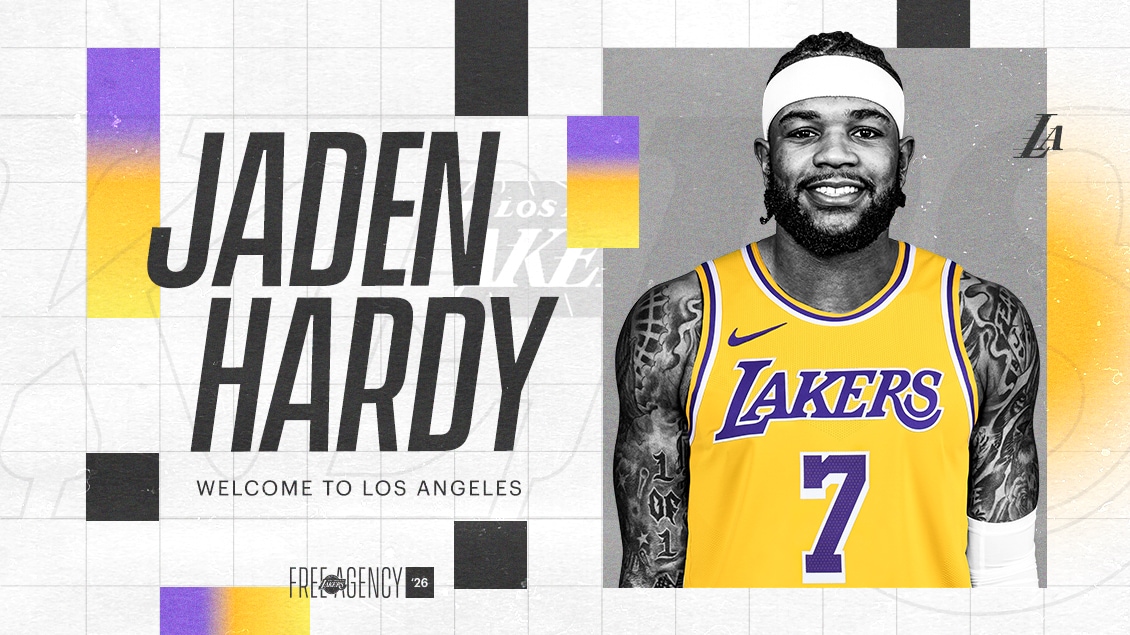
Jaden Hardy and Bronny James complicate the picture because the comparison is not purely statistical. Hardy offers more self-creation. Bronny's pathway is built around point-of-attack defense, off-ball shooting and developmental upside. Knecht's strongest argument is still the cleanest one: he is a 6-foot-6 shooter with NBA proof that he can get hot. The question is whether that single strength outweighs the overlap and defensive concerns elsewhere.
The contract structure makes that comparison even sharper. Knecht is inexpensive enough that salary alone does not force Los Angeles to move him, so the decision can stay basketball-driven. That removes an easy excuse. If the Lakers choose another guard or wing, they are effectively saying the other player's defensive utility, creation or developmental trajectory matters more than Knecht's shooting. For a former first-rounder, that is uncomfortable, but it is also the reality of a contender with a hard roster limit: draft status can earn opportunities, not permanent protection.
Knecht’s shooting still matters — but it has to outweigh the defensive cost

There is a basketball reason not to give up on Knecht. Dončić and Reaves create advantages that become more valuable when the weak side is occupied by a shooter defenses respect. Knecht does not need 15 dribbles to contribute. He can sprint into a relocation three, punish a late tag or turn a Dončić drive into three points without changing the shape of the possession.
That archetype is useful, but it is no longer rare enough on this roster to guarantee a place. Los Angeles added more perimeter options and can build spacing in different ways. If Knecht is merely a good shooter rather than a movement weapon who bends coverage, the defensive trade-off becomes harder to justify.
That is the part Redick's preseason evaluation must answer. Knecht does not need to become an elite stopper in three weeks. He needs to show he can execute the scheme, compete through screens, avoid being targeted every possession and make enough correct rotations that his offense stays on the floor. For a contender, the relevant question is not whether a player has one NBA skill. It is whether opponents can erase that skill by attacking his weakness at the other end.
The best version of Knecht therefore has to create a real spacing tax. Defenders should be reluctant to help off him, trail him through actions and pay for even brief mistakes. That kind of gravity has value beyond his own box score because it opens cleaner driving lanes for Dončić and Reaves. If opponents feel comfortable helping from Knecht and then hunting him defensively, the equation flips. His preseason is less about raw points than proving his shooting changes possessions enough to justify the matchups Los Angeles may have to protect.

The post-LeBron Lakers are building around defense and versatility

Los Angeles' summer made the hierarchy clear. Dončić is the offensive center of gravity, Reaves is a major secondary creator and Walker Kessler was acquired to protect the rim and give Luka a vertical target. Around them, the Lakers invested in players such as Quentin Grimes, Matisse Thybulle and Ziaire Williams — wings whose value starts with defensive activity and lineup flexibility.
That construction puts pressure on Knecht because it changes what a bench wing is supposed to provide. A roster built around two offense-first guards needs perimeter defenders who can absorb difficult assignments. If those defenders can also hit open threes, the case for a shooting specialist narrows quickly.
This is why the final cut should not be framed as Los Angeles suddenly deciding Knecht cannot play. It is a fit decision in a roster with a very specific ecosystem. Dončić can generate efficient offense with screeners, cutters and competent shooters. The marginal value of another scorer is smaller than the marginal value of a defender who keeps Luka and Reaves out of the hardest matchups. Knecht has to prove his shooting is powerful enough to change that equation.
That philosophy also explains why versatility has become such a valuable currency for this roster. A wing who can defend two or three positions gives Redick more freedom to change coverages without substituting, and that matters around high-usage creators. Los Angeles can already manufacture shots through Dončić and Reaves; it cannot manufacture defensive resistance as easily. Knecht does not need to copy Grimes or Thybulle, but he has to show enough functional defense that the Lakers are not choosing between offense and survival every time he checks into a close game.

Preseason is Knecht’s chance to force the Lakers to change the equation
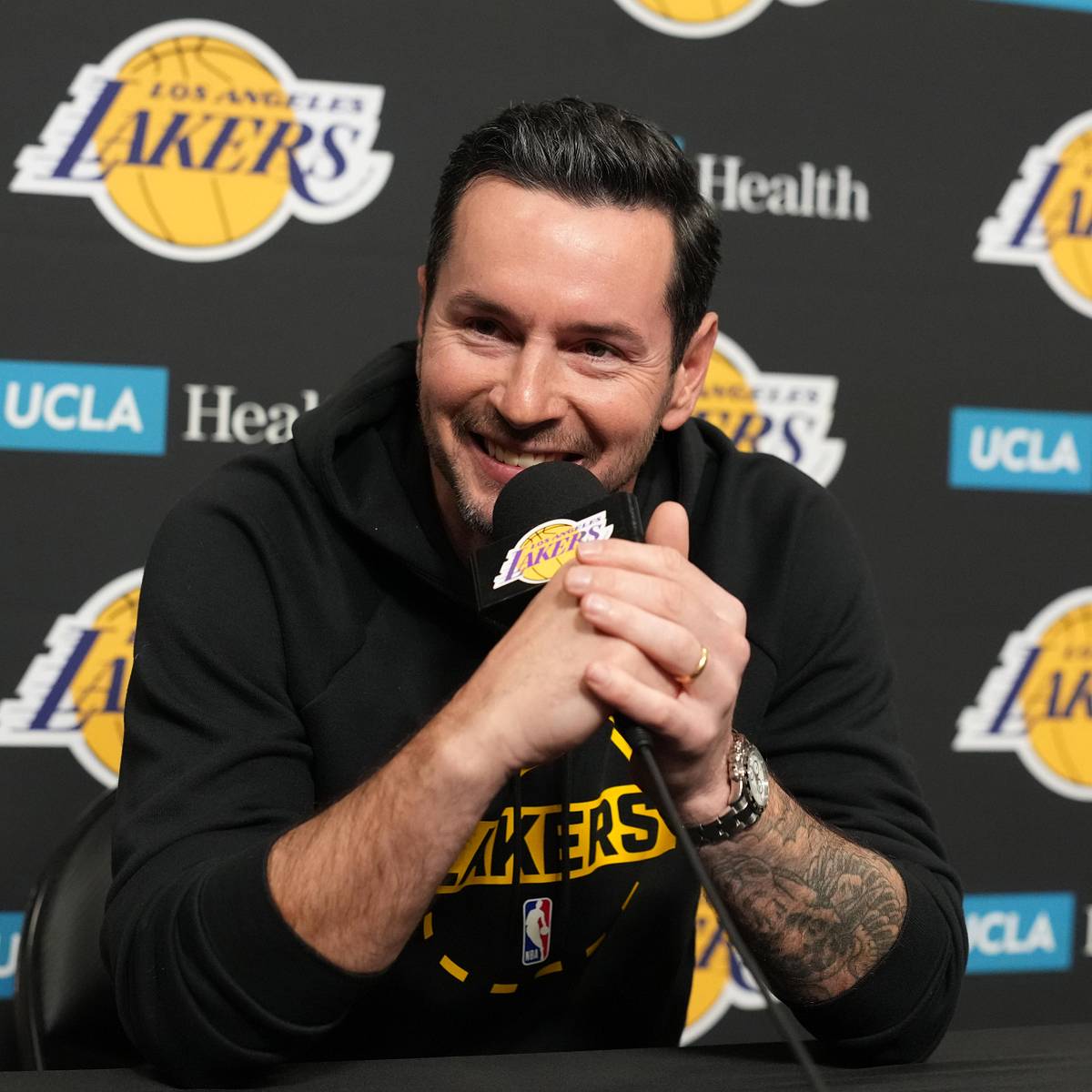
Redick's public praise gives Knecht something important: a real audition rather than a ceremonial camp before a predetermined exit. The coach called him a pro, praised his offseason work and said he had three good practices. The next step is translating that into possessions that are hard to ignore once preseason begins.
The checklist is straightforward. Make open threes at volume. Move decisively without the ball. Compete defensively without fouling. Show that a second unit can run offense through his gravity without having to hide him on every defensive trip. If he does those things, the Lakers may decide his $4.2 million salary is too useful to discard and solve the roster crunch elsewhere.
There is also a trade-market dimension. A strong preseason can make Knecht easier to move for value rather than simply waive. His rookie-scale contract is manageable, he is still only 25 and teams outside the contender tier can offer him a larger developmental role. That may ultimately be the cleanest outcome if Los Angeles believes its rotation has moved past him.
What Knecht cannot afford is ambiguity. He already has two seasons of evidence and a front office that has explored moving him before. Training camp is not about reminding the Lakers why they drafted him. It is about showing that the player he is now fits the team they are now.
The timing gives Knecht one advantage: preseason creates visible evidence quickly. A few strong games will not erase two seasons, but they can change how rival teams value him and how comfortable the Lakers feel keeping him. Conversely, passive possessions or repeated defensive breakdowns would reinforce the concerns that created the bubble in the first place. That makes every stint useful information for two audiences at once — Redick's staff deciding the rotation and opposing front offices deciding whether Knecht is worth acquiring before Los Angeles has to make its final cut.
Knecht still has a path. Shooting is scarce, cheap shooting is valuable, and preseason can change the order quickly. But the Lakers no longer need to preserve a former first-round pick simply because of where he was drafted. They need the 15 players who best support Dončić, Reaves and Kessler.
If Knecht stays, it will mean his shooting created enough separation to justify the defensive trade-off. If he is traded or waived, the lesson is harsher but clear: in this version of Los Angeles, a one-dimensional scorer has to be exceptional at that dimension. The roster crunch is not really about one final seat. It is about the identity the Lakers want every seat to reinforce.