Jackson's Double Ends City's Perfect Start — Villa Expose the Weak Spot
GOATIFYManchester City's seven-for-seven Premier League start ended in the place where their recent visits have become most uncomfortable. Aston Villa beat the leaders 2–1 at Villa Park on Saturday, October 24, with Nicolas Jackson scoring twice and turning two defensive mistakes into the difference between an eighth straight league win and a first defeat. Erling Haaland equalised early in the second half, but the moment that seemed to restore City's authority lasted only minutes.
The result matters beyond the scoreline. City still have 21 points and remain top for now, yet Arsenal began their home match against Everton with a chance to draw level. For Unai Emery, the win was evidence that Villa's slow domestic start has given way to a much sharper, more confident side. For Enzo Maresca, it exposed a problem that a perfect league record had concealed: possession and attacking talent cannot compensate for repeated mistakes when opponents have the pace and courage to attack the space behind them.
Jackson needed six minutes to expose the weakness in City's back line
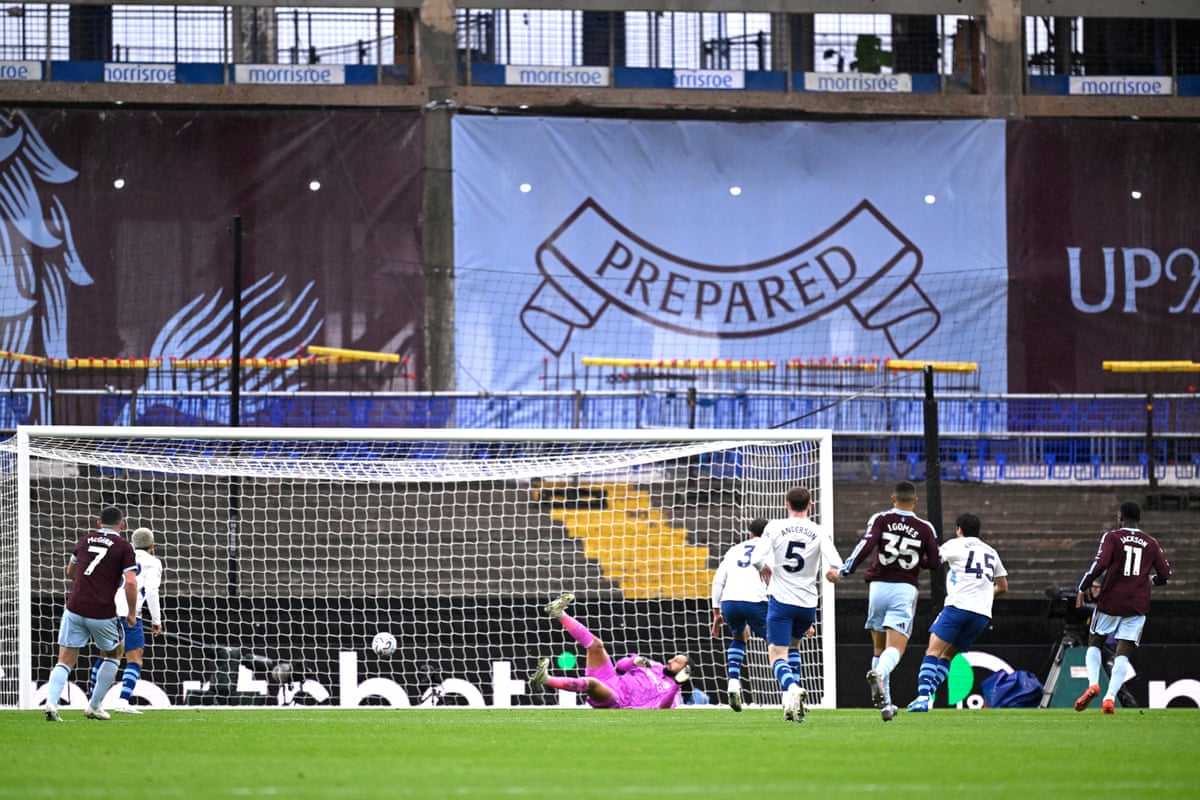
Villa did not spend the opening minutes waiting to see whether the league leaders would settle into their usual rhythm. They pressed with urgency, challenged City's first passes and immediately made the visitors defend while moving backwards. The decisive early sequence began when Marc Guéhi failed to control a pass from Rúben Dias. John McGinn reacted faster than the defender, and Jackson had the space and composure to finish in the sixth minute.
That error was significant because it was not an isolated technical accident in an otherwise comfortable half. Guéhi had already been under scrutiny after a difficult previous league outing against Ipswich. Jackson repeatedly positioned himself where a poor touch could become a direct route to goal, then used his strength to make the next challenge uncomfortable. By the half-hour mark, the defender had been booked for bringing him down near the penalty area. City replaced Guéhi at half-time rather than risk leaving him in another series of exposed duels.
Jackson's performance was more than the two finishes. As Villa's lone central striker, he provided a target when his team needed to clear pressure, offered an immediate run into the channels when City pushed forward and gave McGinn a reliable outlet. Those movements allowed Villa to threaten without dominating the ball. The contrast was revealing: City could string together long periods of possession, but a single well-timed Villa pass forced their defenders into an urgent race towards their own goal.
The home side's domestic position had made this look like a mismatch on paper. Villa entered the weekend with only eight points from seven league games, while City had taken the maximum 21. Yet Villa's three Champions League wins had already shown that Emery's squad could handle high-level opponents. The opening goal translated that European confidence into a Premier League statement, and it made the visitors play the rest of the afternoon against a scoreboard they had not expected.
Haaland's equaliser was real quality — not proof City had control
City were dangerous for long stretches after falling behind. Iliman Ndiaye attacked from the right, Rayan Cherki looked for pockets between Villa's midfield and defence, and Jeremy Doku tried to isolate Matty Cash on the opposite flank. Ndiaye struck the woodwork in the first half, while goalkeeper Zion Suzuki reacted sharply to prevent City's pressure from turning into an earlier equaliser. The visitors were creating moments; what they were not creating was a sense that Villa's counterattack had been neutralised.
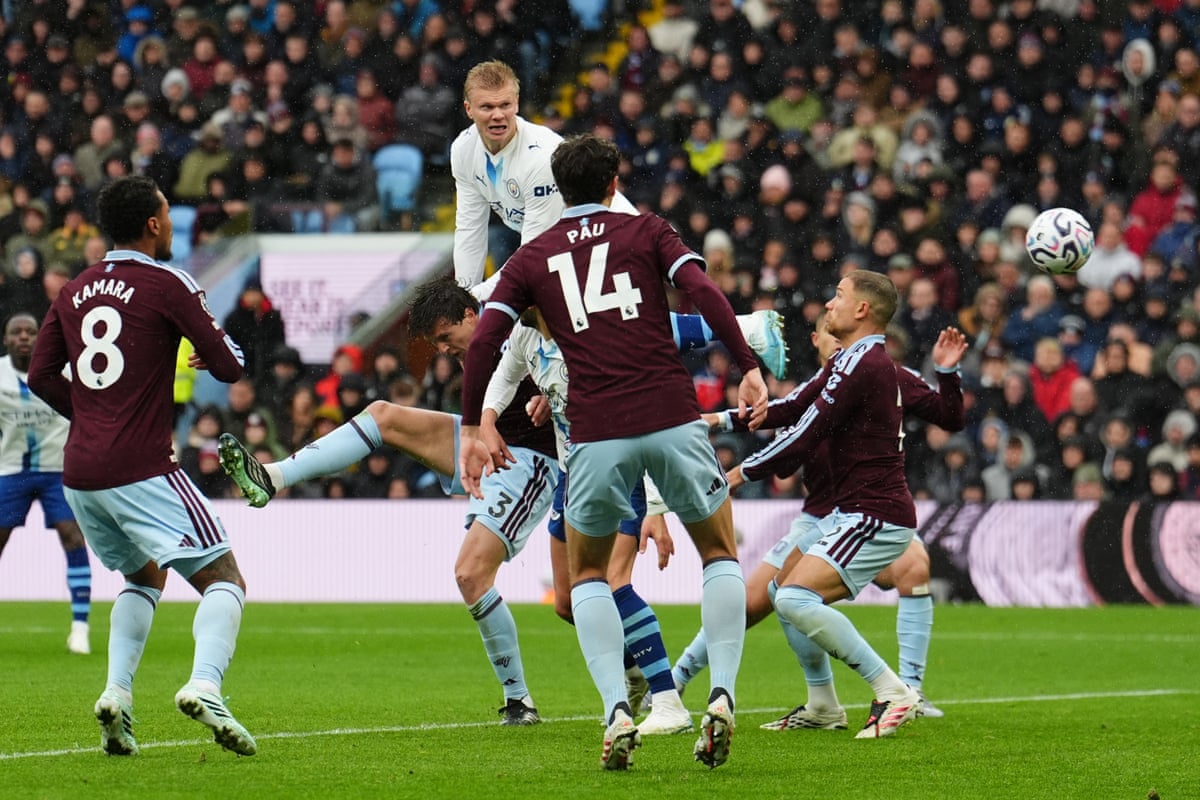
The breakthrough came in the 53rd minute. A free-kick move found Ndiaye wide, and his delivery gave Haaland the kind of close-range aerial chance he rarely wastes. The Norwegian climbed above the challenge and powered his header in, extending his scoring streak to seven successive league appearances. It was also his seventh goal in his last seven away league matches, another reminder that even when City are below their best, their centre-forward can turn one clean service into a goal.
That should have been the moment for Maresca's side to tighten their structure. A team that had won its first seven league games had finally erased the deficit, and the home crowd could reasonably have feared a familiar reversal. Instead, City continued to leave opportunities for Villa to break. The shape of the match had not fundamentally changed: City's full-backs and midfielders were still required to advance, and Jackson still had space to attack whenever possession was lost.
There was also a personnel question. Phil Foden had scored a midweek Champions League hat-trick against AEK Athens but started on the bench at Villa Park. Maresca introduced him and Rico Lewis at half-time, with Guéhi and Cherki making way, and later turned to young Ryan McAidoo. The changes brought energy and helped City circulate the ball, but they did not solve the more important problem of protecting the next transition. Haaland could level the score; he could not, by himself, make the defence less vulnerable.

Mbaye's burst and Donnarumma's error made Jackson the match-winner

The winning goal arrived almost immediately after Villa introduced Ibrahim Mbaye. Jackson received the ball in a central area, turned away from pressure and sent his Senegal international teammate into space on the right. Mbaye carried it forward against a retreating City defence, then cut the ball back into Jackson's path. The striker had kept moving after releasing the pass, arriving in position to finish the move he had started.
His first-time effort was not an unstoppable shot into the top corner. It went towards Gianluigi Donnarumma, whose attempted save allowed the ball to slip underneath him. That distinction matters when diagnosing City's defeat. The visitors were punished both by the structural weakness that allowed the counterattack to develop and by an individual mistake at the final line of defence. The opening goal had started with Guéhi's heavy touch; the second ended with Donnarumma failing to keep out a shot he would normally expect to stop.
Jackson's contribution should not be reduced to those errors. He forced City to defend actions they would rather have avoided. His turn before the second goal removed the immediate pressure, his pass released the runner at the right moment, and his recovery into the box created the finishing option. The combination showed why Villa can be so dangerous when opponents commit bodies forward. Emery did not need a long spell of possession to manufacture a chance; he needed his striker and substitute to execute two or three movements at full speed.
The winner also altered the emotional direction of the game. City had barely had time to enjoy Haaland's equaliser before they were behind again. Their later possession looked increasingly hurried, with crosses missing their targets and attacks losing precision as the clock ran down. Jackson was withdrawn to a standing ovation with roughly eight minutes remaining, having supplied both the scoreline and the tactical reference point that made Villa's performance possible.
Suzuki and Maatsen sealed it — and the title race suddenly tightened
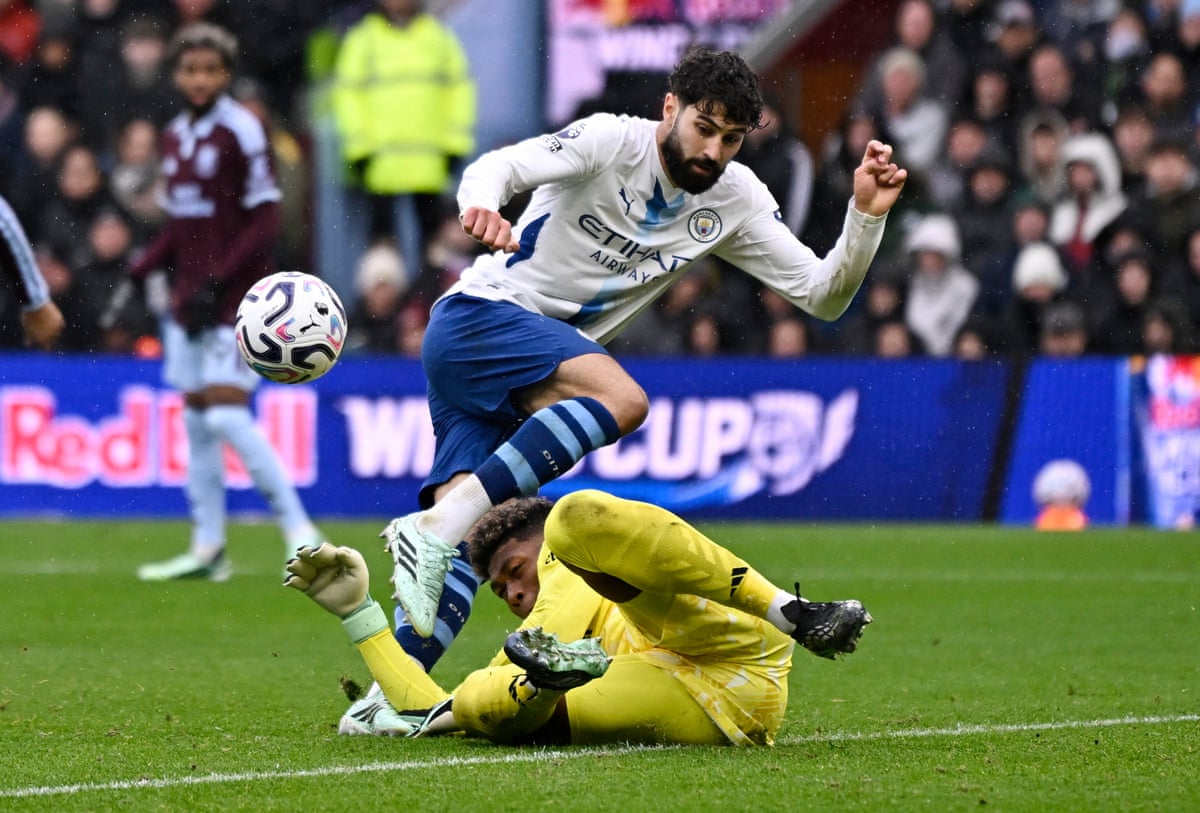
Villa still had to survive the closing stages, and their resistance was as important as Jackson's finishing. Suzuki made several saves across the afternoon, including an aggressive intervention when Joško Gvardiol reached a loose ball in the penalty area. Matty Cash worked hard to prevent Doku from turning wide possession into a steady stream of dangerous crosses. Boubacar Kamara protected the space in front of the centre-backs, allowing Villa to absorb pressure without abandoning their own counterattacking threat.
The most dramatic late moment came when Haaland rose for another header and Ian Maatsen cleared the effort from near the goal line. It was the kind of intervention that often disappears behind the headline of a two-goal striker, but it preserved all three points. Villa were not simply lucky that City failed to score a second time: they kept making the last defensive action, and they made those actions while knowing one lapse could undo nearly an entire afternoon's work.
For Emery, the victory extended an unusually strong recent run in this fixture. Villa have now beaten City in three consecutive Premier League meetings, a sequence no club had achieved against them since Liverpool in 2016. They also have four straight home league wins over City. The immediate table picture remains modest — 11 points from eight games and sixth place at the final whistle — but the trend is more compelling. After taking only one point from their first four league matches, Villa have found a way to turn resilience into results.
City remain the leaders on 21 points, but the aura of invincibility has gone. Their defensive record has also become less comfortable: after conceding eight goals in their first nine competitive matches of the season, they have conceded nine across the next four. Those numbers do not erase seven league victories, yet they make it harder to dismiss the problems at Villa Park as a one-off. Arsenal entered their Saturday fixture against Everton three points behind, so the champions' first slip offered an immediate chance to tighten the race.
There is an off-field backdrop, too. City are appealing a guilty verdict concerning 114 alleged breaches of Premier League financial rules and deny wrongdoing. That process is separate from what happened on the pitch, but it adds pressure around a club whose league form had previously provided a powerful distraction. Maresca's more immediate task is footballing: reduce avoidable errors, make transitions safer and ensure the team does not depend on Haaland to rescue every uncomfortable game.

Villa did not beat Manchester City by outpassing them; they beat them by identifying where City's control was fragile. Jackson punished Guéhi early, connected with Mbaye to strike again after Haaland's equaliser, and gave Emery's side an outlet whenever they needed to escape pressure. Suzuki and Maatsen then protected the lead with the sort of decisive defensive actions that make an upset sustainable rather than accidental.
City's perfect start is over, but their season is not defined by one defeat. The next test is whether Maresca can separate the fixable individual errors from the recurring structural problem that Villa exposed. For the rest of the Premier League, Saturday supplied a simpler message: the leaders can be caught, and the race has room to change.