Mbappé's 100th Madrid Goal Wins El Clásico — Mourinho Cuts Barcelona's Lead to Three
GOATIFYReal Madrid did not merely interrupt Barcelona's perfect La Liga start. They turned a six-point deficit into a three-point race with a single late counterattack. Kylian Mbappe scored twice in a 2–1 win at Camp Nou on October 25, striking in the 41st and 87th minutes around Raphinha's equaliser. For Jose Mourinho, returning to El Clasico as Madrid coach 13 years after his first spell ended, it was the kind of victory that can change the mood of a season.
Barcelona arrived with nine wins from nine league matches and an attack that had overwhelmed opponents. Madrid were third, with little room for another slip against their biggest rivals. The visitors were not dominant in possession, and they endured sustained pressure after half-time, but their pressing choices and speed into space repeatedly threatened the hosts. The winner came from exactly the danger Barcelona had spent the night trying to contain.
Mourinho found a way to hurt Barcelona without owning the ball
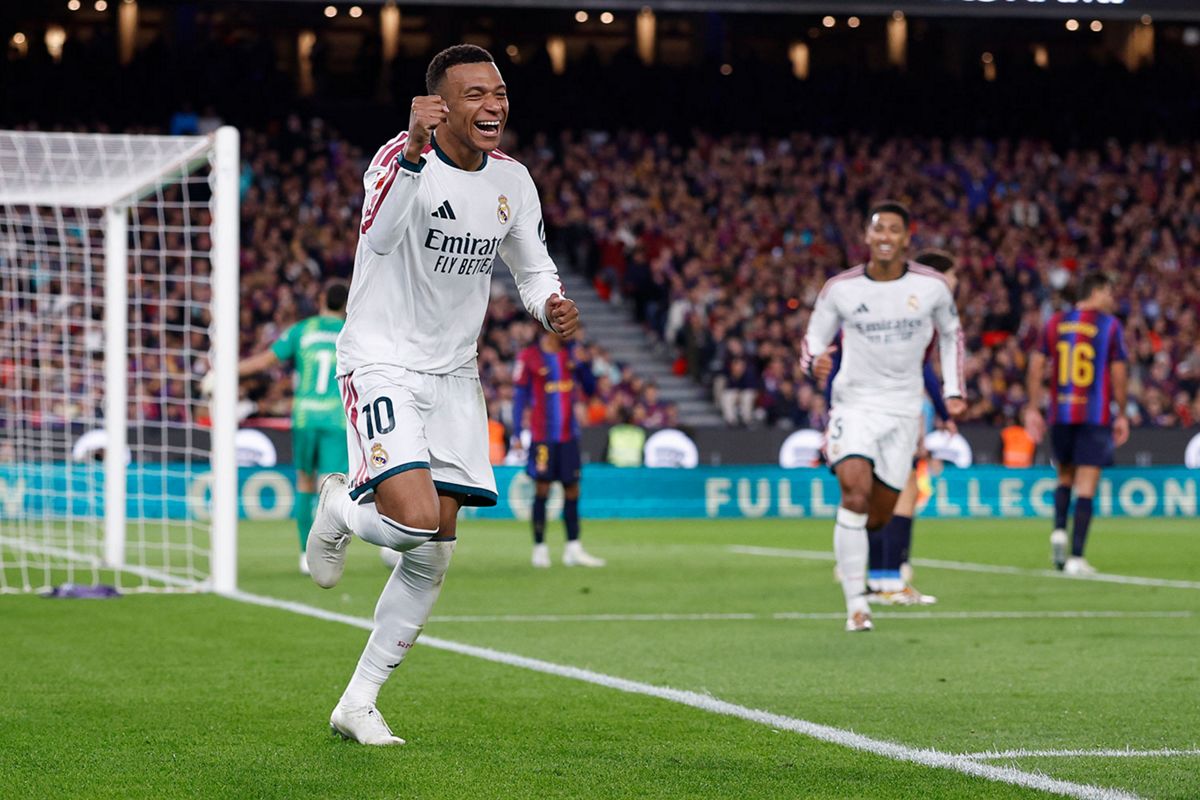
Barcelona had won all nine of their opening league games, but their familiar possession advantage did not automatically become control. Madrid were willing to press high enough to make Pedri and his teammates work for clean first passes, then accelerate when the ball changed hands. Mourinho's side did not have to hold the ball for long stretches; they needed the moments after regaining it to be decisive. That distinction shaped the entire first half.
Arda Guler found an early opening, while Madrid's wide runners repeatedly tested the space behind Barcelona's advanced defensive line. Yan Diomande was especially useful as an outlet on the left. The home side had dangerous spells of their own, with Lamine Yamal and Raphinha capable of shifting the play in seconds, but Madrid's attacks tended to reach threatening areas with fewer touches. That gave the visitors a clearer route to the first goal even while the score remained level.
The breakthrough in the 41st minute carried an element of luck, not an absence of planning. Diomande delivered a low ball into the area, Gerard Martin tried to clear and the ball struck the arriving Mbappe before crossing the line. The final contact was accidental. The run, the width and the speed of the attack were not. It was the reward for repeatedly forcing Barcelona's defenders to turn toward their own goal.
Barcelona almost answered before the interval. Yamal found himself close to goal but failed to convert, a miss that would loom larger after the final whistle. Madrid went in ahead not because they had eliminated Barcelona's quality, but because their own chances were arriving in more direct, dangerous situations. The first-half lesson was simple: a team can dominate the ball and still leave the more useful space to its opponent.

Raphinha changed the game — but Lunin kept Madrid alive
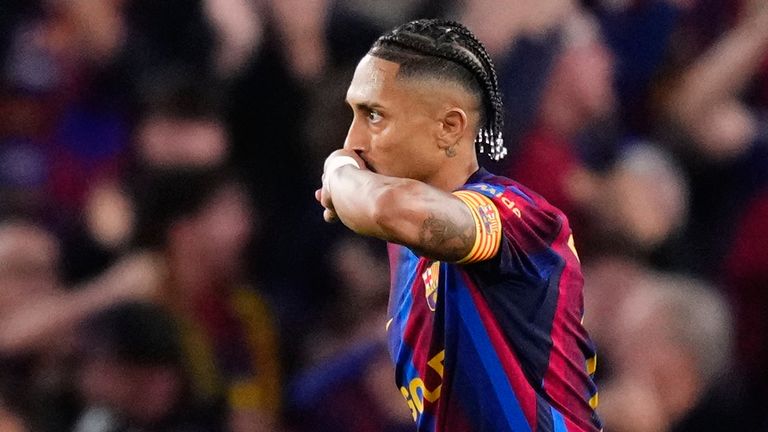
Hansi Flick's team looked more like itself after the break. Barcelona increased the pressure around Madrid's box and made it harder for the visitors to escape with the same clean forward passes. The first-half gaps were still there in theory, but the time Madrid had to find them was shrinking. A match that had suited Mourinho's plan began to tilt toward the home side.
The equaliser in the 61st minute came from an intelligent short-corner sequence rather than a long spell of hopeful crossing. Pedri received the ball and slipped a reverse pass into Raphinha's path. The Brazilian finished low into the corner, giving Camp Nou the release it had been demanding. It was an important reminder that Barcelona's creators do not need a dozen chances to undo a disciplined defensive block; one disguised pass can be enough.
Madrid then faced the hardest stretch of the evening. Barcelona were pushing defenders into advanced positions, Yamal was searching for a decisive opening and the ball was spending longer around the visitors' penalty area. Gerard Martin almost completed his personal turnaround from the unlucky clearance that produced the opener, only for Andriy Lunin to produce a major save from his header. That intervention mattered as much as any piece of attacking flair: without it, Madrid would have been chasing a game they had led for nearly twenty minutes.
Yet Barcelona's improved pressure contained its own risk. Their full-backs and midfielders were committed to the attack, leaving space to be defended by players already moving forward. Madrid's last-ditch blocks and Lunin's handling bought time, but the visitors still needed a route out. Mourinho did not abandon the counterattacking idea when it became uncomfortable. He kept the possibility alive long enough for one more transition to decide the night.

Bellingham and Camavinga made Mbappe's 100th Madrid goal possible
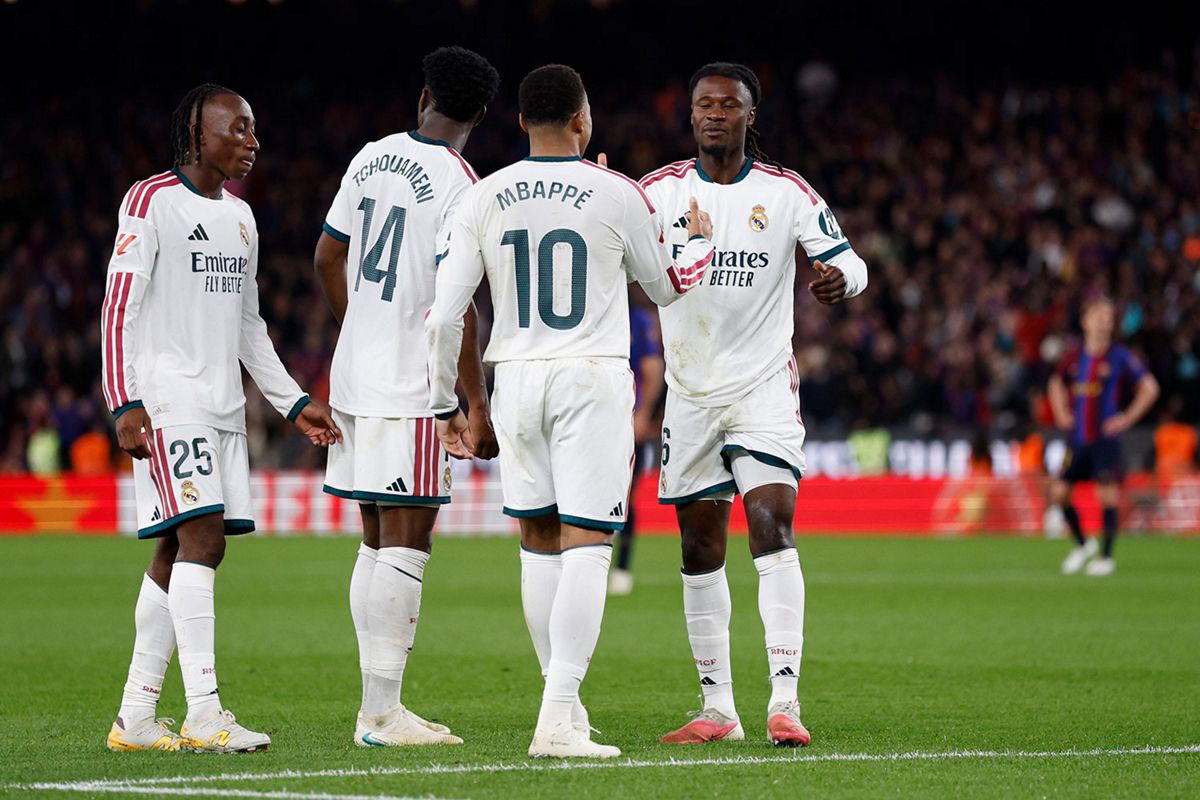
Three minutes from the end, the match seemed to be moving toward a draw. Barcelona had recovered from the first-half setback, Madrid had absorbed a long spell of pressure and both teams had spent considerable energy. Then a Barcelona possession broke down, and the visitors suddenly had the one thing their plan had been waiting for: room to run at a defence facing the wrong direction.
Jude Bellingham helped release the attack with a sharp piece of skill in midfield. Arda Guler was involved in moving the ball on, and Eduardo Camavinga accelerated into the space ahead. His run past Pau Cubarsi forced Barcelona's defensive line to retreat toward its own goal rather than step out to meet the ball. Camavinga then played the pass that mattered most, cutting it back for Mbappe to finish into an exposed net.
The goal was spectacular in its construction but uncomplicated at the finish. That is often the mark of an excellent transition: the most difficult work happens before the scorer touches the ball. Bellingham created the opening, Camavinga carried the threat through the defensive line and Mbappe made the correct movement to receive the final ball. The goal gave the French forward a brace on the night and took him to 100 goals for Real Madrid, according to the club's own match account.
There is a temptation to turn every Clasico into a straight comparison between Mbappe and Lamine Yamal. This one offered a more useful lesson. The decisive move involved several Madrid players recognizing the same opportunity at once, while Barcelona were unable to recover their defensive positions after losing possession. Mbappe's timing and finishing were essential. So was the collective intelligence that gave him an almost empty goal to aim at. Mourinho's exuberant touchline celebration captured what the finish meant: not merely another goal for a superstar, but a proof of concept for his team.
A nine-point threat became a three-point title race
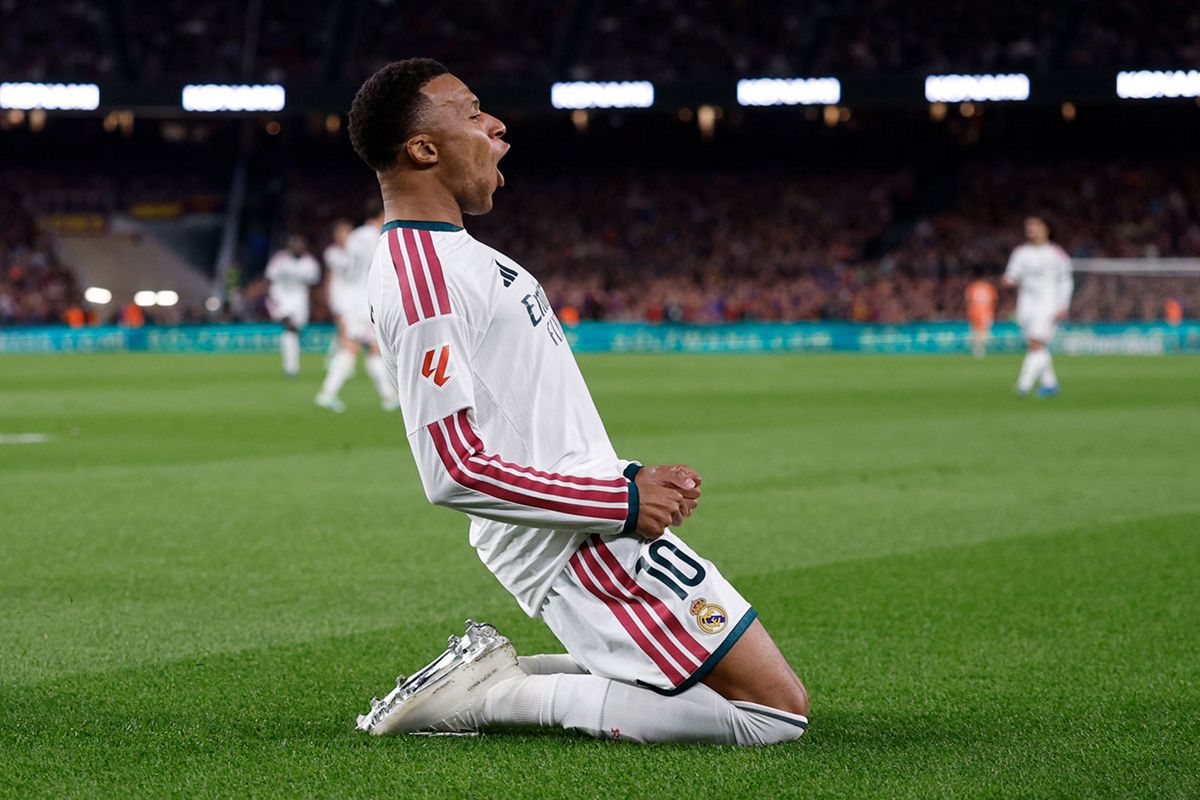
The arithmetic is brutal for Barcelona. A win would have stretched the gap over Madrid to nine points after ten league matches. Instead, the leaders remain on 27 points and Mourinho's team move to 24, with Atletico Madrid between them. That is a six-point swing in the direct contest between the rivals, even if the wider championship remains a long campaign with many difficult fixtures ahead.
Barcelona's first league defeat also changes the conversation around their start. Nine straight victories were not an illusion, and Flick's attack still has the quality to overwhelm most opponents. But the two goals conceded here came from moments in which the defensive line was exposed by speed and direct running. That vulnerability is especially costly against a side with Mbappe's acceleration and midfielders capable of turning a recovery into a chance in seconds.
For Madrid, the result matters beyond the table because it came in Mourinho's return to the fixture after 13 years. His side did not win by retreating into a passive block for ninety minutes. It pressed selectively, used the wide channels, survived the period when Barcelona seized the initiative and still carried a late attacking threat. The approach will be harder to repeat when opponents sit deeper and refuse to leave similar space. The next challenge is turning a well-executed plan for one enormous occasion into a reliable weekly identity.
The result also puts individual performances into perspective. Mbappe now has 11 goals in ten league appearances, an extraordinary pace, but Madrid needed Lunin's save, Camavinga's run and contributions from several midfielders to make the brace count. Barcelona had Raphinha's equaliser and spells of real control, yet the final chance fell to the visitors. The season is far from decided; the narrative of an early runaway has been interrupted. El Clasico has made the title race competitive again before November.
Mbappe's double will own the headlines, and reaching 100 Real Madrid goals with the winner makes the moment even harder to forget. Yet this was not a one-player rescue mission. Mourinho's shape kept Barcelona uncomfortable, Madrid's midfield gave the team an escape route, Lunin preserved parity when the match tilted and Camavinga supplied the final pass.
Barcelona still lead La Liga and remain a formidable attacking side. One defeat does not erase nine victories, just as one Clasico win does not make Madrid champions. It does change the immediate calculation. Instead of stretching the lead to nine points, Barcelona finish the weekend only three clear of Madrid. The next phase of the title race will test whether Mourinho can reproduce this collective discipline against less glamorous opponents — and whether Flick can protect his side from the transitions that decided the biggest game so far.