

Brunson Scored 33. Indiana's 17 Offensive Boards Won the Bigger Fight.
GOATIFYJalen Brunson gave New York 33 points and 11 assists. Karl-Anthony Towns produced another 23 points and 15 rebounds. The Knicks even had the basketball with 2.8 seconds left, needing only two points to force overtime. Yet their Friday-night NBA Cup trip to Indianapolis ended with a 106-104 loss to Indiana and a question much larger than Towns' missed turnaround jumper: why did New York have to stage two exhausting comebacks simply to reach that last shot?
The most revealing number was not Brunson's scoring total. The Pacers claimed 17 offensive rebounds to the Knicks' eight, outscored their visitors 50-30 in the paint and forced New York to spend long stretches defending a possession more than once. Indiana made enough mistakes in the final minute to invite a theft; New York had made enough mistakes before it that the invitation came too late. This was not an orderly two-point result. It was a collision between a team that kept creating extra chances and a team that kept digging out of holes.
Indiana Took Control Twice Before New York Could Find Its Rhythm
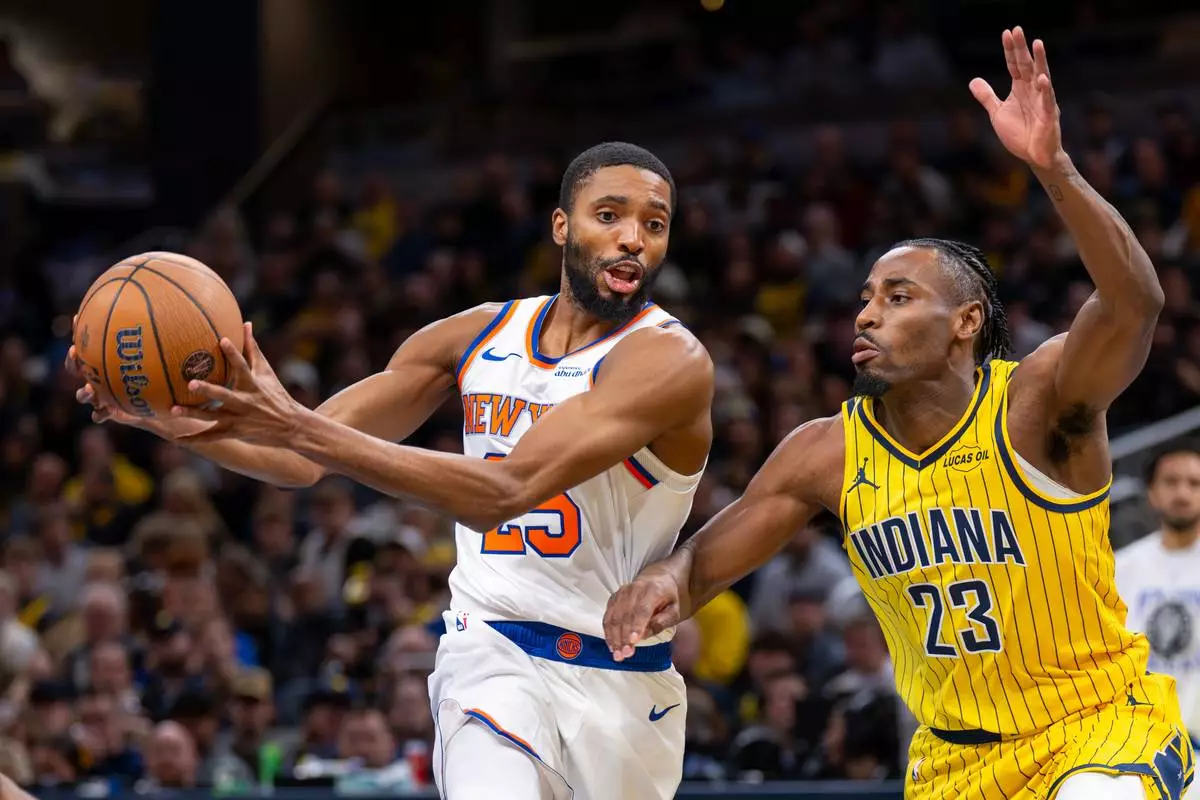
The opening quarter gave the Knicks a plausible route to the win they wanted. Towns went directly to work, scoring 12 in the period, and New York built a lead of as many as nine. A 27-26 advantage after 12 minutes suggested the visitors had enough offensive answers to survive on the road without needing a spectacular defensive night. That impression did not last. The Pacers did not require a long run of outside shooting to change the game; they gradually made New York guard the rim, the rebound and a second action on the same trip.
Indiana won the second quarter 32-22. Aaron Nesmith, whose availability had been in question after right-knee soreness limited his minutes against Washington, gave the Pacers a dependable wing scoring option. The Knicks' own frustration showed when coach Mike Brown drew a technical foul; Nesmith converted the free throw during a stretch that pushed Indiana ahead 58-44. New York did get the margin down to 58-49 by halftime, but that was still a meaningful nine-point hole after having controlled the beginning of the game. The hosts were dictating when the Knicks had to scramble.
There was a false summit in the third quarter. Indiana's lead reached 83-69 with just over three minutes remaining. Brunson then changed the tempo almost by himself. He scored 16 of New York's 35 third-quarter points, repeatedly taking responsibility for finding a quality attempt when possessions were getting away from his teammates. The Knicks closed the period on a 15-2 burst and went into the fourth down only 85-84. It was exactly the kind of escape a star guard can manufacture, but it masked how far behind his team had been.
OG Anunoby tied it at 87 on a three-pointer early in the fourth, giving New York the chance to reset the game rather than chase it. This is the moment that matters in judging the performance. The Knicks had already spent energy erasing a 14-point deficit and had finally levelled the score. A team protecting a road win would use that opening to slow Indiana's second-chance opportunities, defend without fouling and make the Pacers beat a set defense. Instead, New York gave away almost five minutes of offensive control and had to start the comeback all over again.
GOATIFY
GOATIFY Basketball
New York's two comebacks made every Indiana possession count. Explore GOATIFY Basketball gear as the Knicks and Pacers rivalry continues.

Jalen Brunson – Make It Splash Pullover Hoodie
A basketball fan design for everyday wear.
Shop Now ↗
Jalen Brunson G.O.A.T. - Basketball Decal
Add basketball personality to your favourite gear.
Shop Now ↗
Tyrese Haliburton G.O.A.T. - Basketball - Sweatshirt
A basketball fan design for everyday wear.
Shop Now ↗
Carmelo Anthony G.O.A.T. - Basketball Casual Tee
A basketball fan design for everyday wear.
Shop Now ↗

Paul George G.O.A.T. - Basketball Decal Sticker
Add basketball personality to your favourite gear.
Shop Now ↗Seventeen Offensive Rebounds Turned One Indiana Possession Into Two
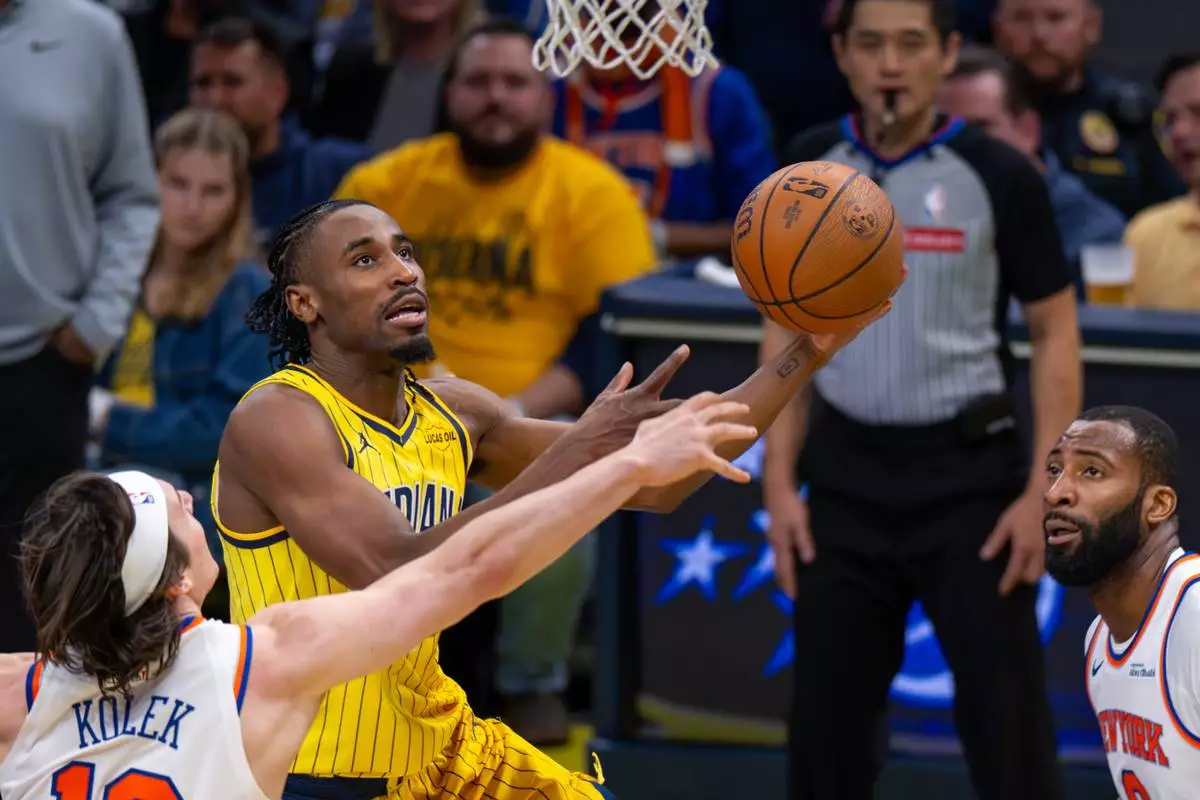
A two-point final margin can make every missed jumper appear equally important. But Indiana's biggest advantage came from the shots the Knicks never finished defending. The Pacers collected 17 offensive boards, more than double New York's eight. Ivica Zubac accounted for nine of Indiana's offensive rebounds himself, finishing with 12 points and 13 total boards. That is an extraordinary concentration of second chances for one player in a game decided by one basket. It meant Knicks defenders could execute the first part of a possession correctly and still find themselves scrambling to contest the next attempt.
Consider the difference between a clean defensive rebound and a loose ball tapped back toward the perimeter. The first ends the danger and creates an opportunity for Brunson to attack Indiana before its defense is organized. The second extends the possession, forces Towns and the wings into another series of help rotations and increases the likelihood of a foul, an inside touch or a mismatch. On a night when New York shot a respectable 43 percent from the field, those extra possessions represented chances the Knicks could not recover simply by making a few more threes.
The 50-30 paint-points disparity tells the same story from another angle. Indiana was not exclusively dependent on deep shooting or a huge individual scoring explosion. Siakam finished with 19 points, Nesmith had 18, Kelly Oubre Jr. added 16 and Zubac supplied his 12 with physical work near the basket. The scoring was spread across players who could cut, finish or punish the Knicks when help arrived a step late. Even Nesmith's seven rebounds made a difference because the Pacers were asking their wings to participate in the possession battle rather than watch Zubac do all the work.
The free-throw figures widened the gap. Indiana attempted 25 and made 18; New York went 10-for-13. Eight more successful free throws and 12 more attempts are not automatically evidence of bad officiating or a failure of effort. They are the statistical shape of a game in which Indiana repeatedly attacked areas that create contact. New York actually recovered 18 points from the Pacers' 17 turnovers, showing that its defense could generate disruption. The problem was what happened after an initial stop: too many possessions stayed alive long enough for the Pacers to get another useful look.
That distinction is also why Towns' 15 rebounds should not be treated as a contradiction. One player can post a strong rebounding line while his team loses the collective battle on the glass. Rebounding is a five-man outcome as much as a center's box-score category. In this case, Indiana's nine extra offensive rebounds and seven-rebound advantage overall gave it a buffer against mistakes, cold stretches and even a terrible final 109 seconds.
The Pacers' 15-2 Response Was the Real Turning Point
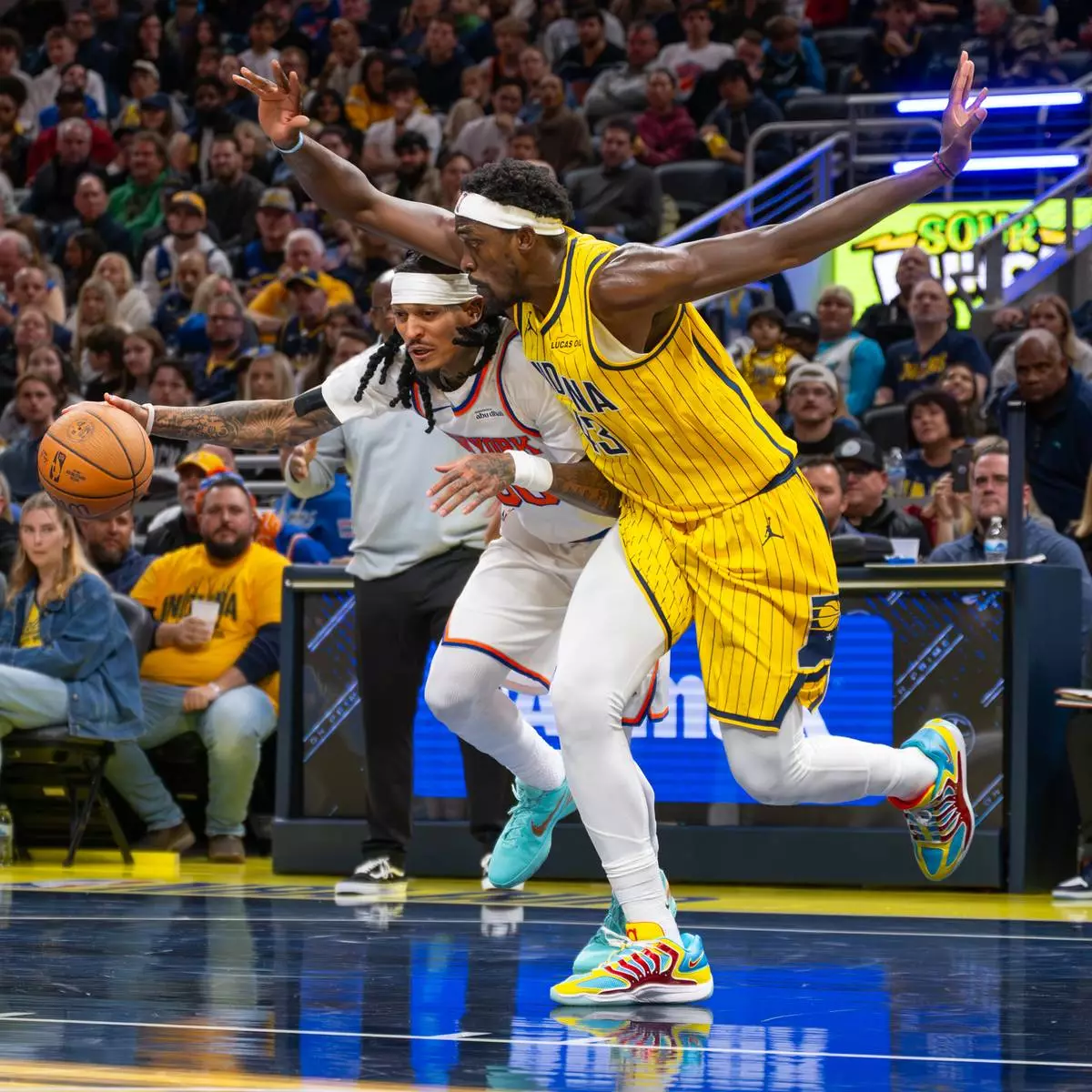
For nearly a quarter, Brunson made the score feel as though it belonged to New York. The Knicks had erased the 14-point third-quarter deficit, Anunoby had equalized with his three and Indiana looked vulnerable to the familiar swing that follows a frustrated home crowd. Andrew Nembhard's answer started with a pullup jumper. A Towns technical gave him another point, and Zubac converted a tip. Nembhard then knocked down a deep three from roughly 28 feet to extend Indiana's advantage to 95-89. Suddenly New York's hard-won tie had been replaced by another uphill climb.
GOATIFY
GOATIFY Basketball
Rebounding decided the work between the highlights. Browse the GOATIFY Basketball collection after Indiana's 17-board offensive-glass advantage.

Tyrese Haliburton G.O.A.T. - Basketball - Hoodie
A basketball fan design for everyday wear.
Shop Now ↗
Paul George G.O.A.T. - Basketball - Greatest Sweatshirt
A basketball fan design for everyday wear.
Shop Now ↗
Tyrese Haliburton G.O.A.T. - Basketball Decal Sticker
Add basketball personality to your favourite gear.
Shop Now ↗
Paul George G.O.A.T. - Basketball Casual Top Tee
A basketball fan design for everyday wear.
Shop Now ↗

Paul George G.O.A.T. - Basketball - Greatest Hoodie
A basketball fan design for everyday wear.
Shop Now ↗The most damaging part of that sequence was defensive, not merely Nembhard's shot-making. Indiana held New York to two points over a stretch of four minutes and 45 seconds, producing a series of stops as the Knicks struggled to generate an ordinary half-court possession. The Pacers' account of the game credits that stretch with ten stops, three steals and a block. Siakam and Oubre added baskets, and Nesmith drove the point home with a dunk. With 6:36 left, Indiana had completed a 15-2 burst and led 102-89. It was the second time the Pacers had taken command after an apparently dangerous Knicks push.
That kind of response carries a practical lesson for both teams. Indiana's 5-8 record did not mean it lacked defensive possessions in which its communication and effort could hold up. New York's 6-6 mark did not mean Brunson could always fix an offense that goes quiet at the wrong time. Good teams need more than a brilliant scorer to interrupt a run. They need reliable ways to create a paint touch, get to the foul line and protect the ball when the first option is denied. In this spell, the Knicks did not produce enough of any of those three.
Bridges and Towns did not surrender. Both hit threes, and Towns added a free throw that drew New York within six, 104-98, with 3:20 to go. Siakam then backed down the defense before making a 15-footer with 1:49 remaining. It gave the Pacers a 106-98 lead that looked almost conclusive. Siakam had scored only 19 on the night and was not especially efficient from the field, yet that particular basket restored enough distance for Indiana to survive the ensuing mistakes. The box score tells you how many points he supplied; the timing explains the value of two of them.
There was plenty of shared contribution behind him. Nesmith's 18 on 7-for-10 shooting helped keep Indiana's offense from depending on Siakam every time down. Nembhard mixed 12 points and six assists with six turnovers, a useful reminder that his fourth-quarter success came inside an uneven overall game. The Pacers could not claim an immaculate performance. What they could claim was a decisive stretch in which the team collectively defended the first action and converted the possessions that followed.
The Last Shot Made Headlines; the NBA Cup Deficit Is the Warning
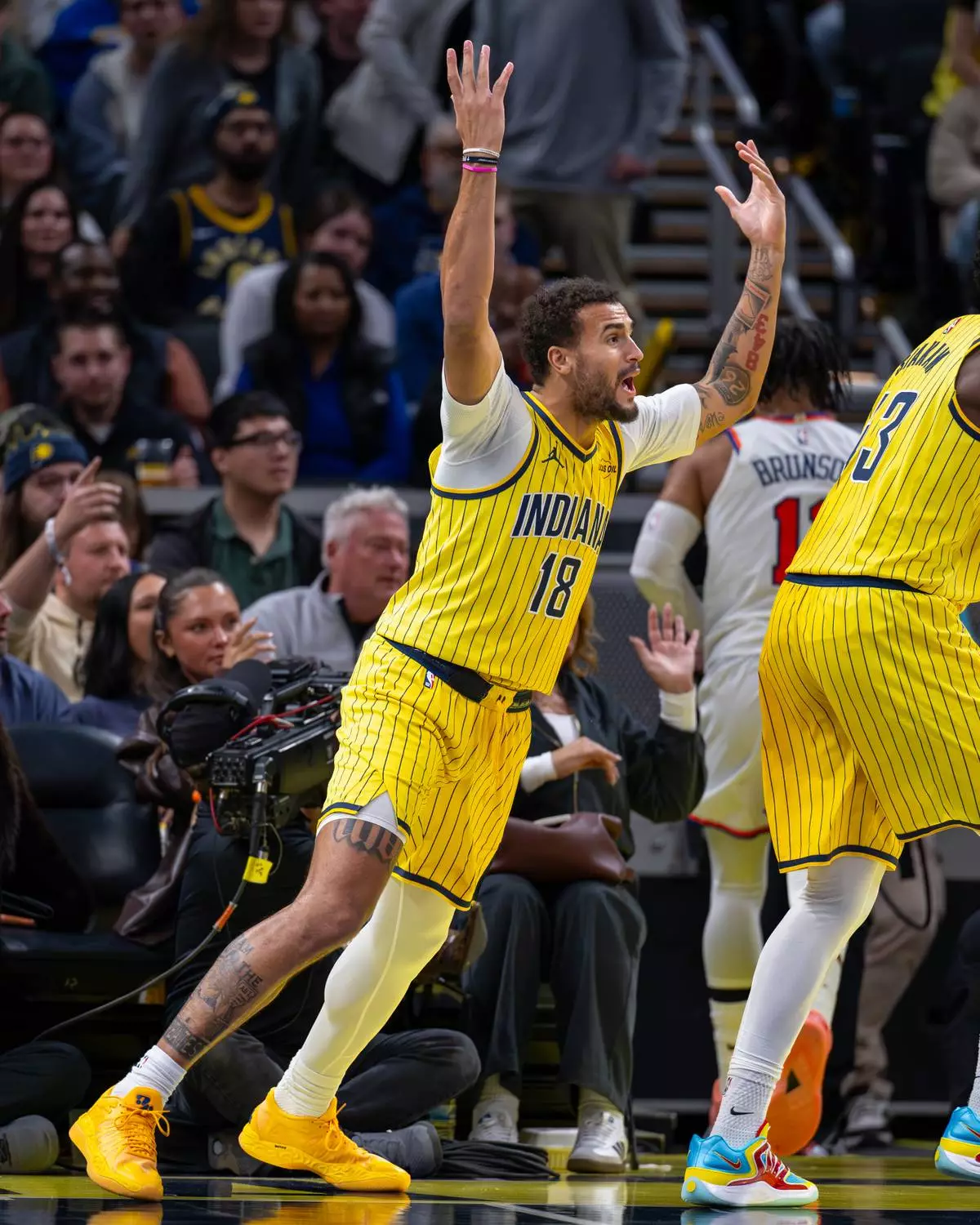
Indiana did everything necessary to make the closing minute comfortable, then spent the ending trying to give its advantage back. After Siakam's jumper put the Pacers up eight, Towns scored with 1:04 remaining. Anunoby blocked a Nesmith attempt, and New York's backcourt pressure forced an eight-second violation. That gave Brunson the ball with a real reason to attack. His driving layup reduced the deficit to four, 106-102, with 26 seconds left. Suddenly Indiana's margin was no longer the cushion it appeared to be less than two minutes earlier.
GOATIFY
GOATIFY Basketball
The Pacers answered Brunson's burst with defense and a 15-2 run. Shop basketball-inspired designs while the NBA Cup group race unfolds.

Michael Jordan – The GOAT Chicago Bulls Sticker
Add basketball personality to your favourite gear.
Shop Now ↗
LeBron James – LeGOAT Champion Muscle Shirt Tank
A basketball fan design for everyday wear.
Shop Now ↗

LaMelo Ball G.O.A.T. - Basketball Coffee Cup Mug
Add basketball personality to your coffee break.
Shop Now ↗

Tim Duncan G.O.A.T. - San Antonio Spurs Hoodie
A basketball fan design for everyday wear.
Shop Now ↗The next exchange nearly completed the escape. Siakam went to the line with 23 seconds to play and missed both attempts. Brunson found Bridges, whose pullup from around 19 feet made it 106-104 with 10 seconds remaining. After a timeout, Anunoby jumped a Siakam pass with 2.8 seconds left. New York had the improbable possession every trailing team hopes for: the deficit was one basket and the clock was low enough that a single clean look could change the result. Towns turned into a 15-foot shot at the buzzer. It missed, and the Pacers were still ahead when the horn sounded.
There is an obvious temptation to call that miss the decisive event, as if New York's evaluation should hinge on whether Towns made a difficult shot after a chaotic inbound. That would let the earlier lapses off too easily. The Knicks trailed by 14 in the third quarter and by 13 again in the fourth. They had conceded nine more offensive rebounds and 20 more points in the paint. Their star guard had needed 33 points, 11 assists and two separate comeback efforts for the contest to reach a final-possession coin flip. If that same Towns jumper goes in and New York wins in overtime, those underlying deficiencies do not disappear.
Towns did reach another personal milestone by continuing his double-double run at the start of the season, but the value of 23 points and 15 boards is limited when Indiana controls the most damaging rebounds. Bridges scored 18, including the late basket that restored hope. Anunoby's three and theft were essential to the rallies. Conversely, Josh Hart went scoreless in 23 minutes and New York's attack could not find a dependable second option during Indiana's fourth-quarter defensive clamp. These individual contributions matter, but the lineup's collective response to pressure matters more.
The loss also has a different weight because it was a group-play game in the Emirates NBA Cup. New York's tournament position is now more precarious, and the result cannot be erased by a strong performance in an unrelated regular-season game. The Knicks next travel to Toronto on Sunday, November 15, while Indiana visits Philadelphia. For the Pacers, a second straight victory and their first NBA Cup win offer evidence they can close a high-stakes contest even while missing key rotation players. For the Knicks, the next task is less dramatic and more demanding: stop treating huge comebacks as a sustainable way to win.
Brunson did almost everything a leading guard can reasonably be asked to do. The Knicks had scoring, a late steal, a final chance and a familiar opponent within reach. They lacked the possession control that would have prevented the final chance from becoming necessary. Indiana's 17 offensive rebounds and 50 paint points explain the loss more convincingly than any single jumper.
The Pacers were far from perfect; their last-minute turnovers and missed free throws made an eight-point cushion feel microscopic. But they owned the extra possessions and authored the 15-2 run that separated the teams when the fourth quarter seemed to belong to New York. If the Knicks want to turn this November NBA Cup disappointment into something useful, the correction starts before the next buzzer-beating opportunity: finish defensive possessions, protect the paint and make a 33-point Brunson night something more than a rescue mission.
GOATIFY
GOATIFY Basketball
Shop GOATIFY basketball shirts, hoodies and stickers.

Michael Jordan – GOAT 6 Rings Chicago Sweatshirt
A basketball fan design for everyday wear.
Shop Now ↗
LeBron James – LeGOAT Basketball Decal Gift Sticker
Add basketball personality to your favourite gear.
Shop Now ↗
Nikola Jokic G.O.A.T. - Basketball Coffee Cup Mug
Add basketball personality to your coffee break.
Shop Now ↗



















