

Pacheco Made 168. Fulghum Made 167.7. The Title Door Just Opened.
GOATIFYDiego Pacheco did exactly what he needed to do before stepping into the ring in Carson: he weighed 168 pounds. Darius Fulghum made the super middleweight limit at 167.7, just three-tenths of a pound lighter. Two routine numbers settled the scale, but they did not settle the far bigger question hanging over Saturday's main event: which contender is actually ready to move toward a world title?
The undefeated Los Angeles headliner brings a 26-0 record, 19 stoppages and two regional belts into the fight. Fulghum arrives with a 15-1-1 record and 13 knockouts, carrying the sort of punching threat that makes a favorite's resume look much less secure once the opening bell rings. Their meeting is a WBA eliminator, not a fight for a full WBA world championship.
There is another distinction worth keeping straight. Pacheco's WBC Silver and WBO International straps are at stake in the main event, but the evening's actual world championship bout belongs to flyweight titleholder Anthony Olascuaga. Friday's weigh-in therefore set up two different title stories on one card: a contender hoping to become next in line and a reigning champion defending what he already owns.
Two regional belts, one WBA eliminator — and no full world title
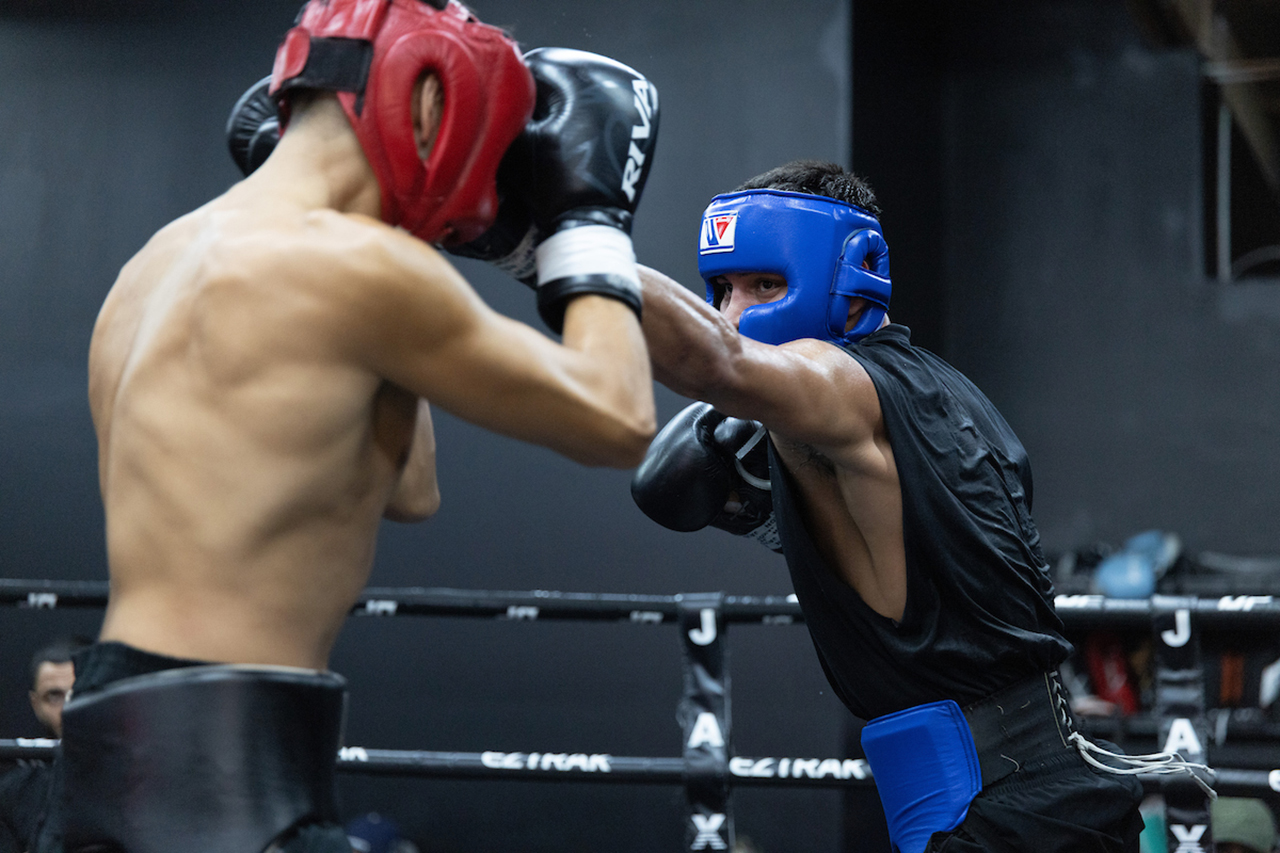
Friday's official numbers were uncomplicated. Pacheco registered 168 pounds, exactly the super middleweight ceiling, and Fulghum came in at 167.7. The margin between them is so small that it says virtually nothing about which man will be stronger when they exchange punches. It does, however, mean both have cleared the one hurdle that could have turned a meaningful Saturday main event into a contractual scramble before the first round.
Pacheco puts the WBC Silver and WBO International titles he already holds at risk. Those belts help establish his position in the rankings, but they are not the full championship of either sanctioning organization. The WBA has separately designated this meeting an eliminator, adding a potential route toward a world-title opportunity. An eliminator is significant because it is intended to sort contenders, not because winning one automatically places a championship belt around the winner's waist.
That distinction gets buried when boxing promotions put too many initials next to a single fight. On Saturday, the WBC and WBO regional-level honors travel with Pacheco into the ring; the WBA designation creates another incentive for both men. The full world championship on this card belongs to a completely different weight division. There is a legitimate story about title positioning here without pretending Pacheco or Fulghum will leave Carson as the WBA super middleweight world champion.
At 26-0 with 19 stoppages, Pacheco enters as the established favorite and an important name in the 168-pound queue. His WBO No. 2 ranking gives that reputation a measurable foundation. He is also fighting in front of his own Los Angeles-area crowd at a venue where he has already delivered meaningful wins. The accumulation of these advantages is why a routine victory may not do much to change public opinion; many observers already expect him to handle this assignment.
Fulghum's 15-1-1 record tells a different story from an unbeaten prospect's. The single loss and draw are not reasons to dismiss him, and 13 knockouts are a serious warning that his wins are not built solely on cautious scorecard boxing. There has been confusing promotional wording around whether both contenders are unbeaten, but the published detailed ledger is clear: Pacheco has no defeat and Fulghum does. Being accurate about the numbers matters more than making the poster look tidier.
GOATIFY
GOATIFY Boxing
Explore GOATIFY boxing designs as Pacheco and Fulghum put their WBA eliminator stakes on the line.


There is a business dimension as well. The main event connects Matchroom-backed Pacheco with Golden Boy's Fulghum. That cross-promotional element does not magically improve either boxer's technique, but it explains why the matchup feels more consequential than a routine stay-busy booking. A win can give the challenger a far stronger negotiating position; a loss could mean that the favorite has spent another valuable night without moving closer to a championship fight.
Carson's open-air setting adds a less glamorous variable. November weather in Southern California is not necessarily the story, but local forecasts have prompted discussion of possible rain during the outdoor event. That matters mostly because footing, ring conditions and the event's running order need to remain dependable. It would be irresponsible to predict that weather will decide the fight; it is another practical detail the teams must manage while preparing for a twelve-round main event.
So the scale did its job without settling the argument. Pacheco and Fulghum have each made the weight that permits their styles and ambitions to be tested. The reward is a more credible place in a crowded title picture. The price of getting there may be much greater than the three-tenths of a pound that separated them in Friday's photographs.
Pacheco's long jab versus Fulghum's pressure and knockout threat
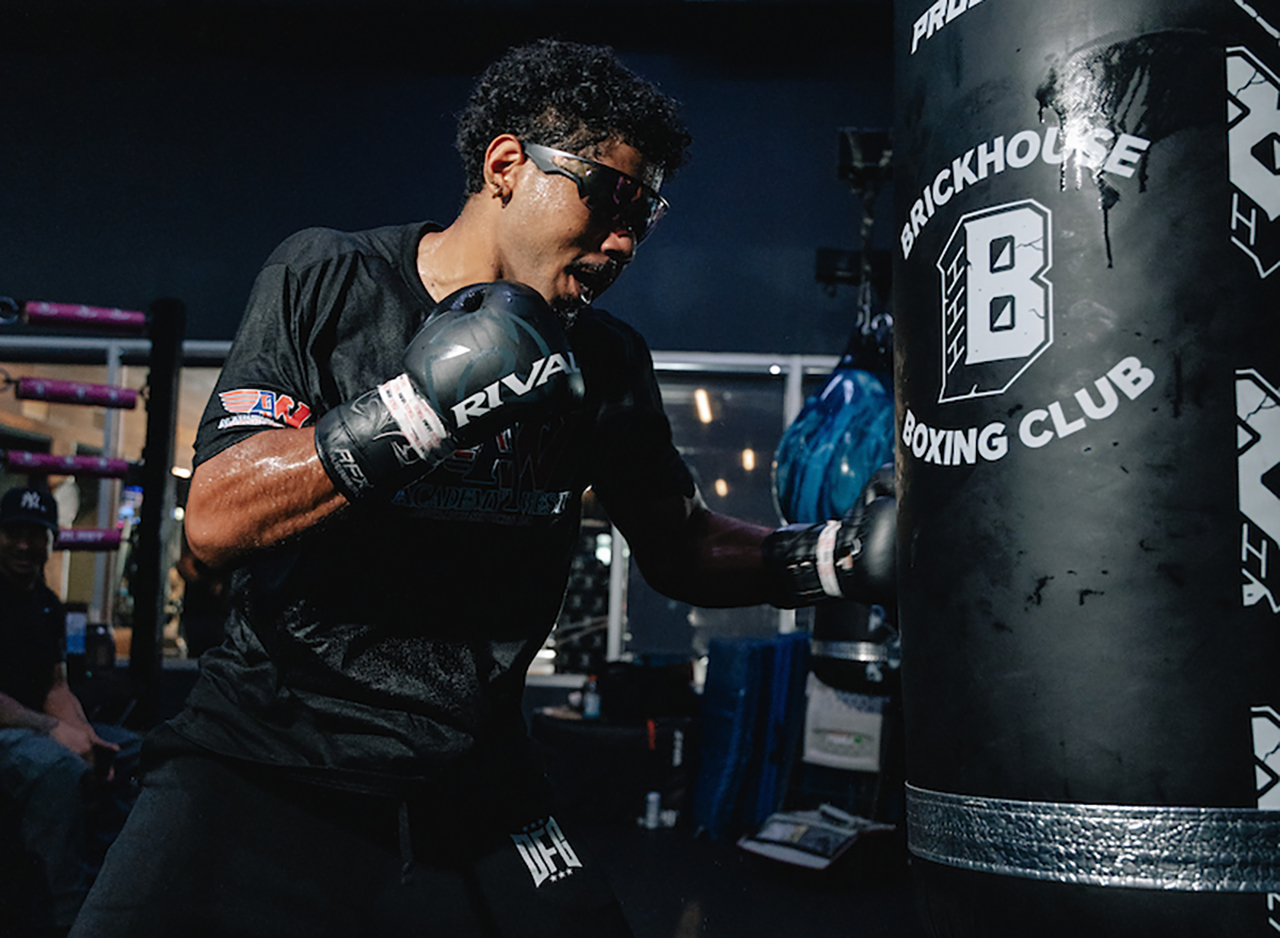
Pacheco's physical tools make the basic tactical question unusually clear. At approximately six feet four inches tall, with a reported 79-inch reach, he should be able to establish contact before many opponents are close enough to throw comfortably. A long jab can measure distance, interrupt a forward step and make a shorter fighter reset his feet. The difficult part is using that advantage when the other corner arrives with the patience and power to challenge it.
The partnership with veteran trainer Buddy McGirt is central to that development. Pacheco's previous Carson outing ended with an eleventh-round stoppage of Immanuwel Aleem, and it was the first bout of the pair's working relationship. Getting a finish late in a fight can show more than raw punching force: it may indicate that a boxer can maintain concentration, manage the pace and convert accumulated work into a decisive opportunity. Whether those lessons carry into a tougher stylistic matchup remains the test.
Pacheco does not have to produce a highlight-reel knockout to demonstrate progress. The stronger evidence could be how consistently he returns to his jab, keeps his lead foot in useful positions, pivots rather than retreating straight back, and avoids giving away the center of the ring after landing a clean combination. Those choices are less spectacular than a single enormous right hand. They are also the foundation a tall super middleweight needs before a genuine championship opponent starts forcing him into prolonged exchanges.
Fulghum's latest cited victory, a third-round stoppage of Yoanki Urrutia, reinforces the risk at the opposite end of the ring. Thirteen of his fifteen professional wins have ended early. A high stoppage rate does not prove he will knock out this particular opponent, but it is enough to demand respect for his ability to turn a successful entry into immediate damage. One poorly timed clinch or lazy exit could undo several rounds of technically better boxing.
His route to an upset probably does not begin with chasing Pacheco around the perimeter. If he lunges from too far outside, the taller fighter can meet him with straight shots and then slide away. Fulghum needs to step in behind a defensive action, make Pacheco punch at a target that is no longer there, and then reach the range where his own combinations become practical. Working the body can also discourage the favorite from floating away without paying for the movement.
GOATIFY
GOATIFY Boxing
Browse GOATIFY Boxing fan gear while the Pacheco–Fulghum matchup puts distance control and knockout power to the test.
The argument in favor of Pacheco is that he has more established ways to win. He can outbox Fulghum at long range, force a steady pace that creates late openings, or make the challenger pay for pressing recklessly. The argument in favor of Fulghum is narrower but dangerous: he can disrupt the rhythm, make the fight uncomfortable and bring his power into exchanges that Pacheco would prefer to conduct from several inches farther away. A favorite's greater number of options is not the same as immunity from a punch.
This is especially important with the crowd expecting a hometown show. Boxers can become impatient when a room full of supporters wants a finish. If Pacheco starts trying to satisfy them with every exchange, he can surrender the distance that makes his best work possible. McGirt's value may be most obvious between rounds, when the corner has to keep him committed to the patient version of the plan even if the challenger has enjoyed a noisy moment.
Fulghum has his own composure test. He may have to absorb a disciplined jab for several rounds before seeing the openings he wants, and he cannot afford to confuse urgency with carelessness. A contender who knows that this might be his biggest available opportunity can take risks, but pressure without defensive responsibility is also the quickest way to give the bigger puncher clean counters. Both fighters therefore need to resist the obvious temptation: Pacheco to entertain, Fulghum to force everything.
The late rounds will provide the most useful evidence if the contest reaches them. Does Pacheco continue to manage the geometry of the ring after sustained pressure, and can Fulghum keep cutting off exits without losing his own shape? The outcome has not been decided by their records or by Friday's weigh-in. It will depend on which man can impose his preferred distance after the first solution stops working.
Olascuaga has the actual world belt — and the undercard has traps
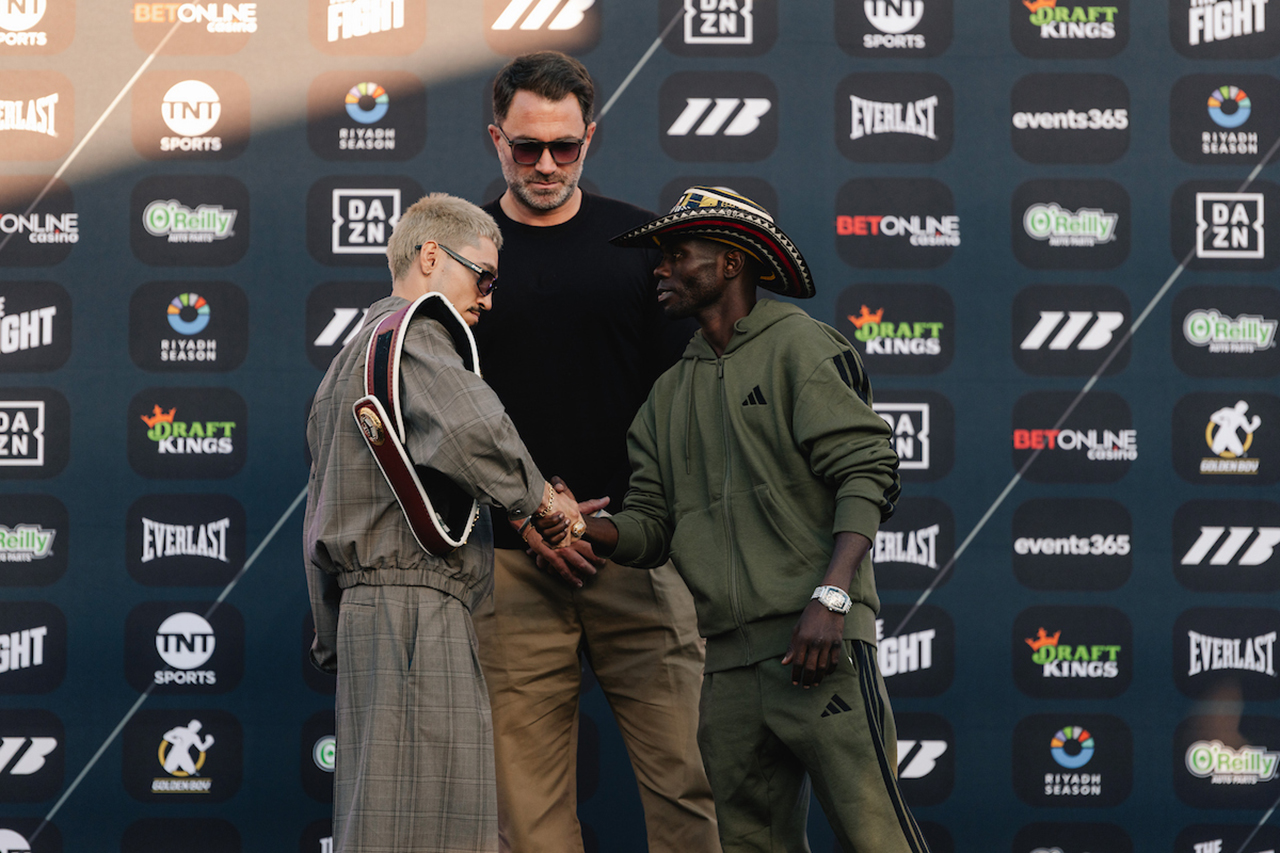
The co-feature brings a simpler title distinction and a very different set of pressures. Anthony Olascuaga, the reigning WBO flyweight champion, weighed exactly 112 pounds for his defense against Yuberjen Martinez, who registered 111.1. Unlike the super middleweight headliner, this is a fight for a full recognized world championship. Its sporting stakes require no creative interpretation of regional belts or eliminator language.
Olascuaga is scheduled for his sixth title defense, and the venue makes the occasion personal. He has spent much of his championship career competing in Japan, including the July 2024 victory over Riku Kano that earned him the belt. Five of his six most recent fights before this booking took place there, so the chance to fight professionally in his Los Angeles hometown is an unusual one. The crowd will see a champion who has done much of his defending far away from that familiar support.
Martinez is not arriving as a random undefeated opponent. The Colombian is an Olympic silver medalist from Rio 2016, has appeared at two Games and brings seven stoppages from seven professional wins into his first world-title opportunity. That combination creates an interesting uncertainty. His amateur pedigree signals extensive experience at a high level, while his short professional ledger leaves unanswered questions about sustained twelve-round pacing against a champion accustomed to being the target.
Olascuaga needs to make those differences work for him. A fighter who has repeatedly prepared for championship rounds should have a clearer idea of the required effort over the entire distance. That does not guarantee he will control every exchange, particularly against a challenger whose confidence is reinforced by a perfect finishing rate. It does mean that Martinez must show something beyond the ability to overwhelm the opposition he has already beaten.
GOATIFY
GOATIFY Boxing
Find GOATIFY Boxing favorites as Olascuaga defends the actual WBO world title in Carson.
One of the most interesting details in the matchmaking is how quickly Martinez accepted the assignment. Earlier plans had him preparing for a November 20 appearance in Colombia before the Los Angeles title opportunity emerged. He planned to finish his camp in Mexico City at the Romanza Gym associated with Nacho Beristain. That background makes his willingness to take the fight understandable without proving how his preparation will translate under the bright lights.
On the heavyweight side of the bill, Federico Pacheco Jr. weighed 236.5 pounds and Jack May checked in at 254.4, a 17.9-pound difference. Weight classes work differently at heavyweight, so that gap is legal and not automatically decisive. For Federico, Diego's younger brother, an eight-round appearance on the same promotion offers a chance to be measured on his own merits rather than only through the family connection. May's greater mass adds a straightforward physical dimension to that test.
The main card also lists David Adeleye against Alexander Flores for a WBA International heavyweight title, while undefeated lightweight Charlie Sheehy meets Argentina's Jose Matias Romero. Those are not interchangeable bouts on a poster. The former presents another contest where heavier punches and position in the heavyweight scene can matter; the latter gives an emerging lightweight a more experienced opponent and a chance to build momentum on a televised platform.
Elsewhere, Nishant Dev meets Sona Akale, and Zaquin Moses takes on Manuel Valentine Lerma in preliminary action. Not every preliminary matchup carries the same immediate ranking stakes as the main event, but the development opportunities are real. A strong undercard can reward fans who watch the whole show, particularly when a hometown title defense and an eliminator offer quite different kinds of championship drama later in the night.
The scheduled main card begins at 8 p.m. Eastern, or 5 p.m. Pacific, with earlier preliminary fights listed for 5 p.m. Eastern. U.S. distribution includes TNT, truTV and DAZN, while DAZN is the international streaming platform named in the event announcement. These published details are the plan before the first bell; viewers should check their local listing if the fight order or start times change.
Viewed together, the weigh-in figures tell a fuller story than a list of pounds. Pacheco's 168 and Fulghum's 167.7 clear the way for a contest that could reshape the super middleweight contender queue. Olascuaga's 112 and Martinez's 111.1 set up a genuine title defense. Federico Pacheco and May add a heavyweight contrast lower down the card. The common thread is opportunity, but the exact reward is different for every pair.
The weigh-in removed one straightforward obstacle. Pacheco and Fulghum are both on weight, the sanctioned contender stakes are clear, and the hometown favorite has another opportunity to show that his patient development has led somewhere meaningful. What the scale cannot answer is whether Pacheco can control Fulghum's offense without drifting into the kind of exchanges that turn a carefully managed career into a single dangerous evening.
Olascuaga and Martinez have a different problem to solve: one must defend a genuine world belt, the other must prove that elite amateur pedigree and a perfect professional stoppage record translate against a tested champion. The card begins with confirmed numbers and plenty of ambition. By the end of Saturday night in Carson, the division should have a much clearer picture of which ambitions deserve a title shot.
GOATIFY
GOATIFY Boxing
Shop GOATIFY boxing shirts, hoodies and stickers.


















