Sheppard Hits Five Threes — Rockets Reach 3–0, Then Survive Atlanta's Rally
GOATIFYHouston is 3–0 for the first time since 2017–18, but the Rockets' 121–114 victory over Atlanta on October 24 was both an advertisement for their depth and a warning about their closing execution. Kevin Durant scored 22 points, Reed Sheppard hit five three-pointers and seven Houston players reached double figures. A 20-point fourth-quarter advantage nevertheless shrank to five before Durant finally settled the contest at the foul line.
The circumstances made the win more impressive. Houston had beaten San Antonio the previous night and arrived in Atlanta around 5 a.m. The Rockets were without Fred VanVleet, Marcus Smart and Steven Adams. Their hosts had started 2–0 and averaged 130 points per game. Houston found enough offense from its entire rotation to survive the difficult schedule — and left with clear work to do before Monday's immediate rematch.
Houston's first 3–0 start since 2017–18 was anything but routine
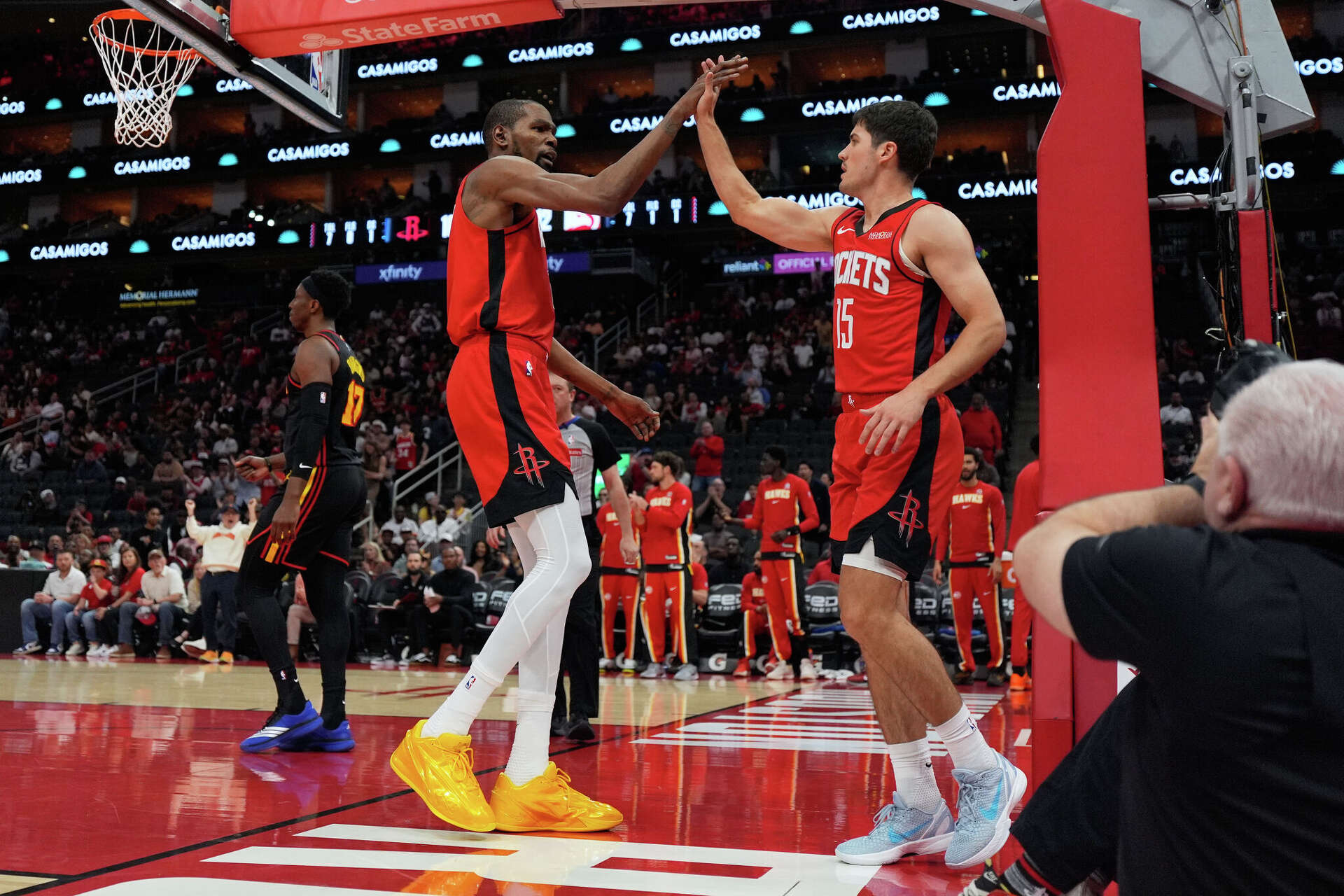
The last Rockets team to win its first three games went on to a franchise-record 65 victories and the Western Conference finals in 2017–18. The parallel makes for a memorable opening-week statistic, not a reliable forecast. This roster has played only three games. What matters more is the way Houston handled the circumstances of its third win.
The Rockets were coming off a 114–110 victory over San Antonio in Austin on Friday. Their travel pushed their arrival in Atlanta to around 5 a.m. local time, and three rotation players were unavailable. The Hawks, meanwhile, had won their first two games and were opening their home schedule. Both teams were on the second night of a back-to-back, but Houston faced an especially demanding overnight turnaround.
Atlanta scored the first seven points, only for Houston to answer with a 10–1 run and take a lead it would not surrender. Jabari Smith Jr. scored 10 in the opening quarter. The Rockets led 30–26 after one, 59–48 at halftime and 92–81 after three. Their biggest advantage reached 108–88 in the fourth. For long stretches they controlled the pace through better outside shooting and a varied scoring attack.
Then the lead started disappearing. Atlanta increased the pressure, Houston became less decisive with the ball and a game that had looked secure became a possession-by-possession contest. That late shift is important because it prevents the 3–0 record from hiding a weakness. The Rockets proved they can build leads while short-handed and tired. They still have to prove they can close them without drama.
Reed Sheppard's five threes made VanVleet's absence manageable
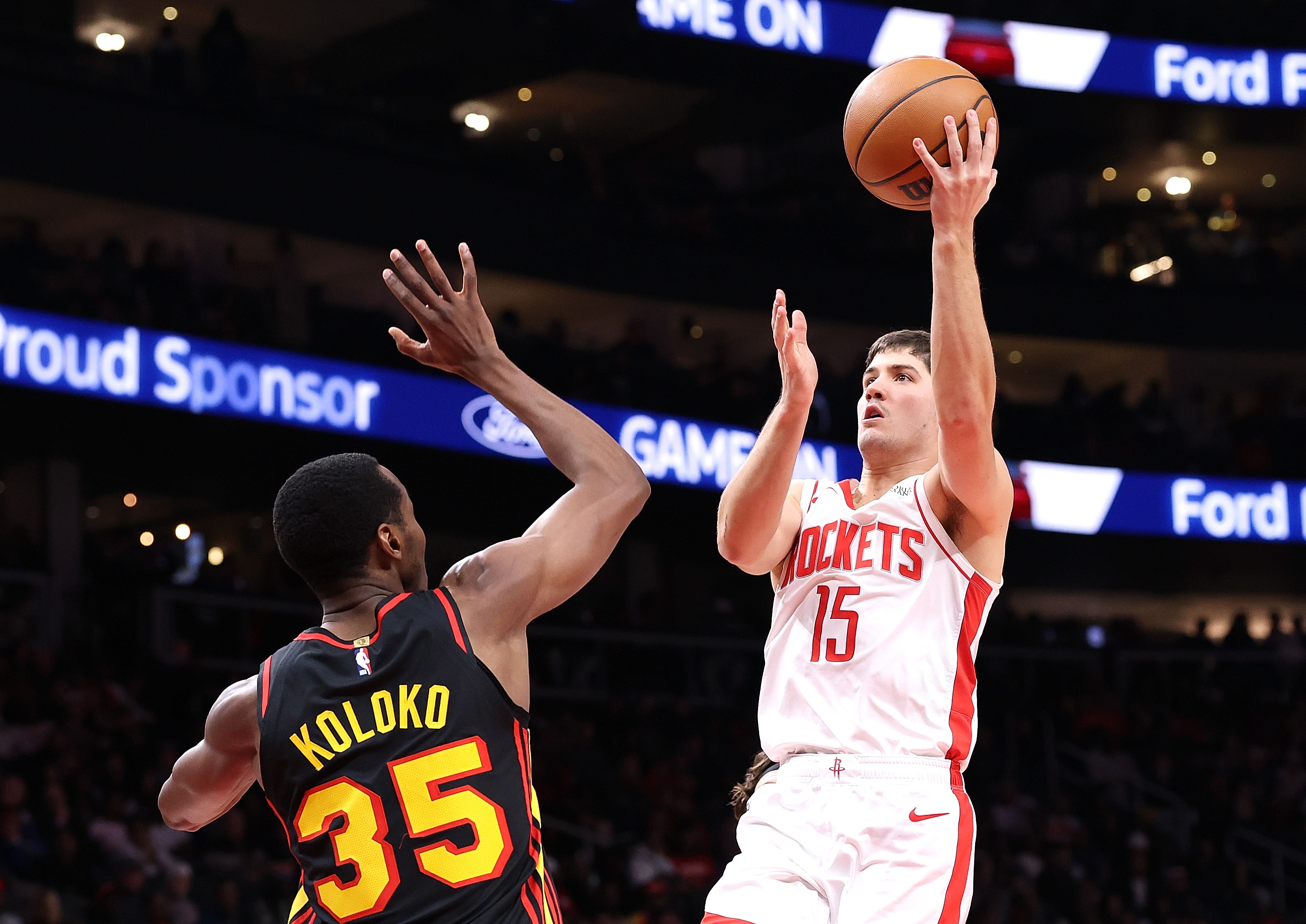
Reed Sheppard did more than fill a vacancy. Starting in place of Fred VanVleet, he scored 19 points, delivered seven assists and collected six rebounds. He made five of 11 attempts from beyond the arc after hitting only one of six in Houston's opener and missing Friday's game with a bruised knee. The Rockets were plus-19 during his minutes, matching Durant for the team's best figure.
Those numbers help explain why Sheppard's value cannot be measured by shooting alone. His three-point threat changed how Atlanta could defend the rest of the lineup, while his passing helped connect actions involving Alperen Sengun and the Rockets' cutters. The result was a more flexible offense despite missing its veteran organizer. Houston made 14 of 35 threes, a 40% clip, while Atlanta made 13 of 49.
Sheppard accounted for five of Houston's makes, but the larger point is how those shots created space. A defender who has to respect his range cannot simply collapse onto Durant or Sengun. When Sheppard also delivers timely passes, Houston can keep its offense moving without asking Durant to manufacture every difficult basket. That is especially valuable in the second game of a back-to-back.
Coach Ime Udoka praised Sheppard's balance, confidence and defensive activity afterward. It would be premature to declare that one night settles the team's long-term point-guard hierarchy; VanVleet remains an established organizer when available. But Sheppard's performance strengthens the case for giving him meaningful responsibility, including in closing lineups. Houston's depth looks more credible when its younger guards can create advantages rather than merely survive their minutes.

Seven double-figure scorers — Atlanta's 49 three-point attempts backfire

Durant's 22 points led Houston, but he was not forced to carry the offense. Tari Eason matched Sheppard's 19 off the bench. Alperen Sengun and Amen Thompson scored 17 apiece and both posted double-doubles. Sengun added 10 rebounds and seven assists; Thompson had 11 rebounds and six assists. Smith contributed 14. The Rockets had seven double-figure scorers, with several players able to initiate or finish possessions.
Each piece brought a different kind of pressure. Sheppard stretched the defense. Sengun's passing connected the interior and perimeter. Thompson attacked downhill and converted all nine of his free throws. Eason supplied force and energy in reserve minutes. Durant could choose his moments rather than chase a massive scoring total. That spread of responsibilities helped Houston keep producing after a difficult travel day.
The Rockets also secured 13 offensive rebounds that generated 22 second-chance points. Those extra chances mattered in a game where Atlanta could not make enough perimeter shots. The Hawks finished 13-for-49 from three, just 26.5%, after going five-for-22 in the first half. Houston made one more three while taking 14 fewer attempts. That efficiency gap made it difficult for Atlanta to convert its good stretches into a sustained lead.
Jalen Johnson was outstanding for the Hawks with 26 points, 16 assists and nine rebounds. Nickeil Alexander-Walker and Dyson Daniels each scored 18. Atlanta even outscored Houston in the paint, 58–46. The Hawks' problem was not a total lack of creation. It was the number of possessions that ended without a made outside shot, followed too often by a Houston second chance.
One cold shooting game should not define Atlanta's season, just as three wins should not settle Houston's ceiling. But Saturday showed a meaningful contrast: the Rockets could win through multiple scoring routes while the Hawks needed a much better return on their enormous three-point volume.

A 20-point lead became five — and Monday brings the same opponent
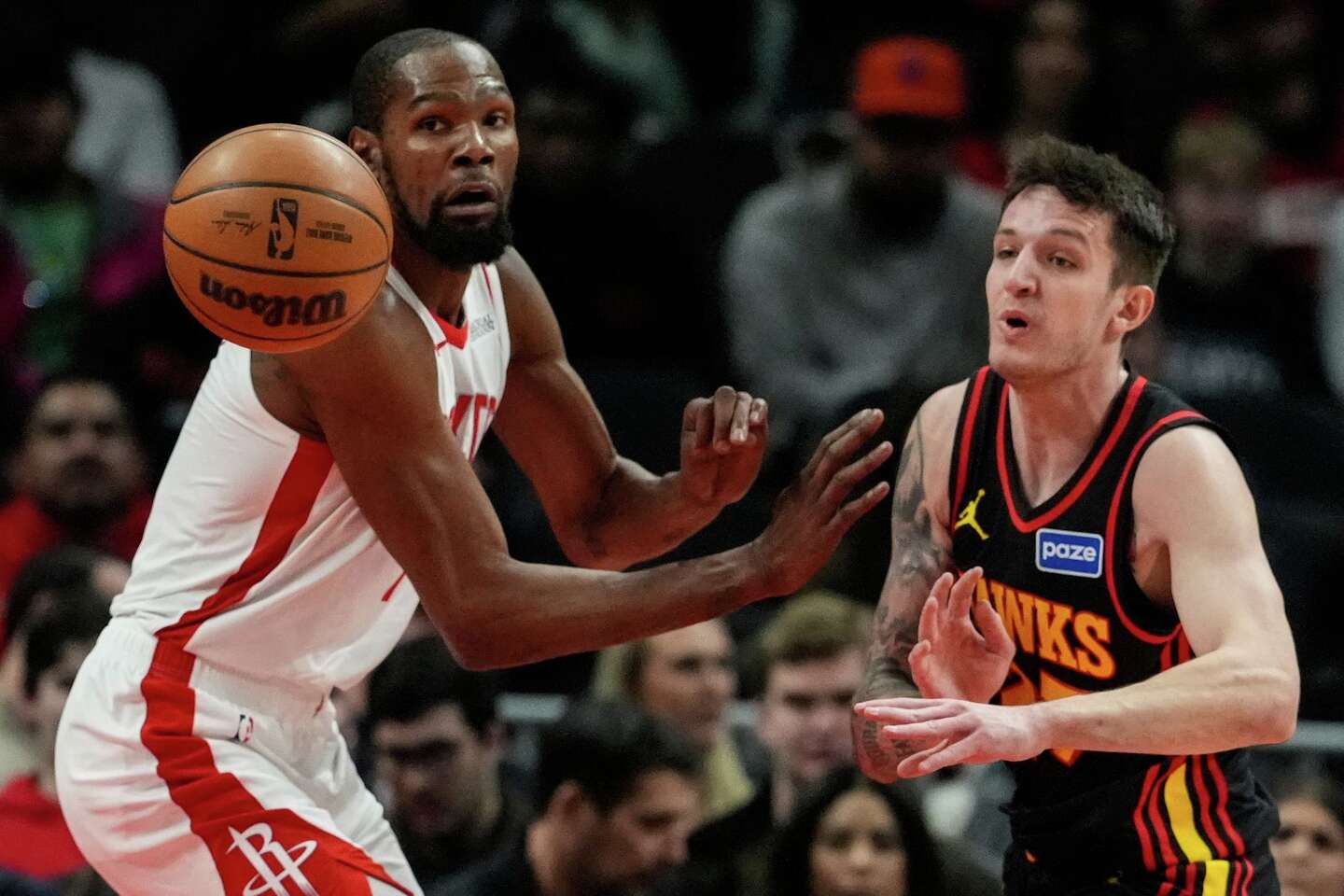
Houston led 108–88 in the fourth quarter. It had controlled the outside-shooting battle and held an Atlanta team that had averaged 130 points over its first two games to a much lower pace. Then the Hawks mounted a late charge, including a 9–0 run, and reduced the deficit to five with 37 seconds left. Durant made two free throws with 18.9 seconds remaining to restore a three-possession cushion and secure the 121–114 result.
That finish matters because it revealed a gap between Houston's best stretches and its endgame decision-making. The Rockets looked comfortable when the ball moved and several players were threats. They were less convincing when Atlanta raised the pressure and each possession felt more consequential. The lesson is not that Houston needs Durant to shoot more. It is that the offense needs clearer decisions about who initiates, where Durant catches the ball and how teammates respond to pressure.
Sheppard's plus-19 and seven assists make him an intriguing option for those closing combinations. Sengun's passing gives the Rockets another release valve, while Thompson's driving creates foul pressure. The coaching challenge is to combine those strengths without sacrificing defense or allowing rushed decisions. A lineup that scores well for 40 minutes still needs to manage the last eight.
Atlanta gets an immediate second chance on Monday, October 26, when the teams meet again in Houston. The Hawks will be looking for a more efficient three-point performance and cleaner defensive rebounding. Johnson's 16 assists suggest they can create looks; converting more of them would change the matchup. The Rockets, for their part, can use the rematch to demonstrate that their scoring depth is matched by better ball security and composure.
Three wins make a strong opening statement, especially with key players missing. But Houston should take the fourth-quarter warning seriously. The teams that turn early promise into lasting success are usually the ones that improve before their weaknesses cost them a game.
Houston's first 3–0 start since 2017–18 came from a genuinely balanced attack. Sheppard's five threes and seven assists, Durant's 22 points, Sengun's passing and Thompson's rebounding gave the Rockets several ways to win without a full rotation. That is a stronger foundation than relying on one star to rescue every possession.
But Atlanta's late comeback was a reminder that depth alone cannot protect a lead. Monday's rematch offers an immediate test of Houston's closing decisions. The unbeaten start is real; the work needed to sustain it is real, too.