Tresoldi Scored Three at San Siro — Inter's Real Problem Started Before the Finish
GOATIFYThree goals from Nicolò Tresoldi made the headlines, but Club Brugge's 4-3 win over Inter at San Siro on October 13 was more than one striker's extraordinary night. The Belgian visitors repeatedly found the space Inter left behind their own attacks, and Carlos Forbs turned those openings into the decisive moments of a seven-goal Champions League game.
Inter finished with 30 shots and 12 efforts on target, scored three times and still lost. Brugge managed 18 shots, eight on target and four goals. Those numbers describe an unusually open match, but they also underline the difference between creating pressure and controlling what happens when possession changes hands. For Inter, now beaten in both opening league-phase fixtures, that distinction is becoming urgent.
The first goal came from an Inter attack, not sustained Brugge pressure
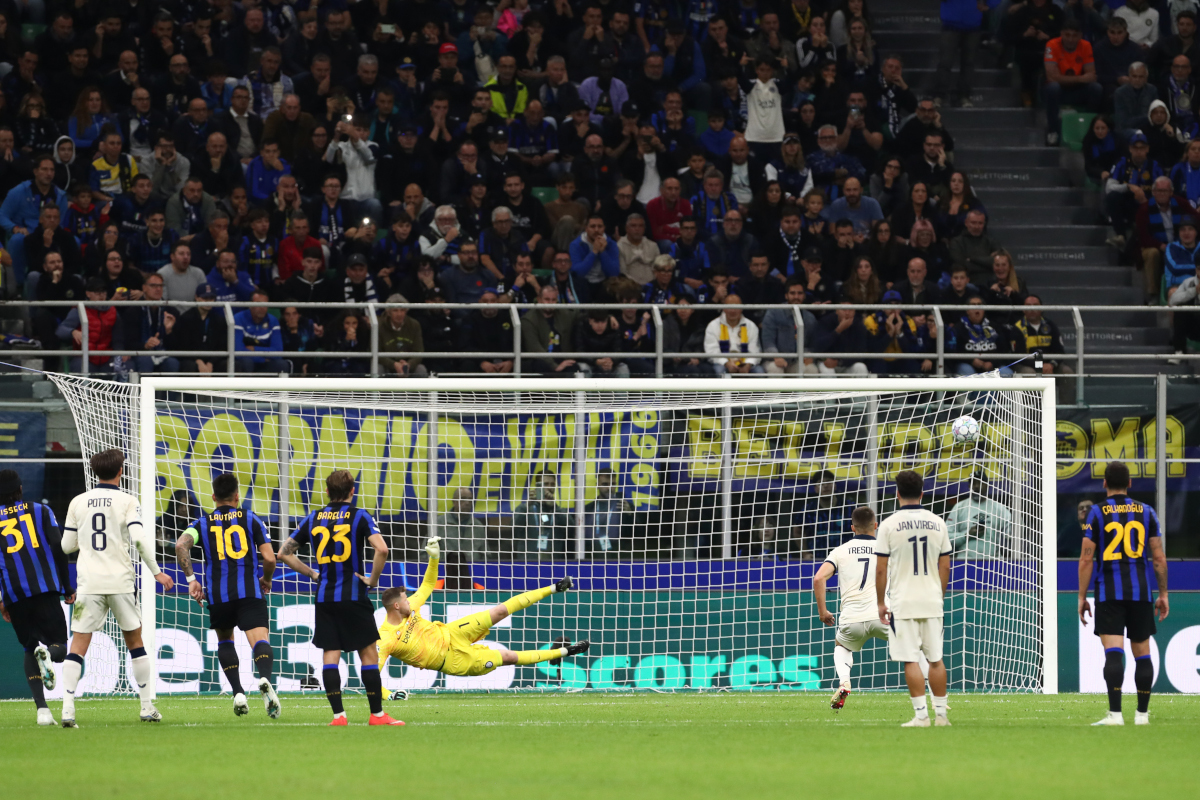
Inter had enough of the early play to make Brugge uncomfortable. Andy Diouf forced Yann Sommer into a close-range intervention, Marcus Thuram threatened from an angle and Lautaro Martínez was finding pockets around the penalty area. But an ambitious attacking position is useful only when the players behind the ball can defend the next transition. That was the part Inter could not consistently manage.
After an Inter corner, Forbs carried the ball from deep in Brugge's half toward the opposite penalty area. Hakan Çalhanoğlu brought him down, and Tresoldi converted the resulting penalty in the 30th minute. The sequence was a lesson in how quickly a promising attacking phase can become a defensive emergency. Brugge did not need a long spell of possession; one runner, a forward option and space to accelerate were enough.
It would be simplistic to blame the goal only on the midfielder who made the challenge. The foul was the final event in a chain that began with Inter's shape when the ball was lost. Players positioned to attack a corner were suddenly required to retreat at speed, while Forbs had the advantage of seeing the space ahead of him. The right question for Cristian Chivu is not merely whether the challenge was avoidable, but why the counterattack reached that dangerous position so cleanly.
Inter did respond. Çalhanoğlu hit the crossbar, a Lautaro header was ruled out for offside, and the captain equalised in the 44th minute after Thuram's run and Federico Dimarco's clever involvement. At 1-1, the hosts had restored the score without repairing the underlying vulnerability. Brugge had already learned which areas could be attacked whenever Inter committed numbers forward.

Forbs kept finding the same weakness, even when Inter had the ball
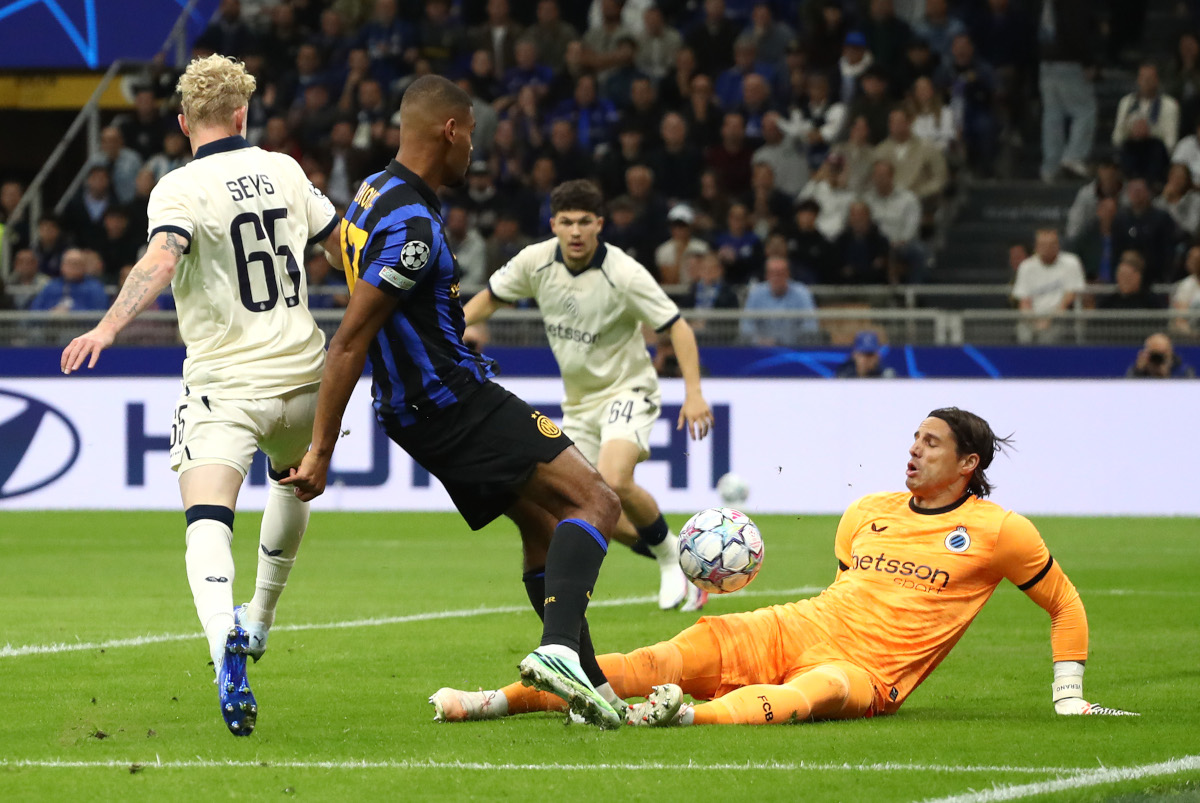
The second half made the first goal look less like an isolated mistake and more like a warning Inter had failed to absorb. Brugge's advantage was not built on dominating possession. It was built on making the next forward action immediate and direct when Inter's structure was stretched. Forbs was central because his speed changed the calculation for defenders and goalkeeper alike.
In the 63rd minute, Forbs reached the danger area as Inter struggled to deal with the ball behind their line. Goalkeeper Josep Martínez was caught away from a secure position, and Tresoldi finished into an exposed goal to put Brugge back in front. The sequence demanded a difficult judgment from everyone involved: how far the defenders should drop, whether the goalkeeper should advance and who was responsible for covering the runner. Inter's answers did not match.
The problem with an aggressive defensive line is not that it can never work. It is that the line, the pressure on the ball and the goalkeeper's starting position have to operate together. If the opponent has time to release a pass, a high line becomes an invitation. If the goalkeeper moves early but does not reach the ball, the attacker may be left with a simpler finish than the move initially promised. Brugge kept creating situations in which one late decision could undo several minutes of Inter pressure.
Forbs also forced the save that led to Tresoldi's third goal in the 74th minute. The striker reacted to the rebound before the defenders could clear, completing his hat-trick. Two goals in eleven minutes came from different final touches but a similar underlying advantage: Brugge reached the decisive space with more conviction than the team defending it.
There is a temptation to label such goals goalkeeper errors and move on. Josep Martínez certainly faced difficult moments, but the tactical lesson runs wider. Inter's defensive recovery, communication and second-ball reactions all need attention. Forbs did not merely run fast; he repeatedly chose the moment when Inter were least prepared to deal with a fast run.
Tresoldi's hat-trick made him the headline, but his timing made it possible

Tresoldi's three goals were not identical displays of technique. The first required composure from the penalty spot, the second demanded a striker who was ready to profit from a broken defensive sequence, and the third rewarded a forward who moved toward a loose ball before the defenders did. That variety is precisely why the performance mattered. He was prepared for the different kinds of opportunity that Brugge's game plan could produce.
The hat-trick took Tresoldi to four goals in the 2026-27 Champions League, putting him at the top of the early scoring chart after two matchdays. He had already scored against Aston Villa in Brugge's opening defeat. The San Siro display therefore was not a completely unexpected burst from a player who had never threatened at this level, although three goals away to Inter represented a dramatic increase in visibility.
There was also a personal dimension to the setting. Tresoldi was born in Italy, and the chance to deliver such a performance in Milan gave the night an obvious narrative appeal. But the footballing significance should not be buried beneath that story. Brugge needed an outlet who could remain alert through long stretches without the ball, protect central positions and finish when the transition created a chance. Tresoldi did those jobs without demanding that the team be built around constant possession.
His partnership with Forbs was the clearest tactical feature of the match. One player destabilised the back line with direct movement; the other occupied the area where an imperfect clearance, rebound or pass could become a goal. It was not sophisticated for the sake of being sophisticated. It was a simple attacking relationship executed at Champions League speed.
That matters for what comes next. Brugge do not need to reproduce a seven-goal thriller to benefit from this performance. They need to preserve the clarity of the runs, the willingness to attack transitions and the discipline to create chances even against opponents who monopolise the ball. Tresoldi's scoring lead will attract attention, but the repeatable advantage is the system that got him those finishes.

Three Inter goals could not disguise the loss of control
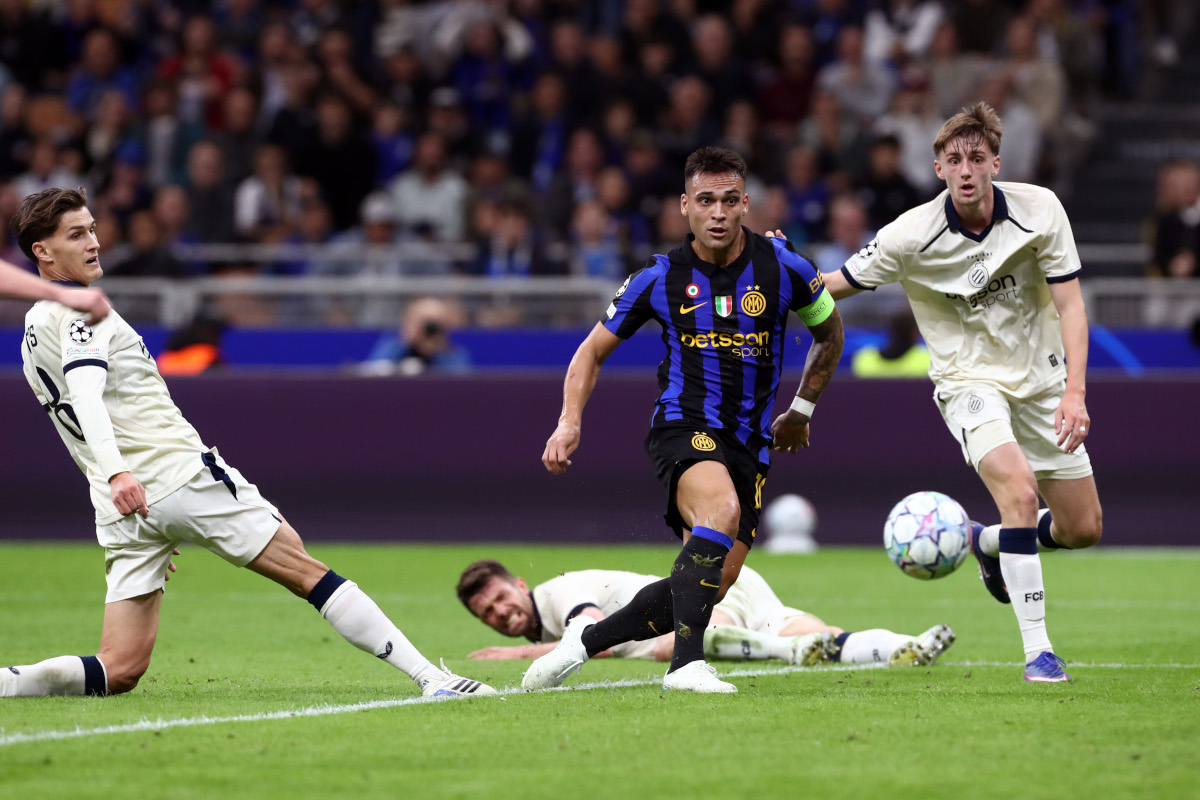
Inter's attack did not disappear after Tresoldi completed his hat-trick. Lautaro Martínez pulled the score back to 3-2 in the 81st minute, reacting after Sommer saved a powerful effort from substitute Petar Sučić. The goal showed the hosts still had enough quality and volume to threaten a comeback. It also created the dangerous impression that scoring one more goal would automatically solve the night.
Brugge answered with the move that effectively settled the match. A loose pass from Djed Spence was intercepted, Forbs released substitute Romeo Vermant and the forward finished in the 87th minute. The score became 4-2, restoring a two-goal cushion just as Inter were beginning to believe they could rescue something. Brugge's fourth was especially revealing because it came from the same principle that had troubled Inter earlier: a quick, vertical response to a vulnerable moment in the hosts' possession.
Ange-Yoan Bonny curled in a fine stoppage-time goal to make it 4-3, but there was no final equaliser. The sequence left Inter with an unusual combination of attacking productivity and defensive disappointment. Thirty shots, twelve on target and three goals would normally be enough to earn at least a point at home. Here they became evidence that the game had been played too openly for the stronger side to impose its preferred rhythm.
Sommer's nine saves also deserve attention. A goalkeeper can concede three and still be one of the reasons his team wins, particularly when he faces a stream of chances from a side chasing the match. Brugge's defensive work was far from perfect, and Inter found plenty of ways into the penalty area. But the visitors survived those spells and were sharper when their own opportunities arrived.
For Chivu, the immediate task is not to persuade Inter to stop attacking. It is to make attacking and defending part of the same plan. Better cover behind the ball, clearer decisions about when the goalkeeper should advance and more urgent reactions to second balls would reduce the number of chances opponents receive from relatively ordinary turnovers. After defeats to Real Madrid and Club Brugge, the European table will add pressure. The more important warning is visible in the football itself: Inter can create enough to score three and still leave the opponent with the better moments.
The next adjustment should also involve the midfielders and wide players rather than placing the entire burden on the back three. When an attack develops down one flank, the far-side players must know whether to narrow, hold a covering position or remain available for the next pass. The nearest midfielder must judge when to support the press and when to protect the centre. Those are small choices made before a turnover, but they determine whether the goalkeeper faces an ordinary through ball or a one-on-one emergency. Brugge's win illustrated the price of getting several of those decisions wrong on the same evening. Inter can keep the ambition that generated their chances, provided they become more deliberate about the space their ambition leaves behind.
Club Brugge's 4-3 win will be remembered as Tresoldi's San Siro hat-trick, and rightly so. Yet the performance was also a demonstration of how a team with less of the ball can control the moments that decide a match. Forbs supplied the acceleration, Tresoldi supplied the finishing and Vermant delivered the late insurance goal.
Inter do not need to erase their attacking ambition. They need to defend it. Until their structure behind possession becomes as convincing as their work in front of goal, the next opponent will study this defeat for more than the final score.