

Bentley Lost His WBO Belt — Now Zerafa Could Face Hernandez for Gold
GOATIFYDenzel Bentley is no longer the WBO middleweight champion. The belt he spent years chasing was declared vacant after he failed to proceed with a mandatory defense against Yoenli Hernandez, choosing instead to keep his November 7 booking with Shane Mosley Jr. The ruling closes one argument about who gets to fight next, but opens a far more interesting one: who is prepared to take on Hernandez now that a world title is available?
Michael Zerafa has emerged in reporting as a possible opponent for the unbeaten Cuban. That would be a striking turn for the Australian, who has been looking for another route to a world championship after rebuilding his career and signing with Matchroom. Yet there is a catch. The opportunity Bentley left behind has not become easier just because the champion is gone. Hernandez remains the same powerful, skilled mandatory challenger, and no vacant-title matchup has been formally announced.
The story is therefore bigger than a stripped belt. It is a test of the strange economics of modern boxing, the value of sanctioning-body titles, and the difference between earning a championship opportunity and being well positioned to win it.
Bentley's 102-day reign ends, but the mandatory obligation survives

Bentley did not lose the championship in a ring. His reign ended through a ruling that removed his recognition as WBO middleweight champion, effective October 30. The sanctioning body had ordered him to defend against unbeaten mandatory challenger Yoenli Hernandez. When Bentley sought permission to face Shane Mosley Jr first, the appeal failed. The belt was declared vacant, and the Londoner's November 7 fight was left without the WBO title he had hoped to carry into it.
The outcome is especially stark because Bentley had only recently reached the position he had pursued for years. In April, after a lengthy spell without a fight, he stopped Endry Saavedra in the seventh round at London's O2 Arena to win the interim WBO title. When Janibek Alimkhanuly relinquished the full championship in July, Bentley was elevated. It was a breakthrough, but one that arrived with a mandatory obligation already looming. A belt can be awarded through a change in championship status; it cannot necessarily be defended on a timetable chosen by the new champion.
The disagreement was not simply over whether Hernandez deserved a fight. Bentley's side had argued that a voluntary defense should be possible before the mandatory. The WBO took a different view, requiring Hernandez to be next. Once that order survived appeal, the decision became binary: honor the obligation or lose the recognition. Bentley's commitment to the Mosley bout meant the second outcome followed. His championship status is now settled, even if the merits of the original scheduling dispute remain debatable.
That distinction matters when discussing the next challenger. Hernandez did not forfeit his mandatory position because Bentley declined to fight him. Instead, the belt became available for a new title contest. It is tempting to treat a vacant championship as a lesser prize, but for the contenders it remains the same route to an official world title. The champion has changed from a named opponent to an empty place on the fight poster. The hard part — beating Hernandez — has not changed.
The story also underlines a familiar boxing paradox. Bentley fought through a long layoff, secured the interim belt, was promoted to full champion and then lost that recognition before making a defense. That sequence can look absurd from a fan's perspective. Yet mandatory challenges exist to prevent titleholders from choosing commercially attractive alternatives indefinitely. The WBO's decision may be harsh on Bentley, but it preserves the principle that the top challenger cannot simply be moved aside whenever a different deal appears.

Hernandez is the danger that a vacant belt cannot erase
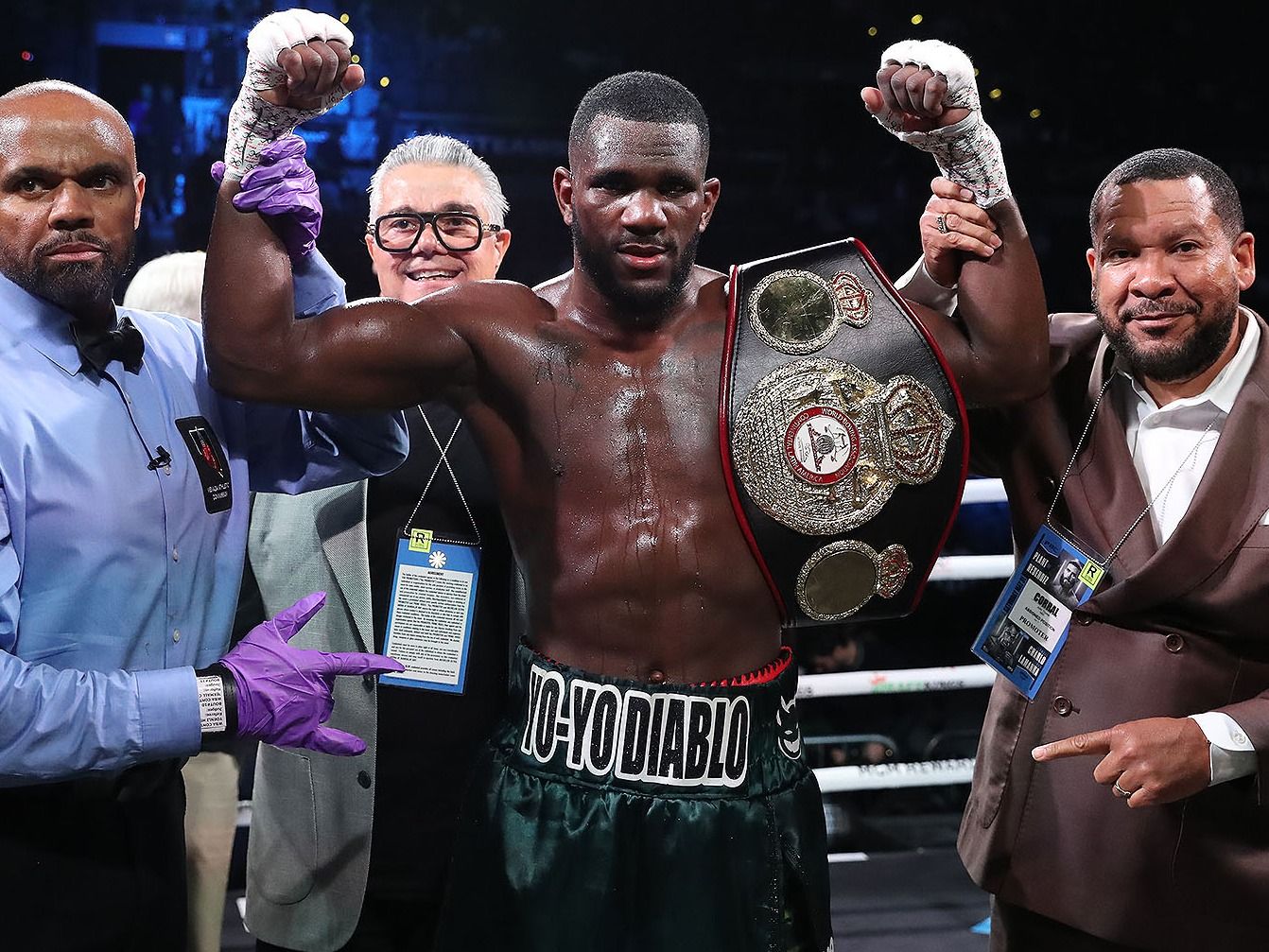
Yoenli Hernandez is not an anonymous name inserted into a championship order. The Cuban middleweight entered this dispute unbeaten at 11-0, with nine stoppage victories. He has the physical tools to dictate where a fight happens, and enough composure to avoid depending on one spectacular punch. That combination explains why the question of who will face him is more consequential than the paperwork that made the belt vacant.
His March performance against Terrell Gausha showed how quickly he can turn pressure into damage. Hernandez overwhelmed an experienced former Olympian and forced a fourth-round stoppage. In August, he took a different route against Francisco Daniel Veron, winning a majority decision across ten rounds. The contrast is important. A boxer who can overwhelm one opponent and negotiate a longer, less straightforward contest against another is building the kind of experience required for championship distance. Hernandez has not yet demonstrated everything a twelve-round world-title fight demands, but dismissing him as an untested puncher would ignore the work already on his record.
Against a fighter such as Zerafa, Hernandez's greatest advantage may be the pressure he creates before he throws. An opponent who retreats in straight lines can be forced toward the ropes. An opponent who plants to trade can be made to pay for staying within range after a combination. The Australian would need to interrupt Hernandez's rhythm with a consistent jab, use angles after his own attacks and avoid offering a stationary target for repeated power shots. None of that is impossible. All of it becomes harder when the other man is fresh, confident and willing to close distance.
The mandatory challenger's position also changes the negotiating dynamics. Hernandez has already waited while the former champion argued for a different fight. He is unlikely to welcome another indefinite delay. The WBO can determine who is next, but it still needs a bout that can be promoted, contracted and staged. An ordered fight is not the same as a signed fight, and the identity of the eventual opponent remains open until those steps occur.
That is why the vacancy should not be confused with a free title. A new challenger may receive a cleaner path to championship status, but not a simpler sporting assignment. Hernandez's unbeaten record is not proof that he will defeat every contender; the step up to elite opposition is real. It is proof that the opportunity comes with a legitimate opponent, not a ceremonial belt presentation. Whoever agrees to fight him will have to earn the crown in the ring.

Why Bentley chose Mosley Jr instead of waiting for the WBO

The immediate reason for Bentley's predicament is visible on the calendar. He is scheduled to meet Shane Mosley Jr on November 7 at London's Copper Box Arena, on a Zuffa Boxing card headlined by Chris Billam-Smith against Chev Clarke. The middleweight contest is a ten-round fight rather than a WBO championship defense. It remains a serious sporting assignment, but it no longer offers the title defense that would have made Bentley's decision look like a compromise rather than a clean break.
Mosley is not a convenient unknown. The American has been through high-level competition and arrived at this booking after stopping Serhii Bohachuk in the sixth round earlier in 2026. His timing, body punching and counterpunching give Bentley meaningful problems to solve. A win would still strengthen Bentley's market position, while a defeat would make the loss of his world-title recognition feel even more expensive. That is the risk of choosing a promotional path when the championship body refuses to travel with it.
Money is part of the explanation, although the precise economics of Bentley's new contract have not been publicly established in full. The original Bentley-Hernandez mandatory reached a purse bid of $200,000, with Warriors Boxing the only bidder. That figure represented the total bid to stage the contest, not a guaranteed $200,000 payday for Bentley. Reports differ on the exact percentage allocated to the champion, so the sensible comparison is the overall scale of the bid rather than an invented estimate of his Zuffa earnings. It was plainly not the kind of bidding war that makes a world champion feel indispensable.
For Bentley, a multi-fight promotional arrangement and a televised homecoming may have looked like the stronger long-term career move. For Hernandez, allowing that deal to push the mandatory backward would have undermined the point of winning his ranking. Both positions have a logic. The champion wants control over a career that has already included extended inactivity. The challenger wants the opportunity he was ordered to receive. A sanctioning body cannot satisfy both when the available dates and opponents conflict.
There is another complication for Zuffa. The promotion is building a boxing operation with its own calendar and roster, but fighters still operate within a championship system shaped by independent organizations. Signing a champion does not automatically bring the belt along if the governing body refuses the proposed opponent. Bentley's case is a public demonstration of that boundary. The November 7 bout can still be exciting, relevant and commercially valuable. It simply cannot be marketed as the WBO title defense that was once hoped for.

Zerafa's possible title shot comes with a queue — and a warning

Michael Zerafa is the name that makes the vacant-title picture especially intriguing. Reporting has suggested he could be matched with Hernandez despite other contenders appearing above him in the WBO rankings. That is not the same as a sanctioning-body order, a signed contract or an announced fight date. Vito Mielnicki Jr and Tim Tszyu are among the other names in the picture, and the WBO still has to determine the route by which a new champion will be crowned. Treating Zerafa-Hernandez as official today would be jumping ahead of the evidence.
Still, the Australian's involvement makes sense as a sporting and commercial possibility. Zerafa has long sought a major title, has continued competing in 2026 and has enough name recognition to give a vacant championship contest attention beyond dedicated rankings watchers. His August stoppage of Alejandro Ortiz came during a period in which he was rebuilding his position with Matchroom. The next opportunity would be larger, but it would also demand a different level of performance.
The most relevant warning comes from his previous world-title attempt. Erislandy Lara stopped Zerafa in the second round in March 2024, a reminder that small defensive errors can become decisive against a precise championship-level puncher. Hernandez is a different fighter from Lara; he is orthodox, brings a different rhythm and should not be reduced to a national comparison. But Zerafa would face the same broad question: can he keep his shape under elite pressure long enough to make his own offense count?
Mielnicki presents a different route for the WBO. A young contender with momentum could be paired with Hernandez in a matchup that gives the belt to a fighter on the way up rather than one seeking another championship chance. Tszyu's availability and other prospective commitments complicate the list. Zerafa's ranking, marketability and willingness would all matter, but none guarantees selection. The sensible position is to watch for an official order rather than declare a winner of the negotiations before they begin.
If Zerafa does receive the call, turning it down would mean passing on the kind of opportunity fighters spend entire careers pursuing. Accepting it, however, could jeopardize his other options if he is beaten decisively. He has also been linked in discussion to a possible Chris Eubank Jr matchup, although no such fight is confirmed. The attraction of a world title is enormous; so is the cost of losing another championship challenge in a division where reputation influences the next deal.
The opportunity is therefore both a gift and a test. Zerafa might inherit the title shot Bentley abandoned, but he cannot inherit an easy opponent. Hernandez has already made himself unavoidable through the rankings. The WBO now needs to decide who gets the chance to prove that its vacant championship is worth fighting for. Until that decision is made, Zerafa remains a contender in a developing story, not the announced challenger in a booked world-title fight.
For Bentley, the decision is already real: he has lost WBO recognition and is preparing for a non-title fight against Mosley Jr. For Hernandez, the obligation that shaped the dispute survives, and a shot at the vacant championship should now be within reach. Zerafa could be the man asked to stand opposite him, but that possibility remains a report rather than a signed, sanctioned contest.
The most tempting reading is that a vacancy has created a shortcut for the Australian. The more useful reading is that the vacancy has removed the champion without removing the danger. Zerafa would be getting access to the prize he wants, while accepting a matchup that could either validate his comeback or expose the same problems that damaged his previous title challenge. Whoever the WBO selects, its next decision will reveal whether the middleweight belt can be made meaningful again through a compelling fight rather than another round of negotiation.

















