

Close-Grip vs Wide-Grip Lat Pulldown: Which Builds a Better Back?
UPLIFT IRON CLUBThe lat pulldown is one of those exercises that somehow turns a simple cable machine into a theology debate. One lifter swears the wide bar is the only way to build a V-taper. Another says a close neutral handle gives a longer range of motion and therefore must be superior. Both can sound convincing because both grips genuinely change how the movement feels.
The useful answer is less dramatic: close-grip and wide-grip pulldowns are both effective vertical pulls. The better choice depends on the exact attachment, your shoulder comfort, how consistently you can control the rep, and whether you can progressively overload that version without turning it into a sloppy cable row.
There is also an important detail that gets lost in gym talk: grip width and hand orientation are separate variables. A narrow neutral V-handle is not simply a narrower version of a wide pronated bar. You changed the distance between the hands and the way the palms face. That matters when comparing technique, loading and range of motion.
Why the Grip Debate Gets Oversimplified

The lats are huge fan-shaped muscles that contribute to moving the upper arm down and back toward the body. Pulldowns also involve the biceps and other elbow flexors, forearms, teres major, rear shoulder musculature and the muscles controlling the shoulder blades. Changing your grip changes the path of the elbows and the leverage around those joints, but it does not magically switch one part of the back on while turning the rest off.
A useful study on pulldown grip width compared three pronated hand positions based on shoulder breadth. The researchers found broadly similar lat, trapezius and infraspinatus electrical activity across the widths, while the widest position produced a slightly lower six-repetition maximum load. That is useful information, but it is not a long-term hypertrophy trial, and it did not test the common narrow neutral V-handle setup.
So the strongest conclusion is modest: there is no convincing reason to crown one grip the universal muscle-growth champion. If one setup allows smoother reps, a repeatable range of motion and steady progression, it can be an excellent primary pulldown.
What a Close Neutral-Grip Pulldown Changes

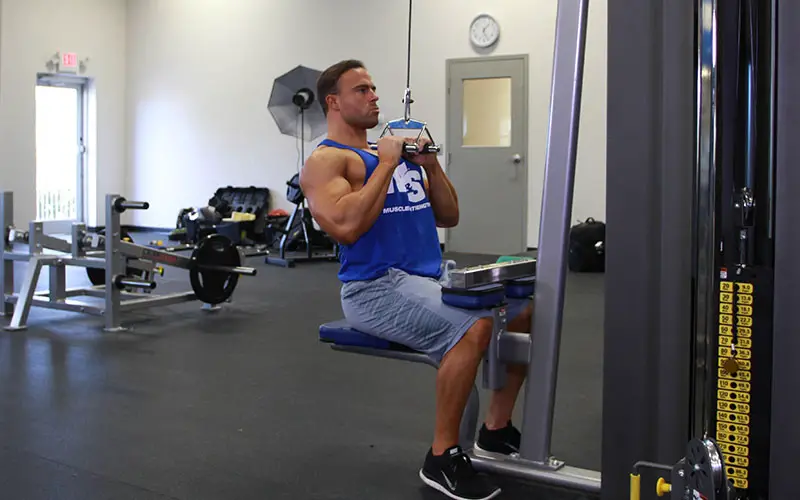
With a close neutral handle, the palms face each other and the elbows tend to travel more in front of the torso before driving down toward the ribs. Many lifters find this path intuitive because the wrists stay neutral and the attachment can travel close to the body.
That setup often creates a longer-feeling rep. At the top, the hands can stay relatively close while the arms reach overhead. At the bottom, the elbows can travel farther down alongside the torso than they usually can with an extremely wide bar. That does not prove it selectively grows a mythical “lower lat” region, but it can make the movement easier to feel through a large controllable range.
Keep the torso stable. A small, consistent backward lean is fine, but if every rep turns into a dramatic swing followed by a row toward the stomach, the exercise has changed. Think about driving the elbows down, keeping the chest tall and letting the shoulder blades move naturally as you reach back overhead.
Watch the biceps takeover. A close handle can make it tempting to think only about curling the attachment down. Your elbows have to flex, so the biceps will work, but the rep should still be driven by upper-arm movement. If your forearms are burning while the back feels uninvolved, lighten the load, start each rep from a controlled overhead reach, and think about bringing the elbows toward your pockets rather than dragging the handle toward your chest.
Neutral does not automatically mean “joint-safe” for every person, either. Shoulder structure, previous injuries, attachment shape and seat position all matter. A grip that feels excellent for one lifter can annoy another. Comfort is useful information, but sharp pain, pinching or numbness is not something to train through.

What a Wide Overhand Pulldown Changes

The wide-grip version normally uses an overhand bar with the hands outside shoulder width. This pushes the elbows farther out to the sides and reduces how far the hands can travel at the bottom. The range may feel shorter, but “shorter” does not automatically mean ineffective.
The mistake is going comically wide because the exercise is called wide-grip. If your hands are so far apart that the bar barely moves, your wrists feel awkward and the shoulders roll forward to finish each rep, you are not earning bonus lat points. A moderately wide grip that lets you keep control is usually the smarter place to start.
Pull the bar in front of the head rather than behind the neck. Let the elbows move down and slightly back, stop before the shoulders have to dump forward, and control the return. The rep should still look like a vertical pull, not a full-body heave against the weight stack.
“Wide” should also be relative to the lifter, not to the end caps of the bar. Two people with very different shoulder widths should not automatically put their hands in the same place. Start only modestly outside shoulder width, run a few controlled reps, and move outward only if the position remains comfortable and the elbow path still feels strong. Extreme width usually buys you less range without proving that you gained more lat stimulus.
What the Research Actually Lets Us Say
Most arguments about pulldown grips are more confident than the evidence deserves. EMG studies can tell us something about electrical activity during a set, but they do not automatically predict which grip will add the most muscle over six months. Small differences in an acute lab test are not the same thing as proven differences in hypertrophy.
We also need to avoid mixing research on different exercises. A study comparing narrow, medium and wide overhand grips cannot be used as proof that a neutral V-handle behaves identically. Likewise, a lifter being able to use more weight with one attachment does not necessarily mean that attachment is superior. Machine pulley ratios, bar friction, technique and range of motion all change the number printed on the stack.
The practical evidence-based rule is simple: pick a pain-free setup, standardize it and progress it. Log the attachment, grip and weight so that your 10 reps next month actually mean something compared with your 10 reps today.
In the grip-width study often cited in this debate, the average six-repetition loads were roughly 80.3 kg for the narrow pronated grip, 80.0 kg for the medium grip and 77.3 kg for the widest grip. That small drop at the widest position is interesting, but it does not tell us that the narrower grip grows more muscle. The study measured acute performance and muscle electrical activity in a small group of trained men; it did not put lifters through months of hypertrophy training and measure changes in muscle size.
This distinction matters because gym advice often jumps from “this grip produced slightly different EMG or load” to “this grip builds a completely different back.” That leap is much larger than the evidence. Use studies to narrow down sensible options, then let repeatable training performance decide which option earns a long-term place in your program.

Which Grip Is Better for Building Muscle?

For hypertrophy, the best pulldown is the one you can train hard enough and consistently enough to accumulate quality volume. Both close neutral and wide overhand grips can do that.
Choose close neutral as your main variation if you like the longer-feeling range, can keep the elbows driving smoothly toward the ribs, and find the wrists or shoulders more comfortable in a palms-facing position. Choose wide overhand if that position feels natural, you can keep a stable torso, and you enjoy the wider elbow path without shoulder irritation.
Do not chase load at the expense of tension. A productive muscle-building set usually ends because the target pulling muscles are close to their limit, not because you have turned the final four reps into a backward hip thrust. Moderate rep ranges such as 6–15 can all work well when sets are challenging and technique stays repeatable.
If you genuinely like both, you do not need to pick a lifetime winner. Use one as the primary pulldown for several weeks while you track progression, then use the other later in the week or rotate it into the next training block.
Progression matters more than attachment tribalism. Keep one main pulldown variation long enough to learn it—usually at least four to six weeks. Use the same seat height, thigh-pad position, attachment and approximate torso angle. When you can add a rep or a small amount of weight while the range and control stay the same, you have evidence that you are getting stronger at a movement that actually resembles the one you started with.
For most muscle-building sets, finishing with roughly one to three good reps left in reserve is a useful default. You can occasionally push closer to failure, but the final repetition should not become a completely different exercise. A heavier stack is not progress if the bar moves half as far and your torso swings twice as much.
How to Program Both Without Junk Volume
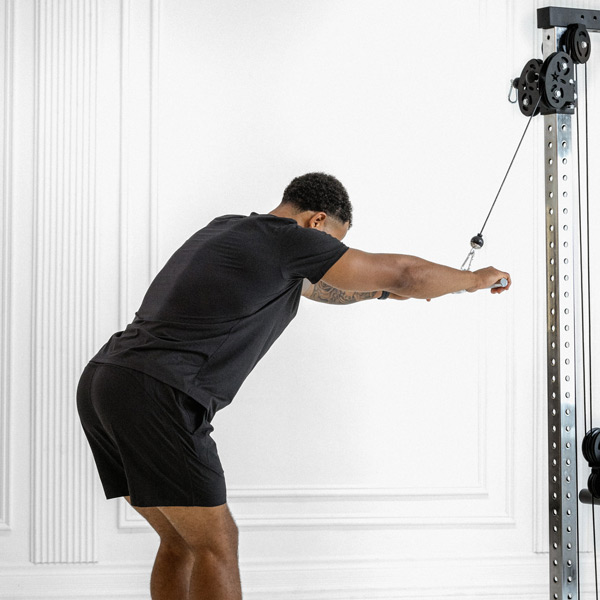
A simple back plan does not need five nearly identical pulldowns. Vertical pulling is only one piece of complete back training. Pair it with a row for horizontal pulling, then add another lat-focused movement only if your weekly volume and recovery support it.
One straightforward setup for an intermediate lifter could look like this:
| Session | Exercise | Work |
|---|---|---|
| Back A | Close neutral-grip pulldown | 3 × 8–12 |
| Back A | Chest-supported or cable row | 3 × 8–12 |
| Back B | Wide overhand pulldown | 3 × 8–12 |
| Back B | Straight-arm pulldown or another row | 2–3 × 10–15 |
Start a little shy of failure while you learn the setup, then gradually push the working sets harder. When you can reach the top of your rep range with clean form across all sets, add a small amount of resistance. If you switch attachments, treat it as a different exercise and establish a new working weight rather than expecting the same stack number.
If you want to compare the grips for yourself, make the comparison fair. Run one variation as your primary pulldown for four to six weeks, record your working loads, reps, technique quality and any shoulder or elbow irritation, then run the other with the same weekly set target. Do not judge from the first session, because unfamiliar attachments often feel weaker simply because the skill is new.
You are looking for the version that gives you the best combination of stable technique, useful range, hard target-muscle effort and measurable progression. If both perform similarly, that is not a failed experiment—it means you have two viable tools you can rotate when training becomes stale.

The Verdict: Pick the Grip You Can Own
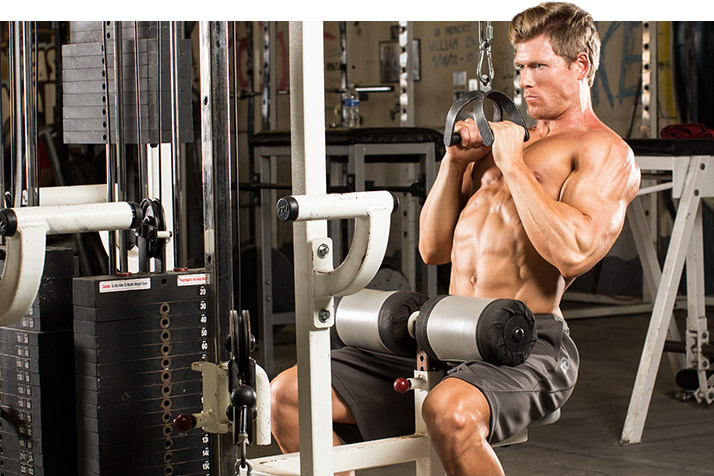
There is no need to turn lat pulldowns into a tribal identity. A close neutral grip offers a compact hand position, a different elbow path and often a larger-feeling range. A wide overhand grip gives you a wider elbow path and is a perfectly legitimate way to load a vertical pull. Neither has been proven to dominate the other for long-term lat growth.
If one grip causes pain, stop treating discomfort like evidence that you are hitting the muscle harder. Adjust the width, attachment, range or exercise. If both feel good, use the one you can progress most consistently and keep the other as a useful variation.
The boring answer wins again: controlled reps, enough hard sets, sensible progression and months of consistency will build more back than arguing about whether your hands should be six inches farther apart.
One final cue applies to either grip: do not force the attachment to touch your chest simply because you were taught that every rep needs a dramatic endpoint. Your usable bottom position depends on arm length, grip and shoulder mechanics. Finish where you can still keep the chest tall and the shoulders controlled, then let the arms return overhead under tension. Consistency beats inventing extra range by collapsing posture.

Gym T-Shirts for Back Day and Heavy Training
Browse lifting tees and pump covers built for gym days, pull sessions and anyone chasing a wider back.
EXPLORE COLLECTION










