

Chiefs Sign Justin Tucker — Butker's Job Is Suddenly on the Line
GOATIFYKansas City has signed Justin Tucker, one of the most decorated kickers in NFL history, to its practice squad. That is a remarkable development for a team that already employs Harrison Butker, the specialist behind some of the Chiefs' biggest championship moments. It is also a blunt acknowledgment that past success no longer guarantees a comfortable hold on the job.
The move was confirmed on October 28, three days after Butker missed twice in a 20–3 defeat in Seattle. Kansas City is 5–1, not in a season-ending crisis, but its kicking numbers are becoming difficult to excuse. Butker has converted 11 of 16 field goals in 2026. Tucker arrives with an extraordinary career résumé, a poor final season in Baltimore and a serious off-field history that cannot be ignored.
This is not an announcement that Butker has been replaced. He remains on the active roster, while Tucker has a practice-squad contract. It is, however, the first unmistakable sign that Andy Reid is preparing another option if the accuracy problem continues.
Butker's 11-for-16 slump has finally produced a consequence

The arithmetic explains why Kansas City made a move. Through six games, Butker has made 11 of 16 field-goal attempts, a 68.8% conversion rate. From 40 yards or longer he is five for ten. Those are not numbers a contender can dismiss as a single unlucky afternoon, especially when the offense is designed to squeeze points out of tight late-game possessions.
Seattle turned the problem from a statistical curiosity into an immediate coaching decision. Butker missed from 58 yards before halftime and from 45 yards in the fourth quarter of the Chiefs' 20–3 loss on October 25. He did convert a 50-yarder, producing Kansas City's only points, but that successful attempt did not erase the two misses. The second failure prevented Kansas City from cutting the deficit to one possession with time remaining. It was a consequential moment, even though the entire offense had been struggling.
The Chiefs managed just 213 total yards in Seattle and held the ball for only 24 minutes and nine seconds. Patrick Mahomes completed 19 of 33 passes for 165 yards and an interception, while Kenneth Walker III was held to 36 yards on 14 carries against his former team. The opponent moved the ball for 410 yards. Blaming the 17-point loss exclusively on a kicker would ignore the much larger collapse. Yet a team that scores only three points has even less margin for wasted scoring chances.
Butker's career record deserves respect. He has been Kansas City's kicker since 2017, won three Super Bowls and entered this season with a reputation for delivering under postseason pressure. His career field-goal conversion rate still stands at approximately 87.3%, with 262 makes from 300 attempts. But a career average is not a substitute for what a kicker is doing today. Kansas City is evaluating the current version of Butker, not the player whose previous performances earned trust.
The concern also extends beyond one game. Since the start of the 2025 season, Butker has missed 10 field goals and five extra points. Repeated misses from distances that NFL teams increasingly treat as routine change fourth-down decisions, field position calculations and how aggressive a quarterback must be on the next possession. Every possession is connected. A kicker who cannot be relied upon narrows the playbook without ever touching the ball on offense.
Bringing in a competitor does not mean Butker cannot recover. It means Kansas City no longer wants to wait for that recovery without a contingency. The roster transaction is both a practical insurance policy and a message: championship history earns patience, but not unlimited patience.

Tucker's record is elite, but his last Ravens season was not
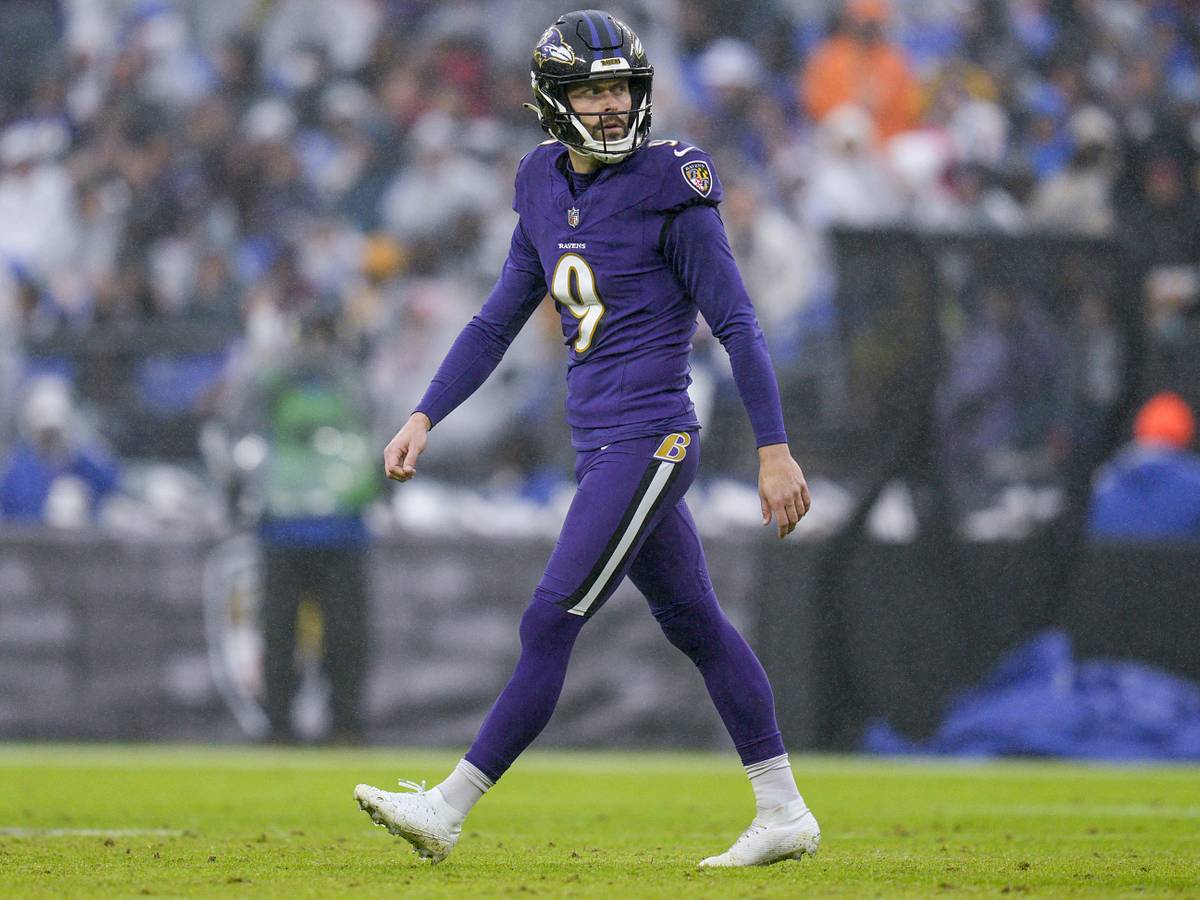
On résumé alone, few free-agent kickers could create more pressure than Justin Tucker. Across 13 seasons in Baltimore, he made 417 of 468 field-goal attempts, an 89.1% success rate that places him among the most accurate kickers the league has seen. He earned multiple All-Pro selections, became a seven-time Pro Bowler and helped the Ravens win a Super Bowl in his rookie season. His long-range kicking made him a reference point for the position for more than a decade.
That history is exactly why this practice-squad addition feels different from a routine emergency signing. Kansas City has not merely found an anonymous backup to take practice kicks. It has brought in a former standard-setter whose name alone makes every subsequent Butker miss more consequential. If Tucker looks sharp in practice, the coaching staff will be asked why a famous alternative is not being used. That question becomes harder to avoid after another close loss.
But Tucker's reputation cannot freeze his football evaluation in 2022 or 2023. His final season with Baltimore in 2024 was the worst of his career by field-goal percentage. He converted 22 of 30 attempts, or 73.3%, and struggled especially from longer distances, making 11 of 19 from 40 yards or beyond. The numbers that helped end his Ravens tenure are uncomfortably similar to the concerns that have created this opportunity in Kansas City.
Nor has Tucker played an NFL regular-season game since that Baltimore chapter ended. He was released in May 2025, and this new contract is a chance to demonstrate what his leg can deliver now rather than what it delivered during his peak. A workout or a week of practice cannot reproduce a live snap, protection, hold, wind, noise and game clock. Kansas City will need to judge his present-day accuracy, distance and consistency before treating him as an upgrade.
His absence from the league also has a serious off-field dimension. Sixteen massage therapists accused Tucker of sexual misconduct connected to treatment sessions in the Baltimore area during the 2010s. Tucker denied the allegations. He was not criminally charged, but the NFL investigated and imposed a 10-game suspension for violating its personal conduct policy. That suspension was served, making him eligible to play again. The allegations, denial and league disciplinary finding are distinct facts; none should be blurred into an unsupported claim of a criminal conviction.
That history makes the signing more than a technical special-teams decision. Kansas City is accepting the scrutiny that comes with Tucker's return while trying to solve a genuine competitive problem. Supporters can reasonably debate the judgment involved, but the on-field question remains concrete: can a 36-year-old kicker who struggled in his last season and has spent an extended period out of games perform more reliably than the incumbent?

Andy Reid is keeping Butker in place—for now
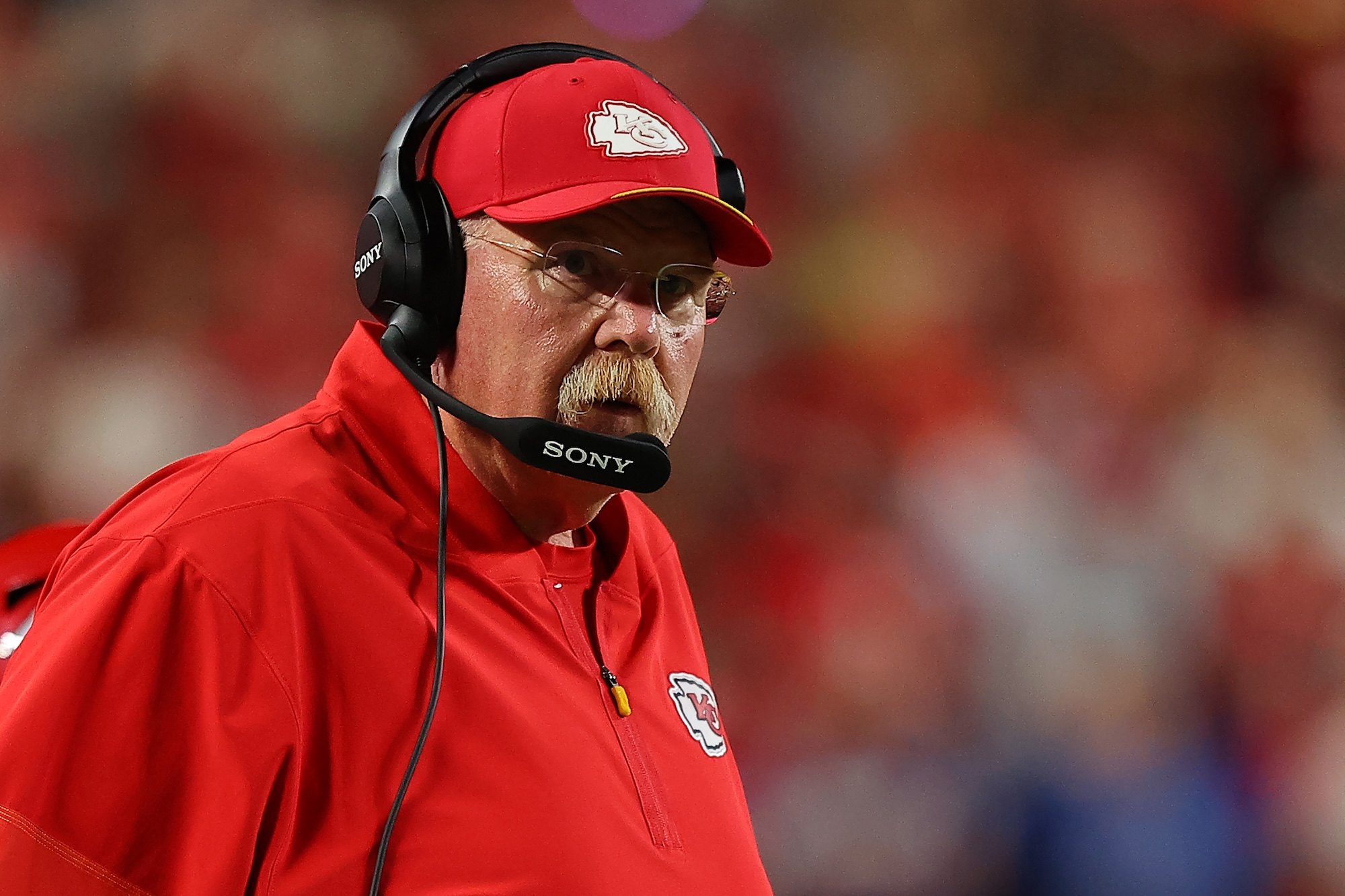
Reid's public position is more restrained than the headline surrounding Tucker's arrival might suggest. He indicated that Butker would probably handle the kicking duties for the next game in Denver, while acknowledging that the veteran needs to improve. The distinction matters. Tucker is on the practice squad, not automatically the starting kicker, and no formal change to the active-roster job has been announced.
Reid described Butker's technique as being off and characterized the addition as security for an available practice-squad position. The coach also made clear that Butker understands the competitive nature of the league. That combination—support for a veteran, paired with a real alternative—is classic roster management. It preserves the possibility of recovery without leaving the club with only one answer if the slump continues.
There are several practical reasons not to rush the decision. Butker knows the holder, long snapper, protection calls, timing and coaching routines. A kicking unit functions as a three-person operation before the ball even flies. Tucker must establish timing with the same personnel, demonstrate repeatable mechanics and show he can handle the distances and weather conditions Kansas City will encounter. Even an exceptionally talented kicker needs those repetitions.
The practice squad also creates flexibility. The team can evaluate Tucker without immediately releasing or demoting Butker, and the staff can compare their practice work in the same environment. If the incumbent improves, the move may remain a short-term insurance measure. If the misses continue, Kansas City has already started the process of preparing a replacement. Both outcomes are consistent with the transaction; neither is guaranteed by it.
The timing is especially pointed because the Chiefs are heading into another AFC West game. Kansas City beat Denver 31–10 in its season opener, but the rematch is a different assignment. The Broncos have since improved, and a road divisional contest can turn on a single field goal. The decision on who kicks is therefore not a publicity exercise. It is about whether the coaching staff trusts the specialist to convert the opportunities that its offense creates.
Reid also has to balance locker-room credibility with performance accountability. Players see when a teammate is struggling, and they see whether a coach acts consistently. Automatically discarding a decorated veteran after a poor month would be rash. Refusing to consider alternatives when repeated misses affect results would be equally difficult to defend. The signing gives Reid room to make a measured choice rather than an emotional one.
The Denver rematch will reveal whether this is insurance or a real challenge

Sunday's visit to Denver is the first meaningful checkpoint after the Tucker signing. The simplest scenario is that Butker takes the kicks, converts his opportunities and makes the roster move look like an unnecessary alarm. That would be welcome news for Kansas City. The alternative is another missed makeable attempt, at which point the question changes from whether the Chiefs need competition to whether they are prepared to use it.
Field-goal percentages require context. A 58-yard attempt is not the same assignment as a 28-yarder, and one kick in difficult weather should not decide a career. But the sample here includes misses from several distances, including the 45-yarder in Seattle, and an overall rate that falls well short of Butker's established standard. Evaluating him fairly means looking at kick distance, conditions, trajectory, operation and repeatability—not simply pointing to a famous name waiting on the practice squad.
Mahomes and the offense also have responsibility for how the kicking story develops. In Seattle, Kansas City converted only three of eleven third downs. Long drives were rare, the running game was ineffective and the passing attack never found a sustained rhythm. A more efficient offense produces shorter field-goal attempts, extra-point opportunities and, ideally, touchdowns that reduce the pressure on a kicker. Better offensive football cannot cure every miss, but it can change how frequently one decides the outcome.
The Chiefs enter this discussion from a position of relative strength at 5–1. Their season is not collapsing because they signed a veteran specialist. In fact, acting while the record is strong can be an advantage: it allows the club to address a weakness before a playoff game turns it into a season-defining regret. Kansas City's best teams have generally combined Mahomes' ability to create points with a dependable finishing operation. When that final piece becomes uncertain, even an elite quarterback loses some of his margin for error.
There is a second uncertainty, too. Tucker's historical accuracy does not automatically translate into 2026 accuracy. If the staff promotes him, it is taking a bet on a player whose last NFL season ended at 73.3%, not simply installing the 89.1% career average. The Chiefs must compare two present-day kickers with imperfect recent evidence. That is a harder decision than the headline of a legendary veteran replacing a struggling starter might imply.
The most defensible reading of October 28 is therefore narrow but significant. Butker still has the job. Tucker has a route back into the league and a chance to make himself a credible option. Reid has created leverage without making an immediate change. Denver will supply the next piece of evidence, and the decision should follow that evidence rather than nostalgia, reputation or the noise surrounding either player's name.

Justin Tucker's arrival makes Kansas City's kicking competition real, but it does not settle it. Butker has earned the chance to show that his recent misses are correctable; Tucker has to prove that his remarkable past still translates into dependable present-day performance. Reid's responsibility is to choose the better kicker, not the bigger reputation.
For a 5–1 team trying to recover from a brutal night in Seattle, this is a sensible time to confront an uncomfortable problem. The next kick in Denver will not answer every question. It may, however, determine how much longer the Chiefs can treat the Tucker signing as insurance rather than a genuine contest for the job.
Shop GOATIFY NFL and American football shirts, hoodies and stickers.

















