

Piastri Has Two Podiums. Norris Has Three Wins. McLaren's MCL40 Is Exposing the Gap.
GOATIFYOscar Piastri was a Formula 1 title contender in 2025. By November 2026, he was explaining why the car beneath him no longer felt like something he could simply drive on instinct. That is a considerable change for a driver whose rapid rise through the junior categories was built on making difficult machinery look manageable.
The numbers make the contrast difficult to disguise. Piastri has collected only two Grand Prix podiums this season, both early in the campaign. McLaren team-mate Lando Norris has won three races, including the rain-soaked São Paulo Grand Prix on November 8. As of November 13, the British driver is 94 championship points ahead of Piastri, even though both share the same team's fundamental package.
In a detailed interview published Friday, Piastri acknowledged that the 2026 MCL40 has demanded changes to how he approaches a corner, trusts its grip and extracts lap time. He says he has made progress in the second half of the season. The interesting question is whether that progress represents a temporary fix for a difficult car or the beginning of a stronger, more adaptable version of the Australian.
The MCL40 Has Forced Piastri to Retrain His Instincts
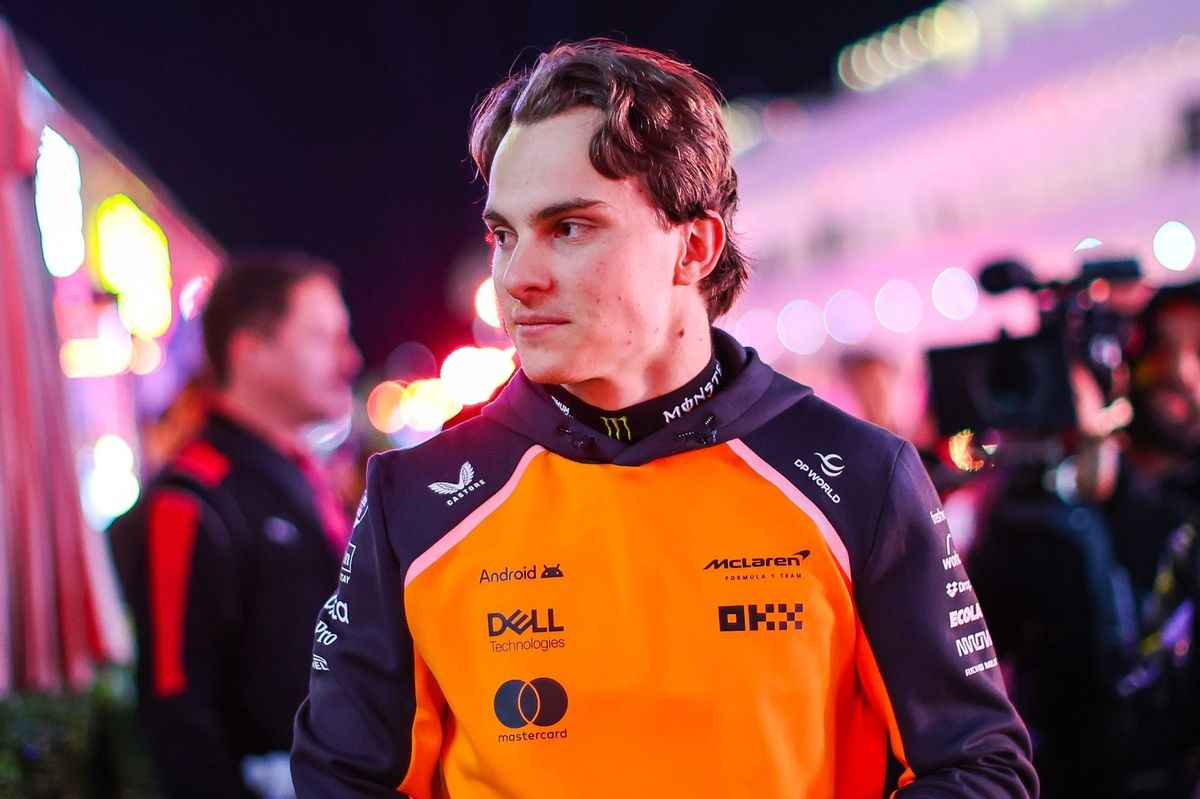
Piastri's most revealing admission is not that the MCL40 has been slow at times. It is that driving it has required him to alter habits developed across years of racing. He described the 2026 season as tougher than expected and said the new car has made him change numerous elements of his approach. In a sport where drivers operate on tiny margins, rebuilding confidence in those instincts is more complicated than learning a new steering-wheel setting.
The 2026 regulation reset introduced major changes to Formula 1's chassis and power units, including a greater electrical contribution and different aerodynamic behavior. Every driver has had to adapt, but the same demands do not affect every driving style equally. A car that rewards one way of managing entry speed, rotation and traction may punish another, even when two equally talented drivers have access to broadly identical equipment.
That distinction matters when evaluating Piastri against Norris. Saying that a machine is hard to drive does not by itself explain a 94-point difference; the McLaren has clearly been capable of winning races. Equally, the fact that Norris has found ways to win does not prove that Piastri simply forgot how to race. The more useful question is how consistently each driver can reach the car's potential as grip, fuel load, tire temperature and track conditions shift throughout a weekend.
McLaren team principal Andrea Stella has previously acknowledged that Piastri has sometimes been unable to rely on pure instinct in particular conditions. Piastri's own explanation fits that assessment. He has spoken about needing to retrain what the limit feels like, and about the difficulty of trusting a car when its behavior differs from the machinery he knows. That process can cost more than a few tenths in qualifying: uncertainty early in a lap can carry into the next braking zone, and an uncomfortable stint can limit strategic options.
His season also began with two unusually painful false starts. He did not take the start of the Australian or Chinese Grands Prix, and the early podiums that followed in rounds three and four never developed into a sustained run at the front. That sequence combines mechanical frustration and competitive difficulty rather than fitting a single explanation. It is important not to turn every lost result into an allegation that the driver is struggling with technique.
GOATIFY
GOATIFY Formula 1
Explore GOATIFY Formula 1 gear while Piastri tackles the MCL40's unfamiliar driving demands.


Piastri's comments do contain a cautiously encouraging note. He believes changes made during the second half of 2026 are helping, and the challenge has given him new tools to work with. Learning to recognize when a previous instinct is misleading may ultimately expand his operating range. But the scoreboard is a reminder that feeling more comfortable and repeatedly finishing on the podium are not the same thing.
Three Norris Wins Show What McLaren Can Do—and What Piastri Is Missing

The comparison becomes sharper because Norris has not cruised through an effortlessly dominant McLaren season. Mercedes won the Constructors' Championship at São Paulo, while new world champion Kimi Antonelli set the pace for much of 2026. McLaren's difficulties under the new rulebook are real; the team that won the two previous Constructors' Championships has often been fighting to recover ground rather than defending an advantage.
Even within that context, Norris has converted the available opportunities. His third Grand Prix victory of the campaign came in Brazil, where changeable conditions could easily have undone his race. Starting from pole, he navigated a wet opening, a dry middle phase and rain at the finish to beat Max Verstappen by about 14.6 seconds. Piastri finished sixth. One race cannot define a whole season, but it illustrates the difference between extracting a result from chaos and settling for a useful points finish.
After Brazil, Stella highlighted Norris's ability to adapt to low-grip conditions. The McLaren boss described adaptability as particularly valuable when neither the car nor the circuit offers an ideal operating window. His praise also contained an important qualification: the team would prefer to give both drivers a car they can drive more easily. That is not an admission that Piastri lacks talent. It is recognition that the MCL40 demands unusually exacting compromise from its drivers.
McLaren brought updates to São Paulo after a period of uneven competitiveness. Norris reported encouraging initial pace, although the team was still chasing the more reliable performance needed to fight Mercedes regularly. Engineering improvements can help Piastri, but they do not automatically solve a style mismatch. If a new part adds downforce only within a narrow range, one driver may access the gain consistently while the other still has to approach the limit differently.
Nor is a 94-point gap entirely a direct measure of raw speed. Points reflect reliability, starts, execution, strategy, penalties and circumstances across a long calendar. Piastri's two non-starts matter. Norris's three victories also matter. The responsible analysis keeps both facts in view: the Australian has been handed a rough start, and the Briton has continued to produce higher-value results with the opportunities available.
Zak Brown had already expressed encouragement about Piastri's improving confidence during the autumn. The executive's support suggests McLaren does not view the tough season as a settled verdict on its driver. Still, there is a competitive cost to waiting for a breakthrough. Every missed podium reduces the sample of successful weekends from which Piastri can build confidence, while every Norris victory reinforces the benchmark in the neighboring garage.
The next step for Piastri is not simply to imitate Norris's technique. It is to identify which car behaviors demand compromise, which can be changed through set-up, and which are better addressed through driver adaptation. That work is technical, incremental and far less visible than a bold overtake. It may also decide how much performance he can carry into the next car.
GOATIFY
GOATIFY Formula 1
Shop GOATIFY F1 gear as Norris's three wins sharpen the McLaren teammate comparison.


From the 2025 Title Fight to a Possible 2027 Payoff

The reason this slump attracts so much attention is that Piastri was a genuine title contender only a season ago. In 2025, he spent much of the year in contention against Norris and Verstappen and remained part of the championship story until the final round. Norris eventually took the crown, but the Australian had already shown he could sustain the pressure of a long, high-stakes campaign. That history makes it misleading to treat 2026 as evidence that he cannot compete at the front.
The difference is the underlying technical environment. McLaren's successful 2025 package suited both drivers well enough for them to fight for the championship; the 2026 MCL40 has introduced different power-delivery and handling demands. Piastri's challenge is to retain the strengths that made him a title candidate while developing tools that were not as essential in the previous generation of car.
During 2025 the team also had to manage the tension inherent in letting two competitive drivers pursue the same prize. That rivalry naturally places every internal comparison under scrutiny. In 2026, the discussion has changed. Norris is still taking wins, but Piastri is primarily trying to make the car feel predictable enough to exploit its potential. A driver can be building useful long-term skills while producing an unsatisfying short-term result; those things are not mutually exclusive.
Piastri himself has framed the difficult season in longer-term terms. He has suggested that learning through unfamiliar limitations could become valuable when Formula 1 changes again. That is plausible, but it remains a possibility rather than a guaranteed rebound. Regulation stability in 2027 might allow McLaren to refine the MCL40's successor, but opposing teams will be developing at the same time. The sport does not reward a driver simply for enduring a hard year.
One positive sign is that McLaren has not abandoned its collaborative approach. Stella has discussed how both drivers are affected by the car's narrow comfort zone, while Brown has said Piastri is becoming more confident. That creates room for a shared engineering response rather than a simplistic driver-versus-driver blame game. It also raises the standard for the coming winter: if engineers broaden the operating window, Piastri must show that he can translate that improvement into repeatable qualifying pace and better race outcomes.
The closing stretch of 2026 therefore has a double purpose. There are points still to win, but equally important is identifying which changes genuinely work across different circuits. A quick lap on a favorable track is less persuasive than several weekends in which Piastri is close to Norris under varied conditions. Consistency, rather than one headline result, will provide the strongest evidence that his adaptation is taking hold.
McLaren should resist declaring victory over the problem merely because an interview sounds optimistic. Piastri has earned the right to be judged by more than one difficult season; he has also earned a demanding benchmark through his own earlier achievements. The 2027 opportunity will be compelling precisely because both the expectations and the evidence are substantial.
Two podiums and a 94-point team-mate gap are not what Piastri or McLaren expected. They are also not the full story. The MCL40 has made a naturally precise driver rethink where speed comes from, and a faster-adapting Norris has made the difference impossible to ignore.
Piastri's admission that he is rebuilding his instincts is more meaningful than a generic promise to work harder. Whether that learning becomes a 2027 advantage will be measured in repeatable performance, not reassuring words. For now, McLaren has two drivers sharing one car concept—and two very different 2026 seasons.
GOATIFY
GOATIFY Formula 1
Shop GOATIFY Formula 1 shirts, hoodies and racing stickers.


















