Singapore’s Haze Is an F1 Problem — Just Not a Cancellation Problem
GOATIFYFormula 1 is heading into Singapore expecting the race to go ahead, but the city's skyline is carrying a warning that cannot be ignored. Wildfire smoke drifting from Indonesia has pushed air quality into unhealthy territory just days before the season's final Sprint weekend at Marina Bay. The FIA says it has no current visibility concern and Formula 1 says the event is not at risk, yet organizers are preparing masks and contingency measures if conditions worsen.
That makes this less a story about an imminent cancellation than about how a uniquely punishing Grand Prix manages an environmental problem layered on top of its usual heat and humidity. The risk profile is different for drivers, who spend limited periods on track, and spectators or workers who may remain outdoors for hours. The next few days will be about monitoring that distinction as closely as lap times.
The race is still on — but Singapore has a real contingency plan
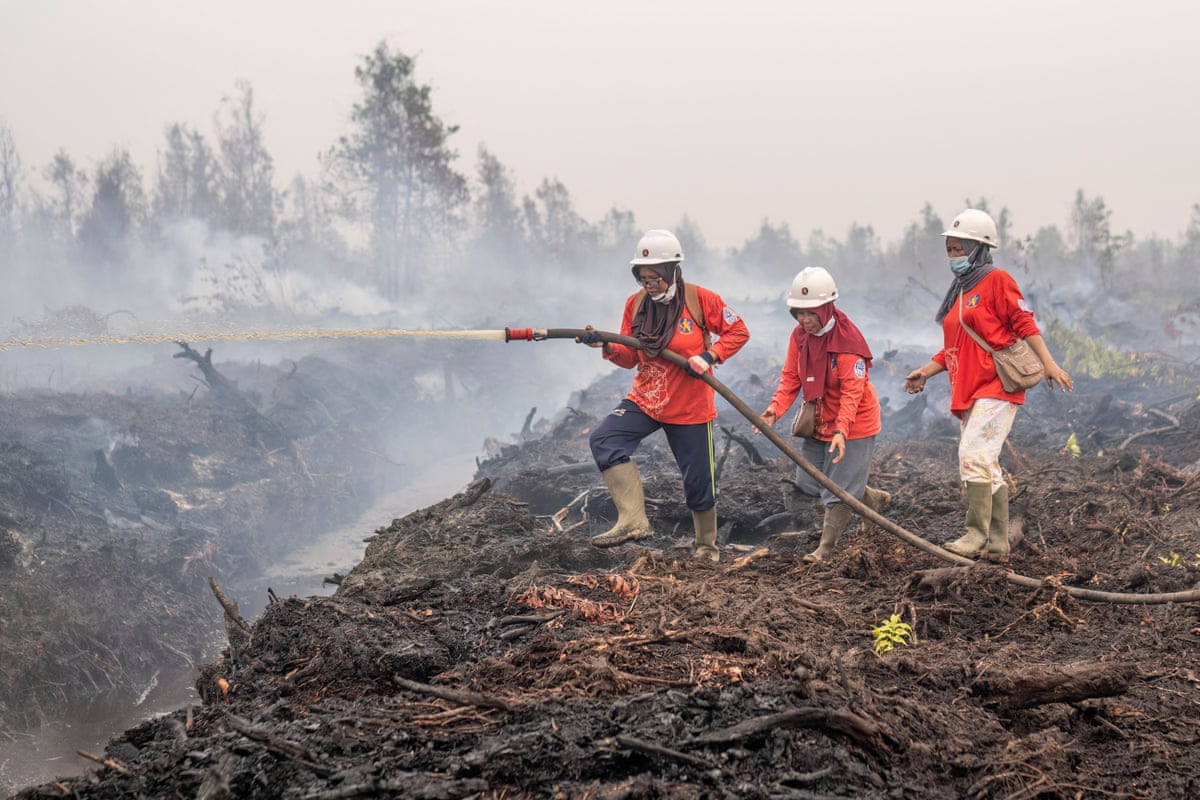
Singapore Grand Prix week has opened with an unusual variable hanging over Formula 1: the air itself. Smoke from major wildfires in Indonesia has pushed across the region and left Singapore under a visible haze, with official air-quality readings reaching the unhealthy range. The immediate message from Formula 1 and the FIA is that the race weekend is still expected to run as planned. Visibility is not currently considered a threat to track activity, but organizers have a contingency plan if conditions deteriorate.
That distinction matters. The present issue is not that drivers cannot see the braking zone at Marina Bay. It is that a three-day outdoor event is being staged in polluted air, with hundreds of thousands of people moving through the circuit precinct and drivers preparing for one of the most physically demanding races of the season. Organizers say N95 masks can be made available if required, while decisions will be coordinated with Singapore agencies if the haze creates public-health, visibility or operational problems.
The timing makes the situation harder to dismiss. Marina Bay already combines heat, humidity, repeated braking and almost no recovery time around its tight street layout. This year also brings a Sprint format, compressing the competitive schedule into one practice session before Sprint Qualifying on Friday night. Teams have less time than usual to adapt if weather or air-quality conditions change.
Singapore's official schedule still has first practice at 4:30 p.m. local time on Friday, Sprint Qualifying at 8:30 p.m., the Sprint at 5 p.m. Saturday, qualifying at 9 p.m. and the Grand Prix at 8 p.m. Sunday. For now, the haze is a monitored complication rather than a sporting cancellation story. But it is a real extra layer on a weekend that was already designed to test concentration and endurance.

The first competitive effect may happen before anyone drives

The more interesting competitive question is whether polluted air changes preparation before it changes racing. Drivers typically use the days before Singapore to acclimatize to heat and humidity, and outdoor exercise can be part of that routine. Environmental-physiology experts have warned that prolonged exposure to polluted air over several days could make that preparation less attractive, pushing drivers and teams toward indoor training and tighter exposure management.
There is precedent. When haze affected Singapore in 2019, Lewis Hamilton said he had been advised not to run outdoors before the race. The lesson is not that every driver will suddenly lose performance this weekend. Formula 1 athletes are exceptionally fit, their actual time driving on track is limited, and teams can control much of their environment away from the circuit. The point is that unnecessary exposure becomes another variable to manage.
Research cited in current reporting also raises a subtler concern: cognition. One pollution study found measurable effects on reaction-time testing after participants spent two hours in heavily polluted conditions. That does not translate directly into a predicted lap-time loss for an F1 driver, and it would be wrong to treat laboratory findings as proof that the haze will decide the race. It does explain why teams have reason to minimize exposure even if the event remains safe to stage.
Marina Bay magnifies tiny mistakes. Drivers operate close to barriers, often in extreme cockpit temperatures, while braking and steering loads accumulate over a long race. A small reduction in comfort or concentration matters more here than at a circuit with wide runoff and long recovery sections. The sensible approach is therefore preventative: masks where useful, indoor conditioning, hydration and as little unnecessary time in polluted outdoor air as practical.

The bigger exposure problem may be outside the cockpit

The larger health issue may sit outside the cockpit. Fans, circuit workers and entertainment staff can spend far longer outdoors than drivers, often for several consecutive days. Singapore's National Environment Agency classified air in much of the island as unhealthy on Tuesday, with central-area readings around the low 100s on the 24-hour PSI scale. At those levels, official guidance calls for reducing prolonged or strenuous outdoor exertion, with more caution for children, older people, pregnant women and people with heart or lung conditions.
That is why the contingency plan extends beyond whether twenty-two cars can safely race. The Grand Prix is a huge live event wrapped around concerts, hospitality, fan zones and transport flows. Restrictions on some outdoor entertainment activities are more plausible than an immediate interruption to Formula 1 sessions if the haze worsens, because spectators can accumulate hours of exposure while drivers are on track for comparatively short periods.
The source of the problem is regional. Fires across Sumatra and Kalimantan have intensified during exceptionally dry conditions associated with a strong El Niño. Separate reporting says Indonesia is experiencing its most severe wildfire season in more than a decade, while smoke has also affected Malaysia. That makes race-week air quality dependent not just on Singapore but on wind direction, rainfall and fire conditions hundreds of kilometres away.
There is at least a possible weather break. Thunderstorms are forecast around Singapore on Friday and Saturday, which could temporarily improve the smoky conditions. But rain can also complicate a Sprint weekend on a street circuit, so the same weather that clears the air may create a different sporting challenge.
For now, the correct reading is neither panic nor indifference. Formula 1 says there is no present risk to the event, the FIA is not concerned about visibility, and teams have not broadly rewritten their plans. At the same time, unhealthy air is a genuine public-health issue and a legitimate preparation concern. Singapore's night race is famous for making drivers fight heat, humidity and the walls. In 2026, everyone arriving at Marina Bay has one more environmental factor to watch before the lights go out.
Singapore remains scheduled to race. The real story is how teams and organizers manage exposure while the air stays unhealthy — and whether wind and rain improve conditions before Sunday night.