

UFC 334's Real Stakes: Gane's Crown, Hokit's Rise and the Harrison–Nunes Legacy Fight
GOATIFYTwo championship bouts headline UFC 334 at Madison Square Garden on Saturday, November 14, but they ask different questions. Ciryl Gane is defending the heavyweight title against undefeated Josh Hokit while the injured former champion, Tom Aspinall, remains outside the cage. Kayla Harrison, meanwhile, defends the women's bantamweight belt against Amanda Nunes, whose return from retirement could either deepen an extraordinary legacy or give Harrison the signature victory of her career.
The contrast makes this more than a fight card built around two famous names. One championship is trying to restore clarity after an injury-driven vacancy. The other is staging a long-discussed contest that fans feared might never happen. With Stephen Thompson's planned farewell and several explosive matchups underneath, New York will offer answers in more than one division.
Gane has the belt, Hokit has the momentum — and Aspinall still casts a shadow
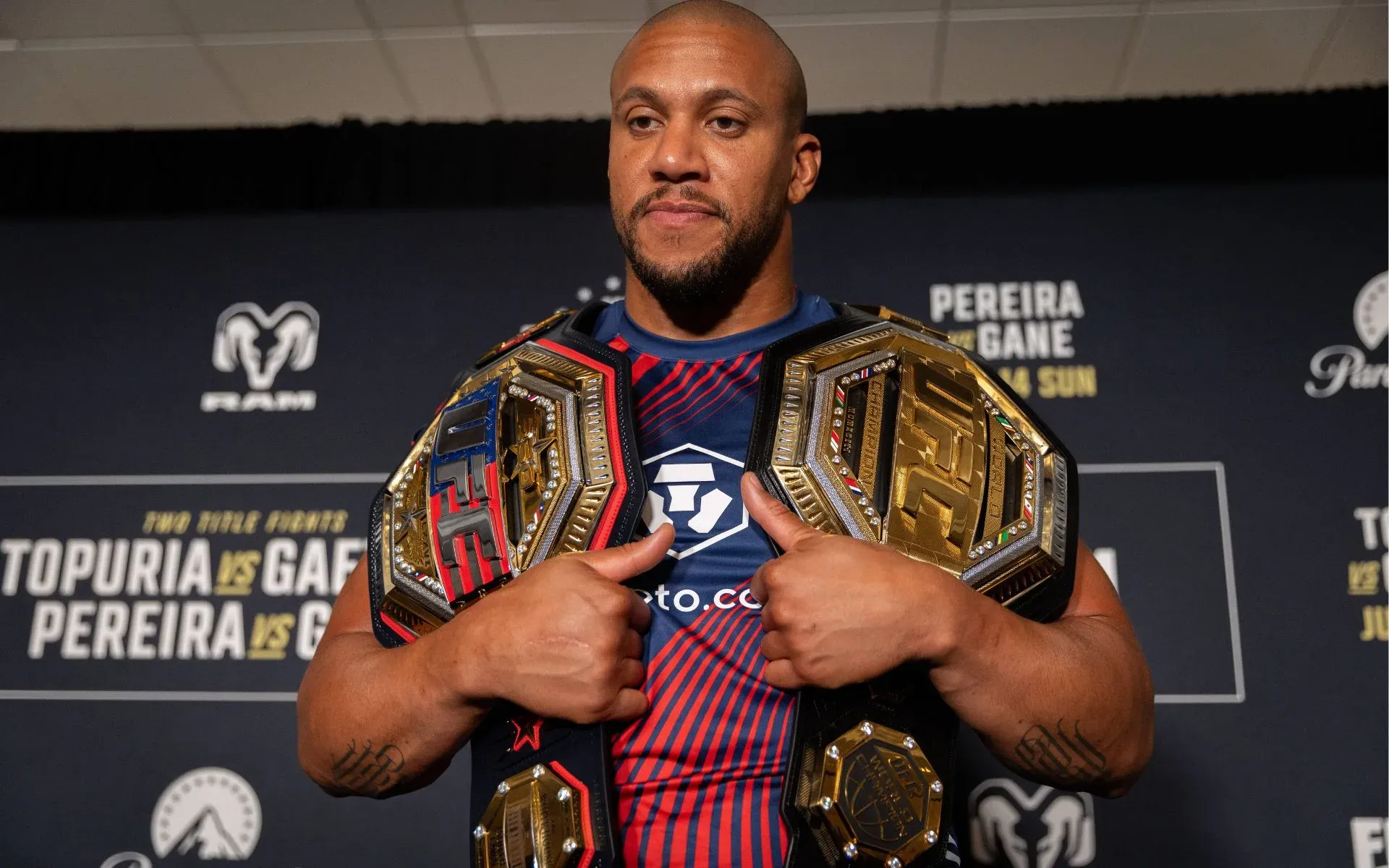
The heavyweight belt has a clear owner on paper, but the conversation around it remains unsettled. Ciryl Gane enters Madison Square Garden as champion after Tom Aspinall vacated the title while recovering from serious eye complications. Gane earned the interim belt by knocking out Alex Pereira at UFC Freedom 250 and was subsequently elevated to full champion. Those are legitimate sporting achievements. They do not erase the unusual way his first undisputed defense has arrived, and they cannot resolve the questions that will follow if Aspinall returns to competition.
That uncertainty is not a reason to dismiss Gane versus Josh Hokit. It is exactly why the fight matters. The division needs an active champion, and Saturday's winner will have survived a real championship test. Gane has the established résumé, a long history of competing at the top and an approach built around controlling exchanges rather than treating every minute as a collision. Hokit brings the opposite kind of momentum: a fast promotion through the rankings, four UFC victories since late 2025 and a style that demands opponents solve problems almost immediately.
Hokit's 10-0 professional record is remarkable partly because his path has not been easy or quiet. He earned his opportunity through Dana White's Contender Series in August 2025, then became a prominent name by beating Derrick Lewis and Curtis Blaydes. The Blaydes fight was an especially valuable test. It showed that the challenger could keep competing when the first dramatic exchanges did not produce a quick finish. Going the distance with an experienced heavyweight who can punish mistakes offers evidence beyond a highlight reel, though it remains different from managing a five-round championship contest against Gane.
There is a temptation to frame this as pure striker versus brawler. That shortcut misses the work both athletes must perform between big moments. Gane is dangerous when he can set the distance, step out after his combinations and make an opponent restart an attack. The challenger needs to turn those resets into costly choices, not simply chase a knockout. If Hokit rushes into straight lines, he gives the champion chances to read his entry and land while moving. If he crowds intelligently, threatens different levels and makes Gane defend successive phases, the fight becomes a test of stamina and decision-making instead of clean single exchanges.
Gane's route is equally demanding. It is not enough to look composed during the first two rounds if every exchange asks him to make another emergency exit. He must discourage Hokit from pressing forward without paying a price, and the best way to do that may be repeated counters, body work and carefully timed changes in angle. The challenger has already faced dangerous veterans, so the champion cannot assume that one sharp connection will change his behavior. A disciplined fight could be Gane's strongest argument that his place atop the division is earned, rather than merely inherited.
The long-form stakes reach beyond technique. If Gane wins convincingly, he adds the first defense of the undisputed crown to a run that already includes the Pereira victory. If Hokit wins, one of 2026's fastest-rising athletes becomes champion less than a year after beginning his UFC campaign. Either result resets the matchmaking order for other heavyweight contenders. It also intensifies scrutiny of Aspinall's eventual return, because a recovering former champion is not interchangeable with an active challenger who has worked through the current field.
Aspinall's situation deserves care. The eye problem that interrupted his reign is a health issue first, not a simple booking inconvenience. He vacated rather than leave the division indefinitely frozen and has spoken about needing further clearance after a setback in training. No confirmed comeback date should be treated as a promise. Until he is medically ready and officially booked, Gane and Hokit are fighting for the title the promotion can actually defend. That is an important distinction between the formal belt and the broader, inevitably subjective argument over the division's best fighter.
The most persuasive answer will come through action. A champion beating an unbeaten contender is substantial evidence; a newcomer defeating the champion after wins over established heavyweights is substantial evidence too. Neither makes the 2027 picture perfectly simple. But a division that has spent so much time debating injuries, status and potential future matchups needs a bout where the two people available to fight can settle something tangible. UFC 334 offers that, whether the result is technical control, a wild stoppage or five exhausting rounds of adjustment.
GOATIFY
GOATIFY UFC & MMA
Heavyweight title week is here — browse GOATIFY's UFC and MMA fan gear while Gane and Hokit settle the championship question.

MMA GOAT Gold Middle Finger Fight Crewneck Sweatshirt
A MMA fan design for everyday wear.
Shop Now ↗


UFC GOAT Gold Middle Finger Fight Decal Sticker
Add MMA personality to your favourite gear.
Shop Now ↗Harrison versus Nunes is a legacy fight with an uncertain aftermath
The women's bantamweight co-main event could be more consequential than the headline championship fight. Kayla Harrison is the sitting champion, yet Amanda Nunes brings a level of historical credibility that makes the word challenger sound almost inadequate. The former two-division titleholder retired after defeating Irene Aldana in June 2023. She is returning after more than three years away to face someone who once represented the sport's great unresolved what-if: the dominant Olympic judoka who built her professional MMA reputation largely outside the UFC.
Harrison's path has been different, but it is no less unusual. She won Olympic gold twice, established herself as a force in the PFL, entered the UFC in 2024 and submitted Holly Holm in her debut. She then defeated Ketlen Vieira and earned the championship opportunity against Julianna Peña, whom she submitted in June 2025. Those steps are more substantial than a promotional shortcut. By the time Nunes returned to the picture, Harrison had proved she could adapt her grappling to a different competitive environment, beat established names and claim the title against a champion.
Saturday is Harrison's first defense, and the timing increases the uncertainty. The pair were initially scheduled to meet at UFC 324, but Harrison withdrew and underwent surgery. A long interval since her title-winning performance means observers cannot simply assume her strongest version will appear at the opening bell. Training reports and confident interviews do not substitute for live rounds. The same logic applies to Nunes. Her championship history is extraordinary, but she is returning from retirement rather than arriving on a recent stretch of active performances.
On paper, the tactical tension is compelling. Harrison wants to use pressure and control to turn her physical strength and judo instincts into prolonged top positions or submission threats. A clean entry and sustained body contact can strip a striker of the time needed to build combinations. Nunes has the striking power and composure to make every rushed entry expensive, alongside the defensive experience collected against a generation of elite opponents. The decisive question is unlikely to be whether one woman is simply a better grappler or striker; it is who forces the other to fight in uncomfortable sequences.
Distance will be crucial. If Nunes can maintain the pocket on her terms, punish predictable approaches and exit before Harrison locks onto her hips, the champion may have to spend energy creating second and third attempts. If Harrison consistently reaches the clinch without taking serious damage, a striking advantage can disappear beneath positional control. Neither scenario is guaranteed. A veteran with Nunes's résumé has seen almost every type of attack, while Harrison's improvement since entering the UFC makes it misleading to assess her solely from earlier Olympic or PFL appearances.
There is also the emotional weight of the matchup. The fight was talked about long before both athletes shared a UFC division, and fans have had years to imagine how the styles would intersect. That history makes predictions unusually vulnerable to nostalgia. Nunes's greatest victories are part of the sport's record, not proof that she will perform identically after retirement. Harrison's Olympic medals are proof of extraordinary judo ability, not an automatic answer to every MMA problem. The match should be decided by the versions of these athletes who enter Madison Square Garden, not by their reputations frozen at different points in time.
After the result, the women's bantamweight division faces another question: who provides the next meaningful challenge? Nunes could choose to remain active, seek a rematch or return to retirement. Harrison could build a defending reign, face a new contender or reassess how much longer she wants to compete. None of those paths should be presented as settled. The division has recognizable names, but making compelling title fights requires both credible sporting merit and fighters prepared to take them. A veteran comeback and an elite champion are a major event; sustaining momentum afterward is a separate task.
Speculation about Valentina Shevchenko moving up in weight adds intrigue, but such a matchup would require real decisions about weight, health, title obligations and willingness to compete. It is not a signed follow-up. The safest outcome for the division would be a compelling Saturday performance that leaves options rather than forcing an immediate retirement narrative onto either athlete. Whatever happens, Harrison versus Nunes deserves attention as a competitive contest between exceptional martial artists, not merely as an occasion for declaring one of them the greatest of all time.
GOATIFY
GOATIFY UFC & MMA
From Olympic champions to Octagon legends, show your fight-night pride with the GOATIFY UFC and MMA collection.


The UFC 334 undercard can shape careers long after the belts change hands

A two-title event can easily be judged only by its final championship results. That would be a mistake with this Madison Square Garden card. Several supporting bouts pair fighters at very different career stages, creating opportunities for a breakout, a course correction or a farewell. These are not interchangeable attractions. They help explain why UFC 334 could still be compelling even if one main event becomes tactically cautious or ends before a rivalry has time to develop.
Uros Medic versus Kevin Holland is the most obvious candidate for an unpredictable main-card finish. Medic has built momentum with a sequence of rapid stoppages, including four consecutive wins ending before opponents could reach the 90-second mark of the opening round. Those finishes suggest dangerous speed and confidence, but fast victories can also hide questions about pacing when a stubborn opponent refuses to disappear. Holland has spent much of his UFC career proving he can operate in messy exchanges, change the rhythm of a fight and frustrate people who expect a straightforward striking duel.
For Medic, the challenge is not merely to land a huge shot. It is to make the first damaging sequence count without assuming that every opponent will fall at the same point in the fight. A 15-minute contest against Holland would ask for a different balance between aggression and defensive responsibility. Holland, meanwhile, cannot rely on durability as an entire plan. Allowing a dangerous starter to build confidence is risky, and the difference between disrupting Medic and simply absorbing his offense may be made by early distance management. Whichever athlete handles the first two minutes best can reveal more than the winner alone.
Caio Borralho against Yousri Belgaroui offers another path to a memorable performance. Borralho has been discussed as an important figure in the middleweight contender picture, while Belgaroui's striking background creates an immediately understandable stylistic question. The fight matters because a convincing showing in a prominent Madison Square Garden slot can alter how the promotion views the winner's next opponent. A spectacular finish attracts attention, but a controlled performance against a dangerous specialist may be just as persuasive to matchmakers looking for consistency. It is a test of competitive substance as well as entertainment value.
The prelims provide a different kind of story. Stephen Thompson has identified his bout with Charles Radtke as his final UFC appearance. At 43, the longtime welterweight contender reaches the end of a career associated with an unusual striking style and repeated high-level opportunities. His kick-based distance control and patient countering made him distinctive even in an era full of technically sophisticated fighters. He challenged for the championship twice, but his significance cannot be reduced to whether he held a belt. Styles can influence a division even when the athlete never becomes champion.
Radtke is not there to participate in a ceremonial send-off. He has an opponent, a record to improve and his own incentive to disrupt a popular veteran's preferred ending. That makes the bout emotionally complicated. Fans may want Thompson to win cleanly and leave on his terms; the sport does not award farewell victories. A close technical fight might be more representative of his career than a spectacular finish, while a difficult final round would not erase what came before. The responsible way to assess his legacy is across the full body of work, not through one last result.
Jim Miller against Terrance McKinney is compelling for almost the opposite reason. Miller is approaching his 48th UFC appearance, a measure of longevity that would be extraordinary in any combat division. McKinney is associated with aggressive, often short fights that turn a small opening into an abrupt finish. The matchup places experience, composure and accumulated defensive habits against the willingness to force the pace immediately. Miller knows how to identify traps and survive uncomfortable positions, but even a veteran of his experience cannot treat an explosive opponent as harmless. McKinney, for his part, needs to avoid turning early urgency into predictable mistakes.
Those contests also matter for the event's pacing. A five-round heavyweight championship bout can require patience from the audience and an entirely different set of tactics from its participants. Underneath it, a quick welterweight finish, a middleweight statement and two career-defining prelims can deliver very different reasons to remember the night. The organizers have paired name recognition with fights where the outcome will genuinely shape what comes next. That is a stronger foundation for a major card than relying only on nostalgia or promotional slogans.
One final caution is worth keeping in view during fight week: announced pairings and running orders can change. A replacement fighter, a medical issue or a revised broadcast schedule may alter the undercard before Saturday. The analysis here concerns the matchups currently advertised, not guaranteed final results. For Gane and Hokit, the question is who earns authority in a damaged heavyweight timeline. For Harrison and Nunes, it is what two remarkable careers can still produce together. For the rest, it is which fighter seizes the opportunity that a New York spotlight can create.
GOATIFY
GOATIFY UFC & MMA
Whether you're watching the headliners or Thompson's farewell, find a fresh fight-night look in GOATIFY's UFC and MMA collection.

Rogainz Joe Rogan UFC MMA Martial Arts Sticker
Add MMA personality to your favourite gear.
Shop Now ↗There is no single result that will settle every UFC 334 debate. The heavyweight winner will have earned the belt on Saturday, even if Aspinall's recovery remains part of the bigger picture. Harrison and Nunes will have answered one historic matchup without automatically settling the direction of an entire division. And beneath them, a new contender can emerge while Thompson and Miller remind fans that a lasting career is more than a championship statistic.
That is the real appeal of this card: two titles, several different definitions of legacy, and enough competitive uncertainty to make the outcomes matter beyond one night. The fights must still happen; everything else is prediction.

















