Golden State's Bench Nearly Doubled Atlanta's — The Finals Could Turn on Depth
GOATIFYGolden State's bench supplied 35.9 points per game during the 2026 WNBA regular season. Atlanta's reserves contributed 17.9. That nearly two-to-one difference is the most revealing contrast ahead of a championship series between teams built to win in very different ways. The Valkyries spread minutes and offense across a deep rotation. The Dream leaned on a powerful starting group and one of the league's most disruptive defenses.
Both approaches have reached the same stage. Golden State finished 32-12, earned the No. 2 seed and swept defending champion Las Vegas in the semifinals. Fourth-seeded Atlanta went 30-14 and reached the Finals without losing a postseason game. Saturday's opener at Chase Center also arrives with the Dream's regular-season leading scorer Allisha Gray managing a left-hand injury. Depth, health and the ability to create shots against elite defenders could determine which franchise captures its first WNBA championship.
Golden State's 35.9 bench points change the arithmetic

Atlanta's starters averaged 73.4 points per game during the regular season, third most in the league. Golden State's starting five produced 46.3, ranking 15th. Those figures look like an overwhelming advantage for the Dream until the second units enter the picture. The Valkyries led the WNBA in bench scoring with 35.9 per game, while Atlanta ranked 14th at 17.9. The difference between starter and reserve production was 55.5 points for Atlanta but only 10.4 for Golden State. These are not predictions for individual Finals games; they describe how the two teams distributed their offense over a season.
The minutes tell the same story. Atlanta's starters played a league-high 31.2 minutes per game on average. Golden State's starters averaged 24.1, the lowest mark in the league. That is a meaningful workload gap, not merely a cosmetic difference in lineup labels. Coach Natalie Nakase has been able to use fresh players and different combinations without abandoning the offensive contribution of the second unit. Dream coach Karl Smesko has often asked more of his primary scorers and playmakers. A best-of-seven series can reward either stability or flexibility depending on who controls the matchups.
Janelle Salaün is the clearest example of Golden State's unusual depth. The 2026 Sixth Player of the Year averaged 12.7 points off the bench, the most among qualifying reserves. Tiffany Hayes contributed 8.9 points per game as a reserve, and Kaitlyn Chen supplied 7.2; all three were among the eight highest-scoring qualifying bench players in the league. That gives Golden State multiple routes to offense when a starter sits, gets into foul trouble or encounters an unfavorable defender. It also allows the team to alter its pace without waiting for one particular player to check back in.
The advantage is not that every reserve will score at a regular-season rate against a Finals defense. Postseason rotations often tighten, and Atlanta has already shown it can survive close games without its preferred starting lineup intact. The advantage is that Golden State has practiced sharing minutes and responsibilities for months. When a game becomes physical or a defender takes away a first option, its bench is less likely to be asked to perform a completely unfamiliar role. That matters even when the scoring contribution is modest, because defensive assignments and ballhandling duties must still be covered.
Atlanta has an equally legitimate counterargument: the Dream's starting talent is supposed to play heavy minutes when the stakes are highest. Angel Reese, Rhyne Howard, Jordin Canada and the available members of the starting group can generate defensive pressure and immediate scoring without needing to match Golden State's substitution pattern. The Finals will test whether the Valkyries' broader production remains an edge against a team capable of making every possession difficult. A statistical bench advantage is useful, but only if it survives contact with Atlanta's pressure.

Allisha Gray's left hand makes Atlanta's rotation the central question
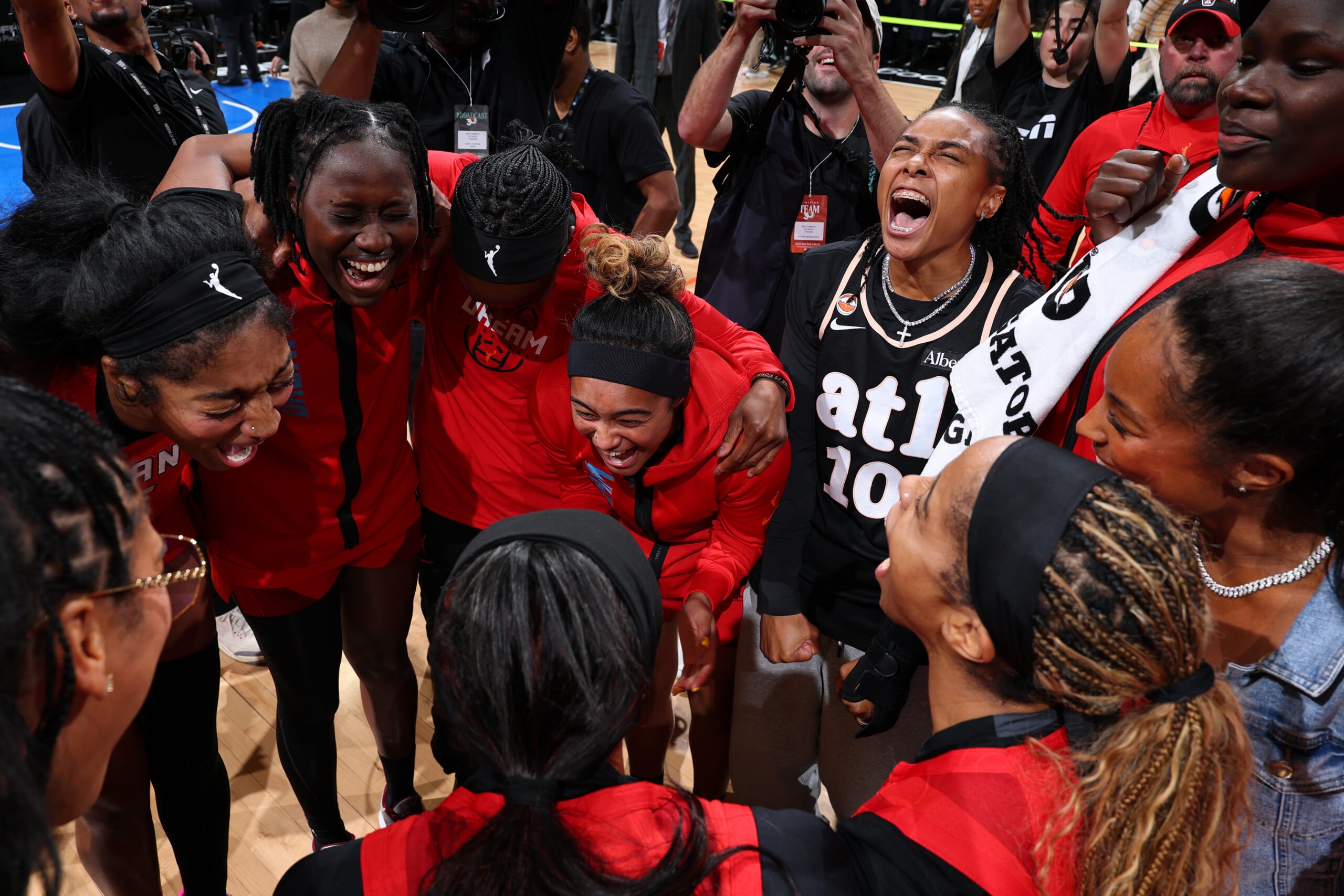
Allisha Gray averaged 19.0 points per game to lead Atlanta during the regular season. Her status matters because the Dream's offense was already tilted toward its starters. Gray hurt her left hand in the semifinal opener against New York and missed the final two games of Atlanta's sweep. She subsequently reported a minor procedure and described her availability as day to day. Ahead of Saturday's Finals opener, her participation had not been confirmed.
Removing a scorer of Gray's caliber changes who initiates possessions and how much work falls to Rhyne Howard and Jordin Canada. The Dream's starter-heavy rotation makes those adjustments particularly important. If Gray returns, her effectiveness must be evaluated during play rather than inferred from her presence on the roster.
Atlanta has already demonstrated that it can win without her. Canada averaged 22.3 points on 62.2% shooting in the semifinal series, according to the league's Finals preview, and the Dream swept the defending champion Liberty. Howard can generate shots, Angel Reese controls important possessions through defense and rebounding, and veteran DeWanna Bonner offers another experienced option.
Bonner's late-August arrival is another reason not to overread Golden State's 3-0 regular-season sweep. All three meetings came before she joined Atlanta. Bonner averaged 8.6 points in her first five regular-season games with the Dream and increased that to 13.6 per game during the playoffs. Her experience gives Atlanta a different look from the team Golden State faced in the summer.
Defense and late-game decisions could overwhelm the bench gap
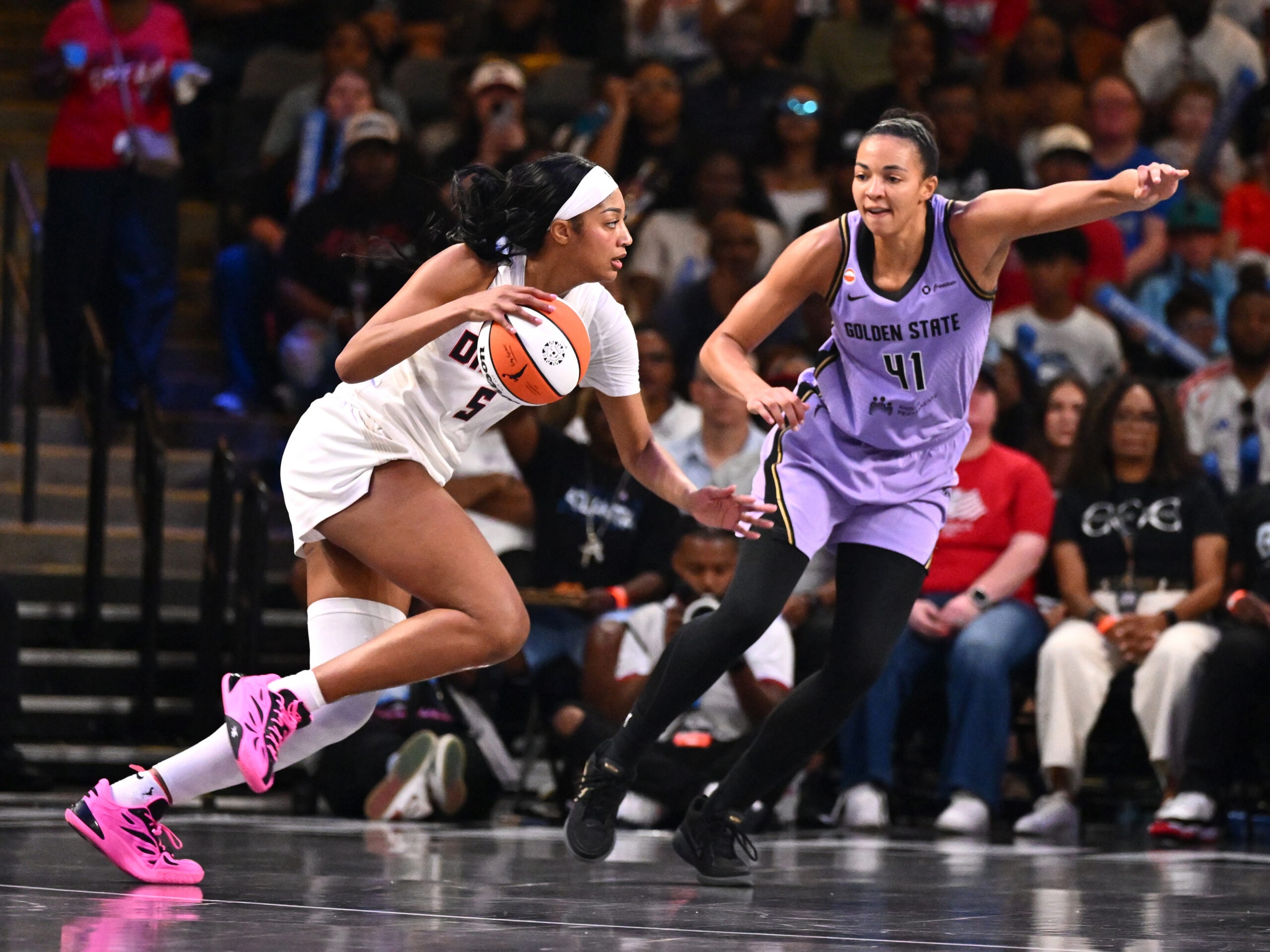
It would be a mistake to reduce the Finals to starters against substitutes. Golden State owned the WNBA's best regular-season defensive rating at 99.1, while Atlanta ranked third at 103.5. In the playoffs, the order reversed: the Dream entered the Finals with a 102.0 defensive rating and the Valkyries with a 104.1 mark. Those numbers describe elite defenses operating in different ways, and they help explain why both clubs swept higher-profile opponents in the semifinals.
Atlanta's strength is disruption. The Dream averaged 9.1 steals per game in the regular season and 10.4 during the playoffs, turning those takeaways into 18.1 and 24.4 points off turnovers, respectively. Howard, Canada and Reese finished first, second and third in the league in steals per game during the regular season. A defense that creates offense can erase a bench-scoring disadvantage quickly because it does not need to grind through a half-court possession to find points. The question for Golden State is whether its ballhandlers can prevent Atlanta from turning pressure into an open-floor game.
The Valkyries' answer is to make clean shots scarce. Their opponents posted a league-low 47.8% effective field-goal percentage in the regular season, and Golden State held opponents to 48.8% in the playoffs. Gabby Williams and Veronica Burton can contest the point of attack while Kiah Stokes protects space nearer the rim. Those assignments become particularly important if the Dream need Canada and Howard to carry more creation. Golden State does not have to win every turnover battle; it can make the shots following failed Atlanta pressure difficult enough to protect its advantage.
There is a crucial difference between a team that can score in transition and a team that can score after the opponent has organized its defense. Atlanta is capable of both, but its most explosive stretches begin with deflections and hurried decisions. Golden State will try to turn those sequences into ordinary half-court possessions. When that happens, the Valkyries can use their reserves to maintain defensive intensity without sacrificing all of their scoring. If Atlanta succeeds in forcing repeated turnovers, Golden State's bench advantage could become less important than the number of easy baskets conceded.
Neither side can simply copy the other's strengths. The Dream's defense is built around aggressive hands and pressure from several starters; Golden State's is designed to challenge attempts across the floor and protect the basket. The contest between those styles will determine how many possessions each team gets to play on its own terms. That is the setting in which the bench numbers will either become decisive or fade into the background.

The 3-0 season sweep will matter less than the next close finish

Golden State swept the Dream 3-0 in the regular season, holding Atlanta to 74.7 points per game. That is far below the Dream's season average of 91.3, so the matchup history cannot be dismissed. Yet all three meetings took place between June 24 and July 4, and two were decided by five points or fewer. Bonner had not joined Atlanta, and neither club had experienced the postseason tests that brought it to the Finals. The sweep is evidence of a successful Golden State plan, not proof that the same result must follow in October.
Close games provide another reason not to overvalue regular-season scoring averages. Atlanta went 9-6 in clutch games during the season and 3-0 in such games in the playoffs. Golden State was 9-9 in the regular season and 3-1 in the postseason. Those are small postseason samples, but they establish that both teams have recently executed under pressure. The Finals are likely to contain possessions where a single defensive rebound or late foul matters more than the total points supplied by either bench.
Gabby Williams has been Golden State's most frequent late-game offensive option, with a 41.1% clutch usage rate and 25 clutch points entering the Finals. Veronica Burton has added timely scoring, including a go-ahead three-pointer late in Game 2 of the semifinals against Las Vegas. For Atlanta, Rhyne Howard leads the team in clutch usage at 30.0%, while Angel Reese has scored 14 postseason clutch points on 5-for-6 shooting and 4-for-4 at the foul line. Reese's free-throw accuracy has climbed to 87.1% in the playoffs from 72.1% during the regular season, a potentially important change if opponents try to exploit late-game trips to the stripe.
Game 1 tips off Saturday, October 17, at 3:30 p.m. Eastern in San Francisco, followed by Game 2 on Monday, October 19. The series moves to Atlanta's State Farm Arena for Games 3 and 4 on October 21 and 24. A best-of-seven format rewards teams that adjust rather than merely repeat the same plan. Golden State may discover which reserve combinations Atlanta struggles to contain; the Dream may identify which Valkyries ballhandlers can be pressured into turnovers.
Ultimately, the more useful question is not which team has the better regular-season numbers. It is which coaching staff can translate its identity into dependable possessions against a similarly strong opponent. If Golden State's reserves keep producing while its defense limits Atlanta's transition game, the Valkyries will have a path to control. If the Dream can keep the ball in their preferred creators' hands and win the close moments, their top-heavy rotation may become a strength rather than a weakness.

The Valkyries' 35.9-to-17.9 bench advantage matters because it gives Natalie Nakase more ways to survive difficult matchups, but it cannot score points on its own. Atlanta's starters can pressure opponents into mistakes and turn defense into offense, while Gray's status could reshape the balance before the opening tip. The first game will show whether Golden State can sustain its broad rotation against the Dream's pressure or whether Atlanta can make the contest about its best players and the possessions they control. Either way, this is a deeper strategic fight than a simple comparison of star power.
Shop GOATIFY WNBA products from the WNBA-filtered basketball collection.