

Yankees Bring Back Tim Hill for $2.25M. The Real Bullpen Test Is Still Ahead.
GOATIFYThe New York Yankees have reportedly made their first move of the 2026–27 offseason, and it is neither a blockbuster nor an attempt to win the winter. Instead, they have agreed to bring back 36-year-old left-hander Tim Hill on a one-year, $2.25 million contract, with a $2.5 million club option for 2028. Multiple reports on November 15 described the agreement; as of those reports, the club had not formally confirmed it.
That modest price is the easy part to explain. The harder question is why New York wants another season from a pitcher whose 2026 ERA climbed to 4.60, whose home-run total reached a career high, and who did not make either of the team's postseason rosters. The answer is a fascinating collision of matchups, ground balls, familiarity and risk. Hill still does one thing at an exceptional level; the Yankees must decide how much that skill is worth when his weaknesses can be exposed three hitters at a time.
And this is only the beginning. Closer David Bednar faces a decision on a $23.15 million qualifying offer on Tuesday, November 17, while several other bullpen arms are free agents. Signing Hill does not settle the relief picture. It merely tells us what kind of piece Brian Cashman is willing to keep while the serious decisions approach.
The $2.25 million bet: low price, familiar arm, real questions
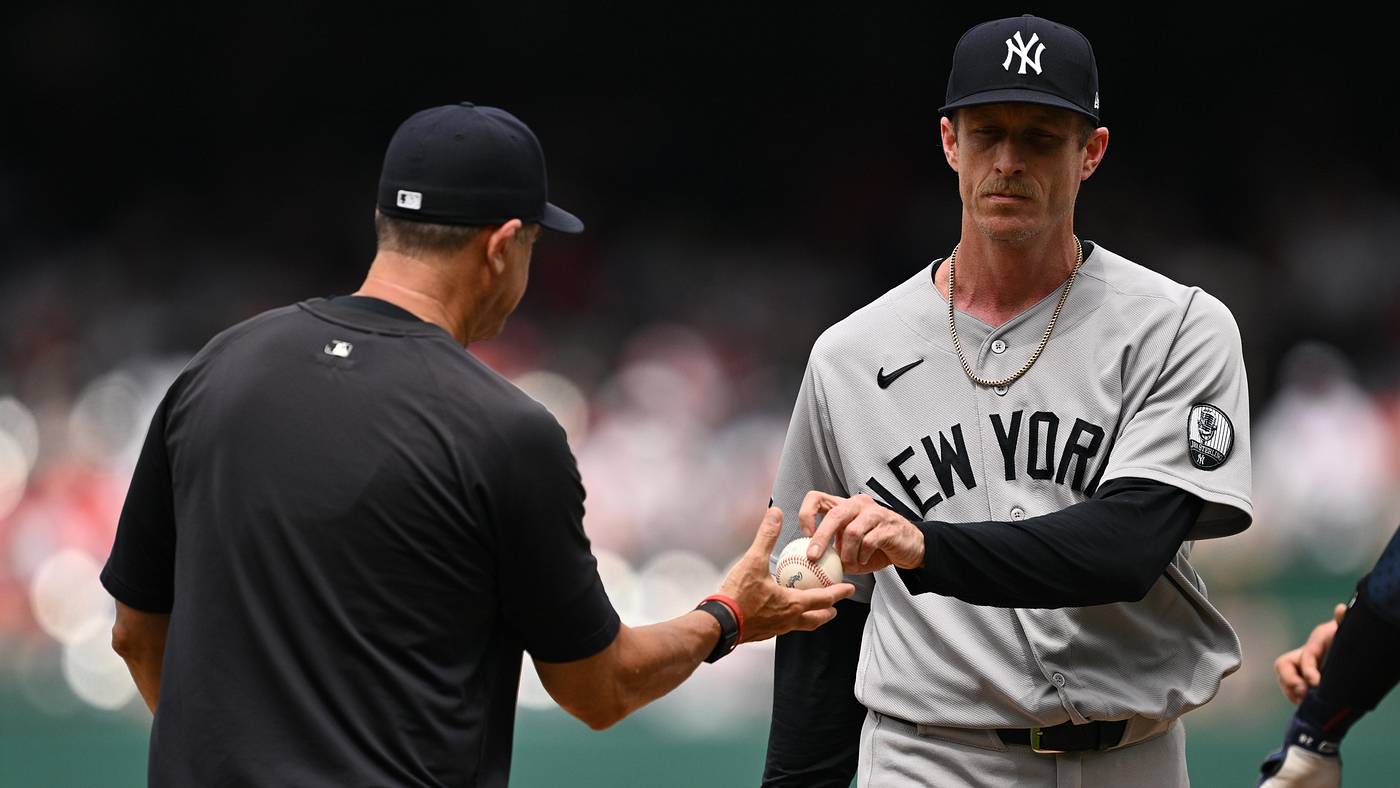
Start with the contract rather than the emotions. The reported guarantee is $2.25 million for one season, with New York holding a $2.5 million option for 2028. That is $750,000 below the $3 million salary Hill earned in 2026 after the club exercised its previous option. A cheap veteran lefty is not a glamorous headline, but it is a practical way of filling a roster spot without sacrificing the payroll flexibility needed for harder decisions.
There are two very different ways to read the move. In the optimistic version, the Yankees are paying for a scarce skill at a reasonable price and betting that Hill's worst 2026 outcomes are not his new normal. In the skeptical version, they are retaining an aging reliever because he was trustworthy in 2024 and 2025, despite evidence that his margin for error has narrowed. Both interpretations can be true. The price can be sensible while the decision still demands a carefully limited role.
Hill turns 37 in January, so this is not an investment in future upside that will keep compounding for five years. It is a short-term assignment: get left-handed hitters, create ground balls, protect leads in the right pockets of a game and avoid leaving the bullpen short of competent options during a long season. A club option gives New York control if that task goes well and a clean exit if it does not. The low commitment matters precisely because there is no guarantee of a bounce-back.
General manager Brian Cashman has described relief pitching as a major offseason priority, which makes the sequencing interesting. Hill arrives first, while higher-profile choices remain unresolved. That does not necessarily mean the Yankees value him above those players. It may simply mean his terms were easier to finish. An organization can close a relatively uncomplicated deal and still be negotiating larger ones in parallel. Nobody should mistake the order of announcements for a bullpen depth chart.
GOATIFY
GOATIFY Baseball
The Yankees' new deal offers a chance to show Bronx baseball pride. Browse GOATIFY Baseball fan styles while considering the $2.25 million bullpen bet.


White Baseball GOAT Dad Hat
A white baseball GOAT design for ballpark days and everyday fan style.
Shop Now ↗

White Baseball GOAT Sticker
A white baseball GOAT decal for your bottle, laptop or game-day gear.
Shop Now ↗

There was reportedly outside interest from other clubs, including the Mets, Dodgers and Guardians. Even if the Yankees were not bidding against a packed market, a veteran with an unusual arm slot and a proven New York track record is not automatically replaceable by an interchangeable minor-league name. The challenge is separating his genuinely useful specialist skill from the assumption that he should be trusted in every situation just because he once was.
The 2024 rescue that earned trust—and the 2026 slide that spent it

Hill's path back to New York matters because his value has never been easy to capture in one pitching statistic. He reached the majors with Kansas City in 2018 after being selected in the 32nd round of the 2014 draft, spent multiple seasons in San Diego and then saw his career threaten to unravel with the White Sox. Chicago released him in June 2024, and the Yankees gave the sidearming lefty an opportunity only days later. That decision changed the end of his career.
In 44 regular-season innings after arriving in the Bronx, Hill produced a 2.05 ERA. He became the kind of pitcher a manager can call on with traffic on the bases without feeling every grounder will find a hole. His delivery was awkward for hitters to track, his sinker encouraged contact along the ground, and his calm approach offered relief from the parade of high-velocity arms that can disappear as quickly as they arrive.
The following season reinforced that trust. Hill recorded a 3.09 ERA across 70 appearances in 2025. Two consecutive useful stretches gave New York a reason to view him as a real bullpen option rather than a brief feel-good reclamation story. On a team with championship expectations, reliability across months matters more than an eye-catching pitching-speed graphic. For a while, Hill supplied exactly that reliability, even though he was never the fashionable type of late-inning reliever.
Then 2026 forced the Yankees to reassess the story. Across 67 appearances and 58 2/3 innings, his ERA rose to 4.60. He allowed a career-high 12 home runs. The ability to force ground balls survived; the assurance that contact would stay harmless did not. Hill's 5.93 fielding-independent ERA, reported in season reviews, was another indicator that the poor results were more than a few unlucky bounces. When a contact-oriented pitcher allows that much damaging air contact, tiny shifts in command become enormous.
The split across the season is especially revealing. He began strongly, then struggled for a sustained stretch after late May. The Yankees eventually left him off both of their postseason rosters. That is a sharper evaluation than any public compliment: in October, when each roster place is expensive and opposing lineups can target a known weakness, New York decided other arms offered better odds of getting important outs. Re-signing Hill now is therefore not a claim that the late-season concerns never existed. It is a decision that a limited regular-season role may still be worth this contract.
An elite ground-ball rate hides a glaring platoon problem
One number explains why Hill still had suitors after his difficult season: a 68.9% ground-ball rate in 2026, the best mark among major-league relievers in the reporting that accompanied the deal. In an era when so many pitchers chase strikeouts by elevating fastballs, Hill attacks from a dramatically low arm angle and tries to make a hitter put the ball into the dirt. His sinker averaged around 88.3 mph. It is deception, location and movement rather than pure speed that make his approach viable.
GOATIFY
GOATIFY Baseball
The Yankees comeback story resonates with fans who remember Tim Hill's journey. Explore GOATIFY Baseball apparel and accessories.


White Baseball GOAT Sweatshirt
Rep baseball’s greatest with a white GOAT graphic sweatshirt.
Shop Now ↗


Gold Baseball GOAT Dad Hat
A gold baseball GOAT design for ballpark days and everyday fan style.
Shop Now ↗That skill carries value with a runner on first and fewer than two outs. The best possible outcome is often a double play, and an uncomfortable left-on-left matchup can produce a weak grounder even when a conventional power pitcher might be challenged to avoid a walk. Hill stranded 33 of 35 inherited runners in 2026, a striking result that illustrates how well he could handle particular jams even in a season when his overall line disappointed. Stranding runners is not a forecast for next year; it does show why a pitching coach can find uses for him.
But the split tells the other half of the story. Left-handed hitters batted just .213 against him in 2026 and posted a .611 OPS. Right-handed hitters batted .293 with a .909 OPS. There is no need to bury that difference under sophisticated vocabulary: many lefties could barely solve the angle, while righties turned his contact-first approach into an invitation. The home-run problem made those mismatches especially expensive. His effectiveness depends on choosing the right moment, and sometimes a manager does not get to choose who walks into the box next.
The modern three-batter minimum creates that exact problem. A pitcher cannot always be brought in to face one threatening left-handed hitter and immediately removed. Unless an inning ends or an applicable exception arises, the matchup can extend to multiple batters. That forces Aaron Boone to consider the next two hitters, the available pinch hitters and the inning's leverage before making the first move. A lineup stacked with right-handed power hitters can turn a seemingly smart lefty matchup into a trap.
Ground-ball rate should also not be mistaken for a guarantee against the long ball. A pitcher can generate a large proportion of grounders and still get punished badly when a smaller number of balls are lifted and driven over the fence. Hill surrendered 12 homers in 2026, showing how fragile that balance can be. The Yankees do not need him to become a strikeout machine at age 37, but they do need sharper location, more defensible right-handed matchups and fewer misplaced sinkers in damage zones.
That suggests an honest job description: valuable specialist and occasional traffic-control option, not an unquestioned eighth-inning solution. Pair him with relievers who can handle right-heavy stretches, keep him away from predictable power mismatches and judge the assignment by the quality of the outs he gets rather than by whether his name evokes the reassuring 2024 version. Used intelligently, Hill may exceed his modest salary. Used as a universal fix, his weaknesses will be tested quickly.
Bednar, the free-agent exits and the bullpen Cashman still has to build
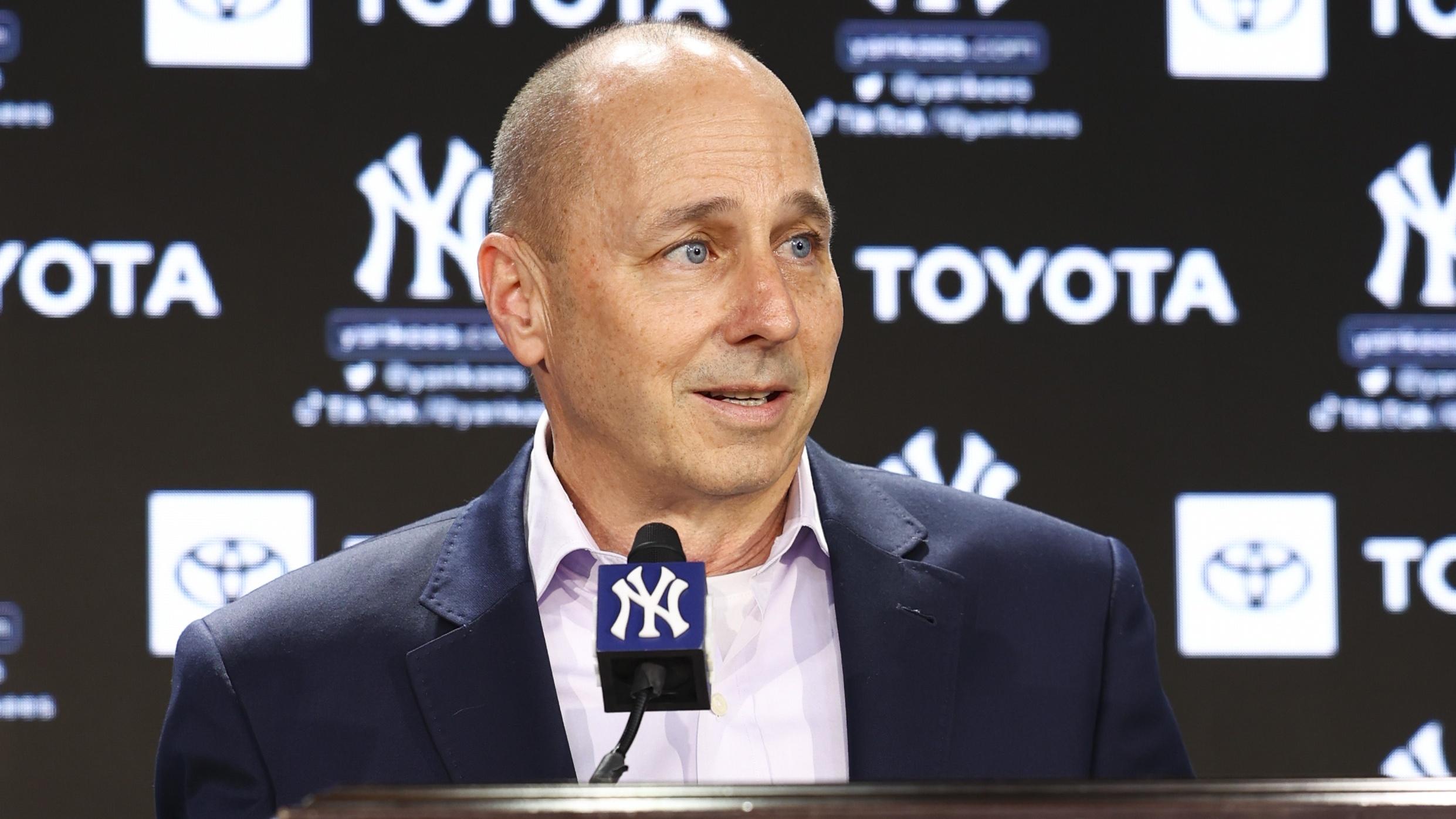
A cheap reunion can be a useful move without being the move that defines the offseason. New York's 2026 bullpen posted a 3.13 ERA, second-best in the majors, according to the team's season-end reporting. That is an unusually strong aggregate result for a unit that now faces turnover. The Yankees can look back at a successful collective season and simultaneously worry about how many of the pieces that produced it will be in uniform when the next one begins.
The immediate headline belongs to closer David Bednar. New York extended him a $23.15 million qualifying offer, with a decision due Tuesday, November 17. A closer's contract is not remotely comparable to Hill's $2.25 million commitment. Bednar's choice could change which innings are truly unsettled and how aggressively the front office needs to search for high-leverage reinforcements. Until that decision is known, any confidently drawn 2027 bullpen chart would be premature.
GOATIFY
GOATIFY Baseball
Ground-ball debates and bullpen matchups are part of baseball fandom. Discover GOATIFY Baseball fan gear for your next ballpark trip.


Gold Baseball GOAT Sticker
A gold baseball GOAT decal for your bottle, laptop or game-day gear.
Shop Now ↗

Gold Baseball GOAT Sweatshirt
Rep baseball’s greatest with a gold GOAT graphic sweatshirt.
Shop Now ↗Other recognizable names are also part of the free-agent picture, including Paul Blackburn, Ryan Yarbrough, John Schreiber and Michael Fulmer. Each brings a different potential role, from multi-inning coverage to matchup flexibility, and a bullpen does not become complete merely because a lefty specialist signs first. The club needs arms capable of retiring right-handers in the seventh or eighth, pitchers who can survive back-to-back appearances, and length when a starter exits before the fifth. An effective eight-man group has to solve several problems at once.
Brent Headrick gives New York another left-handed option, but piling up southpaws is not the same as building a balanced relief corps. Hill's return raises a question the team must answer through the winter: does Boone have enough pitchers whose strengths compensate for one another, or will game plans leave him with awkward choices when the opposition sends up three dangerous righties? The best bullpen is often less about its single most expensive name than whether the manager can construct a clean path through the ninth inning.
Cashman has also been connected in reporting to potential alternatives such as Adrián Morejón and former Yankee Jonathan Loáisiga. Interest is not a transaction, so those players should not be penciled into any projected roster today. More realistically, New York will test several routes—internal competition, short veteran contracts and more ambitious acquisitions—to get the right blend of strikeouts, grounders and workload coverage. The looming December 1 labor-deal deadline could affect the pace of negotiations, but it should not be treated as proof of a particular signing.
For Hill personally, the 2027 season offers a clear chance to change his last impression in pinstripes. He does not have to make every hitter look foolish or regain his best ERA. He needs the left-on-left advantage to remain real, the home runs to become less frequent, and his manager to trust him for situations he can realistically navigate. Those are measurable goals; vague promises about leadership or familiarity are not enough.
The Yankees have secured a familiar, unusual and affordable tool. They have not secured the ninth inning, protected every right-handed matchup or finished the bullpen. Bednar's decision and subsequent additions will reveal whether this is the first sensible brick in a sturdier relief unit or just a nostalgic move in a winter that demanded something bigger.
Bottom line: a reported $2.25 million guarantee and a $2.5 million club option are reasonable terms for a left-handed reliever who still forces ground balls better than almost anyone. The Yankees are not paying Tim Hill to become a completely different pitcher; they are betting his remaining strengths can be deployed more carefully than they were during a rough 2026 finish.
That bet only works if the Yankees build the right bullpen around him. Left-handed hitters remain a favorable matchup, but the .909 OPS allowed to right-handers is too large to hand-wave away. The Bednar decision, the wider free-agent exits and the search for reliable all-situation arms matter much more than the sequence in which the signings are reported. Hill can be a good first move and a very poor last move. New York's next steps will determine which description fits.
GOATIFY
GOATIFY Baseball
Shop GOATIFY baseball shirts, hoodies and stickers.

White Baseball GOAT Dad Hat
A white baseball GOAT design for ballpark days and everyday fan style.
Shop Now ↗White Baseball GOAT Sticker
A white baseball GOAT decal for your bottle, laptop or game-day gear.
Shop Now ↗White Baseball GOAT Sweatshirt
Rep baseball’s greatest with a white GOAT graphic sweatshirt.
Shop Now ↗


















