Kai Greene’s Training Videos Were Weird, Intense and Surprisingly Educational
UPLIFT IRON CLUBKai Greene’s best training videos rarely looked like neat instructional clips. They could be long, theatrical and almost deliberately strange: extended warm-ups, posing between sets, unusual exercise orders, philosophical monologues and a bodybuilder who seemed more interested in describing a sensation than telling you the “correct” number of sets. That was exactly why they were educational.
Greene showed bodybuilding as a skill rather than a spreadsheet. His methods were built for an elite professional with decades of experience, so copying the workload literally would be a mistake. But the principles underneath the spectacle—attention, control, weak-point prioritization and learning to feel what an exercise is doing—remain useful.
Why Kai Greene’s videos felt different
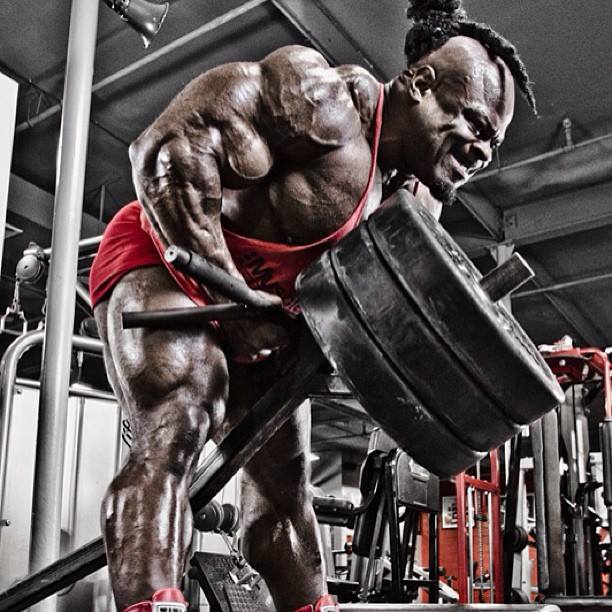
Most workout content is designed to be easy to copy. Greene’s sessions often were not. In his workouts, the plan could change according to what he felt, and a planned four sets could become six if the early sets did not create the muscular feedback he wanted. He sometimes spent a long time on cardio, abs, calves or hamstrings before reaching the exercise viewers expected to be the centerpiece.
That can look inefficient if the only goal is moving the heaviest possible weight. Greene’s goal was different: bodybuilding performance. He repeatedly described training as practice for the physique he wanted to display onstage. The weight was a tool for creating muscular tension, not the final score.
The mind-muscle connection was the real lesson

Greene made the mind-muscle connection central to his training language. In interviews about back work, he described it as the most important factor because you cannot easily watch your own back muscles contracting. Instead, the lifter learns to interpret feedback: where tension is strongest, whether the target muscle is shortening and stretching, and whether another area is taking over.
This idea can sound mystical until it is translated into simple behavior. Slow a repetition down enough to notice where tension disappears. Use a load you can control. Adjust grip or body position and see whether the target muscle works harder. Practice posing or contracting the muscle without resistance. Those are all ways to improve motor control rather than merely “thinking harder.”

Full reps, stretch and contraction mattered more than ego

For someone famously huge and strong, Greene often argued against making load the center of bodybuilding. He emphasized complete repetitions, a strong stretch and a deliberate contraction. In his back-training advice, he specifically criticized cutting out the ends of the range just to move more weight.
That is one of the easiest lessons to steal. Progressive overload still matters, but progression does not have to mean adding plates while the rep gets shorter and less controlled. A lifter can progress by using the same load through a cleaner range, adding repetitions, controlling the eccentric or producing a stronger contraction without changing body position.
Greene’s videos made that visible because his reps often looked exaggerated. The exaggeration was part of the teaching: the viewer could see that he was trying to make the muscle work rather than simply finish the movement.
His strange exercise order was often weak-point training

One of Greene’s most memorable leg sessions placed glutes, calves and hamstrings ahead of squats. For many lifters that sounds backwards. Greene explained that his quads were already a dominant body part, so he wanted to attack areas that needed improvement while he was freshest.
That is classic bodybuilding logic. Exercise order should reflect the goal, not tradition. If rear delts are lagging, putting them at the end of every shoulder session after pressing may keep them lagging. If hamstrings need more work, training them before quads can be reasonable even if it reduces squat performance later.
The principle is not “always pre-fatigue before compounds.” It is to know what you are trying to improve and organize the session around that priority.
Posing and visualization were part of the workout

Greene blurred the line between training and posing. He talked about imagining stage positions during exercises and used posing to improve awareness of muscles that were difficult to feel. For a competitive bodybuilder, that is practical: the final product is not a squat total but a physique displayed through mandatory poses.
Even non-competitors can use a toned-down version. You do not need to pose between every set, but learning to voluntarily contract lats, pecs, hamstrings or glutes can make exercise selection easier. If you cannot create tension in a muscle without weight, it is harder to diagnose what is happening once a heavy load and several joints are involved.

What ordinary lifters should not copy
The obvious trap is copying Greene’s volume. His sessions could be extremely long, with many warm-up and working sets, and they reflected decades of bodybuilding experience plus the demands of professional competition. More sets are not automatically more educational or more effective. If extra work reduces effort, technique or recovery across the week, it can become junk volume.
The same caution applies to instinctive training. Greene could change a session based on feel because he had an enormous library of experience to compare against. A beginner who changes exercises every time something feels difficult is not training instinctively; they are avoiding a repeatable plan. Build a stable program first, then earn the ability to make useful adjustments.
Why the old Kai Greene videos still teach well
The most valuable thing Greene put on camera was attention. He paid attention to the target muscle, the range of motion, his weak points, his mental state and how one repetition differed from the next. That made even bizarre-looking sessions contain a coherent idea.
Modern fitness content can make training look as if the perfect split, exercise ranking or evidence-based set count solves everything. Greene’s videos supplied the missing half: a good program still has to be executed by a person who can control the movement and notice what is happening. You do not need his volume, his theatrics or his 2 a.m. leg sessions. Copy the focus instead.

Bodybuilding shirts, tanks and gym gear for lifters chasing muscle, size, symmetry and the pump.
EXPLORE COLLECTION