

Ferrari Had Race-Winning Pace in Austin — Vasseur Says Q3 Cost the Chance
GOATIFYFerrari left Austin with second and fourth places, a stronger constructors’ position and a question that points beyond one Grand Prix: how much more could Charles Leclerc and Lewis Hamilton have achieved with a cleaner qualifying session? Team principal Fred Vasseur believes the SF-26 had the speed to challenge for victory, yet Kimi Antonelli’s Mercedes finished 13.078 seconds clear of Leclerc. That contrast is the real story of Ferrari’s United States Grand Prix.
The team’s recent upgrades have improved the conversation around its pace. They have not removed the fine margins that determine whether a promising Friday becomes a front-row start or a recovery drive on Sunday.
Second and fourth felt like progress — but Ferrari wanted the win
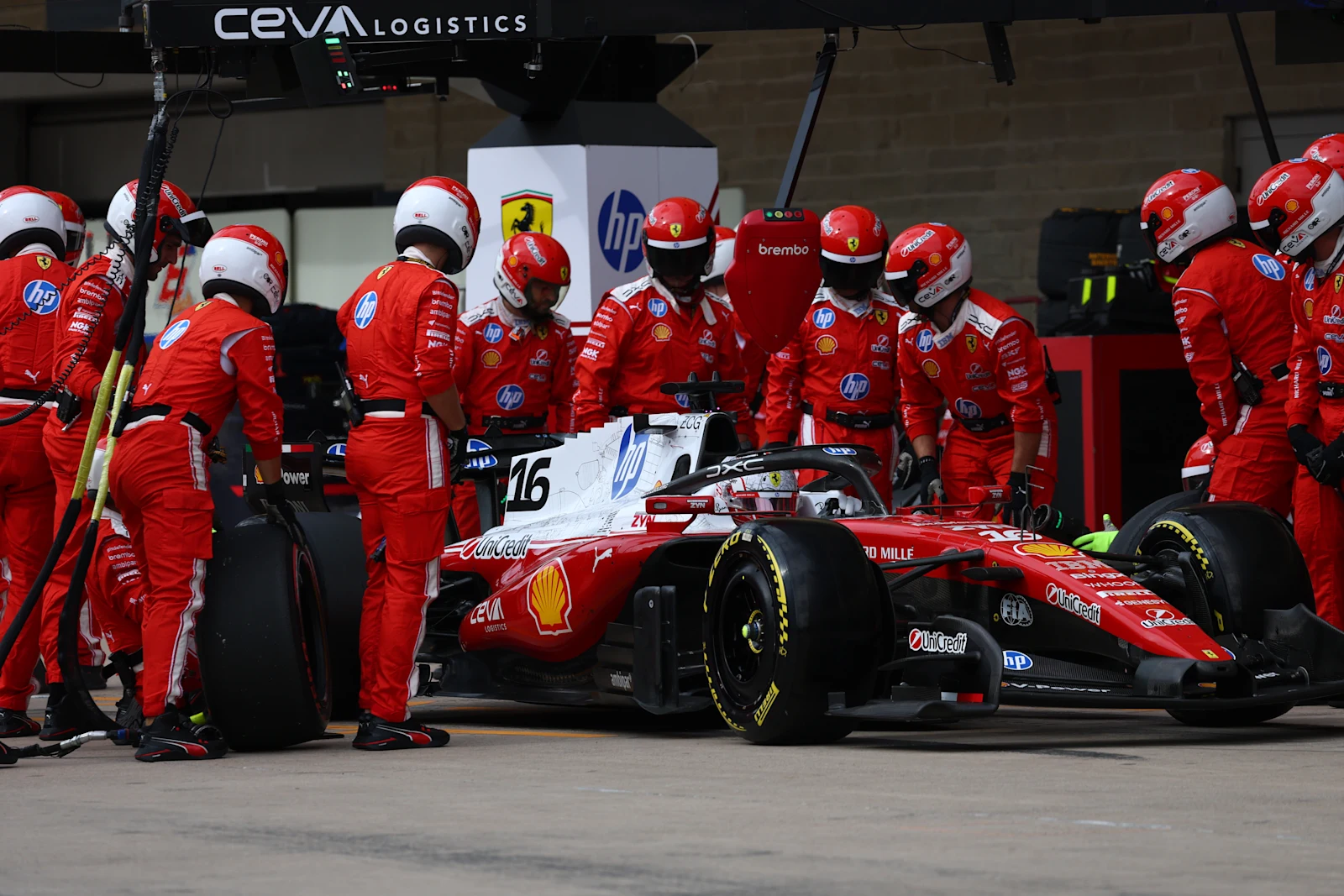
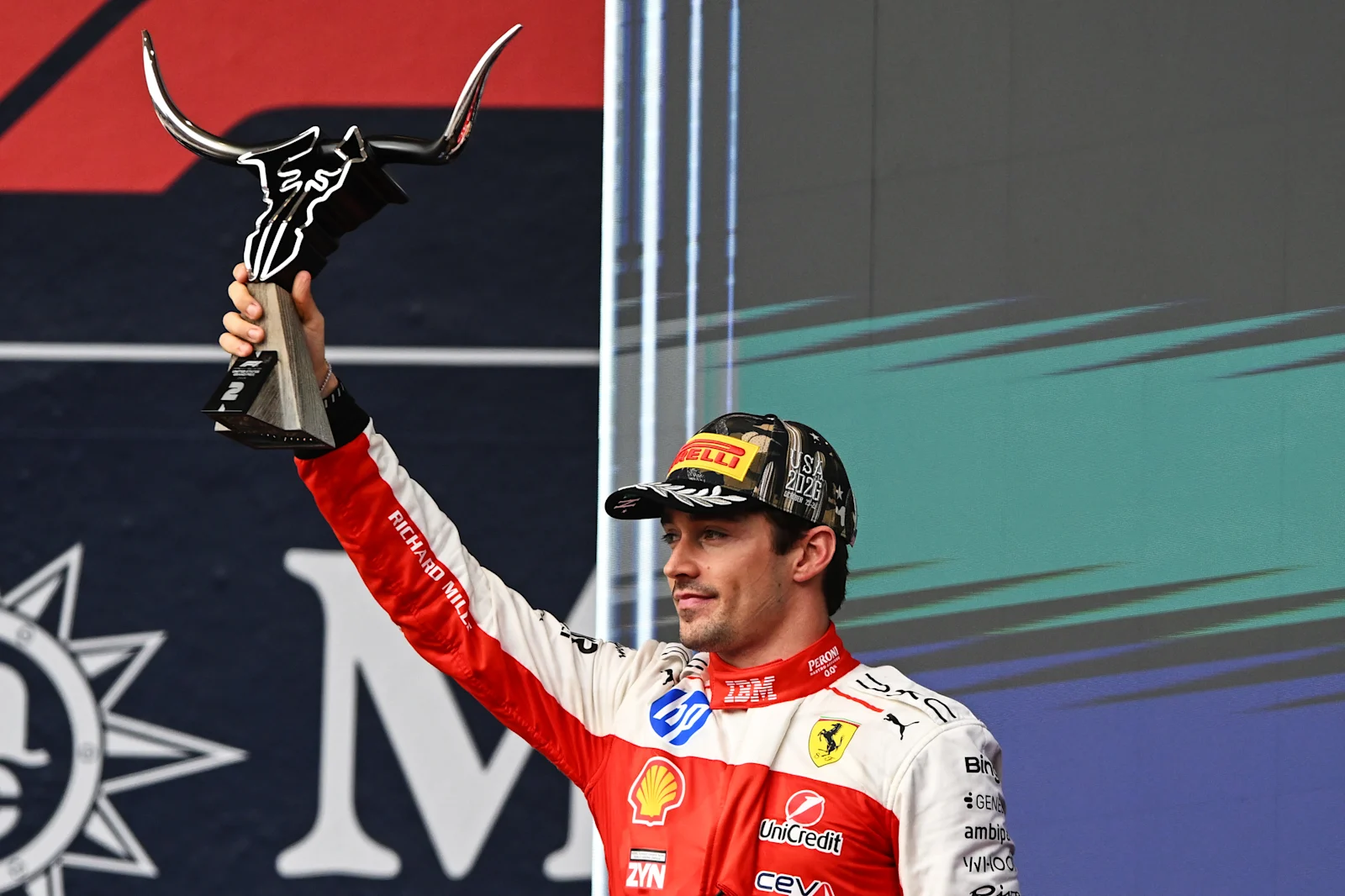
Ferrari had plenty of reasons to call the weekend productive. Leclerc led Friday practice, Hamilton topped the final practice session, and both cars were competitive enough to attack the leading group when the race began. The finishing order backed up the pace: Leclerc was runner-up and Hamilton fourth, with the pair split by Max Verstappen. Yet the team’s mood was not simply one of satisfaction. Vasseur said Leclerc had set his sights on first place early in the race. Finishing second after aiming higher can be both an achievement and a missed opportunity.
The tension makes sense when the weekend is viewed as a whole rather than reduced to the podium photograph. Antonelli controlled the race from pole and made a one-stop strategy work. Ferrari began fourth and fifth, had to fight through traffic and committed to two stops. Leclerc still found a way past Verstappen in the closing stages, but by then the leader was beyond reach. The deficit was not a single dramatic mistake; it accumulated through grid position, tyre choices, time spent following rivals and the execution of the race’s decisive phases.
Vasseur’s post-race assessment was notable for its confidence. He argued that the car’s underlying pace had been present from the first practice session to the chequered flag. That is a different diagnosis from a team admitting its upgrade failed or its race pace vanished. Ferrari’s task, in his telling, is to convert competitive speed into a complete weekend. A fast car that starts behind its main rivals must repeatedly spend tyre life and track position earning back what it lost on Saturday.
The points are useful in the constructors’ contest, particularly against McLaren, whose drivers finished fifth and seventh. But Ferrari cannot treat the gap to Mercedes as a mystery solved by the result alone. Antonelli did not need a late overtake or an unusually timed safety car to protect his win. He controlled the race with clean air and a long tyre stint. Ferrari’s improved speed is genuine evidence of progress; the remaining difference is how reliably that speed becomes an advantage when it matters.
Ferrari's two stops were aggressive, not an obvious strategic mistake
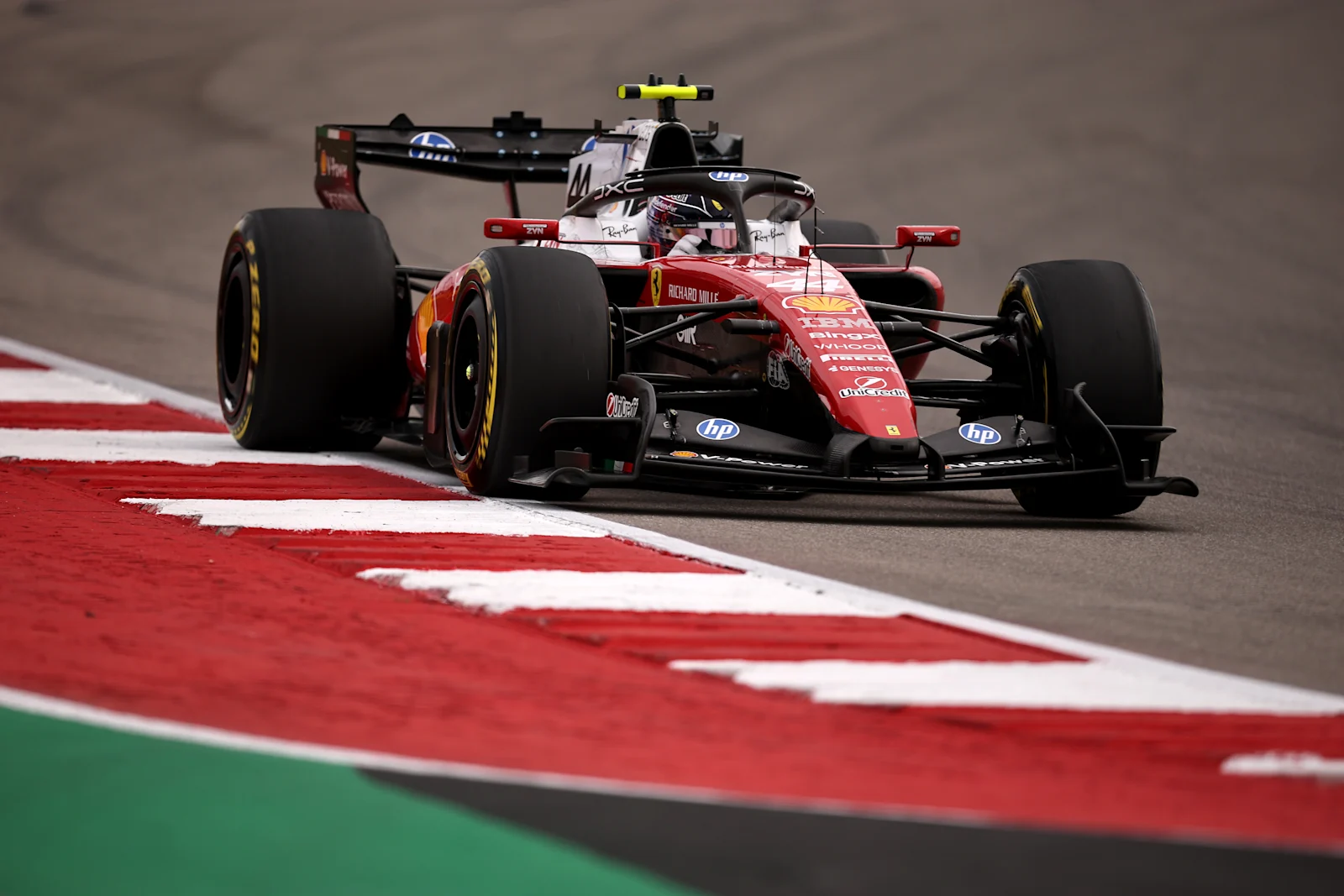
Strategy debates tend to become simple after a race: the winner stopped once, Ferrari stopped twice, therefore Ferrari chose incorrectly. Austin does not support such an easy verdict. Leclerc and Hamilton were starting behind Antonelli and both Red Bulls, which made an aggressive approach more attractive. Their soft-tyre starts created opportunities to gain positions immediately, while two stops allowed them to attack later on fresher rubber. A conservative copy of the leader’s plan would not automatically have put them in front.
Leclerc’s recovery illustrated the upside. After the early exchanges with Verstappen, he was able to use his late-race pace to pass the Red Bull and secure second. Hamilton also made progress, reaching fourth after qualifying fifth. Their two-stop execution delivered strong points even though neither Ferrari could seriously threaten Antonelli by the finish. Vasseur defended the calls and pointed to the extra complications created by starting in dirty air. The race winner could manage the tyres at the front; Ferrari had to race other cars while trying to manage its own stints.
Mercedes had the freedom to stretch Antonelli’s medium-tyre opening stint before switching to hards. That approach demanded control and consistency, not merely a favourable pit-wall prediction. The Italian preserved enough tyre performance to make the final stint viable while rivals committed to additional stops. Ferrari’s faster closing laps could not recover the time already surrendered. This is why the difference between a theoretically quick strategy and the best practical strategy depends on starting position, traffic, overtaking difficulty and tyre degradation.
Vasseur also wondered whether the late Virtual Safety Car prevented Hamilton from putting Verstappen under greater pressure for third. That is a reasonable possibility, not proof that a podium was guaranteed. Ferrari’s two cars did enough to challenge a Red Bull on the road, and Leclerc completed the move. The bigger lesson is that the strategic options available on Sunday were shaped by Saturday’s qualifying positions. Ferrari can defend its pit-stop decisions while still asking why its race began with both drivers needing to recover.

The narrow Q3 tyre window is where Ferrari may have lost its best chance
Ferrari’s most revealing number may not be its 13-second race deficit. Vasseur described a qualifying field in which a difference of two or three tenths could shift a driver several places. That is an enormous competitive consequence for a tiny change in tyre temperature, grip or the quality of an out-lap. Leclerc’s fastest lap of the weekend came in Q2 rather than Q3. The car did not suddenly become slow; the combination of tyres, track conditions and preparation was less effective when the grid was being decided.
Leclerc had already identified the danger after qualifying. He explained that a small difference in tyre temperature had affected the car’s behaviour and made it harder to deliver the lap he wanted. Hamilton, meanwhile, highlighted Ferrari’s straight-line disadvantage to some rivals and acknowledged that the team had not reproduced its practice performance in the session that counted. These are connected problems without being identical ones. One driver may struggle to bring the tyres into the window, while the other finds the aerodynamic balance or deployment insufficient for a complete lap.
That distinction matters because simply adding downforce or changing the wing angle is not a universal cure. More front wing can improve turn-in and balance but may alter straight-line performance, while an aggressive tyre preparation lap can overheat the compound before the timed lap even begins. In a tightly packed field, engineers must solve the whole sequence: tyre temperature at the start, energy deployment, aerodynamic balance, traffic and track evolution. The margins are too small for a driver to rescue every imperfect setup through commitment alone.
Vasseur’s broader point was that Ferrari is not uniquely vulnerable to this problem. Several front-running cars failed to improve in Q3, while Antonelli found a decisive lap. That does not absolve Ferrari of responsibility; it identifies the competition it must beat. A team chasing wins cannot rely on its best lap arriving in an earlier qualifying segment. If Leclerc and Hamilton can turn their practice speed into front-row positions more consistently, they will gain more strategic freedom on Sundays and spend less of the race undoing their own starting positions.

Mexico will test whether Ferrari's Austin upgrade is a trend or a track-specific peak
The next race in Mexico City offers Ferrari a fast opportunity to test Vasseur’s confidence. Leclerc said the direction of the team’s recent development work has made him more comfortable with the car, although he cautioned that major new upgrades are unlikely so late in the season. That shifts the emphasis from introducing hardware to understanding and extracting the package already on the car. Austin showed encouraging pace; Mexico must show that the pace is portable.
Mexico’s altitude and circuit characteristics make it a useful contrast with the Circuit of The Americas. Cooling requirements, aerodynamic efficiency and the way teams prepare tyres can change the competitive order even when the same cars arrive. Ferrari’s Austin result therefore cannot be projected directly into another second place, let alone a victory. What can carry over is the quality of its processes: how quickly the team finds the setup window, how well its drivers prepare qualifying tyres and how confidently it can choose a race strategy from a stronger grid position.
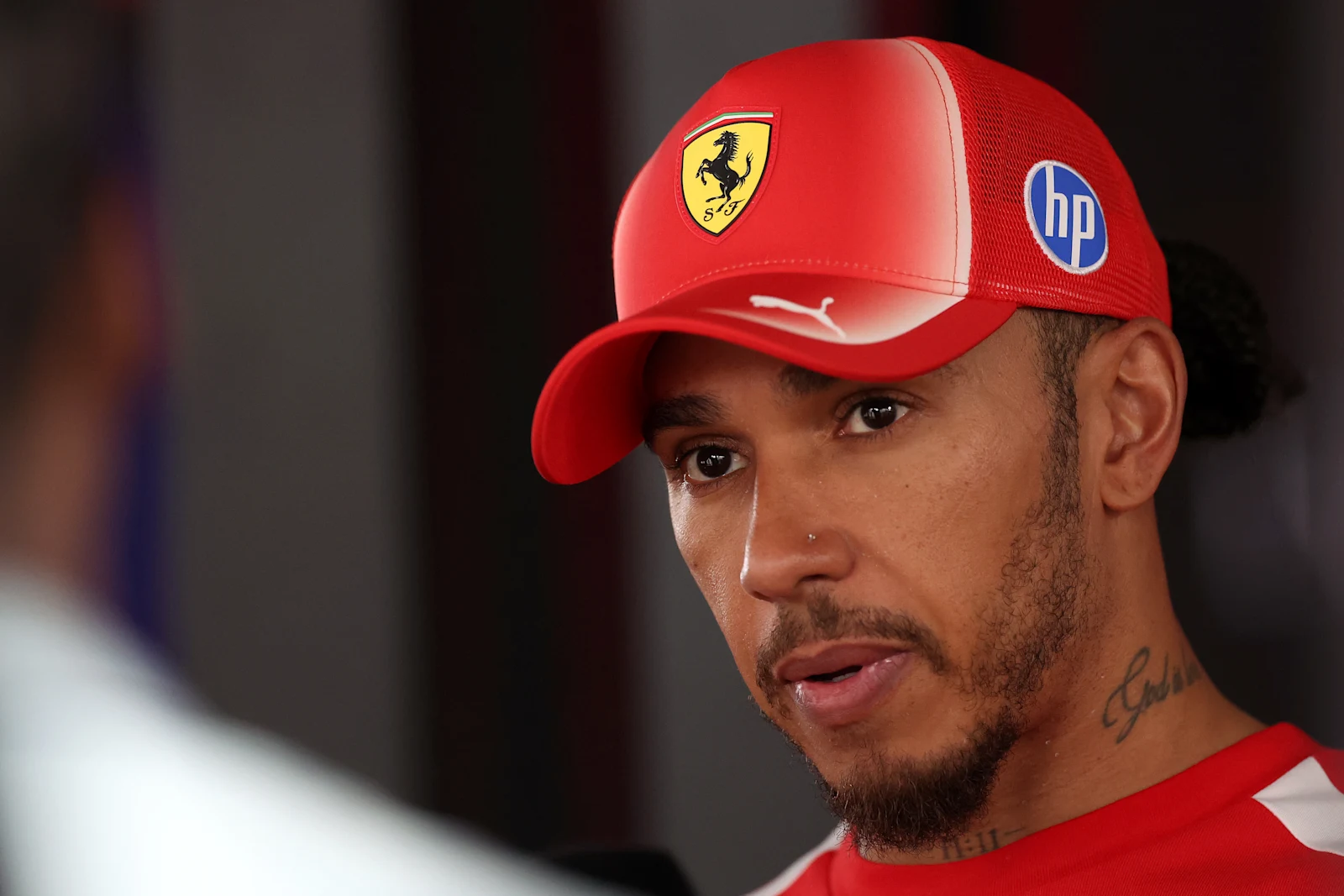
Hamilton’s comments add an important internal challenge. He felt the balance of his Ferrari was not right in Austin and believed Leclerc’s front-wing configuration gave his team-mate more of the response he needed. Hamilton has enough experience to identify what a car is not giving him, but the solution must be repeatable rather than a last-minute guess. The closer Ferrari gets to the front, the more costly it becomes when one driver finds a productive setup earlier than the other.
The championship stakes also differ between the two Ferrari drivers and Antonelli. The Mercedes driver is approaching a potential title-clinching weekend, while Ferrari is fighting to maximise team points and prove its late-season direction. That creates room for an aggressive but measured approach: attack where a genuine opportunity exists, avoid sacrificing both cars on speculative gambles and treat every session as preparation for the next. Austin did not establish Ferrari as the fastest team. It did establish that Ferrari is close enough to make its own execution the most important variable.
Ferrari did not leave Texas empty-handed. Leclerc’s second place, Hamilton’s fourth and the improved SF-26 pace all count. But Vasseur’s frustration captures the remaining gap between being competitive and winning: qualifying tyre preparation, a workable setup for both drivers and track position that gives strategy room to breathe.
If Mexico brings another strong Friday followed by a compromised Q3, Austin will look like a warning. If Ferrari starts near the front and converts its pace into a sustained challenge, the team can finally turn encouraging evidence into a result that matches its ambition.

















