

Yankees Scouted Japan's 1.36 ERA Ace — Now the Kaima Taira Race Begins
GOATIFYThe New York Yankees have already watched Kaima Taira throw, but the most important development in the Japanese right-hander's future arrived away from any scouting seat. On October 30, the Saitama Seibu Lions approved his request to enter Major League Baseball's posting system. One of Japan's most intriguing pitchers is finally moving toward an open market.
Taira is 26, stands 5-foot-8 and has just finished a season with a 1.36 ERA. He has also been a successful closer, can push his fastball toward triple digits and offers an unusually broad arsenal. The Yankees are among several clubs that reportedly scouted him, not a confirmed destination or negotiating partner. That distinction matters: approval to be posted starts the process, not a contract, and the winter's labor calendar could make the race unusually compressed.
Seibu Finally Says Yes — But Taira Has Not Signed Anywhere
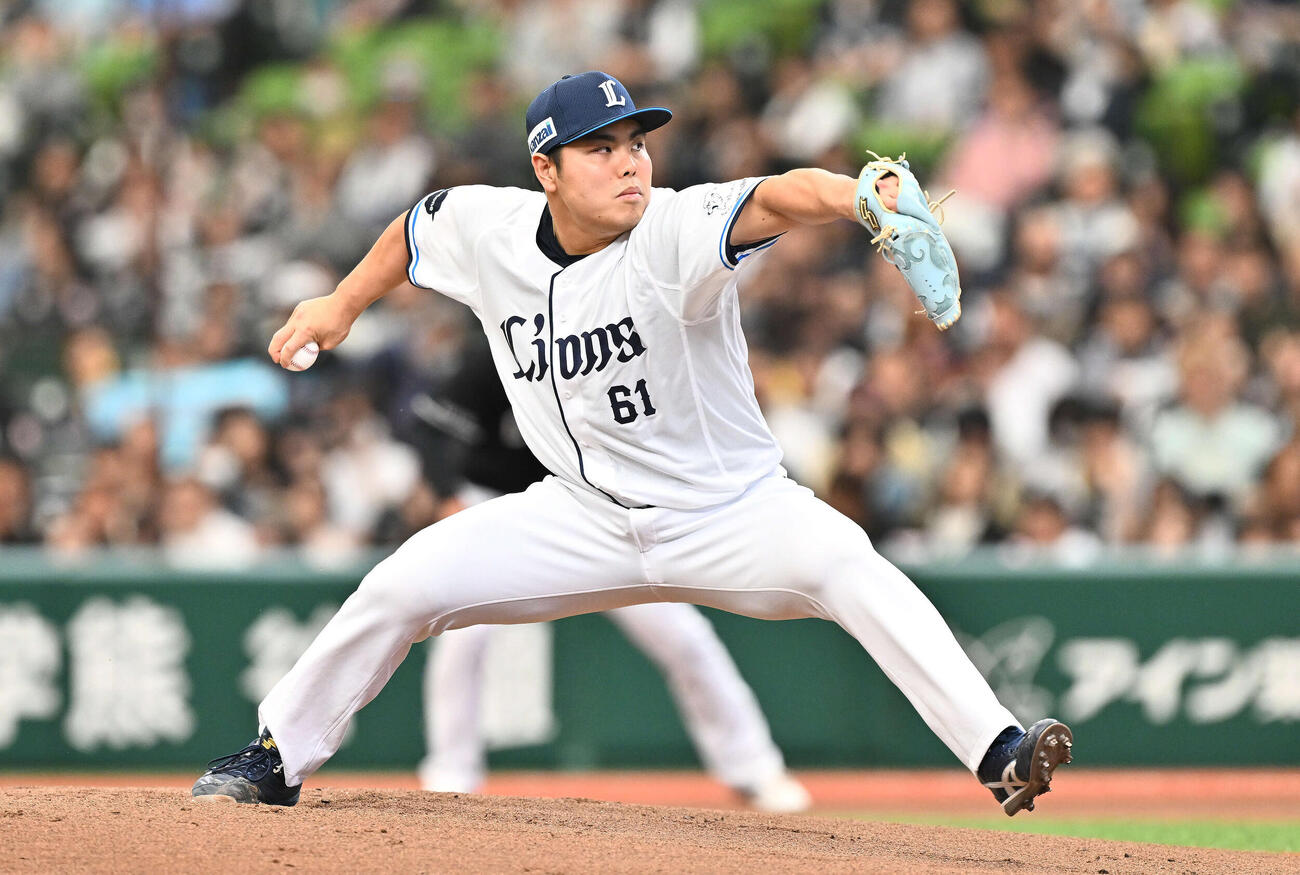
For years, Taira has made no secret of wanting to pitch in the major leagues. The obstacle was not whether he could throw hard enough or whether an American team would notice him. It was the timing of his rights. Without international free agency, he needed the Saitama Seibu Lions to authorize an earlier move through the posting system.
That authorization is now real. On Friday, October 30, Seibu said it would approve the right-hander's posting request, giving him a route to negotiate with MLB organizations once the formal paperwork is completed. The distinction between approval and the opening of the negotiating window is important. Taira has not joined the Yankees, agreed to terms with another club or been guaranteed an MLB roster spot. The club has agreed to let him seek one.
It is a significant concession for a team losing a pitcher who just led Japan's Pacific League in earned-run average. Taira has spent his entire professional career in the Lions organization, moving from relief work to starting and back again whenever the club needed a different kind of contribution. Seibu is not surrendering a fringe player; it is opening the door for an established ace at the moment his international value may be highest.
Taira's own ambitions have been consistent. He had raised the idea of playing in North America repeatedly, and the Lions' decision gives that long-running request an actionable path. It also makes his market unusually interesting: the pitcher can negotiate as an experienced professional, rather than arriving under the restrictions that apply to younger international amateurs.
The Yankees' connection should be understood in that context. Scouts from New York and other clubs reportedly attended one of Taira's August starts, when he delivered seven scoreless innings with nine strikeouts. That is a tangible evaluation step, not proof of an offer. Now that Seibu has given the green light, those evaluations can begin to translate into serious roster and financial decisions.
A 1.36 ERA, 141 Strikeouts and a Career Built in Two Roles

The headline number is almost absurd: a 1.36 ERA across 146 innings in 2026. Taira went 12-5 in 23 starts, struck out 141 hitters and walked 45, while allowing only four home runs. His 0.96 WHIP reinforces what the ERA suggests. This was not a season built solely on escaping jams; opponents struggled to reach base against him in the first place.
That matters because he did not spend 2025 preparing as a conventional rotation workhorse. He had been closing games, collecting 31 saves with a 1.71 ERA. A pitcher who can succeed in short, high-intensity bursts and then return to the rotation for 146 innings offers a different scouting problem from a prospect who has only ever worked in one role. Taira has demonstrated both sets of skills at a professional level.
His résumé extends beyond one extraordinary year. Across eight NPB seasons, he owns a career ERA around 1.78, with a strikeout rate above nine per nine innings. Earlier in his career he was recognized for elite relief work, and in 2023 he also won 11 games as a starter. That record gives teams more information than a single-season breakout, even if no Japanese league statistic transfers perfectly into an American projection.
The arsenal explains why evaluators are interested. Taira can drive a fastball into the mid-to-upper 90s and has shown triple-digit velocity. He mixes a cutter, sweeper, splitter and changeup rather than relying on one secondary pitch to survive. The variety allows him to attack different hitting profiles and potentially change plans as a lineup sees him for a second or third time.
There are limits to what the raw numbers can promise. Nippon Professional Baseball has its own offensive environment, strike zone and schedule, and MLB hitters will punish mistakes that Japanese lineups may not. His 45 walks also deserve attention alongside the strikeouts. Still, a pitcher who suppresses both hard contact and home runs while working a starter's innings is not merely a novelty. He has the ingredients of a genuine major-league rotation candidate.

The Yankees' Real Question: Starter, Closer or Something Between?

There is a reason the Yankees connection attracts attention. New York has reportedly scouted Taira, and the club faces decisions across its pitching staff after another early postseason exit. The possibility of bullpen turnover makes an established Japanese arm especially interesting. But calling him a future Yankees reliever today would be a leap beyond the available evidence.
The first debate is not which uniform he will wear. It is which job a club believes he can handle. Taira is listed at 5-foot-8, a height that makes some evaluators cautious about long-term durability in a major-league rotation. Marcus Stroman has been a notable exception among pitchers of comparable stature. Others point to shorter Japanese starters such as Yoshinobu Yamamoto and Shota Imanaga as reminders that release point, movement and command can matter more than the measurements on a roster sheet.
Taira's 2026 workload offers a strong counterargument to the assumption that he belongs in the bullpen. He did not simply throw 40 dominant innings against tired hitters. He handled 146 innings and reached the ERA title with a full season of starts. A 23-start sample is meaningful, although it does not eliminate questions about maintaining that pace over a longer MLB schedule, facing deeper lineups and adjusting to different baseballs and travel demands.
For the Yankees, the attraction is flexibility. A club seeking a rotation addition could offer Taira the chance to start, with the option to shift him into late innings if that role ultimately proves a better fit. A team needing a power reliever could imagine immediate high-leverage value. But those are alternative strategies, and the promise of a starting role could influence where the player wants to sign. The same flexibility that increases his market value may also complicate negotiations.
New York is not alone. Scouting reports from an August outing also identified interest from the Cubs, Mariners, Rangers, Angels, Tigers, Padres and White Sox. That list describes organizations watching him, not eight confirmed bidders. As the market opens, Taira and his representatives will be weighing role, contract, development plan and competitive ambition together. The Yankees can make a compelling case, but they cannot assume their early homework gives them the inside track.

A 45-Day Window Meets Baseball's Looming Labor Deadline

When Seibu formally posts Taira, the standard negotiating period lasts 45 days. Every MLB club can speak with him during that window. Because he is already over 25, he can sign a major-league contract without the limits that constrain younger international amateur signings. Seibu would receive a release fee tied to the value of the agreement if a deal is completed.
The calendar creates urgency that has little to do with pitching mechanics. MLB's current collective bargaining agreement is due to expire on December 1, and a potential work stoppage could interrupt major-league transactions. That does not mean a lockout is certain, nor does it establish precisely what would happen to Taira's window. It does mean the posting date and the speed of negotiations may be unusually important. A team that likes him might not want to wait until the normal winter rhythm to act.
Japan's international market is also larger than one pitcher. Hanshin Tigers slugger Teruaki Sato, coming off a Central League Triple Crown, is another prominent name seeking a move. Other Japanese pitchers are expected to draw attention. For MLB front offices, that means parallel evaluations of different players, contract structures and timing risks, not a simple bidding war for a single prospect.
Taira has leverage because his 2026 season made him a credible candidate for more than one role. He also has risk: a club may value him as a closer while he prefers to continue starting, or it may hesitate over how a 5-foot-8 power pitcher will adapt to an American rotation. A team that can explain how it will use his cutter, splitter, sweeper and fastball could have an advantage over a team that merely offers a familiar logo.
The Yankees' scouting connection is the attention-grabbing part of the story, but the actual competition will be decided by specifics still unknown: the official posting date, the contract offers, the desired role and the player's preferences. Until those details emerge, the sensible conclusion is that Seibu has opened a major opportunity and Taira has earned the right to see how much MLB clubs believe in his skills. Everything after that remains to be negotiated.
Taira's 1.36 ERA and 2025 saves title make him more than an interesting international name. He has proved he can dominate in two different jobs, and now Seibu has agreed to give him the opportunity to test that value in the majors. The Yankees have done their homework, but scouting interest is not a deal and no club has been announced as his destination.
The next meaningful developments will be the official posting date, the terms clubs are willing to offer and whether a team commits to him as a starter. Until then, the most important fact is simple: one of Japan's best arms has moved a major step closer to MLB, and the market gets to decide what kind of pitcher he can become.

















