

Pimblett Wants Gaethje Again — His 10-Second Plan Changes Everything
GOATIFYPaddy Pimblett has decided that the next time he fights Justin Gaethje, the first ten seconds should look nothing like their first twenty-five minutes. After losing a five-round decision to the American in January, the Liverpool lightweight now says he would immediately shoot for a takedown and look for a submission rather than try to prove he can trade punches with one of the UFC's most destructive strikers.
It is a bold promise, but it is also a revealing admission. Pimblett has acknowledged that his ego affected the original game plan. Gaethje subsequently shocked Ilia Topuria to become undisputed lightweight champion, while Pimblett rebuilt his case with a 52-second submission of Benoît Saint Denis. The rematch sounds tantalizing; the problem is that a better strategy does not automatically earn another title opportunity, and the champion may have more attractive options.
Pimblett's ten-second takedown promise is really an admission

Pimblett's new idea is deliberately uncomplicated: close the distance before Gaethje can establish his rhythm, force the fight into wrestling exchanges, and use the submission threat that made the Englishman dangerous long before he became a major pay-per-view attraction. Speaking about a possible second meeting, he said he would shoot almost immediately and try to put Gaethje on his back. It was delivered with his usual swagger, but underneath the bravado sits a legitimate tactical question.
Their January fight offered an unusually clear contrast between what Pimblett wanted to demonstrate and what he needed to win. He spent long stretches accepting the kind of chaotic striking exchanges that Gaethje has spent his career mastering. The American applied forward pressure, landed the more damaging shots, and repeatedly forced Pimblett to survive when the cleaner approach might have been to interrupt the exchanges altogether. The unanimous decision was not a robbery or a single unlucky moment; Gaethje consistently dictated the more consequential phases.
That does not mean one early shot would have reversed the result. Gaethje is not a striker who simply forgets how to defend a takedown. His balance, defensive reactions and willingness to punish failed entries are central to why he remains so difficult to beat. Shooting from too far away or without a striking setup would give him an obvious countering opportunity. A credible grappling plan requires feints, cage positioning, layered attacks and the conditioning to repeat those efforts after the first attempt fails.
The most interesting part of Pimblett's comments is therefore not the literal ten-second deadline. It is the willingness to admit that entertainment and ego can be expensive when championship stakes are involved. A fighter who has built a brand on fearless exchanges sometimes has to win an ugly round, cling to a leg or spend a minute against the fence. Whether Pimblett can make that change under pressure is a far more meaningful question than whether he can deliver another memorable soundbite.
His striking still matters. He cannot announce a takedown and expect a champion to cooperate. The successful version would use the threat of his hands and kicks to create reactions, then chain wrestling into clinch work and submissions. That is a complete game plan, not a first-ten-seconds stunt.

The 52-second Saint Denis finish proved the grappling is real

July's UFC 329 performance gave Pimblett a powerful piece of evidence for the argument that his best route to the elite involves the mat. He submitted Benoît Saint Denis in just 52 seconds, an emphatic response to the first UFC defeat of his career. The speed mattered because it showed he could recognize an opening and finish before the contest settled into a prolonged striking battle. It did not prove that Gaethje would be equally vulnerable, but it reminded the division that Pimblett has more than one way to end a fight.
His résumé contains submissions of King Green, Jordan Leavitt and Kazula Vargas, along with a damaging ground-and-pound finish of Michael Chandler. Those wins came against different opponents and in different situations, yet they reveal a consistent strength: once Pimblett gains control in a scramble, he is comfortable moving toward a finish rather than merely holding position. That instinct is precisely what he wants to bring into a second Gaethje fight.
However, the Saint Denis finish and a five-round championship fight are not interchangeable tests. One opponent's defensive mistake can create a quick choke; a veteran champion can defend the first attack, scramble free and make the challenger pay for the energy spent. Pimblett would need to establish repeatable entries, win clinch positions and manage his pace. An explosive submission in under a minute is impressive, but it tells us little about the fourth round of a grinding rematch.
The distinction is important because Gaethje's January victory was also a lesson in durability and discipline. Pimblett absorbed considerable punishment, rallied in stretches and made the bout competitive enough to earn respect, but surviving exchanges is not the same as controlling them. He cannot rely on toughness to turn a losing round into a winning one. Grappling has to produce actual scoring moments, positional control or a finish, not merely give him a way to avoid being hit.
At 31, Pimblett still has room to refine the relationship between his striking and grappling. The version of him who finished Saint Denis is dangerous precisely because opponents cannot ignore his submission game. The version who fought Gaethje in January was too willing to let the opponent choose the kind of contest. Bridging those versions is the central challenge of his next title push.

Gaethje owns the belt, but retirement talk complicates everything
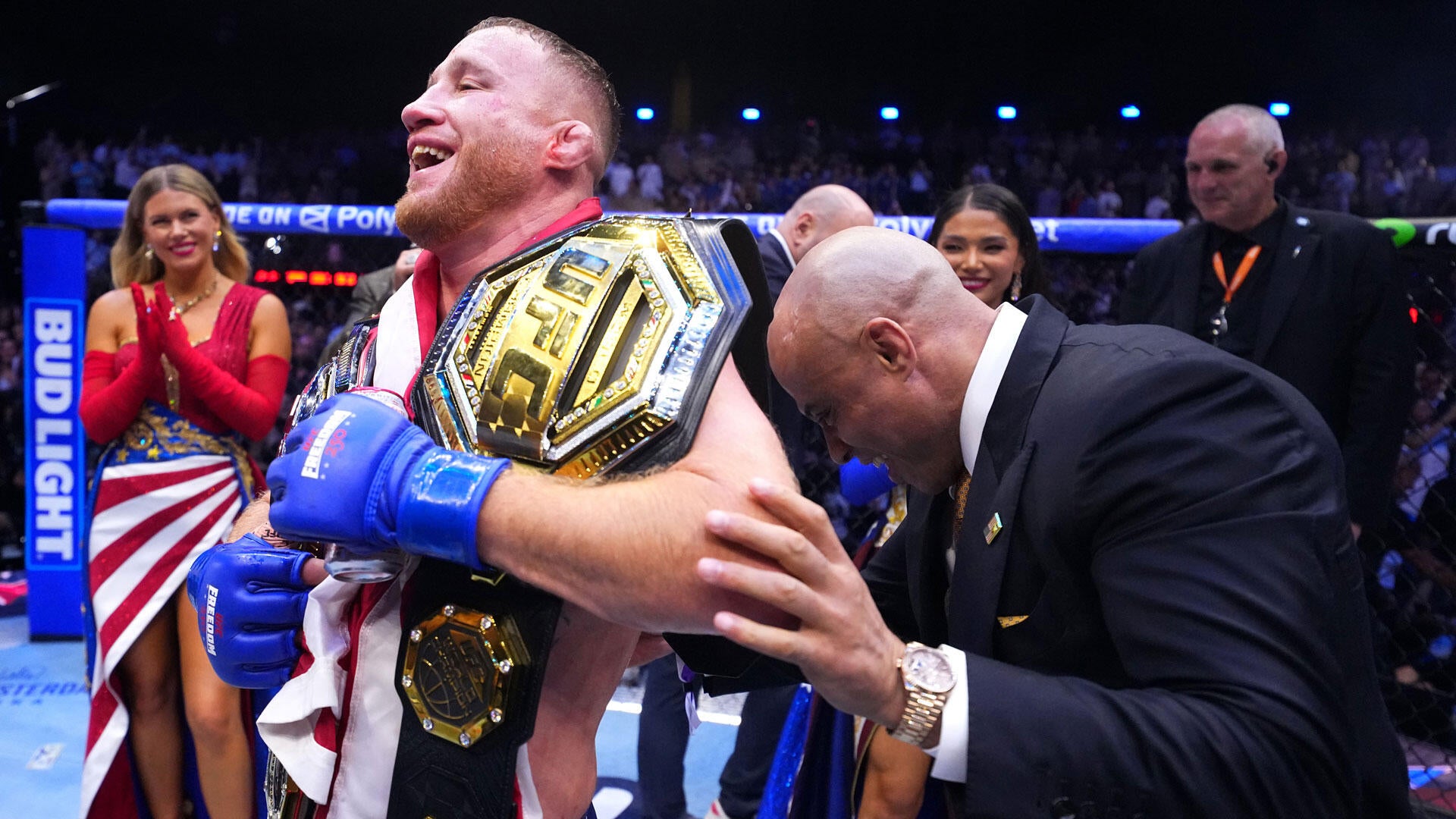
The landscape changed dramatically after Gaethje beat Pimblett for the interim title in January. In June, Gaethje upset Ilia Topuria at the UFC's White House event and took the undisputed championship. That victory transformed him from a veteran chasing one last defining moment into the man everyone at 155 pounds wants to face. Pimblett's preferred rematch is no longer simply a chance to avenge a loss; it is a route to the most valuable belt in the division.
Pimblett has also floated the possibility that Gaethje could retire rather than defend it. His reasoning is emotional: after winning a world championship at an extraordinary event, what could top that experience? It is an understandable thought, particularly with Gaethje approaching his 38th birthday in November. But it is speculation from a potential challenger, not a retirement announcement by the champion. Gaethje has previously spoken about fighting again, and the UFC has not announced that the belt is vacant.
That distinction matters for every contender. If Gaethje returns, the promotion must choose which opponent offers the strongest sporting and commercial case. If he retires, the entire lightweight hierarchy changes and a vacant-title fight becomes possible. Pimblett's public campaign keeps him in the conversation either way, but no amount of enthusiasm can resolve a decision that ultimately belongs to Gaethje and the UFC.
There is also a practical issue with rematches: the first result creates a burden of proof. Gaethje already defeated Pimblett across five rounds. A challenger seeking another opportunity needs to explain what is materially different now. Pimblett's quick submission victory and stated tactical adjustment help, but they do not erase the earlier decision. The champion can reasonably ask why he should repeat a fight when other contenders have yet to receive their first shot.
The upside for the UFC is obvious. Gaethje and Pimblett are recognizable personalities, their first fight delivered sustained drama, and the promise of a radically different approach provides an easy storyline. The downside is equally obvious: booking the same matchup too quickly could look like popularity outranking the competitive order. That tension will shape the lightweight division's next announcement.

Topuria, Tsarukyan and Volkanovski make the queue crowded

Even if Gaethje chooses to defend in 2027, Pimblett is not first in a queue of one. Former champion Ilia Topuria has a direct sporting argument for a chance to regain the belt after losing it to Gaethje. Arman Tsarukyan has spent years building his lightweight credentials and is a credible challenger on merit. Featherweight champion Alexander Volkanovski has also been discussed as a potential opponent, adding a cross-division storyline to an already crowded title picture.
Pimblett understands the competition. He has acknowledged that other names may be ahead of him, and his recent remarks show a clear hierarchy of his own priorities. He has a bitter, long-running feud with Topuria, yet he says he would rather face Gaethje first because Gaethje holds the championship. That is a significant distinction: a rivalry fight can make headlines, but winning undisputed gold would define his career in a way that another grudge-match victory might not.
The Topuria rivalry remains useful leverage, though. If Gaethje does not fight again, or if another challenger gets the next title opportunity, Pimblett against Topuria could become a major event without the belt. The two have exchanged insults for years and have had confrontations outside the cage. Their mutual hostility is established, but the matchup has never been officially booked. It should be discussed as a possibility, not a confirmed future fight.
Tsarukyan presents a different sort of obstacle. He represents the competitive question that can get lost when the loudest personalities dominate the conversation: who has earned the strongest claim through results against elite lightweights? Pimblett's submission of Saint Denis strengthened his résumé, but a title shot is not awarded solely for a dramatic finish or an effective interview. Rankings, timing, availability and the UFC's commercial priorities all intersect.
Volkanovski's name adds another complication because his featherweight achievements and recent title success give him a strong profile even if he has not spent the same amount of time in the lightweight queue. A champion-versus-champion narrative is commercially powerful. Pimblett cannot control those negotiations. What he can control is staying ready, maintaining the submission threat and making his next appearance look like a convincing step toward the division's very top.
The best outcome for Pimblett may be to keep the Gaethje rematch as the ultimate objective while remaining willing to take the fight that actually moves him closer. Fixating on a single champion can leave a contender idle while the title picture moves on. His new game plan has to be more than a hypothetical answer to an opponent who might never sign a second contract.
Pimblett has identified the clearest lesson from his first Gaethje fight: he cannot spend five rounds trying to beat the champion at the champion's favorite game. His promise to wrestle immediately is a useful declaration of intent, and the Saint Denis finish shows that his grappling is a genuine threat. It does not establish that he can impose that threat against Gaethje's takedown defense over a championship distance.
For now the rematch is a proposal, not a booking. Gaethje's next move, Topuria's claim, Tsarukyan's position and Volkanovski's ambitions all matter. Pimblett can talk his way into the conversation, but the next fight he wins—and the way he wins it—will determine whether the UFC has a sporting reason to put him back in front of the champion.

















