

Quinn Hughes Says a Wild Deal Could Come Soon — Hellebuyck Changes the Stakes
GOATIFYQuinn Hughes has spent months refusing to put a clock on his next contract. Now the Minnesota Wild defenseman has offered the clearest hint yet that the wait might not last much longer. Speaking Saturday, October 24, he said his commitment to Minnesota remains firm and acknowledged that something could happen soon. That is not a signed extension, a price or a deadline. But for a franchise that paid a huge trade price to bring him in, it is a meaningful change in tone.
The timing makes the remark particularly intriguing. The New Jersey Devils have just acquired Connor Hellebuyck from Winnipeg, giving the club where Quinn's brothers Jack and Luke play another elite piece. Meanwhile, Hughes is about to face his former Vancouver Canucks teammates for the first time since last December's blockbuster. Two possible futures are suddenly in sharper focus: a long-term partnership with Minnesota or an open market that would have no shortage of ambitious bidders.
Hughes hinted at a deal — but stopped short of promising one

Asked about his future on Saturday, Hughes said his feet were planted in Minnesota and that an agreement might come soon, while carefully avoiding a firm prediction. That distinction matters. The 27-year-old can become an unrestricted free agent in July 2027, and a statement of enthusiasm is not the same as a completed negotiation. Neither a contract length nor a salary figure was announced. The club still has to turn goodwill into terms both sides can accept.
The most revealing part of Hughes' comments was not the vague timetable. It was the way he explained why the situation appeals to him. He spoke warmly about the chance to skate with veterans Jared Spurgeon and Jonas Brodin, and about what the Wild could look like when Brock Faber returns. He also singled out the possibility of sharing ice with Kirill Kaprizov, Matt Boldy and Joel Eriksson Ek. This was a player describing the hockey he wants to play, not simply offering the polite language of someone waiting for an agent to call.
That makes the latest remarks more substantive than the standard extension-season reassurance. Back in September, Hughes repeatedly emphasized that he would decide at his own pace. He liked the team and trusted the process, but refused to treat training camp as a deadline. The October comments do not erase that caution; they add a new possibility. Minnesota can reasonably hear optimism without pretending it has a signature in hand.
For the Wild, the practical response is to keep the relationship and the on-ice situation strong. General manager Bill Guerin cannot make a player choose a particular term, and public pressure rarely improves the economics of a star negotiation. Hughes' words suggest that the conversation is alive and positive. They do not establish whether the final sticking point is money, length, flexibility or something more personal. Until an agreement is announced, those details remain unknown.
Minnesota can sell Hughes a contender, not just a contract

Money will shape any extension, but Hughes has made clear that his next destination must also make hockey sense. Minnesota's pitch starts with a defensive group built to let him do what he does best. Spurgeon brings experience and puck movement; Brodin offers positional reliability; Faber gives the club another high-end defender capable of carrying difficult minutes. That combination can reduce the need for Hughes to solve every breakout and every matchup on his own.
The offensive case is equally persuasive. Kaprizov creates threats that draw defenders away from passing lanes. Boldy can attack off the rush or from set possession, while Eriksson Ek supplies the net-front work that turns point shots and controlled entries into dangerous sequences. A playmaking defenseman thrives when the forwards ahead of him can receive passes under pressure and finish plays. Hughes specifically described enjoying the stretches when Minnesota loads its most dangerous forwards together.
The club has already seen what the partnership can accomplish. After arriving from Vancouver in December 2025, Hughes produced 53 points in 48 regular-season games for Minnesota and added 15 points in 11 playoff games. The Wild beat Dallas in the first round before Colorado eliminated them. That is evidence of both immediate fit and unfinished business. Hughes did not join a blank-slate rebuild; he joined a team close enough to contend that a few improvements could matter.
His October production offers another argument for continuity. Entering Sunday's return to Vancouver, he had two goals and 12 assists through 12 games, according to the game preview. Those numbers do not guarantee a playoff breakthrough, but they show that the puck still runs through him. Minnesota's challenge is to convert elite individual creation into a more resilient team: better depth when stars are unavailable, cleaner defensive exits under postseason pressure and enough scoring beyond the top line.
Faber's availability and the health of the rest of the blue line will be important. Hughes can shoulder enormous ice time, but the Wild are strongest when he is a difference-maker rather than a permanent emergency solution. If the club demonstrates that it can protect leads, create second-chance offense and survive injuries, the case for staying becomes stronger without anyone needing to manufacture a contract deadline.

The price is enormous — and the cost of waiting could be bigger
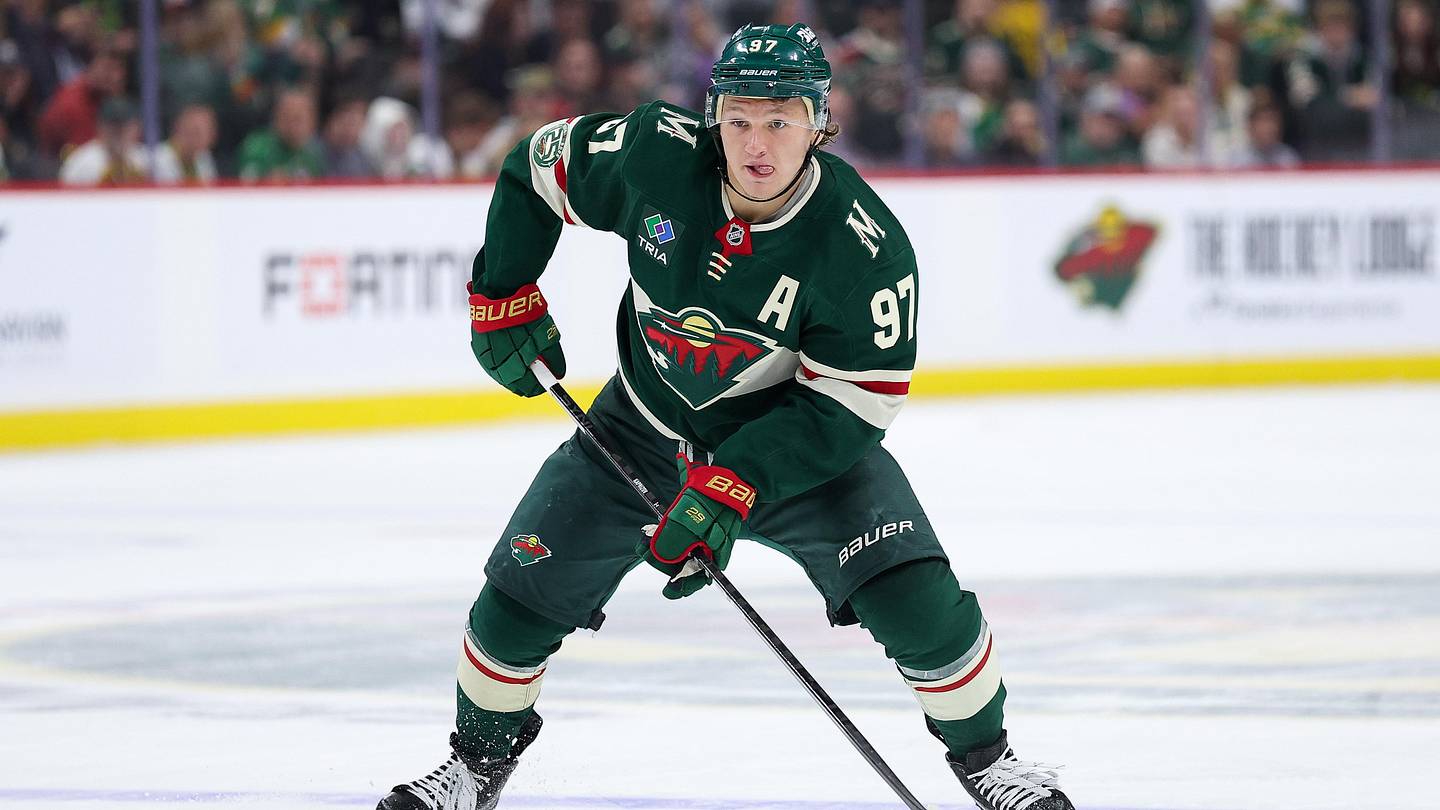
Hughes is playing out the final season of a deal carrying a $7.85 million annual cap hit, a figure that no longer reflects the market for a defenseman who drives an offense. Colorado's Cale Makar pushed the top of that market beyond $20 million per season with his August contract. Hughes is not automatically entitled to identical terms, and the structure of any new agreement would depend on years, guarantees and both sides' appetite for risk. But the benchmark makes clear why this negotiation is much larger than a routine raise.
A longer deal would give Minnesota certainty over its blue-line centerpiece, but it would also commit an enormous share of future cap space to one player. A shorter extension could preserve flexibility for Hughes while leaving the Wild to revisit the same uncertainty sooner. There is no public evidence that either model has been chosen. Fans should be wary of treating a rumored annual number or preferred term as fact simply because it sounds plausible next to Makar's contract.
The Wild have already invested heavily in the surrounding core. Kaprizov's own major extension established that ownership is willing to pay for elite talent, and the franchise gave up significant assets to acquire Hughes. In the December trade, Vancouver received Marco Rossi, Liam Ohgren, Zeev Buium and a first-round draft pick. Losing Hughes after only a brief tenure would not undo the value of the hockey he has played, but it would leave the organization explaining why it surrendered so much for a star it could not retain.
That does not mean Minnesota should sign any terms presented to it. The hard question is how to build a complete contender while paying multiple elite players. The salary cap will evolve, other contracts will expire and younger players will need raises. A front office has to balance the value of an exceptional defenseman against the depth required to win four playoff rounds. The strongest extension is one that keeps Hughes happy without making the rest of the roster too fragile.
Time is the other negotiating variable. The closer Hughes gets to July 2027 without a deal, the more attention rival clubs will pay. That does not make a trade inevitable, and Minnesota has no reason to surrender leverage on the basis of social-media speculation. It simply raises the value of resolving the question while the player is openly positive about his surroundings and the club still controls the immediate situation.

Hellebuyck makes the Devils intriguing, but Hughes still controls the decision

New Jersey's acquisition of Connor Hellebuyck has changed the optics of the Hughes conversation. The Devils already employ Jack and Luke Hughes, and the brothers have never hidden how appealing it would be to share an NHL dressing room someday. Adding a three-time Vezina Trophy-winning goaltender strengthens the idea of New Jersey as a destination that could compete immediately rather than merely offer a family reunion.
Still, an appealing scenario is not a transaction. Hellebuyck arrived from Winnipeg only days ago and has yet to make his Devils debut. The move does not mean New Jersey has made an offer for Quinn, that Minnesota is shopping him or that Hughes has changed his preferred destination. On Saturday he said he had not discussed the goaltender trade extensively with his brothers, and his public comments centered on how much he enjoys playing for the Wild.
There is also a roster-building problem for any team imagining all three brothers together. Jack and Luke are already central to New Jersey's plans, and the club has just taken on another star with substantial salary obligations. Fitting a future Hughes extension would require hard cap decisions and possibly moving other useful players. An ambitious fantasy lineup can look irresistible on paper while being difficult to construct without weakening the very depth that makes it attractive.
The Devils' early season has offered reasons for optimism, including a run of strong defensive performances, but a new goaltender is not a shortcut past the cap. Meanwhile, Minnesota has an existing relationship with Quinn, a competitive roster and the ability to negotiate directly now. Those are real advantages. New Jersey has family ties and a compelling long-term story, but it does not have a confirmed path to acquiring the player.
Sunday's trip back to Vancouver adds a separate emotional layer. Hughes spent six and a half years with the Canucks, became their captain and won the Norris Trophy there. He has spoken gratefully about that chapter even after the trade. His return is a reminder that a player can care deeply about a former city, love his family and still decide that his present team offers the best next step. The most important clue is not the destination fans imagine; it is the decision Hughes eventually makes.
The most important news is what Hughes has actually put on the record: he likes Minnesota, he likes the hockey around him, and he believes a deal could arrive soon. That is an encouraging signal for the Wild, not a contract announcement. New Jersey's Hellebuyck trade raises the intrigue, but it does not override the player's stated comfort with his current team.
Over the coming weeks, watch for concrete developments rather than fresh guesses about salary or family preference: an official extension, credible details on term, or a material shift in how Hughes and Guerin discuss talks. Until then, Minnesota remains the team with the strongest immediate case because it already has Hughes on the ice — and, by his own account, that is where he is enjoying himself.

















