

6-Move Leg Workout: What Squats, Lunges, Bridges and Hinges Really Train
UPLIFT IRON CLUBCelebrity trainer Yasmin Karachiwala recently shared a six-move lower-body circuit built around squats, lunges, an isometric wall hold, a bridge, a kettlebell swing and a staggered deadlift. The sequence is simple enough to do with minimal equipment, but the useful part is not the promise of “toning” a particular area. It is the way the six movements cover several different jobs: knee-dominant strength, single-leg control, hip extension, posterior-chain loading, power and muscular endurance.
This six-move leg circuit is best understood as a balanced lower-body session rather than a spot-reduction routine. Squats and lunges emphasize the quads and glutes, the wall sit adds isometric endurance, bridges and staggered deadlifts bias hip extension and the posterior chain, and kettlebell swings add a faster hip-hinge pattern. Beginners can start with two controlled rounds; stronger lifters can add load, range of motion or additional rounds instead of rushing the reps.
- The routine trains the whole lower body; it cannot selectively remove fat from the thighs.
- Squats and lunges provide the main knee-dominant work, while bridges and deadlifts add hip-dominant work.
- The wall sit is useful for local muscular endurance, not a replacement for progressive resistance training.
- Kettlebell swings are a power-oriented hinge and should stay crisp rather than turning into a slow squat.
- Progress by improving control, adding load or adding rounds before chasing exhaustion.
1. Sumo Squats and Front Lunges Build the Base
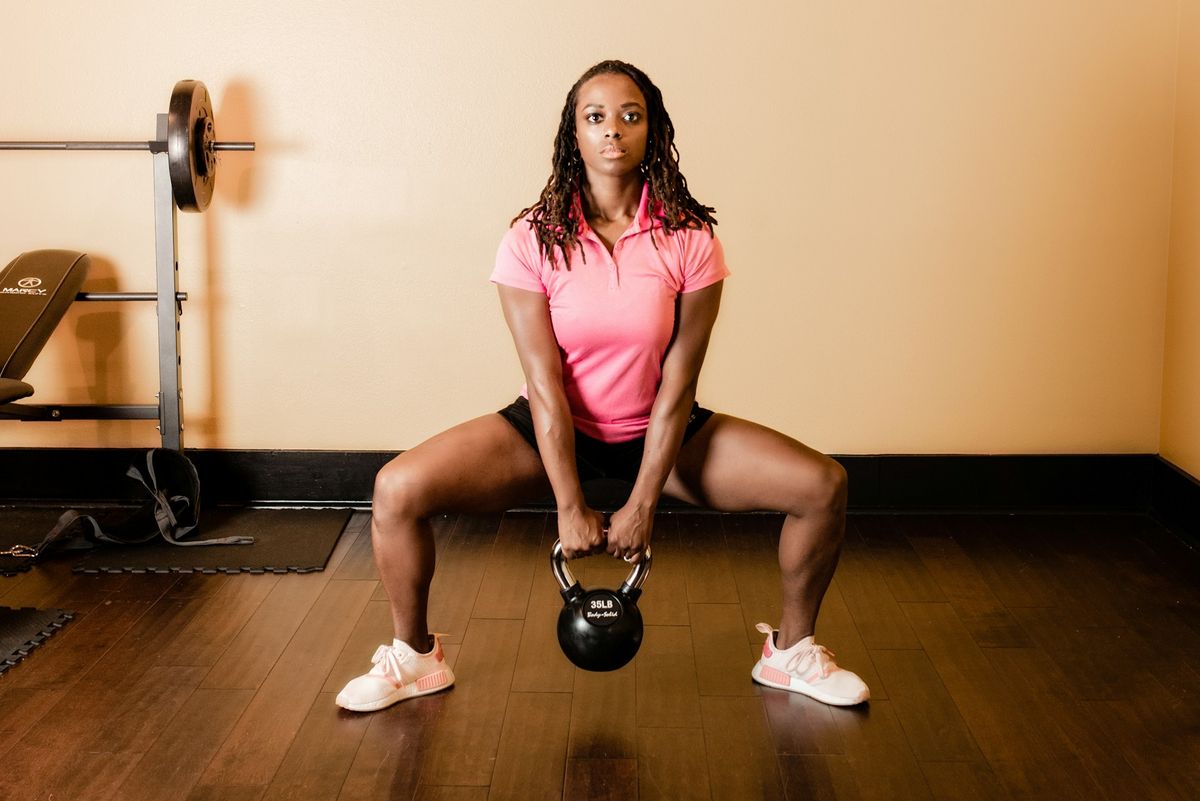
The first two movements cover a lot of lower-body territory. A sumo squat uses a wider stance than a conventional squat and still asks the knees and hips to flex together. That means the quads and glutes do substantial work, while the wider stance can increase the demand on the adductors for many lifters. The exact feel will change with stance width, toe angle, depth and individual hip structure, so there is no reason to force an exaggerated width just because the exercise is called sumo.
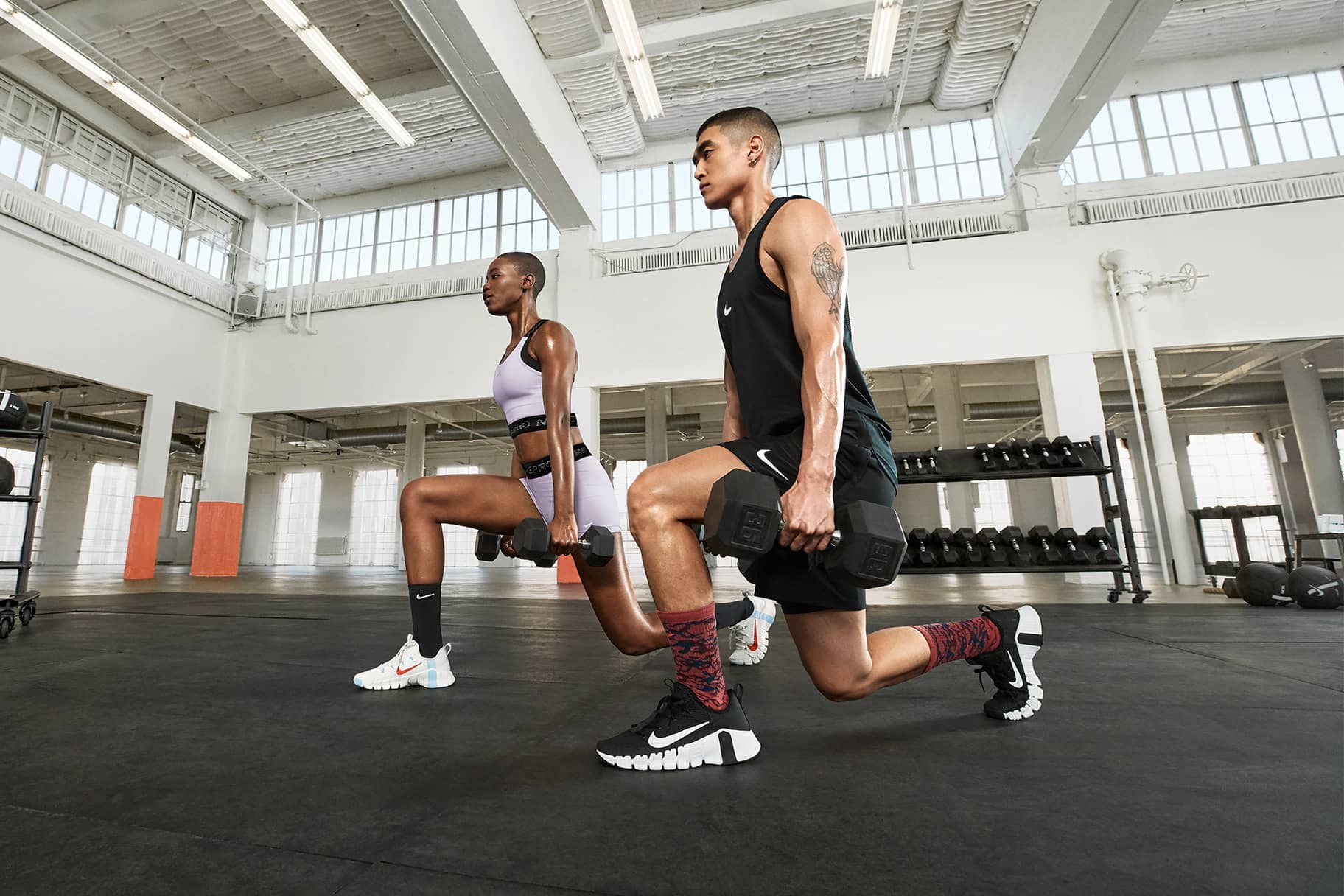
The alternating front lunge adds a different challenge: one leg has to accept most of the load while the body controls forward momentum. That introduces unilateral strength, balance and coordination. A lifter who can squat a respectable load can still find bodyweight lunges surprisingly demanding because the stability requirement is different.
For home training, these two exercises can do most of the heavy lifting in the circuit. If bodyweight is easy, hold a dumbbell or kettlebell at the chest. If balance is the limiting factor, use a wall or sturdy support and focus on a smooth range of motion. The goal is not to make every rep look dramatic; it is to keep tension on the target muscles and repeat technically solid reps.
2. The Wall Sit Trains a Different Kind of Leg Strength
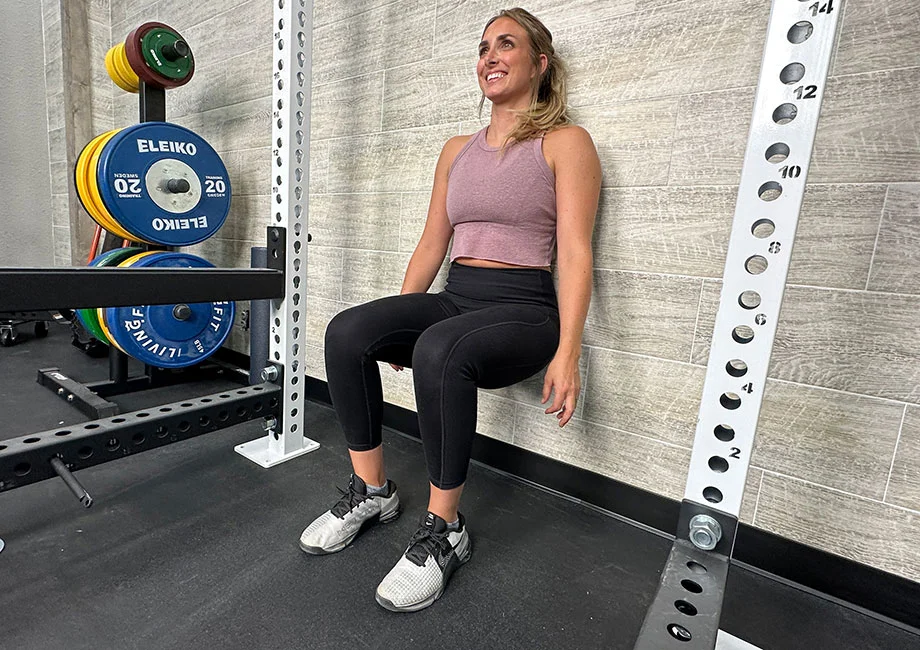
A wall squat hold looks simple because nothing is moving, but the quads can accumulate a lot of local fatigue. Unlike a squat or lunge, this is an isometric exercise: the muscles produce force while the joint angles remain mostly fixed. That makes it a useful way to extend a lower-body session without needing extra equipment.
The important distinction is that burning is not the same thing as uniquely effective muscle growth. A long wall sit can feel brutal because metabolites accumulate and the quads stay under continuous tension, but progressive dynamic training still gives you more obvious ways to add load and train through a useful range of motion. Treat the hold as a complement to the squats, lunges and hinges rather than as the main event.
Karachiwala’s reported circuit uses the wall hold between dynamic movements, which also makes sense from a conditioning perspective. If you are new to it, start with a duration you can hold without your hips sliding up and down the wall. Add time gradually instead of turning the final seconds into a wrestling match with your posture.
3. Bridges Shift the Emphasis Toward Hip Extension
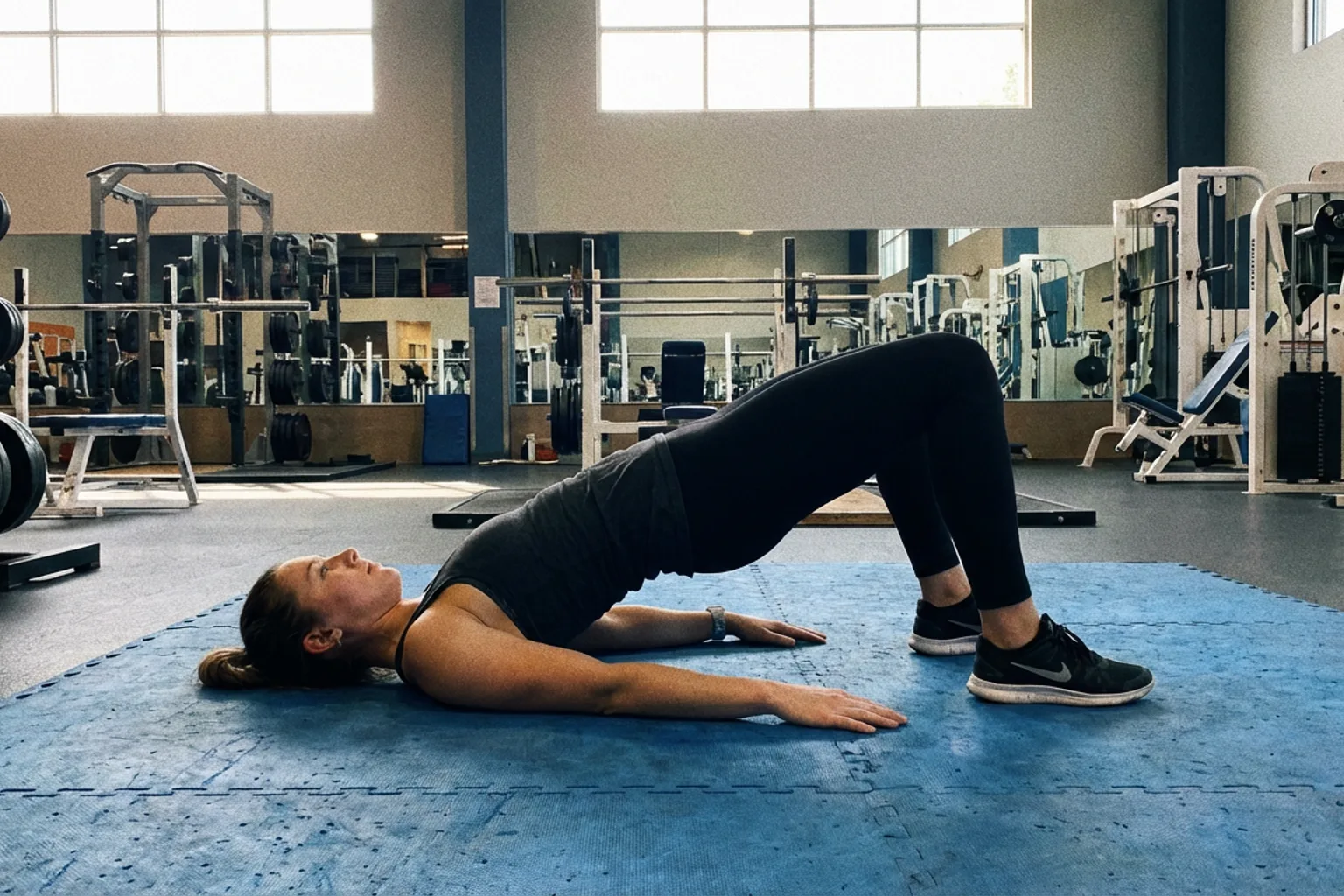
The bridge changes the pattern. Instead of standing and moving through a squat or lunge, you lie on the floor and extend the hips. That puts the glutes in a more direct hip-extension role and gives the lower back a relatively simple position to manage. The source routine describes a ball bridge, but the basic floor bridge is a practical substitute when no ball is available.
Think about finishing the rep by extending the hips, not by arching the lower back. Ribs staying reasonably down and the pelvis moving with the torso usually produces a cleaner contraction. Stronger lifters can progress to a single-leg bridge, a loaded glute bridge or a hip thrust, but the bodyweight version remains useful for warm-ups and high-rep accessory work.

4. Kettlebell Swings Add Speed to the Hip Hinge
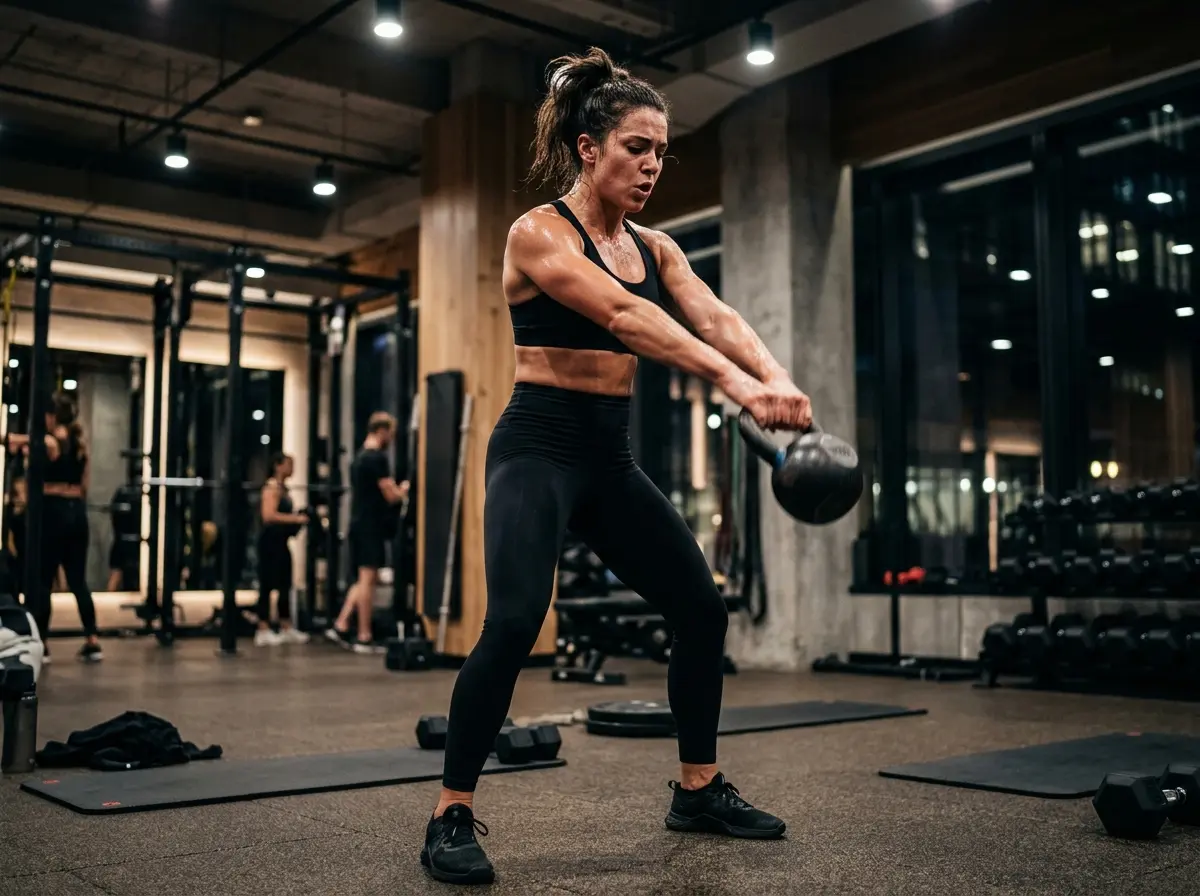
The kettlebell swing is the most explosive movement in the six. It should look like a fast hip hinge, not a front raise powered by the shoulders and not a deep squat with a kettlebell attached. The hips move back, the hamstrings load, and the glutes drive the body back to a tall position. The bell floats because the hips accelerated it.
That makes the swing a useful bridge between strength work and conditioning. Repeated crisp swings can elevate heart rate quickly while still reinforcing a powerful hinge pattern. But fatigue changes the equation. Once the hinge becomes sloppy or the bell starts being muscled upward with the arms, the set has stopped serving its main purpose.
Beginners do not need to force the swing into the workout immediately. A kettlebell deadlift is a perfectly sensible regression while learning how to hinge. Skill comes first; speed comes after.

Leg Day Shirts & Gym Gifts

Gym shirts and gifts for lifters who never skip leg day.
SHOP THE COLLECTION5. Staggered Deadlifts Finish the Posterior Chain — Here’s How to Run the Circuit
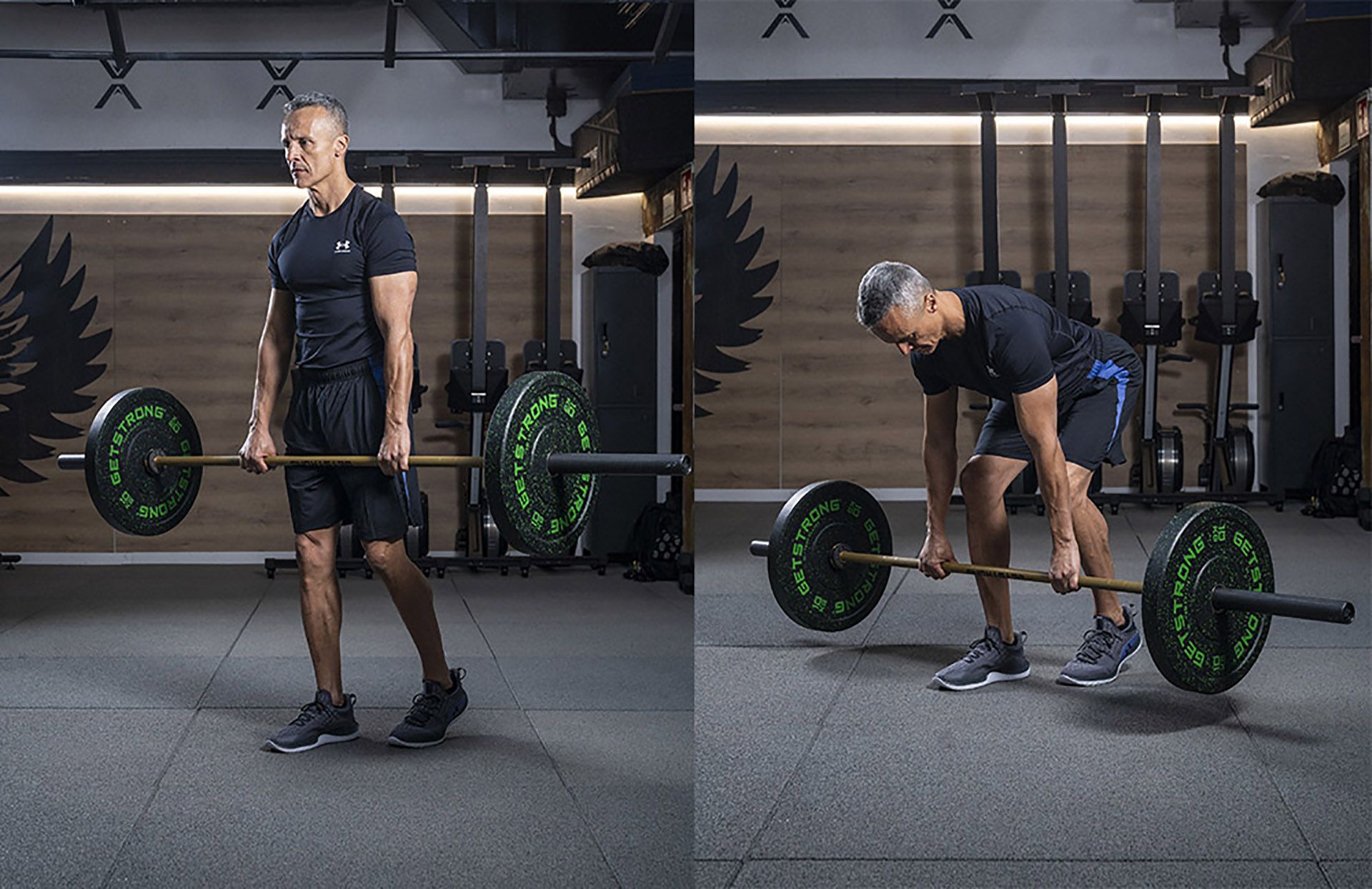
The staggered-stance deadlift gives one leg most of the work while the other foot acts like a kickstand. It is a useful middle ground between a conventional two-leg deadlift and a true single-leg Romanian deadlift. The working-side glute and hamstrings have to produce force while the offset stance adds a manageable stability demand.
Keep most of the pressure through the front foot, push the hips back and let the torso tip forward as one unit. The back foot should help with balance rather than turning the movement into a fifty-fifty deadlift. You do not need the weight to touch the floor; stop where you can maintain a controlled hinge and tension through the posterior chain.
The source recommends roughly 12–15 repetitions per movement for two to four rounds, with beginners starting at the lower end. That is a reasonable circuit framework, but it is not a law. If 15 technically sound reps are easy, add resistance. If 12 reps make your form deteriorate, reduce the reps. For muscle and strength development, the important variable is whether the set provides enough challenge while technique stays repeatable.
A practical beginner version is two rounds with bodyweight squats and lunges, a short wall sit, floor bridges, kettlebell deadlifts instead of swings, and lightly loaded staggered deadlifts. Rest as needed between movements. A more experienced lifter can use three or four rounds, add external load and keep the swing explosive.
And about toning: no exercise can choose where your body loses fat. What training can do is strengthen and potentially build the muscle underneath. Visible definition comes from the combination of muscle development, overall body-fat level, genetics and time. That is less catchy than a thigh-toning promise, but it is a much better framework for deciding whether a workout is actually useful.

6. How to Progress the Workout Without Turning It Into Random Cardio
A circuit format makes the session convenient, but convenience should not erase progression. If you repeat exactly the same bodyweight circuit for months, your body eventually becomes efficient at that workload. At that point the session may still raise your heart rate, yet the strength and muscle-building stimulus can flatten out. The solution is not necessarily more exercises. It is to make the existing movements gradually harder.
Start with the simplest lever: rep quality. Use a controlled descent, reach a range of motion you can own, and keep the last few repetitions looking recognizably like the first few. Once the prescribed 12–15 reps feel comfortable, add a small amount of external load to the squat, lunge, bridge and deadlift patterns. You can also progress by adding a third round after you have adapted to two, or by slightly reducing rest while maintaining technique. Do not increase load, rounds and speed all at once.
For muscle growth, the dynamic movements deserve most of the progressive overload. A loaded squat or lunge, a harder bridge or hip thrust, and a progressively heavier hinge give you clear ways to increase tension over time. The wall sit can remain a finisher, while the kettlebell swing can stay focused on power and conditioning. That keeps every movement in the circuit doing a distinct job instead of making all six exercises different versions of the same fatigue test.
A useful way to judge the exercise mix is by movement pattern rather than by body-part labels. The squat and lunge ask the knee extensors to work hard while the hips contribute. The bridge and staggered deadlift emphasize hip extension from different positions. The swing asks you to express that hinge quickly. The wall sit keeps the quads under sustained tension without repeated joint motion. That is a more complete menu than six random leg burners, because each movement adds something the previous one did not fully cover.
If you have knee, hip or back pain, the best modification is not to push through sharp symptoms for the sake of finishing the circuit. Shorten the range, reduce load, substitute a better-tolerated variation or skip the movement and seek professional guidance when pain is persistent. Training consistency depends on having exercises you can repeat, not on winning one workout.
Frequency matters too. One lower-body session can be useful, but most lifters who want noticeable leg development benefit from exposing the muscles to challenging work more than once across the week, provided recovery is adequate. The second session does not have to repeat the identical circuit. It could use a heavier squat, Romanian deadlift and split squat while this six-move session serves as the lighter, more accessible day.
Finally, soreness is not the scoreboard. A workout can be productive without making stairs miserable for three days. Track whether you can perform more clean reps, use more resistance, control a deeper range or complete the same work with better technique. Those are much more useful signals than simply asking whether your legs burned.










