

Antonelli Is F1's Youngest Champion at 20 — Verstappen Wins Mexico by 0.799s
GOATIFYKimi Antonelli crossed the line third in Mexico City, but he left the Autódromo Hermanos Rodríguez with something much bigger than a podium. At 20 years and 68 days, the Mercedes driver became Formula 1’s youngest world champion, eclipsing Sebastian Vettel’s 2010 benchmark by more than three years. He also ended a 73-year wait for an Italian drivers’ champion, stretching back to Alberto Ascari in 1953. It happened in only his second Formula 1 season, with four Grands Prix still to run.
The race itself belonged to Max Verstappen, who climbed from fifth to win by just 0.799 seconds over Ferrari’s Lewis Hamilton. Antonelli finished 4.006 seconds behind, yet his third place was the decisive result in a season defined by nine victories, consistency and an extraordinary transformation from a difficult rookie year. The Mexican Grand Prix supplied a fittingly chaotic final examination: a Ferrari first-lap fight, a red flag, two restarts and one vital pass on Charles Leclerc.
A Red Flag Erased the Advantage — Antonelli Still Made the Podium His

Antonelli did not arrive in Mexico needing a miracle. Ninth place would have been enough to put the championship mathematically beyond his rivals, regardless of the results for Hamilton and Mercedes teammate George Russell. That margin could have encouraged an excessively cautious afternoon. Instead, the 20-year-old combined sensible early decisions with a willingness to attack once the opportunity arrived. He started fourth after a qualifying session that had left him short of the front row, then protected his car through the frantic opening corners.
Mercedes kept him on his original soft tyres for more than 40 laps, extending the first stint as the other leaders stopped. The longer run created a tyre-age advantage that might have given him a route into the lead battle. But the timing turned cruel. Antonelli finally pitted at the end of lap 43, and shortly afterward Valtteri Bottas crashed heavily in his Cadillac. The Safety Car became a red flag while barriers were repaired, allowing rivals to change tyres without the usual pit-lane cost. The carefully built offset was effectively wiped away.
Antonelli was moved back to fourth for the standing restart under the revised order. He did not respond by trying to force a reckless three-car move into Turn 1. He got through the launch, assessed the Ferrari ahead and then struck on the next lap, braking decisively past Leclerc to reclaim third. That was not required for the championship on paper. It mattered because it showed the instincts of a driver still trying to race rather than merely survive a mathematical formality.
The closing laps brought another Safety Car after contact between Oscar Piastri and Arvid Lindblad, but Antonelli kept his position. Verstappen and Hamilton fought for the win ahead, while the new champion controlled the margin behind them. The final lap was emotional enough that he later admitted tears were affecting his vision and he deliberately eased off. A season of relentless speed ended with the unusual task of slowing down just enough to bring the car and the title home.

Verstappen Won the Race Ferrari Had the Speed to Take

The fight for victory was a separate drama from the title clincher. Hamilton had secured his first Grand Prix pole for Ferrari, with Russell and Leclerc immediately behind him and Verstappen starting fifth after a grid penalty. Ferrari appeared to have the pace to turn a promising Saturday into a statement Sunday. Instead, the opening lap became a demonstration of how quickly two cars fighting each other can hand an advantage to a third.
Leclerc attacked Hamilton through the opening sequence and both Ferraris ran beyond the track at Turn 4. Leclerc retained the lead after crossing the grass, while Hamilton lost momentum and Verstappen slipped into second. Stewards awarded Leclerc a five-second penalty for leaving the circuit and gaining an advantage. When Leclerc and Verstappen stopped together at the end of lap 27, the penalty made the difference: Red Bull emerged ahead and the race had a new leader.
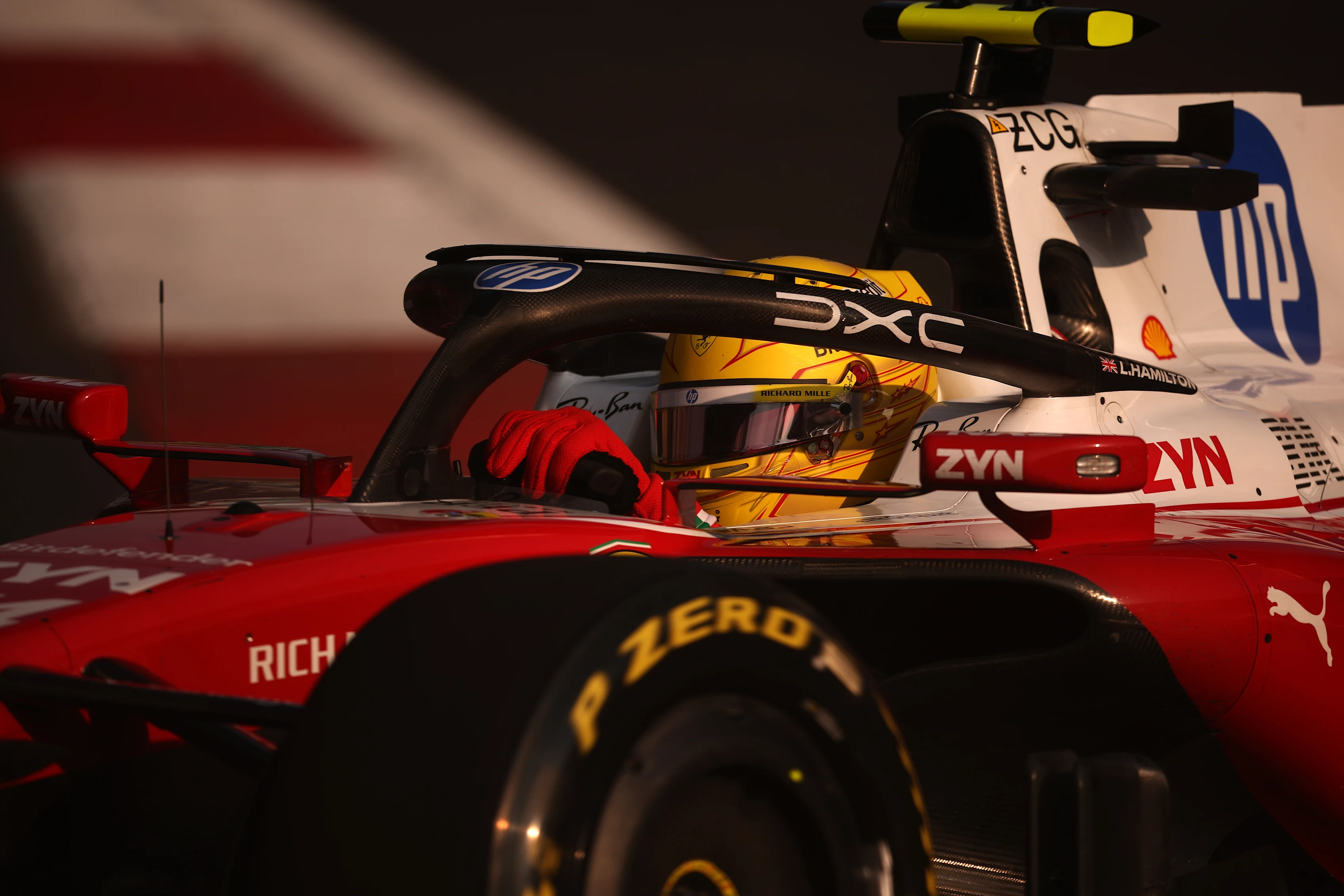
Hamilton eventually climbed back to second after the red-flag restart and remained close enough to threaten Verstappen. He recorded the fastest lap of the race, 1:19.268, on lap 50, and after the final Safety Car his Ferrari stayed in the Red Bull’s mirrors. But proximity did not become a pass. Verstappen held his lines and repeatedly recovered time through the middle sector, surviving to the chequered flag with a margin smaller than a second.
Ferrari left Mexico with genuine pace and genuine frustration. Hamilton believed the team had thrown away a chance to finish first and second, and Leclerc accepted that his off-track move deserved a sanction. The distinction matters: Ferrari's underlying speed was not the problem, but the decisions made while trying to exploit it were. Verstappen's third victory of the 2026 season lifted him to second in the championship standings, while the two Ferrari drivers were left to discuss what should happen when both have the machinery to win.

Mercedes Took the Hamilton Gamble — and Its Teenager Repaid It
The remarkable part of Antonelli’s championship is not only his age. It is the speed with which a risky-looking personnel decision became one of the defining moves of the modern Mercedes era. When Hamilton decided to leave for Ferrari, Toto Wolff did not seek a veteran to preserve the old hierarchy. He promoted a teenager whose junior-category record was outstanding but whose experience at the top of the ladder was thin.
That gamble looked uncomfortable during parts of 2025. Antonelli went through stretches without points, and questions about whether he should have spent more time developing at a smaller team became increasingly loud. Mercedes kept its faith. Wolff has described the promotion as a calculated risk, and the 2026 results now explain the confidence. The team did not merely give a young driver a fast car; it gave him time to learn its procedures, survive mistakes and develop the discipline needed to extract points when outright victory was unavailable.
The second season produced a step change. Antonelli began winning, took the championship lead after the Japanese Grand Prix and built a streak of five consecutive victories. His successes included Monaco, Monza and Spa, circuits that ask very different questions of a driver. Winning at home in Italy, at the sport’s most unforgiving street circuit and on one of its great high-speed tracks was not a one-dimensional demonstration of speed. It was evidence of adaptability.
Russell's own Mexico afternoon provided a painful contrast. An energy-deployment issue at the start cost him positions, and a collision with Isack Hadjar brought a ten-second penalty. He finished sixth while his teammate celebrated the title. Wolff acknowledged that Mercedes had let Russell down on too many occasions this year. The team now has to celebrate its youngest champion without pretending that the other side of the garage has experienced the same season. Managing that relationship will be one of the next tests for a constructor still chasing the teams' crown.
Twenty Years Old, Nine Wins, Four Races Left — the Next Era Is Already Here
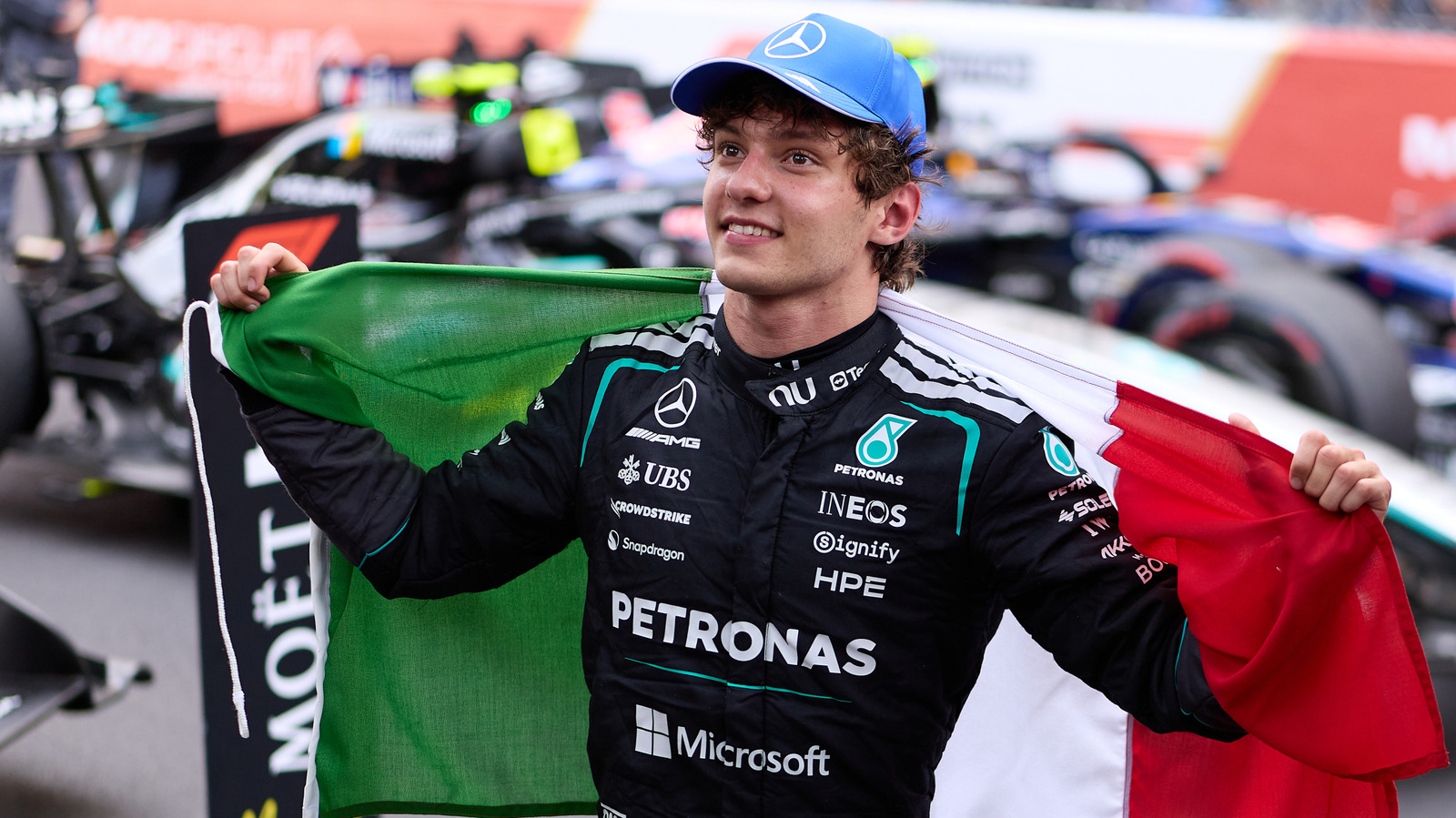
Formula 1 has spent years asking who would eventually follow the generation led by Hamilton and Verstappen. Mexico offered a striking answer. The podium contained two multiple champions and the man who had just joined them. Antonelli's age record is dramatic in itself: Vettel was 23 when he became champion in 2010, Hamilton was 23 in 2008 and Verstappen was 24 when he claimed his first crown. Antonelli achieved it before his 21st birthday.
For Italy, the symbolism reaches even further back. Giuseppe Farina won the inaugural drivers' title in 1950 and Ascari followed in 1952 and 1953. Since then, Italian drivers have won Grands Prix and earned iconic places in the sport without adding another world championship. Antonelli's triumph changes that history. He is not merely the latest successful Mercedes prospect; he is the driver who ended one of the longest national waits in Formula 1.
His title was sealed with four rounds remaining, but the season is not finished. Mercedes still has a constructors' championship to secure, and the margin over Ferrari after Mexico stood at 126 points. Verstappen moved ahead of Hamilton in the contest for second among drivers, while Ferrari's internal arguments and McLaren's fight with Red Bull remain live stories. The São Paulo Grand Prix on November 6–8 will be Antonelli's first appearance as a confirmed world champion, and the remaining weekends will test whether he can maintain the standard without the pressure of a title chase.
The greatest compliment to his 2026 campaign is that the final result felt inevitable long before it was official. Nine wins through 19 races and a large points advantage are not the products of one spectacular afternoon. They come from repeatedly delivering on the ordinary weekends as well as the glamorous ones. Mexico gave him the photographs, the tears and the history. The months before Mexico gave him the championship.
Antonelli did not win the Mexican Grand Prix, but he won the argument that has followed him since Mercedes put him in Hamilton's seat. He handled a messy race, made the decisive move for the podium and became world champion at 20 years and 68 days old. The record is extraordinary. The nine-win season that made it possible is more impressive still.
Verstappen's narrow victory and Ferrari's missed opportunity will be debated into Brazil. Mercedes has its own unfinished business in the constructors' fight. But the largest fact from November 1 will outlast all of those arguments: Italy has its first Formula 1 champion since 1953, and the sport's newest title winner is young enough to make the next decade look very different.

















