

F1 Wants Less Downforce in 2027. Mercedes Says Teams Will Find It Again.
GOATIFYMercedes already has the two trophies that matter most from Formula 1's first season under the 2026 regulations. Now its technical director, James Allison, is warning that the next round of rulemaking may trigger another engineering arms race rather than permanently slowing the cars. The FIA is considering further aerodynamic restrictions for 2027, with early reports suggesting a substantial reduction in downforce. Allison's response amounts to a challenge: write whatever limits you like, but do not assume the teams will stop developing.
The proposal reaches into a particularly sensitive area of modern F1. Downforce helps a car corner and brake, but producing it can create drag and disturb the air behind. That affects how drivers follow, overtake and manage their increasingly important electrical energy budgets. A governing body can try to remove an aerodynamic device; the paddock's designers immediately start working out which other surfaces might recover the missing performance. That tension is the real story behind the latest 2027 discussion.
Crucially, the reported scale of the cuts is not the same thing as a fully ratified technical rulebook. Teams are preparing for an evolving framework, and the distinction matters. What Allison is describing is not a specific Mercedes upgrade already waiting in a factory. It is the competitive logic of F1: regulations define the boundaries, while engineers try to reach the quickest possible result inside them.
The FIA wants less grip, less dirty air and better energy management

The central number being discussed for 2027 is a reported reduction of roughly 20 to 50 points of downforce. Those figures describe the intended aerodynamic change in the reporting around the proposal; they are not an official promise that every car will lose an identical amount of lap time. The amount a team actually gives away depends on its starting design, the details of the restrictions, the circuit and what its engineers recover before the opening race.
That is why the specific parts being targeted matter more than a headline figure. F1's 2026 cars already work with a new combination of slimmer, lighter chassis, rethought floors and movable front and rear wing elements. Instead of relying on the old pursuit-only DRS arrangement, drivers use the active aerodynamic package to trim drag on the straights and regain cornering load when they need it. The point is not simply to add as much grip as possible. A fast lap requires a vehicle that can trade between low resistance in a straight line and enough loading to turn and stop.
Reports on the 2027 package describe restrictions on rear aerodynamic elements and revisions farther forward around the floor. Technical analysis earlier in the season identified plans to shorten the floor's front tea-tray region and reduce the number of devices permitted around its leading edge. That kind of change attacks the efficiency of the underbody and the flow structures that feed it. Meanwhile, removing small rear-wing appendages can reduce the number of opportunities designers have to manipulate air near the back of the car. The exact final text still matters enormously: a small difference in the permitted geometry can create an entirely different development direction.
GOATIFY
GOATIFY Formula 1
The proposed wing and floor rules put aerodynamics back in the spotlight. Explore GOATIFY F1 racing designs as the 2027 debate develops.


There are two racing objectives behind this push. First, regulators want cars that are more manageable from an energy perspective. The 2026 hybrid system relies on a much larger electrical contribution than its predecessor, making the relationship between drag, speed, harvesting and deployment impossible to ignore. Excess drag on the straights is not just an aerodynamic disadvantage; it can force drivers to ration electrical assistance differently over a lap. Second, cleaner airflow behind a car could help another driver remain close through a sequence of corners rather than watching the front tyres lose performance in the wake.
Those aims overlap, but they do not automatically move together. Reducing a wing's load may cut its drag while creating a different turbulent flow. Removing a floor detail can alter the balance of the entire car, not merely its total downforce. Even the best-looking change on a technical drawing must survive simulation, track testing and the awkward reality of racing alongside another car. It is possible to make the stopwatch slower without producing a better contest; it is also possible to reduce peak load while leaving enough performance for drivers to attack.
For the FIA, success will therefore mean more than announcing a big cut. It will mean finding a set of restrictions that delivers the desired aerodynamic and energy behavior even after the best engineering departments have spent months exploiting every legal opening. That is a much higher bar than deleting a few visible flaps from the back of the cars.
Allison's warning is about the development race, not defying the rules
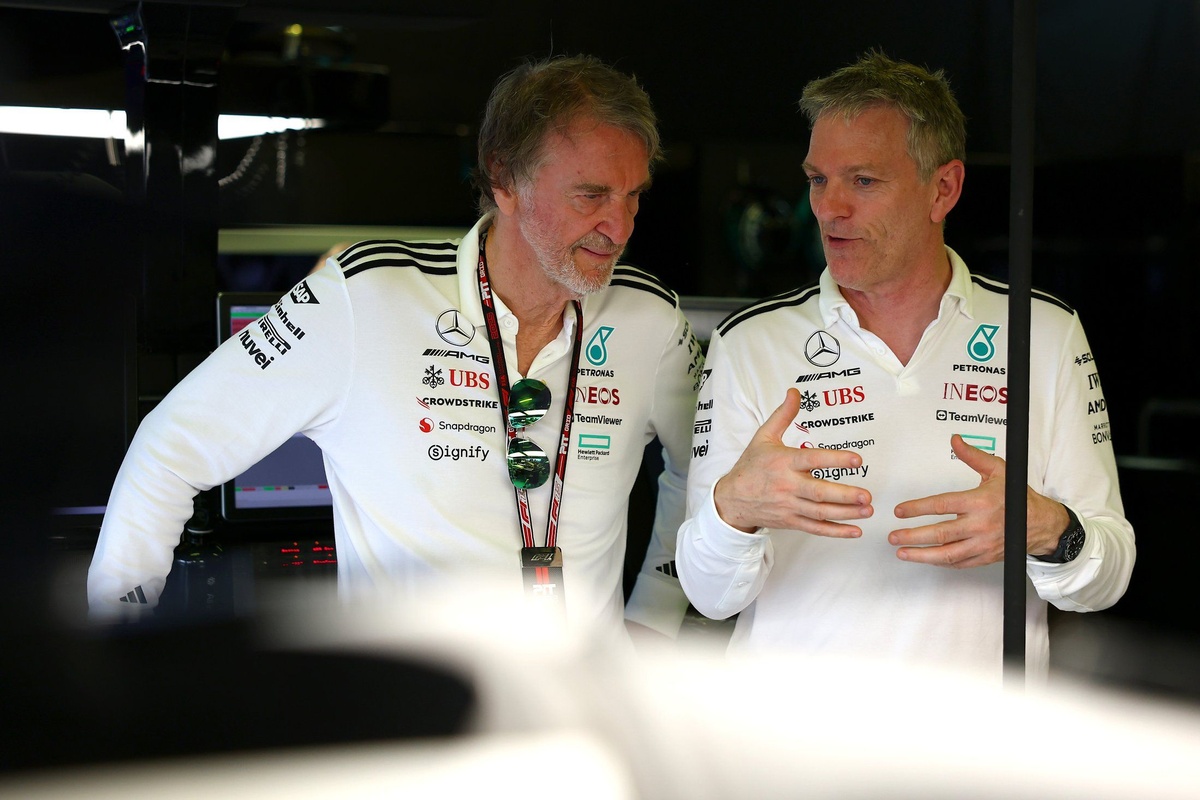
James Allison was not suggesting that Mercedes would ignore the FIA's instructions. Quite the opposite: his point is that a regulation can be followed perfectly while its intended performance consequence gradually disappears. In a recent Mercedes team podcast, he acknowledged that the planned reduction was significant, then questioned whether the teams would simply accept that loss or find a way to regain it. The revealing phrase was whether engineers would “recover it all or not.” That is a normal Formula 1 technical question dressed up as an unusually clear warning.
The first response to an aerodynamic restriction is rarely a single ingenious part that instantly cancels it. More often it is a chain of smaller discoveries. One group finds a legal angle for a permitted wing element. Another revises the bodywork to deliver cleaner air to the floor. A third changes suspension behavior or ride-height control so the aerodynamic platform works over more of a lap. Every improvement may be modest in isolation. Stack enough of them together, though, and the car starts recovering performance that looked unavailable when the rules were first announced.
This is especially important because downforce is not created by one isolated component. The air arriving at a rear wing has already been influenced by the front wing, wheels, chassis, sidepods and floor. Remove a rear appendage and a team may reorganize the upstream airflow rather than replacing the missing part directly. Restrict the front floor and engineers may revisit how the rest of the underbody is fed. Some ideas will be dead ends. Others will become standard across the grid once one car demonstrates the gain.
GOATIFY
GOATIFY Formula 1
Allison's engineering challenge is about finding legal speed after a regulatory reset. Discover GOATIFY Formula 1 shirts and racing gear.


The 2026 rules provide a vivid recent example of this process. Teams had to learn how the active front and rear wing systems interact with a different chassis and a new energy equation. What looked plausible in launch renders or early simulations did not always survive the first races. Development then spread beyond obvious upgrades: aerodynamic efficiency, mechanical balance, cooling, packaging and control of the car's operating window all became related problems. By the time a constructor arrives at its next concept, it has thousands of laps of evidence about what works.
Of course, recovery is not unlimited. The cost cap, aerodynamic testing restrictions, manufacturing lead times and the need to design an entirely new package put real limits on experimentation. The team that knows where to look first enjoys a competitive advantage, even when its rivals possess comparable software and facilities. Every misjudged idea consumes simulation capacity or factory effort that could have been used elsewhere. A rule change can therefore reshuffle performance despite the eventual tendency of teams to claw back speed.
That distinction is why Allison's comments matter. The FIA may succeed in reducing downforce at the start of 2027 and still watch cars become dramatically quicker as the season progresses. Or it may devise a restriction whose effect proves unusually difficult to recover. Both outcomes fit within the rules; neither can be determined by a headline number alone. The championship is decided by how much performance each team can create under the final constraints, not by how intimidating the draft restrictions look on paper.
Mercedes leads the championship, but 2027 could erase its comfort zone

Mercedes approaches this argument from a position of considerable strength. The 2026 transition helped return the Silver Arrows to the top of the constructors' championship, and Kimi Antonelli secured the drivers' title while George Russell contributed to the team's dominant campaign. That gives Allison's group a very strong reference point. It also makes the risk unusually clear: an aerodynamic change that resets the characteristics of the fastest car can remove the particular combination of advantages that made it fastest in the first place.
A championship-winning machine is more than a pile of high-performing pieces. Teams develop a shared understanding of where its balance lies, which circuits expose its weaknesses, how aggressively it can run the floor and how the power unit works with the chassis. A revised 2027 floor or rear-wing architecture could change those relationships. Mercedes would then need to decide what is worth preserving from the W17 and which successful choices should be discarded because the next rules reward something different.
Its rivals face the same challenge but not the same incentive. A contender that believes its 2026 concept has reached a ceiling may be happy to embrace aggressive redesign. A leader has more to lose from throwing away a working platform, especially while the current season still offers race victories and commercial momentum. Neither philosophy is automatically correct. What matters is whether a team can transfer its best knowledge into the next car without becoming attached to parts that are no longer efficient.
GOATIFY
GOATIFY Formula 1
Mercedes enters the next development cycle as champion, but its rivals see an opening. Browse GOATIFY F1 gear before the 2027 aero battle.


Williams has already shown the painful side of that calculation. Team principal James Vowles described the decision to sacrifice some 2026 aerodynamic development to protect its 2027 prospects as difficult but necessary. For an outfit rebuilding its operation, putting resources into the next rule set can be worth more than improving a car that will soon be superseded. At the front, Mercedes, Ferrari, McLaren and Red Bull must make their own allocation choices while attempting to extract every useful performance point from the current season.
The knock-on effects reach drivers as well. A smaller aerodynamic operating window can change which driving style extracts the most from a car. More or less stable load through high-speed corners affects confidence on corner entry. Different drag characteristics alter overtaking opportunities and battery strategy. A driver who looks completely in control of a 2026 machine may face a different balance problem in 2027. That is not a prediction that any particular driver will struggle; it is the reason technical revisions can affect the competitive order even without a change in the headline power-unit regulations.
There is another uncertainty: the pace of convergence. Once teams see a successful interpretation of a new floor or wing rule, they can study the concept and pursue their own versions, subject to legality and intellectual-property rules. The field can become closer over time, yet a development lead early in the year may be decisive in a season-long points race. Mercedes knows this from both sides of F1's history: getting the first interpretation right is valuable, and being the team everyone studies brings its own pressure.
The smart conclusion is not that the 2027 restrictions will hurt Mercedes more than anyone else. There is no sound basis for that claim before the final details and new cars are known. It is that the winner of the present regulations still has to solve the next problem from scratch. Allison has signaled the mindset with which his department intends to approach it, but whether that translates into an advantage will only become visible when competitors start showing their cars and accumulating comparable lap data.
Allison has framed the proposed 2027 downforce reduction as the beginning of a contest rather than the final word on car performance. The FIA wants to address the relationship between grip, drag, energy use and the ability to race closely. Mercedes and every rival constructor will try to deliver the fastest legal interpretation of whatever text is ultimately approved. Both sides can do their jobs well and still end up debating whether the new cars are producing too much downforce a few months later.
For now, the most important qualification remains that the reported 20–50-point target and the associated aerodynamic changes are still subject to the definitive rulemaking process. Mercedes is not promising to defeat a fixed regulation, and a proposed restriction is not yet proof of a particular 2027 lap-time loss. The real story is simpler and more revealing: F1's designers already see the next boundary coming, and nobody expects them to stop searching for speed when they reach it.
GOATIFY
GOATIFY Formula 1
Shop GOATIFY Formula 1 shirts, hoodies and racing stickers.


















