

Three Losses to Sánchez–Ustero. One Dubai Win Sent Josemaría and González to the Final.
GOATIFYThree meetings, three defeats, and one memory that still stung: Paula Josemaría and Bea González had repeatedly come close to solving Ari Sánchez and Andrea Ustero, only to watch their rivals take the match. At the Kuwait Major, a winning position slipped away. On Saturday, November 14, the No. 2 seeds finally rewrote the ending. They defeated the third-seeded Sánchez and Ustero 6–4, 7–5 in the Dubai Premier Padel P1 semifinals and booked a place in Sunday's final.
It was not a comeback built on a spectacular third set or a collapse by the opposition. The breakthrough was that Josemaría and González could sustain their best decisions across two tight sets. Josemaría found precision and pressure in her diagonal exchanges, González brought a more reliable attacking game, and at 5–5 in the second set the pair produced the decisive separation. Those details matter because inconsistency, not a lack of top-end quality, had been their recurring problem in this matchup.
The result also reshaped the women's closing stretch of the season. Sánchez and Ustero missed a chance to capitalize on the quarterfinal exit of ranking leaders Gemma Triay and Delfi Brea. Meanwhile, an entirely different pairing, Martina Calvo and Claudia Fernández, was already waiting in the final after a commanding semifinal of its own.
At 5–5, the old pattern finally broke
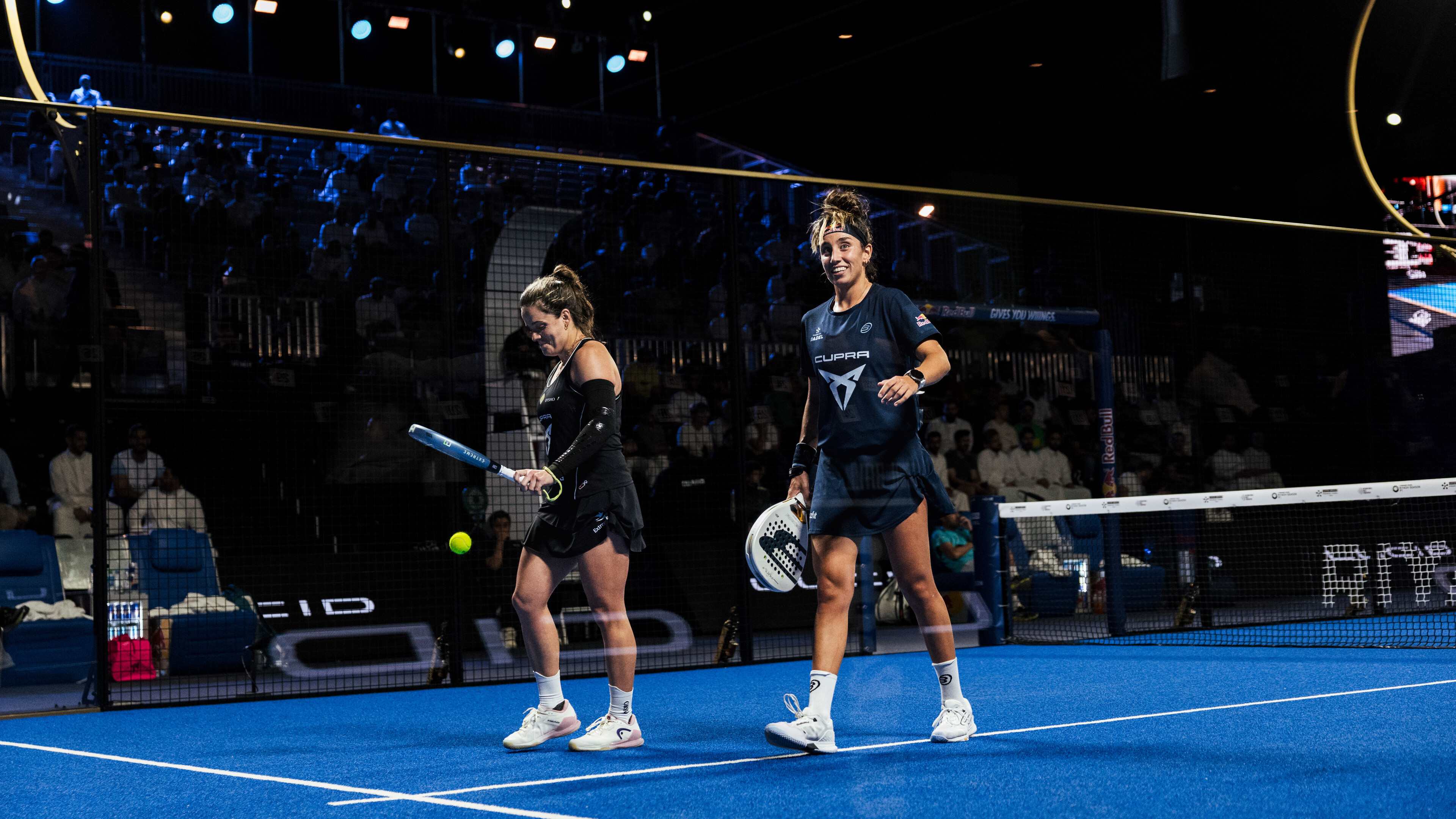
The most revealing thing about the Dubai semifinal was the scoreline's relative simplicity. Josemaría and González did not need a deciding set to beat the opponents who had frustrated them in three consecutive head-to-head encounters. They took the opener 6–4, absorbed a stronger response from Sánchez and Ustero, and won the second 7–5. The margins were narrow, but the outcome no longer depended on whether the No. 2 pair could summon one brilliant spell. It depended on whether they could keep their quality together when the match became uncomfortable.
That distinction goes back to Kuwait. The earlier Major meeting had offered Josemaría and González an opportunity they could not convert, making the pattern more painful than a simple sequence of defeats. A pairing with their offensive ceiling was creating promising situations but failing to protect them. The Dubai win supplies evidence of an adjustment, not a guarantee that the problem has vanished. A single semifinal cannot erase several matches of evidence, yet it can show whether the right habits are beginning to stick under pressure.
Josemaría's work in her diagonal exchanges was central to that change. Her attack was not merely about swinging harder. It combined accurate placement, timely aggression and the judgment to avoid gifting Sánchez and Ustero easy counterattacking opportunities. In elite padel, occupying a good court position is only half the task; deciding whether the ball justifies a change of pace determines whether an advantage survives the next two shots. Her play made that judgment look considerably cleaner.
GOATIFY
GOATIFY Padel
Josemaría and González finally solved a difficult rivalry with sustained attacking quality. Explore GOATIFY's dedicated Padel-filtered collection.


González was the complementary piece. Her ability to turn defensive exchanges into offensive chances was useful, but the bigger gain was reliability. She did not need to manufacture a winner whenever an opening appeared. By keeping her level steadier throughout the contest, she reduced the periods when the opposition could score several points in quick succession and dictate the emotional rhythm of a set. That meant Josemaría's attacking decisions had a more stable platform around them.
Sánchez and Ustero were not passive spectators in the second set. The No. 3 seeds raised the pressure, tightened the exchanges and found ways to unsettle their opponents. This is exactly where the previous meetings had made Josemaría and González look vulnerable. Yet at five games all, the No. 2 seeds found the break that put the match within reach and closed it at 7–5. The key fact is not that they never faced a difficult patch. It is that they came through one without allowing an earlier pattern to repeat itself.
Whether the tactical shift lasts will be tested against more than one opponent. Still, there is an immediate psychological difference between knowing you have the shots to compete with a rival and having a recent win that demonstrates you can finish the job. Dubai turned a frustrating 2026 head-to-head narrative into an actual semifinal result. That gives the No. 2 seeds a stronger basis for belief heading into the final than another narrow defeat ever could.
Triay and Brea lost in the quarters. Their pursuers missed the opening.

The ranking consequences are almost as striking as the match itself, although they need to be described carefully. On Friday, world No. 1 pair Gemma Triay and Delfi Brea were knocked out in the Dubai quarterfinals by Tamara Icardo and Claudia Jensen. That opened a competitive window for Sánchez and Ustero, one of the leading pairs pursuing the season's top ranking. Every round the challengers progressed while Triay and Brea were already out offered a chance to gain ground.
Sánchez and Ustero instead stopped in the semifinals. The result leaves Triay and Brea with a meaningful cushion as the season approaches its conclusion. It does not mean the No. 1 race is mathematically over, and it does not establish a precise point deficit without up-to-date ranking calculations. What it does establish is a lost opportunity. When a leader exits unusually early, a rival's chance to profit is finite. Making the semifinals is impressive in isolation; failing to advance when the leaders are absent can feel more expensive than the same loss in an ordinary week.
There is a strange twist in who preserved that advantage. Josemaría and González were pursuing their own title and trying to reverse a personal rivalry, not playing on Triay and Brea's behalf. Yet by removing Sánchez and Ustero, they limited the most immediate threat to the leaders. A match can matter simultaneously to the competitors on court and to a pair whose tournament ended a day earlier. The logic of tour rankings makes that possible without implying any cooperation between teams.
GOATIFY
GOATIFY Padel
Dubai's semifinals shifted the title race even as the ranking leaders were off court. Browse GOATIFY's Padel fan apparel and accessories.
Josemaría and González also retain a theoretical route into the top-ranking conversation, but it is a narrow one. They would need a near-perfect close to the season and favorable results elsewhere. Winning a semifinal does not suddenly turn them into favorites for year-end No. 1. Treating all possible contenders as equally likely would ignore both the existing ranking gap and the scarcity of remaining opportunities. Their more immediate and controllable aim is much simpler: win another Premier Padel title and sustain the form that made their semifinal so convincing.
The wider 2026 women's circuit has repeatedly shown that seedings describe an expected hierarchy rather than a guaranteed result. Icardo and Jensen provided the latest warning by beating Triay and Brea 6–3, 3–6, 6–1 in the quarters. That result created the opening, but it was the semifinal loss of Sánchez and Ustero that prevented a larger ranking swing. One upset made the door available; a second result decided how much anyone could walk through it.
For supporters trying to understand Sunday's final, the practical distinction is between ranking ambition and tournament momentum. Josemaría and González may be distant outsiders in the season-long race while still being strong contenders to win Dubai. These are not contradictory statements. Padel seasons are built from accumulated points, but trophies are settled by whichever pair plays better on the final day. Dubai's bracket now offers the No. 2 seeds a title opportunity regardless of how the ranking permutations eventually unfold.
Calvo and Fernández are waiting—and Bea knows her old partner
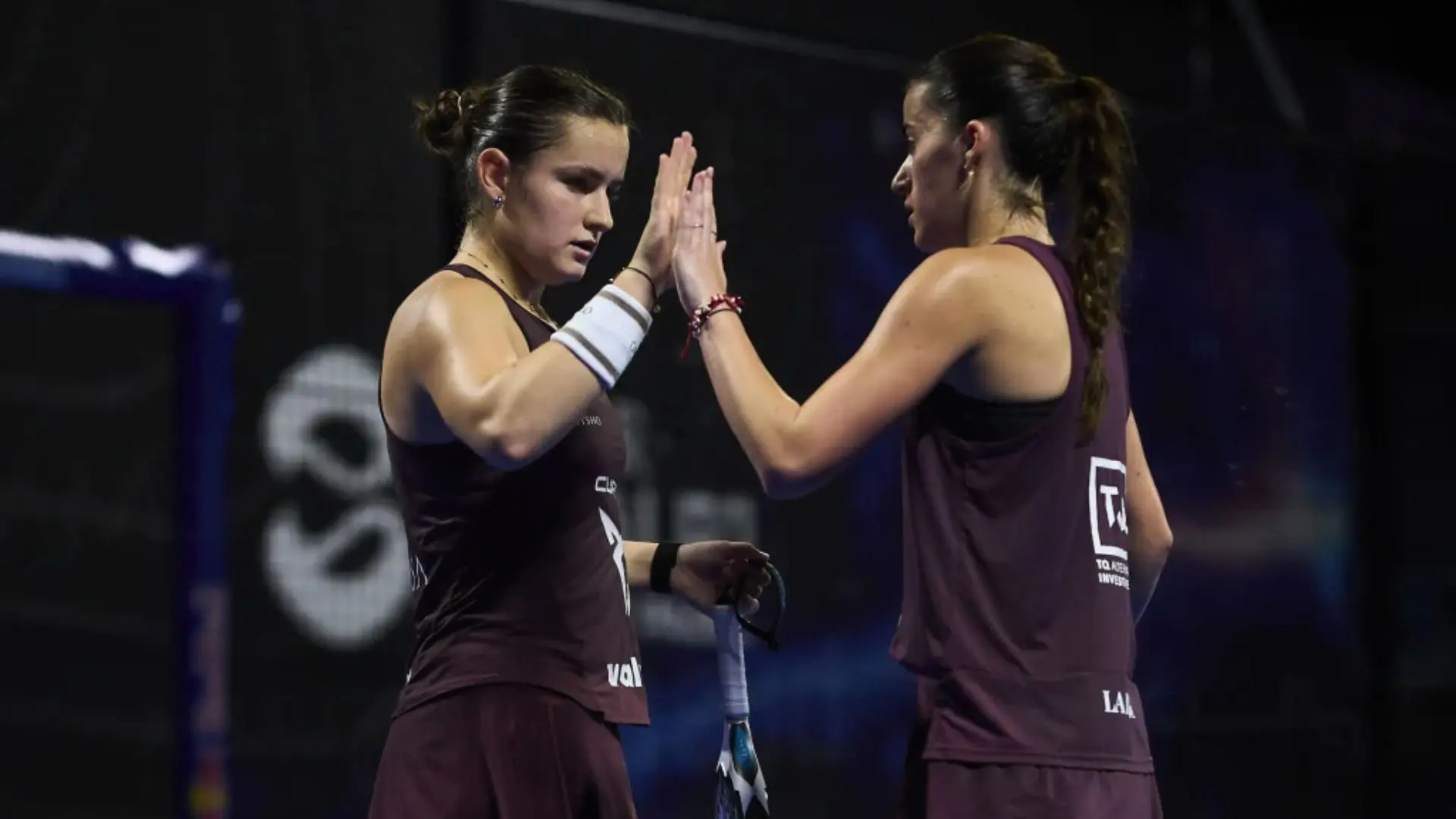
Sunday's opponent will not be the pair many people were watching when the quarterfinal results came in. Martina Calvo and Claudia Fernández, seeded fourth, dismantled the giant-killing run of Icardo and Jensen 6–3, 6–1 in the other semifinal. That score concealed some early resistance. Icardo and Jensen generated opportunities in a competitive opening set, but they failed to turn several break-point chances into a lead. Calvo and Fernández struck at 4–3 and then closed the set, turning an unsettled contest in their favor.
The second set was much more one-sided. Calvo and Fernández defended well, increased the intensity of exchanges and punished a drop in precision from opponents who had eliminated Triay and Brea less than 24 hours earlier. They established a double-break advantage and finished 6–1. That sequence is significant for a final preview: the No. 4 seeds did not merely benefit from the top seeds' elimination. They beat the pair responsible for it with enough control to avoid a lengthy third-set battle.
The partnership's trajectory also argues against treating them as surprise finalists. Since joining forces in July 2026, Calvo and Fernández have reached five finals in nine tournaments, according to their Dubai semifinal report. Their results include a Germany P2 title and appearances deep into major draws. The pairing has learned quickly how to defend as a unit and how to build points patiently before attacking. Against a team that wants Josemaría and González to play at high tempo, that steadiness may be the most important counterweight.
GOATIFY
GOATIFY Padel
Calvo/Fernández and Josemaría/González will contest Sunday's Dubai final. Discover GOATIFY's Padel collection before the title match.
There is a personal subplot that goes beyond the seeding numbers. Fernández won the Dubai P1 title in 2025 alongside Bea González, who now stands on the other side of the net. That makes this final a reunion between former title-winning partners, but with different tactical partnerships and responsibilities. Fernández is defending a championship she once shared with González; González is trying to win again in Dubai while partnered with Josemaría. The shared history adds intrigue without telling us which pairing has the advantage today.
From a tactical perspective, the final will test both semifinal lessons. Josemaría and González have just shown they can sustain pressure without the prolonged lapse that had undermined them against Sánchez and Ustero. Calvo and Fernández have just demonstrated how effectively they can survive early danger and convert a narrow opportunity into a controlled finish. The opening set may turn on which pair can establish net position without taking unnecessary risks. If rallies stretch, managing the transition from defense to attack could become more important than hitting the most spectacular shot of the afternoon.
Those are questions to watch, not predictions disguised as established facts. Calvo and Fernández have the confidence of a decisive 6–3, 6–1 semifinal. Josemaría and González have the emotional release of finally beating a troublesome rival 6–4, 7–5. Sunday, November 15, will determine whether Dubai marks a genuine return to title-winning form for the No. 2 seeds or another statement result for one of the season's most productive new partnerships. The 2025 champion is guaranteed to appear in the final; the identity of the 2026 champion remains open.
Josemaría and González came to Dubai needing a result that challenged their own recent history. A fourth consecutive defeat to Sánchez and Ustero would have reinforced the idea that their strongest passages were not reliable enough to win this matchup. Instead, two well-managed sets delivered a 6–4, 7–5 victory and another chance to play for a trophy.
The result also protected Triay and Brea from a bigger ranking challenge after their surprise quarterfinal exit, while setting a final with a very different test: Calvo and Fernández have the results, composure and shared understanding to punish careless games. For Bea González, there is the extra symmetry of facing Claudia Fernández, her fellow Dubai champion from 2025. For Paula Josemaría, there is an opportunity to turn precise semifinal decision-making into the defining performance of the week.
Saturday proved that the old head-to-head pattern could be broken. Sunday will show whether the improvement is substantial enough to produce a Dubai P1 title. Until the final has been played, that remains the most interesting question—not the ending of a story, but the next test of it.
GOATIFY
GOATIFY Padel
Shop GOATIFY padel products from the Padel-filtered collection scope.


















