

Nakase Had Five Years to Win — Her Castoffs Did It in 534 Days
GOATIFYNatalie Nakase was hired to build a new WNBA team, not to inherit a ready-made contender. Owner Joe Lacob gave her a five-year championship ambition. Golden State needed just 534 days from its first game to finish the job, beating Atlanta in a seven-game Finals and becoming the fastest major North American expansion franchise in decades to win a title. The speed is astonishing. The way the Valkyries achieved it is the more useful story.
The roster was crowded with players other teams had released, overlooked or treated as temporary solutions. Nakase turned those uncertain careers into a system that defended relentlessly, trusted its bench and survived the harshest possible test of a coach's convictions: a championship series in which changing the starting lineup could have fractured the locker room. Instead, it helped rescue the season. This was not a miracle assembled out of one superstar. It was a deliberately built organization that made second chances feel like a competitive advantage.
Golden State's greatest advantage was believing in players other teams had stopped trusting
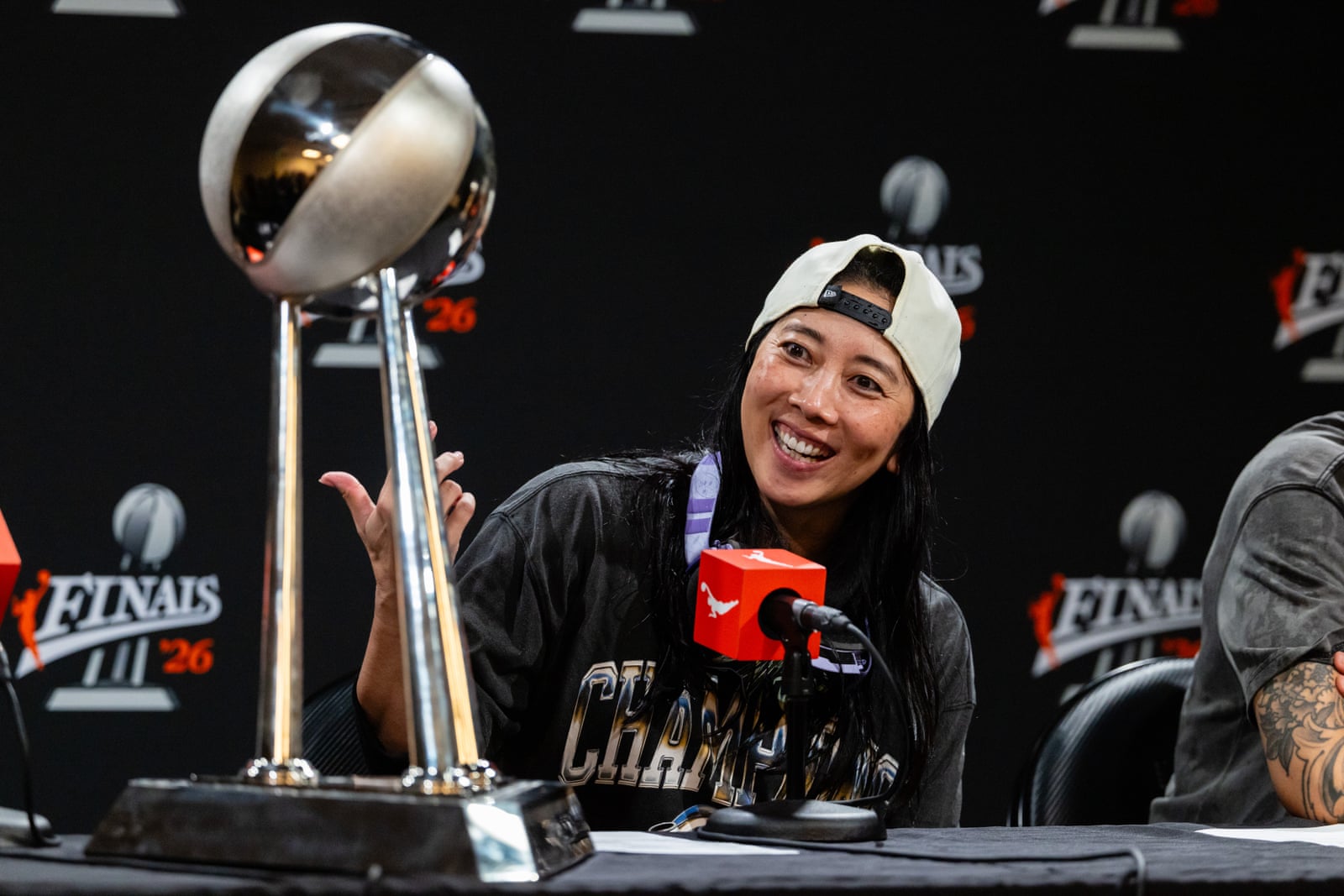
The most striking feature of Golden State's title-winning roster is how little it resembles the usual blueprint for an instant contender. Veronica Burton had been waived by Dallas and was training back home while waiting for another opportunity. Connecticut offered her a way back into the league, but did not protect her in the expansion draft. Golden State saw more than a spare guard. Burton became the organizer of its offense, a point-of-attack defender and proof that an expanded responsibility can reveal skills that limited minutes conceal.
Kaila Charles had been released repeatedly across five seasons. A short-term hardship contract was supposed to be another fragile opening, not a route to a Finals starting role. Nakase's staff gave her a genuine place in a system built around movement, defensive communication and accountability. A player who could easily have become a footnote in another team's transaction log was trusted to handle the most consequential possessions of Golden State's season. That is a remarkable change in status, but it did not happen because the team simply decided to be nice. Charles had to meet the standard once the opportunity arrived.
Kayla Thornton offers another version of the same story. Undrafted and moved between organizations before establishing herself as a reliable veteran, she reached a first All-Star selection in her thirties. Cecilia Zandalasini went from sporadic WNBA starting opportunities to a substantial role across Golden State's first two seasons. Kaitlyn Chen, a third-round selection, found meaningful ways to contribute without being asked to become a headline name. Each example undermines the assumption that a player's previous role tells the full story of her ceiling.
Then there is Tiffany Hayes. Her career had contained years of high-level production, hard matchups and near misses without the ultimate reward. Winning a championship after so many games without one made her contribution more than a sentimental subplot. Veterans such as Hayes brought habits and experience that younger players could learn from, while accepting a system in which reputation did not guarantee every closing minute. Gabby Williams supplied the Finals MVP performance, but even she described the value of arriving at a team where the relationships and standards already existed.
The common thread is not that every discarded player becomes a star if someone believes hard enough. Most do not. Golden State's edge was in finding players whose particular strengths fit a demanding collective identity, then giving them enough responsibility to express those strengths. Scouting, player development and trust reinforced one another. A bench assembled from other teams' uncertainty became an asset opponents had to prepare for, rather than a weakness to exploit.

A UCLA walk-on, a Japan coaching breakthrough and two Aces titles shaped Nakase's approach
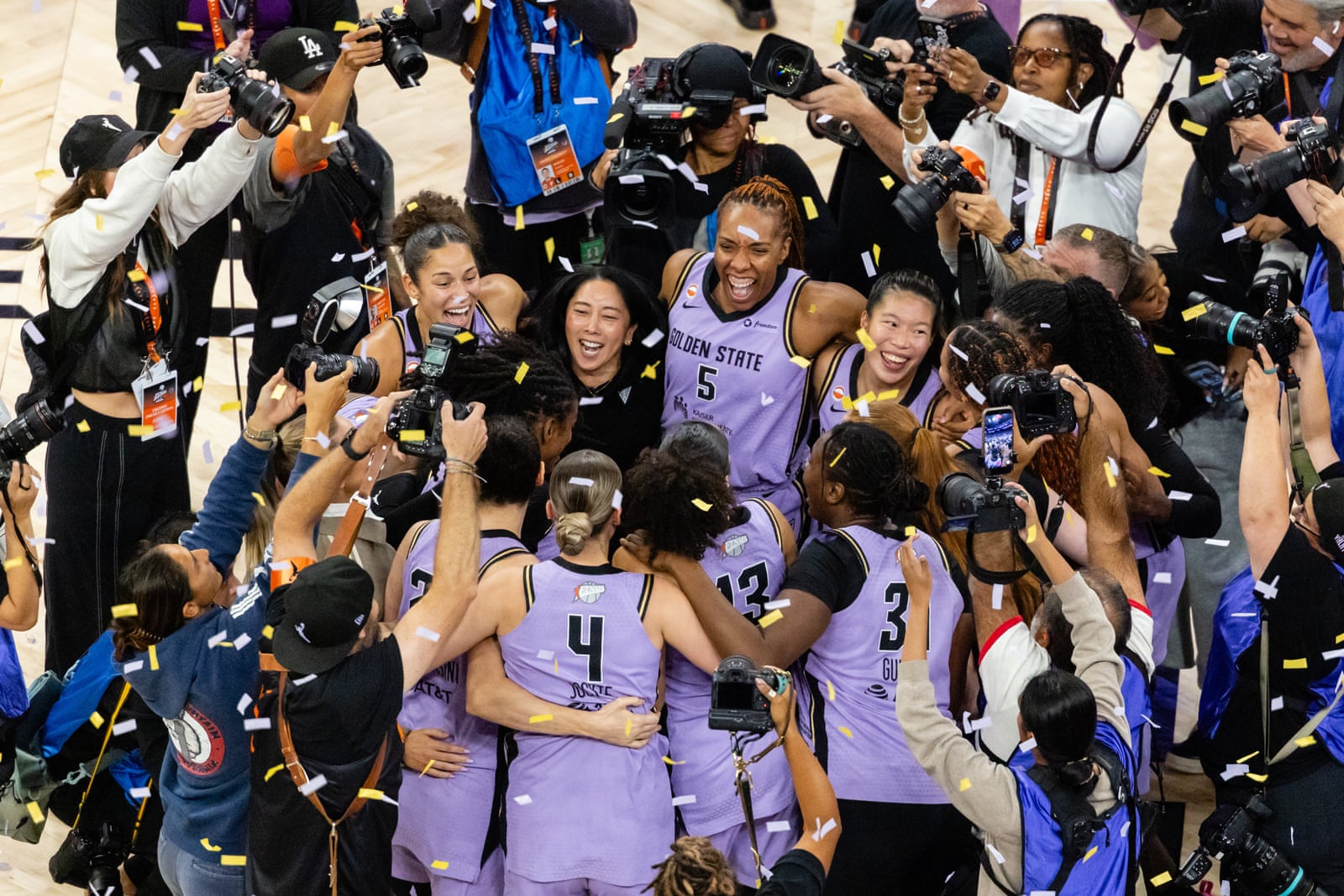
Nakase's willingness to look beyond a résumé is easier to understand when her own résumé is examined in order. She passed up a scholarship elsewhere to walk on at UCLA, where an early knee injury complicated the path she had chosen. She eventually earned a scholarship, became a starter and captained the Bruins. None of that guaranteed a professional playing career. A WNBA opportunity with Phoenix did not become a lasting roster place, and another injury helped bring her time as a player to an end.
Coaching was not a straight line either. She worked in Germany, then made an unlikely opening for herself in Japan by preparing a scouting report and getting involved with the Tokyo Apache. That initiative led to an assistant role, and eventually to leading the Saitama Broncos in Japan's top men's professional league. The significance goes beyond being first through a particular door. She had to persuade people to evaluate her ideas and preparation instead of relying on the conventional career route that she did not possess.
Back in the United States, she entered the Los Angeles Clippers organization through its video department and spent years in development and coaching positions. Film work can be invisible to fans, but it demands the ability to turn thousands of possessions into a few useful decisions. It also teaches a coach to explain those decisions clearly to players who have very different skills, habits and incentives. That background is visible in a Golden State team whose defensive rotations rarely seemed to depend on one player improvising heroics.
Working alongside Becky Hammon in Las Vegas added the missing championship reference point. Nakase was part of a staff that helped the Aces win consecutive titles, observing what elite talent, disciplined execution and an ambitious organization look like when everything is aligned. Golden State did not copy the Aces' star-driven construction. It borrowed the expectation that winning requires detail, a common language and players who understand exactly why a possession matters.
There is a less glamorous part of the story, too. Nakase's intensity has costs. She became lightheaded during the first-round playoff decider against Dallas and later acknowledged the need to manage rest and recovery more carefully. The incident should not be romanticized as proof that exhaustion is a virtue. It illustrates a leader learning to apply the same care to herself that she demands in preparation from everyone else. A sustainable winning culture cannot depend on a coach running beyond her limits indefinitely.
When Nakase talks about underrated people, it is not an abstract motivational slogan. She has been the undersized player, the rejected hopeful, the outsider who had to create her own opening and the assistant waiting years for a lead job. That history gave her credibility with a locker room full of players who knew what it felt like to be told, directly or indirectly, that their chance had passed.

The Finals proved her culture could survive the hardest lineup decisions
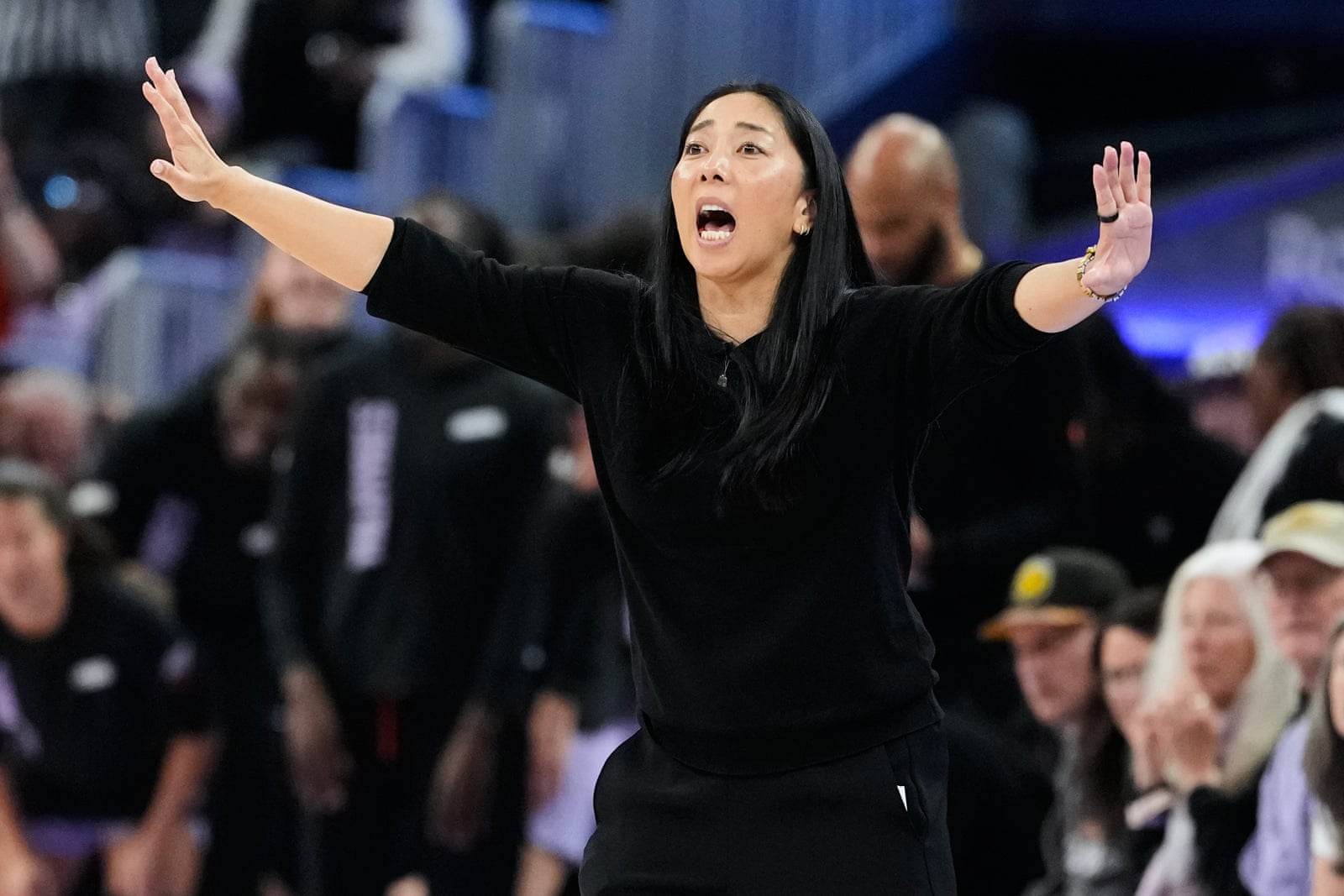
Every coach can promise that the team comes first in training camp. The real test arrives when a player who has earned a starting role is asked to give it up in the middle of the Finals. Atlanta took a 2-1 series lead after a lopsided Game 3, exposing Golden State's offensive limitations and forcing Nakase to make a decision that carried both tactical and emotional risk. She changed the starting group, moving Charles and Hayes in while shifting Thornton and Zandalasini to bench roles.
That reshuffle could have sent an ugly message: the players who helped build the season were being blamed for the biggest loss. Instead, Golden State treated it as a different assignment within the same collective plan. The team won the next two games, holding Atlanta to 62 and then 55 points. The numbers do not prove that a single lineup switch caused the turnaround. They do show how the Valkyries responded when a coach challenged the group to defend with greater discipline and accept a new distribution of minutes.
That distinction matters because Golden State's best weapon was not a single offensive matchup. It was the ability to make an opponent work through several defensive layers, with guards applying pressure and the frontcourt protecting space without abandoning rebounding. A team that relies on this sort of synchronized defense cannot afford resentment between starters and reserves. One missed rotation is enough to undermine several possessions of good work. Nakase's insistence that everyone could matter on any night gave her more tactical combinations than a rigid hierarchy would have allowed.
At times she even trusted a rookie to finish an elimination game while Burton, the established starting point guard, watched. There are sound basketball reasons for such choices: size, defensive assignments, fresh legs or a particular player's confidence in a moment. But the move only works repeatedly if players believe the standard is consistent. A coach cannot demand acceptance of a reduced role from one player while protecting another from the same scrutiny. Nakase's willingness to make uncomfortable choices was part of why the team could respond without losing its identity.
Game 7 still required an exceptional individual performance. Williams scored only two points in the first half, then produced 28 after the break, including a late three that helped Golden State take control. The point of the culture story is not to diminish that greatness. It is to explain the environment in which it could decide the championship. Williams had the freedom to attack, teammates maintained the defensive framework, and the group kept believing after Atlanta led at halftime. Nakase had prepared them to survive the minutes before their best player caught fire.
The title therefore validates something more demanding than an upbeat locker room. Trust allowed a coach to change lineups, ask established contributors to sacrifice and rely on players whose previous teams had seen limited upside. When pressure rose, Golden State did not have to invent its principles. It had already practiced them for two seasons.
Lacob's five-year challenge came with real investment — and a business case for winning
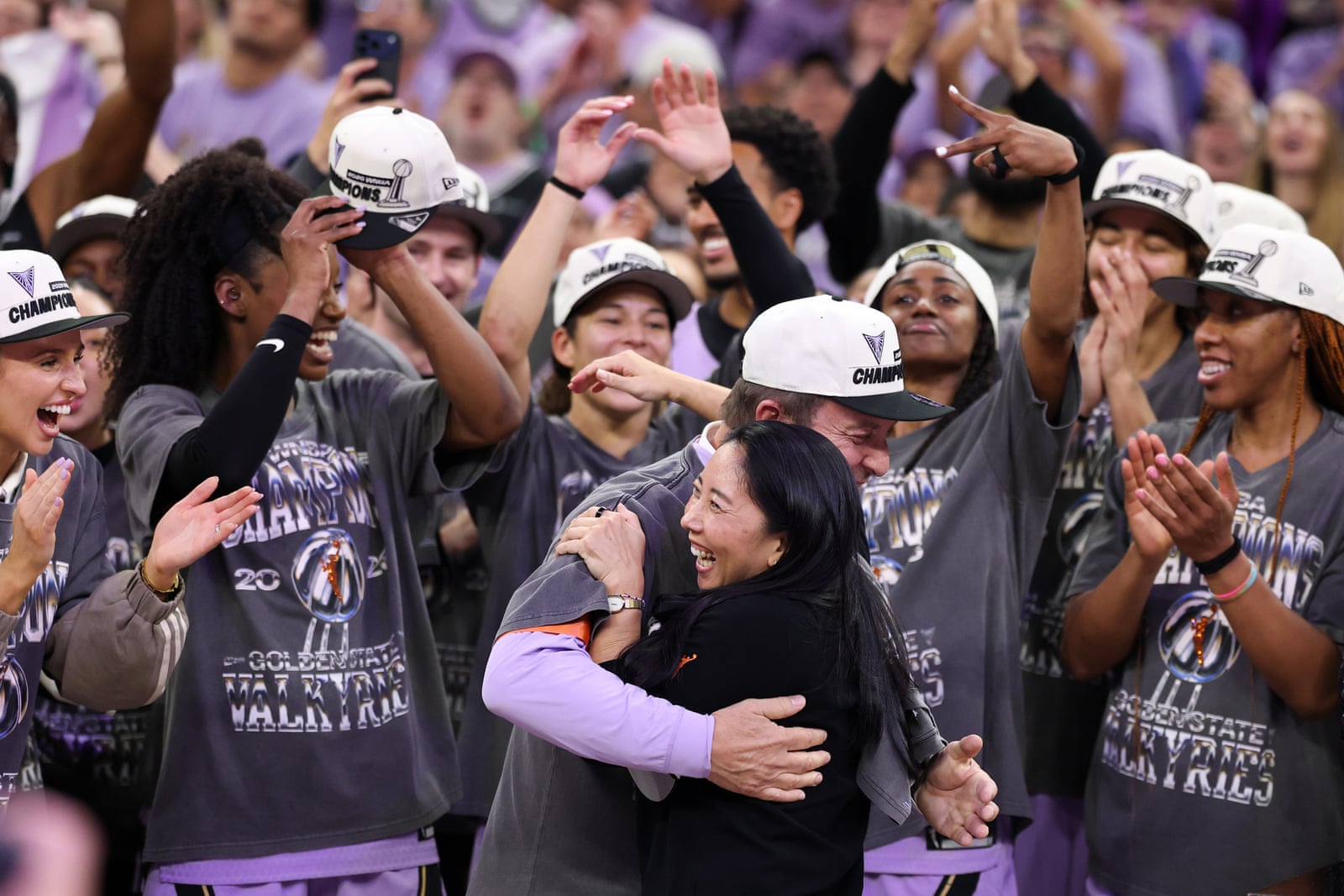
The owner who told Nakase to deliver a championship within five years also had to make that demand credible. Joe Lacob did not simply set an aggressive deadline and wait for a charismatic coach to perform magic. The organization invested in the facilities, staffing and operational support required to build a contender from nothing. General manager Ohemaa Nyanin assembled a roster that fit the coach's philosophy, while team president Jess Smith helped build a franchise with a strong public identity and commercial foundation.
Those roles are easy to overlook when a Finals MVP is holding the trophy. Yet an expansion team has to solve dozens of problems before it can even practice a defensive scheme: recruiting staff, establishing player-care systems, negotiating facilities, scouting unprotected talent and persuading athletes that a new organization is worth their commitment. If those systems are weak, the best coach in the league spends her energy patching holes instead of developing players. Golden State's speed suggests the work behind the scenes was not merely adequate; it gave the basketball operation room to move unusually quickly.
The broader WNBA provides useful comparisons. Las Vegas backed Hammon with a major coaching investment and dedicated facilities while building a championship core. New York's rise likewise followed ownership decisions that treated the Liberty as a major professional franchise rather than a peripheral asset. The Valkyries have arrived at the same principle through a different roster strategy. Their success does not establish that money automatically buys a title, but it does challenge the idea that player development and financial ambition are competing priorities.
The commercial returns are already striking. Golden State reportedly passed $100 million in annual revenue, a landmark for women's professional sports, while its 18,064-seat home arena became a fixture of sellout crowds. The final championship game was another reminder that demand is not theoretical: tickets commanded extraordinary resale prices, and the franchise had a loyal audience before its roster had a single established star. A championship can amplify that momentum, but the foundation was built by treating the fan experience and team investment as central products from day one.
There is an important caution in the headline numbers. Revenue is not profit, and one season's extraordinary ticket demand does not guarantee that every new WNBA franchise can reproduce the same growth curve. Golden State benefits from the Bay Area market, a recognizable ownership group and an NBA arena. Its model is therefore not a copy-and-paste formula for every city. What other organizations can learn is the alignment: ownership ambition, front-office judgment, coaching philosophy and fan investment all pointed toward the same outcome.
Lacob's five-year challenge was beaten in two seasons because the team built for long-term seriousness immediately. Nakase's message of opportunity would have been much harder to sustain without the resources to support it. Equally, expensive infrastructure would have meant less without the coach and players willing to turn it into habits on the court. Golden State's achievement belongs to that combination, not to a single inspirational speech or a single checkbook.

Golden State's championship will be remembered for Williams' explosive second half, the first Game 7 in WNBA Finals history and a new franchise lifting the trophy almost impossibly soon. The lasting lesson may be how deliberately the Valkyries connected people who had been overlooked with a system that gave them a meaningful chance. Burton, Charles, Thornton, Hayes and their teammates were not interchangeable spare parts. They were players whose strengths became more valuable when the organization understood how to use them.
Nakase had five years to prove the idea could win at the highest level. It took 534 days from the franchise's first game. The next challenge is harder in a different way: sustaining that trust once everyone in the league knows what Golden State has built. But the title has already answered the most important question. A second chance can be a championship foundation when belief is matched by preparation, accountability and investment.
Shop GOATIFY WNBA products from the WNBA-filtered basketball collection.



















