NBA Rumor Roundup: Curry's Extension Choices, Sabonis Trade Market and More
GOATIFYSeptember is usually the quietest stretch of the NBA calendar, but the league is not completely standing still. Several larger offseason moves are already done or nearly done, including Klay Thompson, Peyton Watson and James Harden landing in new situations, while a handful of contract, trade and roster decisions are still unresolved.
The biggest names in the latest round of news are Stephen Curry and Domantas Sabonis. Curry has unusually broad control over how and when he extends his Warriors career. Sabonis remains available in trade discussions, but his salary makes a deal far more complicated than his production would suggest. Around them, Cleveland is using a draft-rights signing to manage the apron, Detroit has guaranteed a useful playoff contributor, Miami still needs another guard, Jaylen Brown has closed his Boston chapter with a major public farewell, and Chicago is already under pressure to develop Noa Essengue correctly.
Cover image credit: Keith Allison / Wikimedia Commons, CC BY-SA 2.0. Backup cover: Augustas Didžgalvis / Wikimedia Commons, CC BY-SA 4.0.
Stephen Curry Has Options — and Almost No Pressure
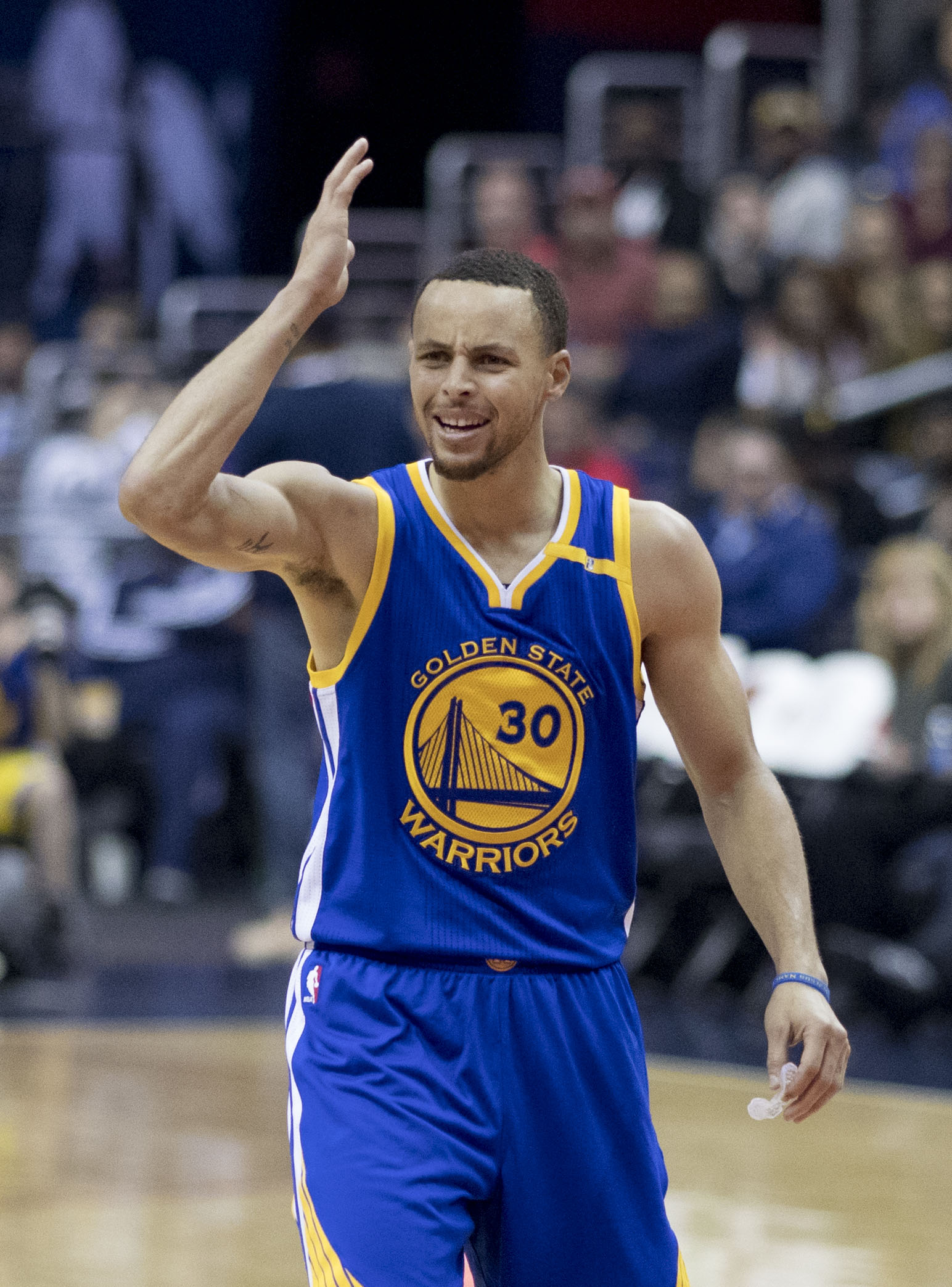
Stephen Curry has made his long-term intention clear: he wants to remain with Golden State and finish his career in the Bay Area. The uncertainty is not really about whether the Warriors want him back or whether Curry wants to leave. It is about which contract path makes the most sense and when he chooses to commit to it.
Curry is entering the final season of his current deal at $62.6 million. Because of the NBA's over-38 rule, an extension signed now cannot stretch beyond two additional seasons. The biggest immediate option is estimated at roughly two years and $136.7 million, which would carry him through his age-41 season. He can also choose a shorter extension if he prefers more flexibility.
The other path is to wait. If Curry reaches next offseason without signing an extension, he could become eligible for a three-year max contract estimated around $212.9 million. That would mean taking on the normal risk of playing another season before locking in the new money, but Curry is in a rare position where the franchise is effectively allowing him to choose from the available options rather than forcing a negotiation.
There is little urgency on either side right now. The expectation is that Curry may settle on his preferred route closer to training camp. For Golden State, the larger strategic question is how long the franchise wants the final Curry era to run and how much flexibility it can preserve around him. For Curry, the decision is mostly about term, timing and how he wants the final stage of his career structured.

Domantas Sabonis Is Still Available — but the Contract Is the Problem

Domantas Sabonis remains available on the trade market, and Sacramento's willingness to move him is no longer a new development. The Kings have explored the idea for more than a year. The difficulty is not finding basketball reasons another team might want him. The difficulty is building a modern roster around his contract and defensive limitations.
Sabonis is still a highly productive offensive center. He rebounds at an elite level, passes extremely well for his position and can function as an offensive hub from the elbows or the high post. A team that wants screening, playmaking and efficient interior offense can get all of that from him. The trade-off is that he is not the kind of back-line rim protector many teams now want anchoring their defense.
The bigger obstacle is money. Sabonis is owed $45.4 million this season and $48.6 million the following year, both fully guaranteed. Under the current apron system, committing nearly $50 million to a center who is not viewed as a true top-tier superstar can squeeze a roster quickly. That is especially relevant when younger elite centers around the league are themselves running into difficult extension negotiations below that level.
A deadline move is possible if an interested team develops a specific need, but the cleaner market may arrive next offseason when Sabonis is entering the final year of his contract. An expiring deal is easier to move and easier for an acquiring team to evaluate. Until then, Sacramento can still use him productively alongside rookie guard Darius Acuff Jr. Sabonis' screening, passing and decision-making give the young point guard an experienced offensive partner while the Kings wait for a better trade opportunity.
Cleveland's Khalifa Diop Signing Is About Basketball and the Apron

Cleveland officially added 7-foot-1 center Khalifa Diop, a player the Cavaliers selected with the 39th pick in the 2022 draft and left overseas to develop. Diop has been playing for Baskonia, and his arrival gives Cleveland another developmental big behind a roster built to contend immediately.
The signing also matters because of an unusual cap advantage. As a draft-rights rookie, Diop can count for only about $1.3 million against Cleveland's cap instead of the roughly $2.4 million standard charge for a comparable roster spot. That difference is small in ordinary NBA accounting but meaningful for a team trying to stay sufficiently below the first-apron hard cap.
Cleveland needs that room as it works around the three-year, $97 million James Harden agreement. Diop is therefore both a basketball addition and a useful piece of cap engineering. Expectations for an immediate major role should remain modest: he averaged around four points and 4.2 rebounds in EuroLeague play last season. The Cavs are not bringing him over because he was dominating Europe; they are adding a young center whose contract structure helps the roster fit together financially.
Detroit Locks In Paul Reed at a Bargain Number

Detroit made one of the simpler decisions in this roundup by fully guaranteeing Paul Reed's $5.6 million salary for the season. Reed earned trust as a reserve big and gave the Pistons useful minutes when the games became more important, including during their playoff run.
At that price, the Pistons are not paying for a star. They are paying for dependable frontcourt depth, energy, rebounding and someone who has already shown he can survive postseason minutes. For a team trying to build continuity around a young core, that is exactly the kind of contract that becomes valuable: useful enough to play, inexpensive enough not to distort the cap sheet and movable enough that it does not lock the franchise into a long-term mistake.
The decision also stands in contrast to Detroit's much larger financial questions elsewhere in the frontcourt. The Pistons can afford to be patient on bigger extensions when they are getting functional depth at a number like Reed's.
Miami Still Needs Another Guard

Miami is expected to use its final standard roster spot on another guard. The logic is straightforward: the Heat need more backcourt depth, and the 15th spot gives them one more opportunity to add ball-handling or perimeter insurance before the season begins.
This is not necessarily a move that will dominate the transaction wire. The final roster spot rarely produces a headline name in September. But Miami's rotation has enough questions that another guard could become important quickly if injuries hit or if the current combinations do not provide enough creation.
The Heat have historically been willing to use the margins of the roster aggressively, so the identity of the signing matters less than the role. They need someone who can absorb regular-season minutes, keep the offense organized and give the coaching staff another option when the main guards are unavailable or overextended.
Jaylen Brown's Boston Goodbye Was Bigger Than a Normal Farewell

Jaylen Brown's departure from Boston received a send-off that looked more like a civic event than a routine former-player appearance. Fans gathered at Boston Common, Mayor Michelle Wu presented him with a key to the city, and the celebration included performances from Lil Baby and A$AP Ferg.
Brown used the moment to thank the city and the community that supported him throughout his Celtics career. His message centered on the people who helped him through the difficult stretches as well as the success, making the event feel like a closing chapter rather than a simple goodbye.
That scale makes sense given what Brown represented in Boston. He arrived as a young lottery pick, became part of a long-term championship core and grew into one of the franchise's defining players before moving on. The farewell does not change any roster math, but it shows how much his identity became tied to the city during his time there.

Chicago's Noa Essengue Development Already Comes With Pressure

Chicago's latest development story carries more organizational baggage than a normal second-year-player update. New Bulls coach Tiago Splitter has been direct about what 19-year-old Noa Essengue needs to improve: he wants the young forward to play with more force and become more physical in the things he does on the court.
For Essengue, that is a reasonable developmental challenge. He is still extremely young, and projecting teenagers requires patience. The pressure comes from the history of Chicago's talent evaluation under former basketball operations leadership. Every new prospect is now judged against the draft decisions that did not work.
The most painful example remains the 2020 draft. Chicago used the No. 4 pick on Patrick Williams while multiple voices in the room reportedly preferred Tyrese Haliburton. The decision looks much worse in hindsight because Haliburton became a high-level NBA lead guard while Williams never developed into the player the Bulls envisioned at that draft position.
That history now follows Essengue. Chicago focused heavily on him while some evaluators preferred Joan Beringer, who has already flashed intriguing upside in Minnesota and is expected to receive a larger role. None of that means Essengue is a failed pick. It means the Bulls need his development plan to work, because every positive Beringer stretch will invite another comparison.
The immediate task is simpler than the organizational debate: help Essengue become stronger, more assertive and more physical without rushing a 19-year-old prospect. If he grows into the tools that made him attractive in the first place, the old draft arguments will matter much less.

What These Moves Say About the NBA Entering Training Camp
This is what early September looks like in the NBA: fewer blockbuster transactions, but plenty of decisions that can still shape the season. Curry is choosing how to structure the ending of an iconic one-team career. Sacramento is waiting for the economics of a Sabonis trade to become easier. Cleveland is counting every dollar under the apron while trying to maximize a contender. Detroit is locking in inexpensive depth. Miami is still searching the edge of the roster.
Boston and Chicago are dealing with different kinds of transitions. Brown's farewell closes one of the most important Celtics chapters of the last decade, while the Bulls are trying to make sure their newest developmental bet does not become another entry in a list of draft regrets.
The league will get louder as training camp approaches. Extensions will be decided, fringe roster spots will fill and trade conversations that feel dormant now can become urgent once teams see their actual rotations. For the moment, Curry and Sabonis remain the biggest names to watch, but the quieter moves around them show that front offices are still working even when the transaction calendar slows down.