

Giannis Jumped Eight MVP Spots. Luka and Wemby Still Lead.
GOATIFYOne week can change the conversation without settling the argument. Giannis Antetokounmpo is the clearest example in the NBA's November 20, 2026 MVP Ladder: the Miami Heat forward has climbed from eleventh to third while his new team has found six consecutive wins. Luka Dončić remains first for the Los Angeles Lakers; Victor Wembanyama is still second for the San Antonio Spurs. All three cases are compelling, but for very different reasons.
The extraordinary part is not simply that Giannis moved eight places. Miami opened the season badly and has already moved into a far more convincing rhythm. A star who was once judged primarily by what he could carry on his own is now being judged by how well his dominance can fit around a second All-Star big man and a wider collection of shooters and creators. That is the kind of change a weekly award ranking is designed to notice.
There is an important distinction: the Kia MVP Ladder is an editorial assessment of the race, not an official ballot, a betting price or a prediction of the eventual winner. This edition tells us where the narrative and current performances stand on November 20. It also raises the more interesting question: which of the front-runners has an argument that can survive the next four months?
Miami's winning streak turned Giannis from contender to top-three threat
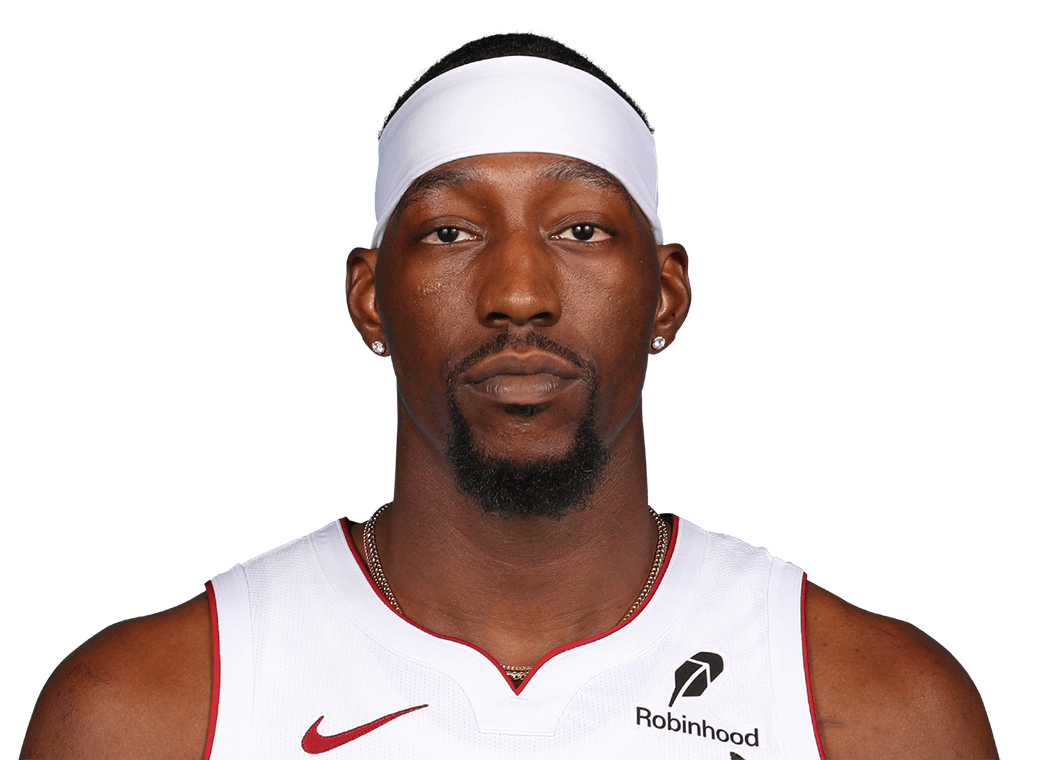
Giannis is putting up 28.2 points, 12.6 rebounds and 5.5 assists per game, according to the November 20 Ladder. Those are enormous numbers in any setting. They are even more striking because he is doing it after an offseason shift from Milwaukee to Miami, with all the adjustments that a new playbook, a new frontcourt partner and a new division of responsibilities require. The eight-place jump from No. 11 to No. 3 is a verdict on the whole package: individual production, momentum and the Heat's much-improved results.
Miami has won six straight. That streak matters because the early part of the season was not a seamless transition. A team can acquire a dominant scorer without immediately becoming a coherent offense; the fit has to be built in live possessions. The Heat now appear more comfortable choosing when to play through Antetokounmpo, when to let Bam Adebayo operate, and when to get the ball out to guards who can turn a collapsing defense into open three-point looks. None of those options removes Giannis as the center of gravity. They make his gravity more valuable.
Defenders have always known the essential problem: once Antetokounmpo gets downhill, the paint can become an emergency. Send a second defender and the ball may find a shooter. Stay home on everyone else and the basket is suddenly exposed. The difference in Miami is what happens immediately after the help arrives. If the Heat can consistently move from the initial drive to a second or third action, opponents cannot treat his touches as isolated tests of strength. The threat persists after the first pass.
Adebayo is particularly important. He is not merely another finisher standing beside a superstar. His screening, short-roll reads, defensive versatility and comfort operating away from the rim give Miami several ways to connect possessions. There will be lineups where spacing is less generous and games where the half-court attack stalls, because pairing two interior-oriented stars is never completely effortless. Yet the recent results make the complementary possibilities much easier to see. Winning a possession with a Giannis drive is one thing. Winning the following possession because the opponent overreacts to that drive is how an offense becomes difficult to scheme against.
The latest games provide substance behind the new position. In a victory over Detroit, Giannis supplied 34 points, 14 rebounds and eight assists. Against his former Bucks, he logged 27 points, 14 rebounds and nine assists in a 137–130 Miami win. The Milwaukee reunion was a compelling standalone story, but the larger MVP significance is broader: it was another game in which he pressured a defense without insisting that every point belonged to him. Miami had enough other sources of offense to make the total more important than the individual spotlight.
GOATIFY
GOATIFY Basketball
The Heat found their rhythm. Explore original GOATIFY basketball designs while the MVP conversation heats up.

LeBron James – LeGOAT Trophy Crewneck Gift Sweatshirt
A basketball fan design for everyday wear.
Shop Now ↗


Giannis Antetokounmpo G.O.A.T. - Basketball Sticker
Add basketball personality to your favourite gear.
Shop Now ↗
LeBron James G.O.A.T. - Greatest of All Hoodie
A basketball fan design for everyday wear.
Shop Now ↗
Wemby G.O.A.T. - Victor Wembanyama Basketball Mug
Add basketball personality to your coffee break.
Shop Now ↗There is a counterargument. Early-season rankings can move dramatically because the samples are still small, and one six-game streak does not guarantee a six-month identity. Opponents will test how the Heat function late in tight games, how their rotations handle injuries and how often the spacing around the two stars survives against playoff-style scouting. Giannis also has to stay available. For now, though, the combination of production and team turnaround makes his rise logical rather than cosmetic. The Ladder has rewarded evidence, not merely reputation.
Dončić is still No. 1 because nobody has solved his scoring and passing

If Antetokounmpo has become the most dramatic mover, Dončić remains the most intimidating constant. The Lakers guard leads the November 20 Ladder at 38.1 points, 7.0 rebounds and 7.6 assists per game. That scoring average is not a hot quarter or an isolated 50-point night. At roughly one month into the 2026–27 season, it is a sustained workload of shot creation that few opponents have found an answer for.
His recent 43-point performance against Phoenix is a useful illustration, but the reason he is first is the wider offensive dilemma he creates. A defense can take away the first attempt and still lose. Crowding the ball can surrender a cut, a corner three or a big man's finish. Switching can invite a mismatch. Drop coverage can give him the space to settle into the kind of measured rhythm he prefers. The Lakers do not require a perfect possession every time, because Dončić can produce a credible shot long after the original design breaks down.
That kind of reliability is often more persuasive in an MVP conversation than one spectacular statistical category. His 7.6 assists matter because they show the 38.1 points are not coming at the expense of every other offensive option. His passing forces the same defenders who fear his jumper to make a second choice: stay attached to the scorer or abandon a teammate. And the more the Lakers win, the stronger his case becomes that this kind of usage can translate into team success rather than just an oversized box score.
There is a temptation to frame the contest as Dončić's offensive volume versus Giannis's two-way power. That is not quite enough. Dončić also shapes an opponent's rotations, foul decisions and late-game pace. He can turn a high-pressure fourth quarter into a controlled sequence of possessions where the other team is forced to react on his clock. The Lakers still have to keep their supporting players engaged; an offense that looks effortless when he is hitting difficult jumpers can become far less pleasant when those shots stop falling. Sustaining efficiency and team balance through the winter will tell us more than a single ranking.
He is also the player with the clearest immediate statistical headline. Scoring close to 40 per game captures casual attention instantly. Giannis could remain a more powerful defender, Wembanyama could transform more shots at the rim, and Jokić could deliver more subtle possession-by-possession value, but none of that automatically overrides what Los Angeles gets from Dončić on offense right now. The most defensible position is that the Lakers guard deserves to lead this particular weekly list while the remainder of the field tries to narrow the gap.
And there is still time for that gap to close. A scoring average this high is difficult to maintain across an entire season, especially as opponents adjust schemes and the schedule gets heavier. Voters will eventually consider availability, team record, late-season form and how much each star elevates teammates. Dončić cannot win an award in November. He can, however, give everyone else a benchmark that demands more than another big week to surpass.
GOATIFY
GOATIFY Basketball
Luka's scoring race is on. Find GOATIFY basketball fan styles inspired by the game's biggest stars.

Luka Doncic G.O.A.T. - Basketball Decal Sticker
Add basketball personality to your favourite gear.
Shop Now ↗


Fat Luka Doncic Los Angeles Lakers NBA Sticker
Add basketball personality to your favourite gear.
Shop Now ↗
Fat Luka Doncic Los Angeles Lakers NBA Mug
Add basketball personality to your coffee break.
Shop Now ↗
Luka Doncic G.O.A.T. - Basketball - Greatest Sweatshirt
A basketball fan design for everyday wear.
Shop Now ↗Wembanyama's second-place case extends far beyond the block column

Victor Wembanyama sits second, exactly where he was a week ago, and perhaps the most interesting part of his candidacy is the gap between what he does and how few minutes it takes him to do it. San Antonio's center is averaging 28.6 points, 11.9 rebounds and 3.9 blocks in roughly 30 minutes a night. Those are franchise-center numbers before anyone adds in the defensive possessions that never become a shot because an opponent sees him waiting.
His per-36-minute rates, listed at 34.1 points, 14.2 rebounds, four assists and 4.6 blocks in the November 20 assessment, help illustrate the scale of the impact. They are not a promise of what he would average if a coach simply kept him on the court for six more minutes. Workloads, opponent adjustments and fatigue do not scale perfectly. But the exercise makes it easier to understand why an apparently modest minutes total can coexist with one of basketball's most influential individual seasons.
Wembanyama changes shots without touching them. An attacker can get a step on his man, look toward the rim and decide the attempt is a poor proposition. That decision can force a pass back to the perimeter, a late-clock reset or a contested runner. Those outcomes rarely look as dramatic as a blocked dunk, but over dozens of possessions they change what an opposing offense is willing to try. His 3.9 blocks per game are the obvious evidence. The opportunities opponents abandon are harder to measure, and they are central to the argument that his value extends beyond points and rebounds.
His offensive role is no side benefit either. A center with his reach can finish over traffic, pull defenders away from the basket and make normal passing windows look different. The challenge for San Antonio is to keep that versatility productive without turning every trip into an invitation for a difficult, off-balance attempt. Great defense can stabilize a team over an entire night. For the Spurs to remain among the top Western contenders, the offensive possessions around Wembanyama must be consistent enough to capitalize on the stops he creates.
The minutes management is a second part of the story. There is sound logic behind rationing a uniquely demanding physical workload early in the campaign. There is also an obvious award implication: availability and accumulated production become more important as the season moves toward its conclusion. A player can be the most spectacular defender in the league while another candidate supplies more total offensive value simply by playing longer. It is too early to know whether the difference will matter, but it is not too early to ask.
For now, the juxtaposition with Dončić is almost perfect. One candidate forces the defense to respond every time he handles the ball. The other makes an opponent rethink what counts as a good shot before the ball reaches the paint. Giannis stands between them as a devastating interior creator with his own major defensive influence. That is why the top three feels more like a genuine contest of philosophies than a temporary ordering of similar stat lines. Wembanyama staying second is not a consolation prize. It is recognition that his two-way case is already serious.
Jokić, Şengün and the crowded chasing pack can still reorder this race

The headline trio should not convince anyone that the race ends at third. Jayson Tatum is fourth in the November 20 Ladder, Nikola Jokić fifth, Alperen Şengün sixth and Tyrese Maxey seventh. Shai Gilgeous-Alexander, Cade Cunningham and Karl-Anthony Towns complete the top ten. That depth matters because early momentum has a way of reshuffling the field. A single high-profile stretch can earn a rapid climb; several ordinary weeks can undo it.
GOATIFY
GOATIFY Basketball
Two-way dominance is an art. Browse GOATIFY hoops fan apparel and accessories.

Fat Jokic Denver Nuggets - Basketball Decal Sticker
Add basketball personality to your favourite gear.
Shop Now ↗
Alperen Sengun G.O.A.T. - Houston Rockets Sweatshirt
A basketball fan design for everyday wear.
Shop Now ↗
Nikola Jokic G.O.A.T. - Basketball Casual Top Tee
A basketball fan design for everyday wear.
Shop Now ↗

Crying LeBron – NBA Basketball Muscle Shirt Tank
A basketball fan design for everyday wear.
Shop Now ↗
Ja Morant Gun Basketball NBA Memphis Grizzlies Mug
Add basketball personality to your coffee break.
Shop Now ↗Jokić offers the clearest warning against judging the award only by points per game. His numbers—24.1 points, 10.7 rebounds and 8.9 assists—would be remarkable for almost any center, even if his 28.1 percent three-point shooting is below his usual standard. Denver's offense can still revolve around his decisions while someone else takes a larger share of the scoring. He has spent years showing how an elite passer can bend a defense from the middle of the court. An imperfect shooting month does not make that skill disappear.
His immediate counterpart in this particular ranking is Şengün, whose role in Houston has expanded alongside Kevin Durant. The Rockets center is averaging 21.6 points, 9.1 rebounds and 6.8 assists, and his recent 43-point, 12-rebound performance against Utah showed how aggressively he can dictate a game when the matchup cooperates. Both big men can receive the ball away from the rim, read cutters and punish defenders who guess wrong. The similarities are fascinating, but they should not obscure the difference in their established résumés. Jokić has already proved this level of play across seasons and the highest-pressure games. Şengün is building the case that he belongs in that same broader conversation.
That comparison also comes with a short-term uncertainty: the November 20 source listed Şengün as questionable because of an abrasion to his left eye before a possible matchup with Denver. A preview is not a result. If he plays, the meeting provides a useful checkpoint; if he does not, it tells us nothing about who would have won an individual duel. This is a simple but important restraint in weekly analysis, especially when a dramatic matchup can take over a news cycle before the teams even tip off.
There is another tier of challenges. Tatum's Boston is built to compete at the top of the Eastern Conference, and his 26.4 points, 6.6 rebounds and 6.8 assists put him in a position to benefit if the Celtics stack victories. Maxey has emerged as Philadelphia's primary option on many nights and has scored at least 20 in 13 of his first 15 games. His 26.5 points and 5.8 assists show that the offensive responsibility is substantial, even if players above him have the more visible superstar narratives.
Gilgeous-Alexander's eighth place is a reminder of how volatile the weekly order can be. The Thunder had lost four of five amid absences and a punishing stretch, even as their lead guard was putting up 31.1 points per game. His production did not suddenly become ordinary. Team health and results were weighing on the surrounding picture. Cunningham's 25.8 points and 7.8 assists helped Detroit remain competitive, while Towns was contributing 21.3 points and a league-leading 13.9 rebounds for New York. Their placement shows that the Ladder is a conversation about context, not a spreadsheet sorted by one number.
So the question is not whether Giannis has passed all these players forever. He has not, and the weekly list never claims that. The question is whether Miami can keep adding wins to his personal brilliance while Luka's scoring and Wembanyama's two-way dominance stay extraordinary. If the Heat's balance holds, Giannis has a route to the top. If it slips, a field this deep will quickly reclaim the room he just gained.
The November 20 race has three distinct leaders and no final answer. Dončić is the toughest individual scoring assignment in basketball right now. Wembanyama can transform both ends while playing controlled minutes. Antetokounmpo has reminded the league that his production can power a rapid team turnaround in a completely new setting. Each argument has evidence; each still has questions to answer.
Miami's six-game streak has made the MVP conversation more interesting, not simpler. Giannis' climb from eleventh to third deserves attention because it reflects meaningful results. But the current order is a snapshot. The standings, injuries, defensive counters and the grind of winter will change the evidence again. That is the reason to follow the race week by week: the best case today does not always become the winning case in April.
GOATIFY
GOATIFY Basketball
Follow the race all season with six original GOATIFY Basketball fan favorites.


Dwyane Wade G.O.A.T. - Basketball Muscle Shirt Tank
A basketball fan design for everyday wear.
Shop Now ↗


Domantas Sabonis GOAT - Basketball Decal Sticker
Add basketball personality to your favourite gear.
Shop Now ↗
Victor Wembanyama Alien Wemby NBA Basketball Mug
Add basketball personality to your coffee break.
Shop Now ↗















