

Maxey Drops 38 Without LeBron or Embiid — Edgecombe Steals the Ending
GOATIFYPhiladelphia went to Charlotte without LeBron James or Joel Embiid, watched the Hornets build a seven-point lead late in the fourth quarter, and still left with another win. Tyrese Maxey supplied 38 points. VJ Edgecombe supplied the shot everyone will remember. The 76ers closed with a 13-0 surge before surviving one final scare, beating the Hornets 109-104 on October 31 and moving to 6-1.
The headline is a comeback, but the more revealing story is how it happened. Philadelphia had played the previous night, its two most recognizable frontcourt stars were resting, Jaylen Brown was returning from a knee issue, and Charlotte had spent much of the evening making shots. This was not the comfortable kind of victory that lets a talented roster cruise on reputation. It demanded a primary scorer, useful secondary creation, and a young guard willing to take a high-pressure shot after a difficult shooting night.
That combination matters because the Sixers' biggest question is not whether their names look impressive on paper. It is whether the pieces can win different kinds of games, including the ugly ones when the preferred lineup is unavailable.
Maxey carried the offense; Edgecombe delivered the moment

The defining sequence began with Philadelphia facing a 101-94 deficit. Charlotte had survived an earlier Sixers push, and the visitors had endured a scoring drought that threatened to turn a manageable game into a frustrating road loss. Then the scoreboard started moving in only one direction. Philadelphia strung together 13 unanswered points, and a Hornets lead disappeared in the final minutes.
Maxey was the reason the Sixers were close enough to make that run matter. His 38 points were a season high, and he has scored at least 26 in every game of this young season. That is an extraordinary level of reliability for a guard whose teammates and responsibilities are changing around him. He is no longer simply the young scorer beside an established franchise centerpiece; he is an offensive foundation who can carry a possession-heavy night when two headline teammates are unavailable.
There is a distinction between putting up a large total and making that total useful in a close game. Maxey did both. His pace forced Charlotte to defend in space, his pull-up threat made defenders respect the perimeter, and his willingness to keep attacking gave Philadelphia a source of offense even when the ball stopped flowing. He also helped finish the late run from the foul line. On a night when the Sixers could have blamed fatigue, they had someone prepared to take the difficult shots and absorb the responsibility.
Edgecombe's contribution was almost the opposite kind of performance. He struggled for most of the night and finished with 10 points on 4-of-13 shooting, along with eight rebounds. A box score read without context would suggest a limited offensive contribution. The final minute told a different story. With the shot clock winding down, Edgecombe hit a three-pointer over Grayson Allen that capped the 13-0 burst and turned a nervous rally into a winning position.
That is not proof that Edgecombe will always make the biggest shot, nor does it erase the misses that preceded it. It is evidence of something more valuable for a young player: a willingness to remain involved after an inefficient evening. Philadelphia did not need him to pretend the first three quarters had been brilliant. It needed him to recognize the opening, trust the shot and deliver when a possession carried disproportionate weight.
For Maxey, the game reinforced a developing identity as the steady source of points. For Edgecombe, it reinforced the possibility that his impact can outlast an ugly shooting line. Together they turned an ordinary October road trip into an early lesson about the kind of closing combination Philadelphia may be able to trust.

Brown, Simons and Wade made the comeback bigger than one scorer

Maxey's 38 points will dominate the highlight packages, but a team cannot erase a late deficit by asking one guard to win every possession. Philadelphia needed other sources of pressure, and three very different contributors helped provide them. Jaylen Brown scored 16 points in his return from a knee issue. Anfernee Simons delivered 19 off the bench, including five three-pointers. Dean Wade, starting in the frontcourt, finished with 10 assists and provided connective play that is easy to overlook when the scoring totals are more dramatic.
Brown's night was not a smooth return. He missed his first five shots and had to work into rhythm. His eventual scoring contribution mattered because it gave Philadelphia a second player capable of creating a shot when the possession became static. He also made the two late free throws that sealed the result after Brandon Miller's three-pointer cut the margin to 107-104. Those points did not come with the spectacle of Edgecombe's triple, but they required the same composure.
Simons supplied another answer: spacing. Five made threes from a reserve force a defense to account for more than the ball handler. A team can load up on Maxey if every other perimeter player is hesitant or cold; it cannot do so comfortably when a bench guard is repeatedly punishing open space. Simons's 19 points also made Philadelphia's second unit something other than a holding pattern until the main scorers returned.
Wade's 10 assists may be the most intriguing detail of the support cast. On a roster full of players who can score, the ability to connect possessions can be as valuable as another isolation option. His passing helped move the ball into favorable spots rather than forcing the same action again and again. He also contributed defensively, including a critical late block as Philadelphia tightened its grip on the game.
None of those contributions makes the Sixers invulnerable. Brown's knee will need sensible management, Simons will not hit five threes every night, and Wade's unusual assist total should not be mistaken for a permanent statistical baseline. The significance is structural. Philadelphia found offense through individual creation, catch-and-shoot spacing and passing from a less obvious position. That is a more resilient menu than simply hoping its biggest names are healthy and spectacular every evening.
The best teams often win games that look uncomfortable because they have more than one way to solve a problem. Philadelphia's support cast did not remove the need for Maxey's brilliance. It made that brilliance sufficient.

Charlotte shot well enough to win — and still lost control
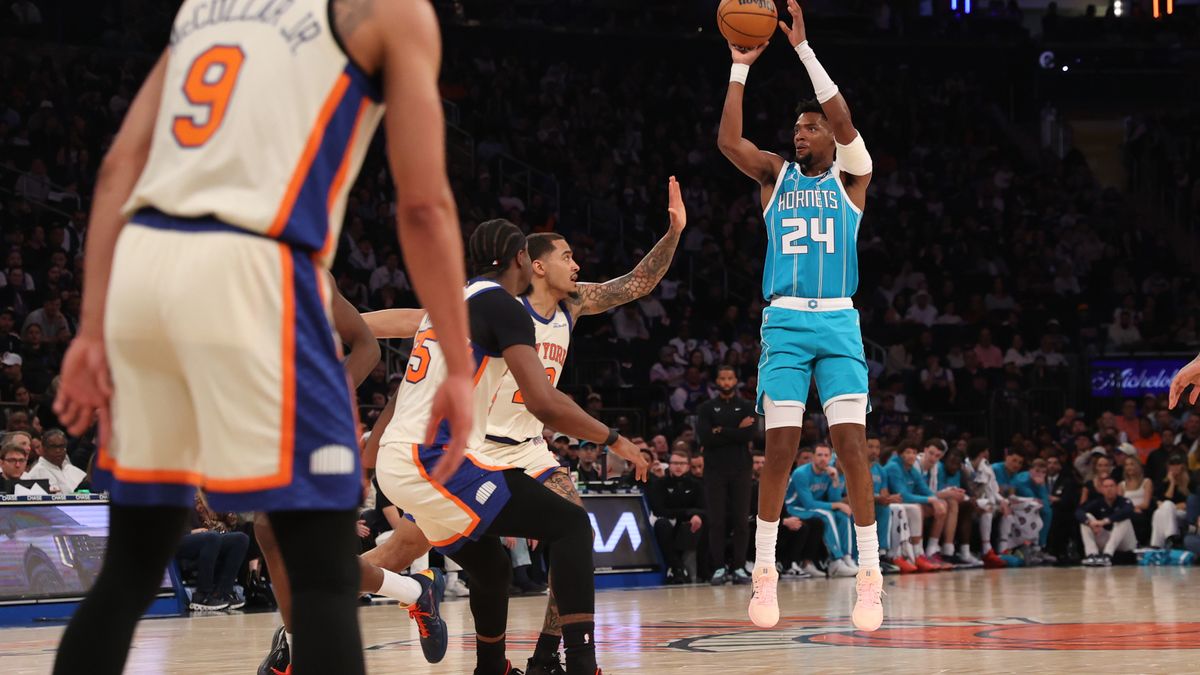
Charlotte has reasons to be furious with this result. The Hornets shot 50 percent from the field, led by 13 in the first half, carried an 83-77 advantage into the fourth quarter and were still up seven late. They received a season-high 27 points from Grayson Allen and 24 from Brandon Miller. For long stretches, that looked like enough to punish a Philadelphia team playing the second night of a back-to-back without James and Embiid.
The opening quarter was especially encouraging for Charlotte. The Hornets scored 37 points, made shots at a blistering rate and forced Philadelphia to spend the next period undoing the damage. The Sixers responded with a 30-17 second quarter to lead 57-54 at halftime, but Charlotte was not finished. A third-quarter surge restored control, and the hosts entered the final period with a six-point cushion. This was not a team that merely stumbled into a late lead. It repeatedly put Philadelphia under pressure.
Allen's shooting was central to that success. He made five threes in the first half and repeatedly stretched the defense, including a late make that pushed Charlotte ahead 101-94. Miller was the more complete headline threat, providing 24 points and a final three that briefly reopened the door. Yet Charlotte's offense also exposed a serious imbalance: apart from Miller, the Hornets' other starters combined to miss all 13 of their three-point attempts. That is a difficult distribution to survive when the opponent starts taking away the easiest looks.
There is a larger issue than the final shooting percentage. A good percentage over 48 minutes does not guarantee a good possession when a game becomes tense. Charlotte's late offense lost its rhythm as Philadelphia generated stops, rebounds and turnovers. The Hornets did not need another brilliant quarter; they needed a handful of organized possessions to protect a seven-point advantage. Instead, they went scoreless through the decisive 13-point Philadelphia run.
The danger for Charlotte is interpreting this as pure bad luck. Some of it was the inevitable variance of late-game shooting. Some was a young team's difficulty keeping its structure against defensive pressure. The two are not the same, and the second requires more attention. Miller's development and Allen's perimeter threat provide real scoring talent, but a team that needs its best shooters to keep making contested shots will remain vulnerable when those attempts stop falling.
Charlotte had already endured a heavy defeat in Washington the previous night, and this became a third loss in four nights. The schedule explains some tired legs, not the entire collapse. The useful question now is how the Hornets create a reliable late-game possession when an opponent takes away the first option. Until that answer improves, nights of efficient shooting can still end in an uncomfortable silence.
No LeBron or Embiid: Philadelphia passed a test its superteam must keep passing
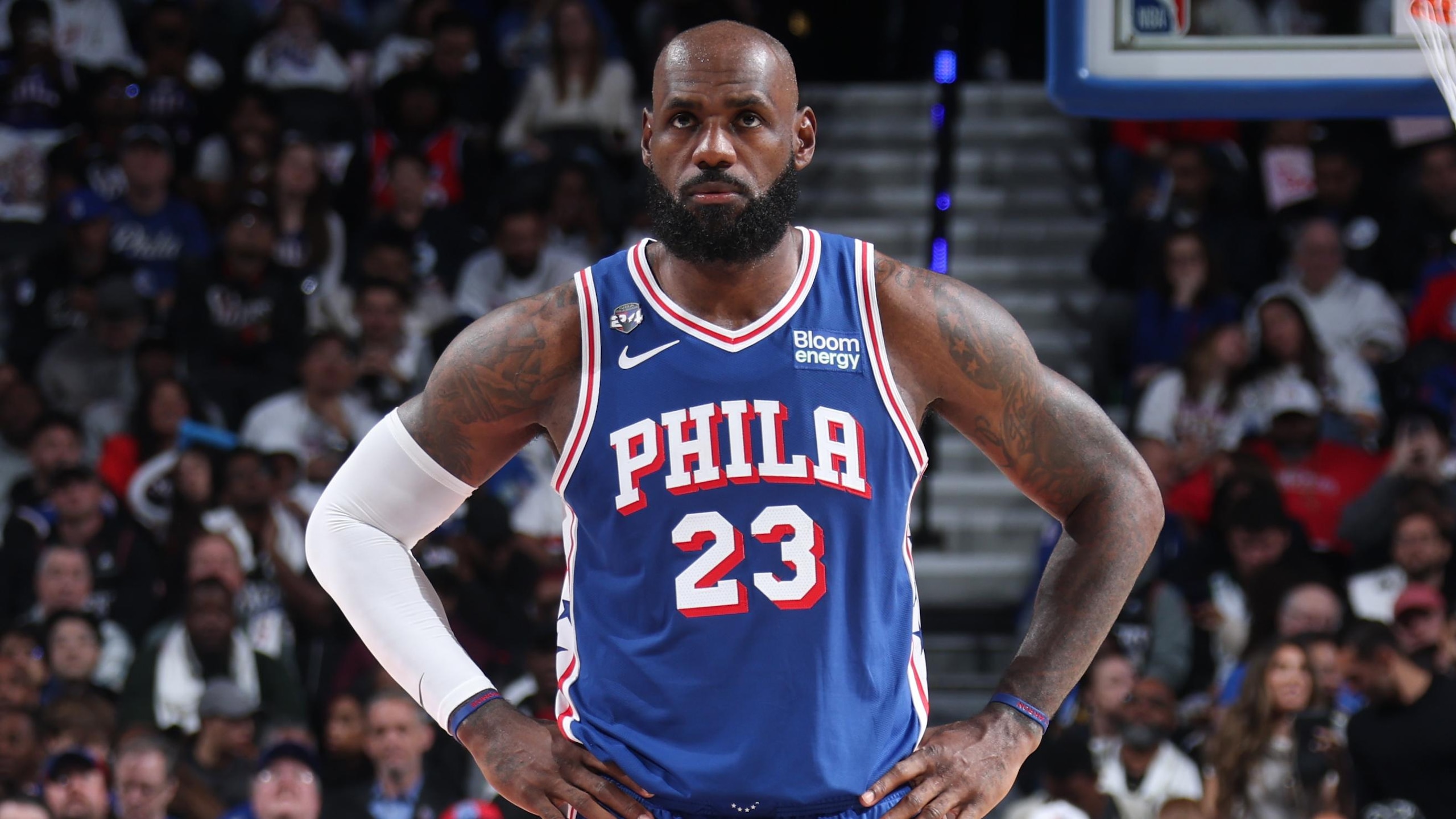
The absence of LeBron James and Joel Embiid changes the meaning of this result. Both were held out for load management after Friday's 98-93 win over the defending champion New York Knicks. Philadelphia had every excuse to treat the trip to Charlotte as a difficult schedule spot. Instead, the Sixers found a way to win and improved to 3-0 away from home.
Rest is often discussed as if it were separate from competitive ambition, but on a veteran-heavy contender it is part of the same calculation. James is entering a very different stage of his career from Maxey. Embiid's workload has to be managed with the postseason in mind. A roster built around several expensive and established stars needs younger legs and complementary players to absorb real responsibilities rather than merely fill minutes when everyone is available.
This is why Maxey's performance is particularly significant. His scoring is not an emergency substitute for a missing superstar; it is one of the pillars that should make Philadelphia's rotation flexible. When James is on the floor, his playmaking can help Maxey work without the ball. When Embiid plays, the defense must account for an interior scoring and passing threat. When both rest, Maxey can still initiate the offense and create enough pressure for teammates to exploit the space. Those different alignments will not always look equally polished, but the Hornets game showed that at least one alternative can survive adversity.
Brown's return adds another layer. Philadelphia acquired him to bring proven two-way quality and another high-level scoring option. His 16 points in Charlotte were not a signature performance, and his early misses showed how quickly rhythm can disappear after a layoff. But the final free throws, the improved second-half play and the willingness to shoulder possessions were useful signs. A championship-level roster cannot require every star to have an excellent shooting night at the same time.
There are obvious limits to what one October result proves. The Hornets are not the toughest opponent Philadelphia will face, the Sixers were vulnerable for long stretches, and the closing 13-0 run should not obscure how close they came to losing. The offense stalled, the defense allowed too many clean early looks, and the visitors needed a spectacular individual night from Maxey. Those are warnings to take seriously, not footnotes to erase.
Still, winning imperfectly matters. Philadelphia has now banked six victories in seven games while using different combinations of players and recovering from uncomfortable deficits. The next challenge, a home meeting with Chicago on Monday, offers another chance to test the rotation and see whether the late-game decision-making travels from one matchup to the next. The real measure will be whether the Sixers can keep finding answers when the spectacular rescue is not available.

Philadelphia's 109-104 win is memorable for Maxey's 38 and Edgecombe's late three, but it should be remembered just as much for the circumstances. The Sixers were short two major stars, faced a Hornets team that shot well and led deep into the fourth, and still found contributions from Brown, Simons and Wade when the margin for error disappeared.
Charlotte will see a game it let escape. Philadelphia can see a game it had enough answers to steal. Neither interpretation is wrong. The difference is that the Sixers now have an early piece of evidence that their depth is more than a collection of recognizable names. A roster with championship aspirations needs to win on nights when the plan falls apart. On Halloween in Charlotte, Maxey kept that possibility alive and Edgecombe made it real.



















