

McDavid Reached 19 Straight — Draisaitl and Levi Made the Rangers Win Count
GOATIFYConnor McDavid's 2026-27 start has become a race against the history books. On Monday night at Rogers Place, he made it 19 consecutive games with a point, joining a club that previously counted only Wayne Gretzky, Mats Sundin and Dany Heatley. Edmonton beat the New York Rangers 3-1, but the score and the milestone tell different parts of the story.
McDavid's opening goal was a gift New York's goalie will wish he could retrieve. From there the visitors pushed hard, and Edmonton needed Leon Draisaitl to finish twice and Devon Levi to be sharp for nearly an entire night. There was even a statistical twist: McDavid's record-setting run of assists finally stopped. What looked like a routine win for a powerhouse was a test of whether Edmonton could defend a narrow advantage when its best playmaker was not collecting helpers.
McDavid joined a tiny historical club — while his assist streak stopped
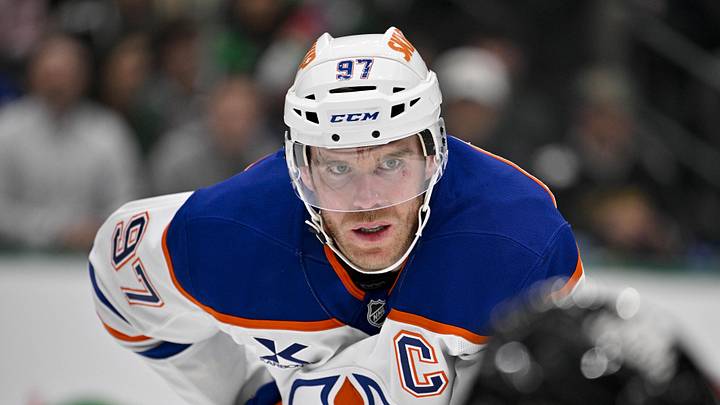
The most revealing part of McDavid's opener was how ordinary the first touch looked. New York goaltender Dylan Garand went behind his net to move the puck, tried a pass and watched it catch the back of the cage. McDavid read the bounce, arrived at the right post and tucked the mistake away at 6:42. It counted as an unassisted goal, which made it perfect for extending one streak and useless for prolonging another.
That first-period finish carried McDavid to points in all 19 games Edmonton had played this season. The company is extraordinary. Gretzky did it on three occasions, his 51-game launch in 1983-84 still the benchmark; Sundin opened with 30 in 1992-93 and Heatley reached 22 in 2005-06. McDavid is the first player to reach 19 since Heatley. It is not a claim that he has tied Gretzky's greatest run, but it is an indicator of how narrow the historical category has become.
His 48 points comprise 11 goals and 37 assists. Those totals also put him among a different elite group: players to record at least 48 points before appearing in a 20th game, alongside Gretzky, Mario Lemieux and Joe Malone. McDavid's individual scoring pace has been so extreme that even a night with just one point carries another milestone. As the season develops, the more meaningful question may be how much pressure that production places on opponents before they can establish their defensive matchups.
But Monday also ended something. McDavid did not get an assist for the first time this season, stopping his season-opening assist streak at 18. That mark had become one of the defining stories of Edmonton's October and early November; it was level with Adam Oates for the second-longest assist streak in league history. The irony is that a goalie error kept his point streak alive without the usual involvement of a linemate. A scoring streak and a playmaking streak are different records, and this game separated them cleanly.
That distinction matters beyond trivia. McDavid has often controlled games through passes that arrive a moment before the defense can react. Against New York, Edmonton did not have to depend on another setup from its captain. He found the goal when the opportunity appeared, and other players carried the scoring and defensive workload later. The win therefore revealed a different way for a McDavid-led team to survive a tight contest.
GOATIFY
GOATIFY Hockey
As McDavid's streak reshapes the NHL conversation, explore GOATIFY's hockey collection for fans following every record and rivalry.


Draisaitl's two goals turned uncertain moments into a lead and a finish
Leon Draisaitl spent the night proving that Edmonton can have two separate problems for defenders. McDavid's first-period goal gave the Oilers an early advantage. Draisaitl's first finish, at 2:59 of the second, made it 2-0 and arrived from a play that did not develop as originally planned. Mattias Ekholm sent a slap-pass toward the slot, Vasily Podkolzin could not settle it, and Draisaitl collected the bouncing puck with almost no time to prepare. His wrist shot went through Garand's legs.
New York challenged for goaltender interference, but the goal survived the review. It is tempting to call such a bounce fortunate, and there was unquestionably a loose-puck element. Yet it also demonstrated why Draisaitl remains dangerous in small windows. He did not need a cleanly drawn passing sequence; he located the puck and released before the Rangers could reset. A star's skill often appears most clearly when a broken play still turns into a goal.
The second was even more situational. With 1:27 left in regulation, the Rangers had already replaced Garand with an extra attacker when Ryan Shea's tripping penalty gave them a six-on-four. Edmonton was defending a 2-1 margin and could have spent the remaining time pinned in its own zone. Instead Draisaitl intercepted a vulnerable pass and sent the puck from deep in the Oilers' end into the empty net at 18:47. It was a short-handed goal, not a routine five-on-five insurance marker.
That shot turned the final 73 seconds from an urgent defensive stand into a two-goal cushion. It also gave Draisaitl his league-leading 18th goal and his second two-goal game in a row. He has scored six times in his past four contests, while his six-game point run includes 12 points. The scoring form makes him more than McDavid's secondary option: he can decide how the last minutes of a game are played, both with his finishing and by recognizing when a risky opposing pass opens the ice.
Edmonton's first two goals had messy origins, and the third came as New York pressed for an equalizer. There is a lesson in all three. Efficient teams do not always manufacture long sequences of gorgeous offense. Sometimes the opponent makes one poor decision or the puck breaks strangely, and a high-end finisher turns the moment into something lasting. Against a Rangers side that believed it carried much of the play, Draisaitl's reactions were decisive.
Levi's 28 saves explain why the Rangers could not turn pressure into points
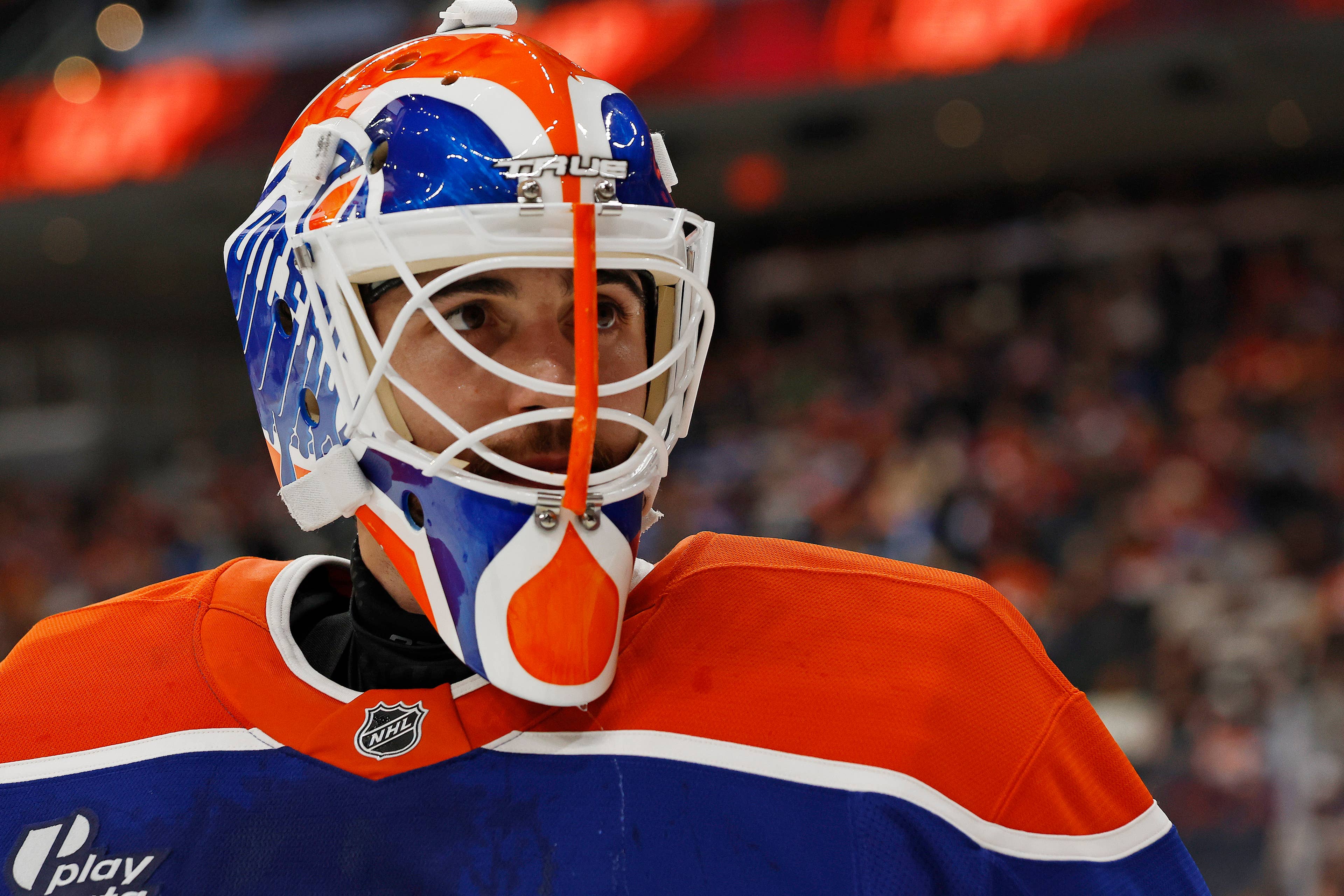
By the time the final horn sounded, New York had put 29 shots on goal to Edmonton's 20. That disparity is a useful corrective to anyone who sees the two-goal final margin and imagines a comfortable home victory. Devon Levi stopped 28 of those attempts. His performance was the central reason the Rangers' comeback never moved beyond a one-goal threat.
Levi was especially important in the second period, when New York produced chances even while chasing the game. One save against Tye Kartye became a defining moment for the Oilers' own postgame account. Edmonton had already taken a two-goal lead, but the visitors were generating enough danger that the scoreboard could have changed quickly. The better a team is at finishing its limited openings, the more important its goaltender becomes when opponents are doing much of the attacking.
There is no need to pretend that all 28 saves carried equal difficulty. A goalie can accumulate stops on shots from distance and still surrender control of the crease. What distinguished Levi on this night was the timing. New York had opportunities to make Edmonton pay for stretches of imperfect defending, and it repeatedly met a goalkeeper who kept his team in front. Draisaitl acknowledged afterward that Levi was the most important reason Edmonton won.
The victory improved Levi to 8-1-0, an encouraging start after the club had spent recent seasons searching for steadier goaltending performances. On Monday, the other end of the rink provided an uncomfortable contrast. Garand made 17 saves, but his puck-handling error effectively donated Edmonton's opening goal. That single mistake did not erase the Rangers' hard work, yet it placed them behind against a team with McDavid and Draisaitl available to exploit any future opening.
Oilers coach Mike Babcock was not celebrating perfect execution. His broader assessment was that Edmonton did enough to score, then had to keep checking and win the battles necessary to protect the result. This is the type of victory that matters in a long regular season: not the game in which every shift goes according to plan, but the one in which the goalkeeper absorbs the mistakes that are not immediately corrected elsewhere.
GOATIFY
GOATIFY Hockey
From big saves to late goals, hockey rewards the moments that matter. Browse GOATIFY hockey designs built for fans of the game.
New York's short-handed strike made a simple finish impossible
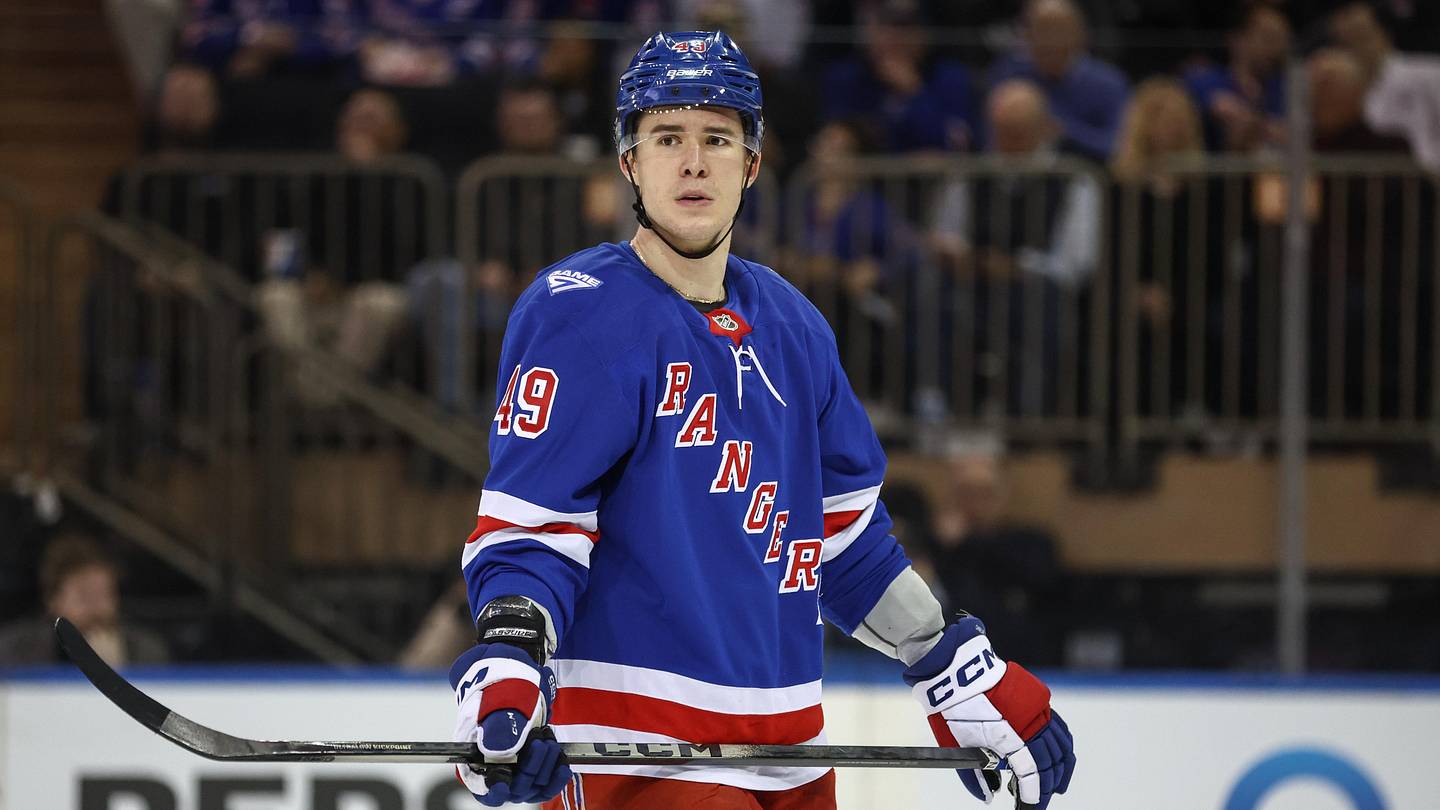
The Rangers' answer arrived from the least obvious situation. Edmonton briefly had a five-on-three power play early in the second period and seemed positioned to expand its two-goal lead. New York survived the first penalty, and Mika Zibanejad collected the puck in his own end. Jaroslav Chmelar had just emerged from the penalty box, which created a lane before Edmonton could restore its ordinary defensive shape. Zibanejad found him with a long pass and Chmelar beat Levi from the right circle at 5:05.
It was a short-handed goal at precisely the point when the Oilers should have been thinking about a possible 3-0 advantage. That reversal gave the Rangers life and underlined the risk of assuming a superior attacking roster will control the puck on every special-teams sequence. Chmelar's timing mattered as much as his finishing: he moved quickly from penalty-killer to breakaway target while the home defense was still adjusting to an unusual number of players on the ice.
From there the visitors had reasons to think an equalizer was possible. Their shot total climbed, their defensive effort kept Edmonton's chances limited, and the score remained 2-1 deep into the third. New York captain J.T. Miller felt the performance merited more. That view is understandable from a team that worked the game back into reach after conceding first. But hockey's reward system is unforgiving: territorial advantages and dangerous rushes are not the same currency as the goals that actually beat a goaltender.
The final gamble came when Garand went to the bench and Shea's penalty handed the Rangers a six-on-four opportunity. Coach Mike Sullivan had every reason to load the ice with attackers; a one-goal deficit late in regulation leaves no benefit in protecting the losing score. But Draisaitl anticipated the backpass, cleared the zone by scoring and settled the game. The same urgency that gave New York a chance also left its net exposed.
The season records sharpen the contrast. Edmonton is 11-0-2 when it scores first, while New York fell to 0-7-1 in games where it concedes the opener. The Rangers entered with three consecutive wins and had played better than those figures might suggest. Still, another early mistake forced them to chase. Edmonton had also won 4-1 in New York on November 1, so this completed a two-game regular-season sweep. The Rangers next visit Calgary; the Oilers host Philadelphia. Both clubs have reasons to inspect their execution even though only one leaves with two points.
GOATIFY
GOATIFY Hockey
The Rangers and Oilers delivered another hard-fought rivalry night. Explore GOATIFY's hockey collection for fans who love the game's big moments.
McDavid's point streak is the headline because its historical comparisons are so rare. But Edmonton's 3-1 win against the Rangers had a more practical message: an elite team can benefit from its captain's opportunism, a second superstar's finishing and a goaltender's resilience without owning the puck for most of the evening.
For McDavid, the next game offers a chance to reach 20 consecutive outings with a point. The assist streak is over at 18, and that does not diminish what came before it. For Edmonton, the greater challenge is making sure the support shown by Draisaitl and Levi is a sustainable formula rather than a rescue operation. The Rangers made them earn the result; the Oilers found just enough ways to respond.

















