Gabby Williams Broke the Aces’ Grip — but Golden State’s Rebounding Changed the Series
GOATIFYGolden State entered the semifinals with a convincing identity and an uncomfortable history. The Valkyries owned the WNBA’s best regular-season defense, yet Las Vegas had beaten them in all three regular-season meetings. Game 1 changed the terms immediately. Golden State won 71-60, held the defending champions to their lowest scoring output of the season and turned a matchup that looked like a test of whether its system could survive A’ja Wilson into a test of whether the Aces can survive Golden State’s physicality.
Gabby Williams was the headline with 25 points, 11 rebounds and five assists. The more consequential number may have been 52-25: Golden State’s advantage on the glass. That gap created extra possessions, protected the Valkyries through cold shooting and gave their defense permission to stay aggressive.
Gabby Williams did more than win the star matchup

Williams did not ease into the biggest series of Golden State’s young history. She hit back-to-back threes, scored 15 points before halftime and repeatedly punished Las Vegas for giving her even a small window. Her final line — 25 points, 11 rebounds and five assists — made her only the tenth player in WNBA history to reach at least 25-10-5 in a playoff game.
The important part was how the scoring arrived. Williams was not merely finishing broken possessions. She attacked in transition, hit pull-ups and made A’ja Wilson defend in space. When a perimeter creator can force the league’s best interior defender to step higher, every cut and offensive rebound behind the play becomes more dangerous.
That is why this performance matters beyond one hot shooting night. Golden State’s regular-season offense was built around depth and movement rather than a conventional heliocentric star. Williams giving the Valkyries a player who can create a good shot when the system stalls changes the postseason ceiling. Las Vegas can adjust by trapping earlier or switching different defenders onto her, but both choices pull resources away from the areas Golden State already won in Game 1.

The 52-25 rebounding gap was the real tactical alarm
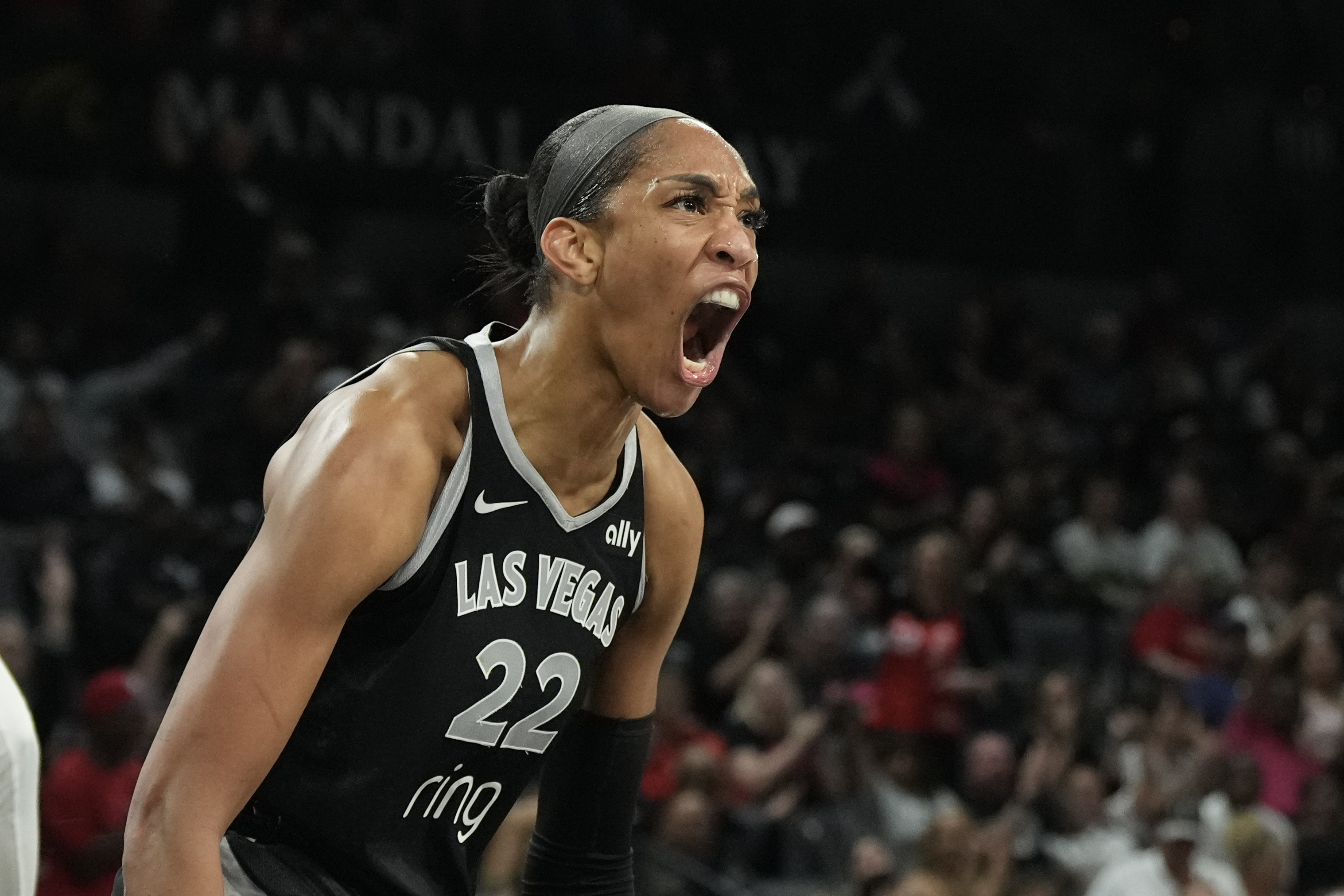
The box score that should dominate Las Vegas film review is not Williams’ scoring total. It is the rebounding margin. Golden State collected 52 rebounds to Las Vegas’ 25, with Kiah Stokes grabbing 14 and three Valkyries reaching double figures. The Aces gave up 17 offensive rebounds and 20 second-chance points.
That is devastating in a playoff game where both teams struggled to score efficiently. Golden State shot under 40 percent, so a normal defensive rebounding performance could have allowed Las Vegas to survive its own 33.9 percent shooting. Instead, missed Valkyries shots often became another possession, another scramble and another chance to make Wilson defend multiple actions.
Stokes was especially important because her value did not depend on touches. She had seven rebounds in the first quarter and nine plus three blocks by halftime. Against a team built around Wilson, Gray and Young, that kind of low-usage impact is exactly what Golden State needs. Las Vegas can fix effort and box-out assignments, but doing so may require sending an extra player toward the paint, which can weaken its transition offense and perimeter outlets.
Golden State’s bench turned depth into scoreboard pressure

Golden State’s depth was a regular-season advantage. In Game 1 it became a direct playoff weapon. The Valkyries’ bench outscored Las Vegas’ reserves 27-7, with Kaitlyn Chen scoring 11 and Aminata Gueye producing nine points in a career-high 12 minutes.
Gueye’s contribution was particularly useful because it was not part of an obvious pregame script. She had played only ten minutes in the entire first round and four minutes during the regular season, yet she gave Golden State energy, two steals, a block and efficient finishing when the game needed another source of force. That is what depth looks like in a long series: not simply having more names, but having players who can survive a role change without the structure collapsing.
Las Vegas also left Game 1 with another variable after Jewell Loyd exited with a leg injury in the third quarter. Even if the Aces receive better bench production in Game 2, Golden State has shown it can keep attacking through lineup changes. Becky Hammon’s answer may be to shorten the rotation and increase the burden on Wilson, Gray and Young. That can raise the Aces’ immediate ceiling, but it also makes every Golden State possession that extends through an offensive rebound more expensive.

Game 2 is about whether Las Vegas can change the possession math
Las Vegas does not need a philosophical rebuild before Wednesday. It needs to change the possession math. Wilson still produced 24 points, Gray added 16 and the Aces were within five in the fourth quarter despite losing almost every physical category. That is enough evidence that their core offense can keep the series competitive if the rebounding gap returns to normal.
The harder decision is how much to alter the defense around Williams. Sending more help can cool her scoring, but it also creates easier kick-outs and weak-side rebounding lanes. Keeping Wilson closer to the paint protects the glass, but gives Williams more room to operate in the middle. Golden State has earned the right to make Las Vegas choose.
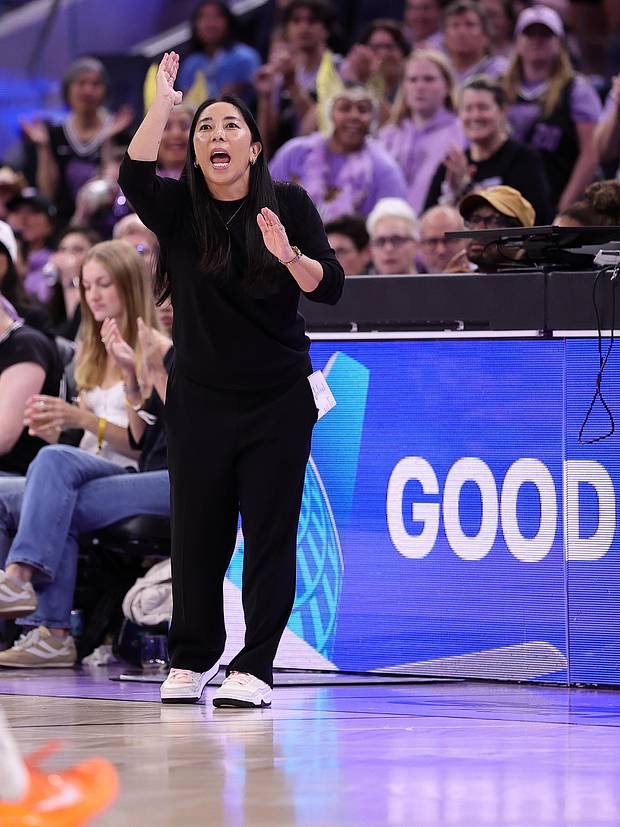
Natalie Nakase’s team should also expect a response in pace and contact. Defending champions rarely lose the same way twice without forcing the opponent into a different game. Golden State’s task is to preserve the habits that traveled from the regular season — defense, depth and collective rebounding — while accepting that the exact shots and matchups will change.
That is the biggest difference from the semifinal preview. Before Game 1, Golden State’s path was theoretical. Now it has a blueprint: make Williams a creator, turn every miss into a contested possession and force the Aces’ stars to beat a deeper team without the comfort of controlling the glass.
Golden State has not solved Las Vegas after one afternoon. Wilson still scored 24, Gray still found 16, and championship teams usually respond sharply when a weakness is made this obvious. But the Valkyries no longer need to prove their style can work against the Aces. They have evidence.
Game 2 now becomes a question of counters. Las Vegas has to put more bodies into rebounding possessions without sacrificing transition defense, while Golden State has to expect a harder effort to deny Williams clean touches and keep Stokes away from the rim. If the Valkyries can keep the possession battle close to what it was in Game 1, this series has already become much more dangerous for the defending champions than the regular-season meetings suggested.
Shop GOATIFY WNBA products from the WNBA-filtered basketball collection.