

The Vikings Brought Kirk Cousins Back — and Opened the Raiders' Mendoza Era
GOATIFYAn NFL trade deadline can turn a franchise's carefully arranged quarterback plan upside down in a single afternoon. Minnesota's latest move does something even stranger: it brings a familiar face back to repair a problem that became impossible to ignore on Monday night. Kirk Cousins is returning to the Vikings after the club agreed to send the Las Vegas Raiders a third-round pick in the 2027 draft, a decision that affects two teams heading in opposite directions.
For the Vikings, the wager is immediate competence. They started the 2026 season 6-0, then lost two straight as their defense carried a burden the offense could not match. For Las Vegas, the return is a valuable draft asset and, more importantly, an opening for Fernando Mendoza, the rookie selected first overall. The same deal offers Minnesota a potential short-term rescue and gives the Raiders a decisive look at the future.
A 23–6 loss made Minnesota's quarterback dilemma impossible to ignore

Minnesota's urgency makes more sense when the trade is viewed through Monday's 23-6 defeat by Buffalo. The Vikings were not merely short of scoring; they struggled to maintain drives, protect possessions or give a formidable defense a realistic cushion. Carson Wentz finished 8-for-25 for 81 yards, threw two interceptions and lost a fumble. In a game that did not demand an offensive shootout, every squandered possession became more damaging.
That result arrived at a particularly awkward point in the season. A 6-0 start had suggested Minnesota could build around a defense capable of changing field position and controlling games. Two losses did not erase those victories, but they showed how narrow the margin had become when the offense was unable to turn favorable situations into points. A team hoping to stay among the NFC contenders could not afford to treat that failure as an isolated evening.
Kyler Murray's hamstring injury complicated the decision. Murray was the incumbent starter, yet he had not consistently delivered the steadiness Minnesota expected before being sidelined. Wentz's replacement outing then removed much of the comfort that a veteran backup is supposed to provide. Bringing in another established passer was a response to a position group that had grown uncertain from two directions at once: health and execution.
The front office's earlier quarterback decisions also form part of the picture. Minnesota moved former first-round selection J.J. McCarthy to the Giants in September, having already committed to a different direction at the position. That choice left a narrower set of internal alternatives when injuries and ineffective play emerged. The Vikings now have to pay in draft capital to acquire someone who knows the organization, rather than waiting for their original plan to settle.
Head coach Kevin O'Connell acknowledged after the Buffalo loss that the Vikings were examining possible additions. The timing mattered: there was little space between the final whistle and Tuesday's deadline, while the schedule offered no gentle reset. Minnesota is set to travel to Green Bay next. It is one thing to conclude that quarterback play must improve; it is another to identify a reachable player who could plausibly learn the necessary calls quickly enough to help.
Cousins offers a different profile from a developmental project or an unknown emergency starter. He has navigated difficult NFL protections, coverage disguises and end-of-game situations for years, and he has worked directly with O'Connell. The immediate objective does not have to be a spectacular offense. First downs, manageable third downs, fewer giveaways and the ability to make defenses respect the passing game could change how opponents approach Minnesota.
Nothing about the trade guarantees Cousins will be under center for the next snap. New terminology, teammates, protection adjustments and a compressed preparation period all matter, even for an experienced player returning to a familiar setting. But the Vikings were running out of time to improve their options. Moving a third-round pick is a meaningful cost; standing still when the rest of a promising roster is ready to compete carries a cost of its own.
GOATIFY
GOATIFY NFL
The Vikings' quarterback emergency has NFL fans talking. Explore GOATIFY football-themed apparel and accessories celebrating the game.


What Cousins can restore with O'Connell and Jefferson — and what he can't

The reunion comes with a clear football memory. Cousins spent six seasons with Minnesota from 2018 through 2023, including two under O'Connell. In 2022, he passed for 4,547 yards and 29 touchdowns as the Vikings leaned on the timing and volume of their passing game. Justin Jefferson's 128 receptions and 1,809 receiving yards that year illustrated how frequently the offense could create productive connections.
Those numbers are not a prediction for November 2026. They explain why Minnesota would consider this particular veteran rather than another available name. Coaches understand his preferences, he knows the demands of reading an NFL defense, and Jefferson has already produced elite results with him. That shared history can shorten the process of establishing trust, especially on throws where a receiver and quarterback must interpret coverage in the same instant.
The practical benefits are more specific than nostalgia. A quarterback willing to take an available underneath completion can keep an offense on schedule. A quick, accurate throw against pressure can prevent a negative play from becoming a turnover. Timely intermediate passes can draw defenders out of run-support positions. Minnesota does not need every possession to end in a highlight; it needs the ball to move often enough that its defense can dictate rather than merely survive.
Yet Cousins is 38, and his career has included significant injury history. Returning to a familiar coach cannot reverse age or remove the risks associated with pressure, pass protection and declining mobility. Any evaluation of his fit should distinguish the recognizable Vikings version of Cousins from the current quarterback. The relevant evidence comes from his recent play and the tasks Minnesota would ask him to perform now, not a greatest-hits montage from the first stint.
His Raiders numbers make the case more substantial than sentiment alone. Through nine starts in 2026, Cousins completed 64.1 percent of his passes for 2,340 yards, 20 touchdowns and eight interceptions. That is evidence of a passer still capable of generating production, even if the interceptions and surrounding circumstances complicate the picture. Minnesota can reasonably see a higher offensive floor without assuming it has acquired a prime-age franchise cornerstone.
There is also a financial dimension. Local coverage of the deal puts Cousins' remaining 2026 cap charge for Minnesota at roughly $650,000, while pointing to a guaranteed $10 million roster bonus next year. Those reported terms complicate any simplistic description of the trade as a cheap rental. The headline price is a 2027 third-rounder, but Minnesota also inherits an important future roster and financial decision at a position where it has already changed course several times.
Jefferson's presence remains the strongest reason for optimism. His route-running can turn accurate placement and anticipation into explosive gains without relying solely on broken coverages. Still, a productive reunion depends on protection, complementary receivers and a running game that prevents defenders from simply attacking passing downs. The Vikings' coaching staff must build around what Cousins can do now. He can stabilize an offense; he cannot solve every problem that helped create its crisis.
The next few games will reveal whether Minnesota bought breathing room or merely changed the name attached to its quarterback uncertainty. The club has chosen to spend a future asset in order to support a season that started too well to abandon. Whether that bargain works will be measured less by Cousins' return narrative than by third-down conversions, turnover avoidance and points against the NFC opponents standing directly in the Vikings' path.
GOATIFY
GOATIFY NFL
From familiar quarterback-receiver partnerships to unforgettable NFL moments, browse GOATIFYs football designs for fans.
The third-round pick opens the Fernando Mendoza era in Las Vegas
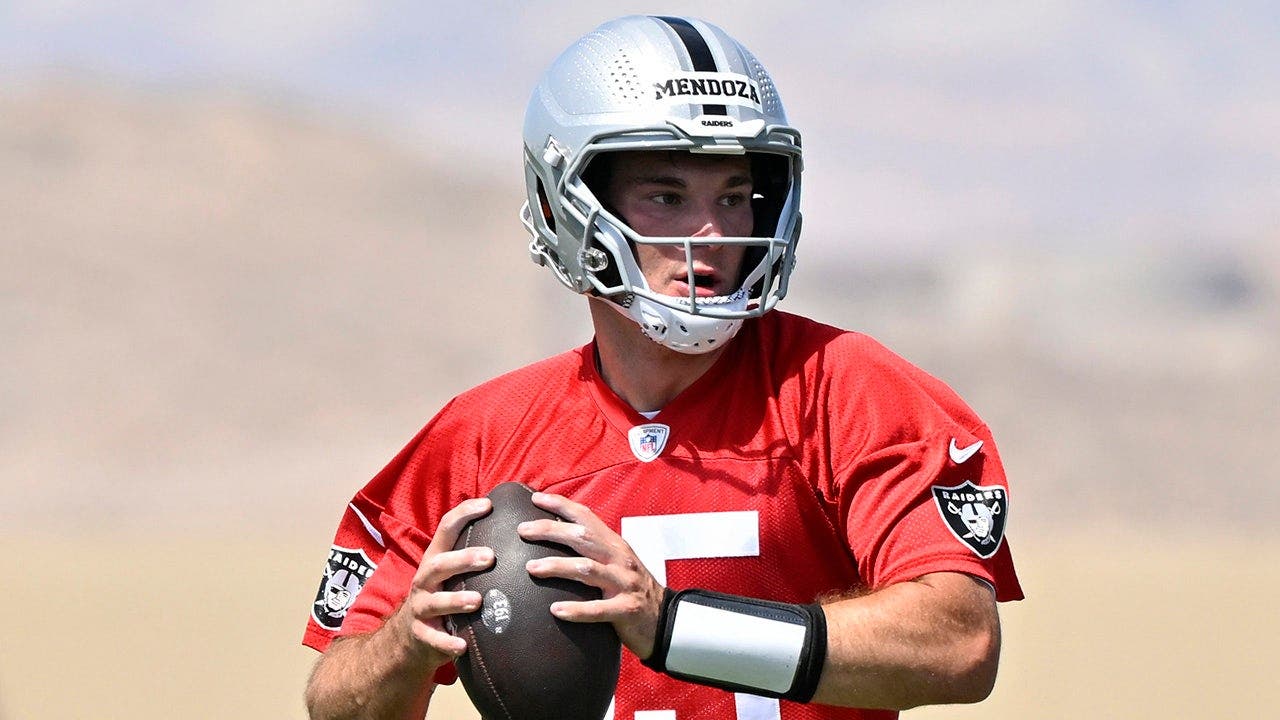
For Las Vegas, parting with Cousins brings the 2026 quarterback transition forward. The Raiders are 4-5, still close enough to the race to care about every Sunday, yet they have now chosen a third-round selection and a full starting opportunity for Fernando Mendoza over more weeks of veteran insurance. The move turns a gradual succession plan into the defining experiment of their second half.
Mendoza arrived as the first overall pick, with the expectations that accompany that draft position. The Raiders were able to begin his professional season behind a veteran instead of making him handle every complicated NFL coverage immediately. That protection has value for a rookie. So does the experience he can gather only through live possessions, where the pocket collapses faster, windows close sooner and mistakes carry consequences on the scoreboard.
The schedule makes the handover especially revealing. Las Vegas is due to host Seattle before facing Denver, both opponents capable of testing a young quarterback's processing speed and pocket discipline. Success should not be reduced to whether he wins his first two starts. Watch how he identifies pressure, gets the ball out against disguised coverage, avoids repeat errors and responds when a protection call or route adjustment goes wrong.
The trade also changes the club's incentives. Keeping Cousins might have offered more predictability from week to week, especially after a 4-5 start, but it would have delayed a valuable evaluation of the player drafted to lead the franchise. With the rookie now positioned to play, coaches will acquire direct evidence about which concepts suit him, where he needs support and how a future roster should be constructed around his strengths.
Las Vegas should also be careful not to confuse a trial by fire with proof of a finished product. Mendoza has not yet had a prolonged stretch as an NFL starter. A difficult debut against a quality defense would be unsurprising, not a definitive judgment on the pick. The useful question is whether the offense can give him answers and then adjust as opponents identify his tendencies. A rookie's development is an organizational responsibility, not just his own.
A 2027 third-round pick adds another dimension. Draft capital gives the Raiders a future opportunity to build at other positions, replace depth or package assets in a later move. The trade therefore serves two purposes: it creates the immediate opening for Mendoza and improves the resources available to support him. That return is not a guarantee the selection becomes an impact player, but it is tangible value for a quarterback Las Vegas was preparing to move beyond.
Tuesday's broader deadline activity illustrated the difference between the teams' priorities. San Francisco was reportedly moving for experienced receiver Keenan Allen while Buffalo was adding safety Amani Hooker, each seeking help for a more immediate competitive need. Minnesota's acquisition belongs in that win-now category. The Raiders' decision sits on the other side: accepting more uncertainty now in pursuit of clearer answers about the next several seasons.
The winners of the Cousins trade will not be identified by the first social-media reaction or even the first game after the deadline. Minnesota needs its new-old quarterback to help a talented defense convert opportunities into victories. Las Vegas needs Mendoza's starting experience to reveal something useful about its future. The two clubs are making very different bets with the same transaction, and both outcomes can remain uncertain for weeks.
GOATIFY
GOATIFY NFL
Las Vegas is putting its faith in the next generation. Celebrate football's legendary plays and players with GOATIFY NFL fan gear.
Cousins' return is an acknowledgment that the Vikings' 6-0 foundation deserved a more reliable offense than it had received in the past two games. Familiarity with O'Connell and Jefferson may speed the adjustment, but it does not make the 38-year-old a permanent answer or erase the third-round price. Minnesota's standard is whether the offense becomes dependable enough to complement its defense.
The Raiders have traded that experience for a draft choice and a clearer view of their highest-profile young player. Mendoza's first starts will be difficult, and their significance extends beyond the immediate scores. One deadline agreement has turned Minnesota toward a familiar solution and Las Vegas toward an unfamiliar future. The real verdict will come from how well each team prepares its quarterback for the job.
Shop GOATIFY NFL and American football shirts, hoodies and stickers.

















