

Bednar's $23.15M Offer Is Only the Start of the Yankees' Closer Gamble
GOATIFYNew York entered the 2026 season with plenty of questions about its relief corps and finished with one of baseball's best. Now the Yankees must decide how much of that success came from a dependable ninth-inning star, and how much came from a system capable of finding useful pitchers without paying every one of them like an established closer.
David Bednar's one-year, $23.15 million qualifying offer brings that argument into focus. He saved 35 games with a 2.47 ERA in 2026, but acceptance would make him the game's highest-paid reliever on an annual basis. A rejection could begin a much longer negotiation or an exit that leaves a vacancy. With a November 17 decision deadline, the Yankees are not just buying saves. They are deciding how much flexibility to surrender before a potentially uncertain 2027 season.
$23.15 million buys certainty for one year — not necessarily three
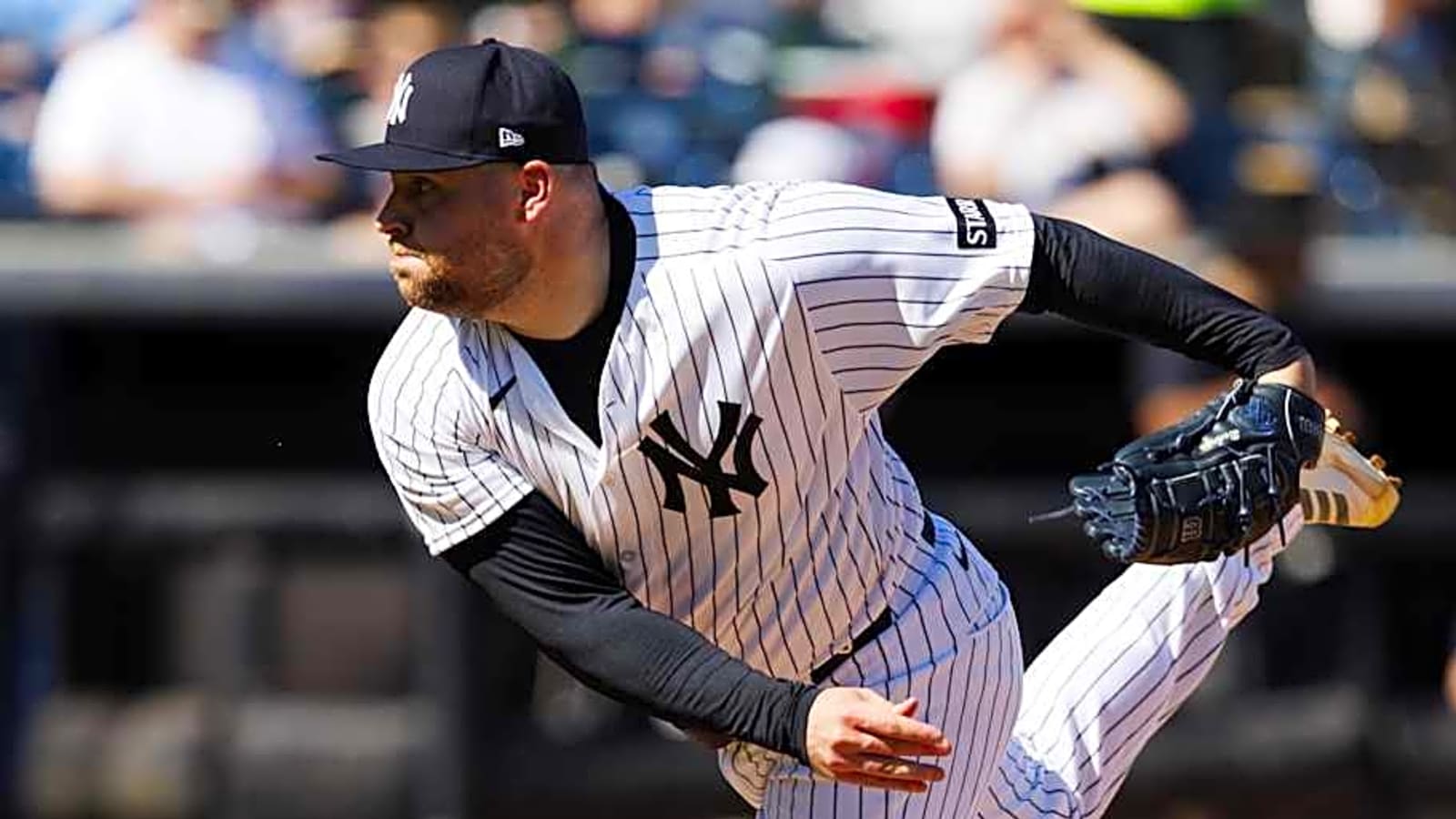
Bednar's position is unusually strong. The Yankees extended the qualifying offer after a season of 35 saves in 39 opportunities, a 2.47 ERA and 69 1/3 innings across 64 appearances. His splitter became a bigger part of his late-inning attack, and his 2.15 ERA in the second half provided evidence that the finish was not merely a continuation of an early-season hot streak. New York also knows precisely how his temperament fits its bullpen and the expectations of Yankee Stadium.
The price, however, changes the conversation. A $23.15 million salary for 2027 edges past the $23 million annual pay of Edwin Díaz with the Dodgers. It would not be a bargain on the closer market simply because Bednar has been reliable. It would be a large, deliberately concentrated bet on a job that typically covers fewer than 80 innings. The Yankee staff as a whole excelled in 2026, so every additional dollar tied to one reliever has an alternative use.
Consider the comparison with the club's reported 2026 relief-pitching commitment of roughly $24.84 million. One Bednar qualifying offer would nearly match that amount on its own. There are accounting and roster-year caveats when comparing a future individual salary with a previous group's spending, but the contrast captures the strategic point: New York has often assembled useful bullpens through development, acquisitions and affordable role players rather than one massive commitment at the top.
An accepted offer is therefore defensible in a way that a longer deal might not be. One season buys a proven closer without binding a front office to the same solution when the roster's needs change. The Yankees could look for younger relievers, shift workload elsewhere and reassess after 2027. A three-year or four-year agreement provides the player with more security but carries performance risk into his mid-30s. An approximately one-mile-per-hour dip in Bednar's fastball velocity during 2026 does not establish immediate decline, yet it is a reason to avoid treating his current form as permanent.
Devin Williams' reported three-year, $51 million Mets contract offers a useful scale comparison, not a prediction of what Bednar will command. Lower average annual salary can coexist with a greater aggregate obligation, and that matters if a closer becomes less effective or the team wants to redistribute high-leverage opportunities. The Yankees' 2025 qualifying-offer decision with Trent Grisham is also a reminder that a player's perceived value can change quickly after the guarantee is signed. Bednar's performance profile is different; the contract mechanism still presents a familiar risk.
The collective-bargaining calendar makes the calculation harder. A possible 2027 work stoppage could affect the schedule, though no particular interruption should be assumed. That uncertainty might favor a player seeking long-term security, while making a team think more carefully about the cash it commits across several seasons. The closer has until November 17 to accept or decline the qualifying offer. Until then, keeping him is a realistic outcome, not a done deal.
There is a clean dividing line for New York: expensive for one year may be acceptable when the pitcher is this good and the rest of the bullpen is controllable. Expensive for multiple seasons must clear a much higher test because it limits the room to upgrade the lineup, rotation and the next generation of relievers. That is the opportunity cost at the heart of the decision, rather than a simple argument over whether Bednar deserves the money.
GOATIFY
GOATIFY Baseball
Bednar's uncertain 2027 decision is one more chapter in New York baseball. Browse GOATIFY Baseball apparel, hats and stickers for the fans who live for the ninth inning.

Gold Baseball GOAT Sweatshirt
Rep baseball’s greatest with a gold GOAT graphic sweatshirt.
Shop Now ↗


White Baseball GOAT Dad Hat
A white baseball GOAT design for ballpark days and everyday fan style.
Shop Now ↗The market has alternatives, but each one moves the risk somewhere else
New York's apparent advantage is that losing Bednar would create a position to fill, not an entire pitching staff to rebuild. Yankees relievers posted a 3.13 ERA in 2026, second in the majors behind Boston's 3.00. The club's overall 3.23 team ERA led baseball. Those results are evidence of infrastructure, even if they cannot guarantee the same performance with different personnel next year.
The free-agent board has recognizable names but few obvious risk-free replacements. Adrian Morejón offers premium stuff entering his age-28 season, yet other clubs could see him as a potential starter rather than pay solely for closing duties. Raisel Iglesias saved 34 games with a 2.55 ERA in 2026 and has the established ninth-inning résumé, but his age-37 season is approaching. The choice between paying for younger upside and established experience is not the same as finding an exact duplicate of Bednar.
Kenley Jansen brings an even longer record of closing games. His 3.20 ERA and 22 saves in 2026 show he can still contribute, while a 39-year-old reliever necessarily brings an age-related durability question. Emilio Pagán's uneven start, injury issues and stronger second half complicate a projection from his best stretches. Pete Fairbanks and Carlos Estévez have their own health-related concerns after injury-affected campaigns. None should be dismissed, but none makes the value of keeping Bednar disappear.
The interesting alternative might be a bullpen constructed around multiple high-leverage arms rather than a single star replacement. Alex Vesia, Bryan Abreu and Gregory Soto are among the available names with late-inning experience. A club could divide save situations according to matchups, attack a particularly dangerous left-handed pocket earlier in the game, and preserve its best reliever for the highest-leverage moment instead of automatically assigning him the ninth. That approach asks more of the manager and less of an expensive closer label.
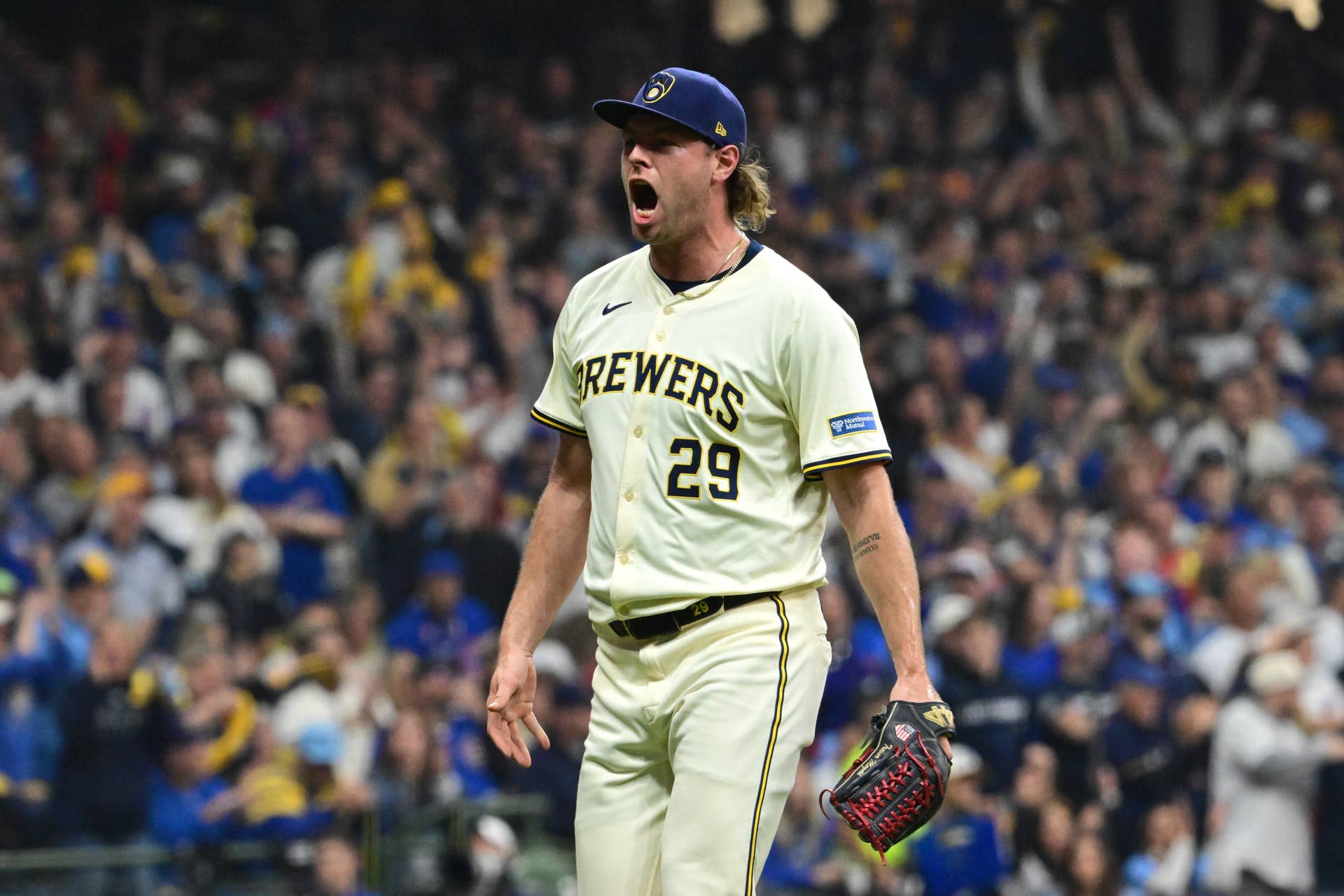
A trade is another possibility. Milwaukee's Trevor Megill, who recorded 30 saves in both 2025 and 2026, presents an obvious analytical fit because he is due to reach free agency after 2027. The Brewers have previously traded important players before their market value reached its final contractual season. Megill throws hard, relies on an unusual curveball and has become one of their dependable late-inning weapons after a later-than-usual major-league breakthrough.
But a Yankees-Megill deal remains a hypothetical path, not a reported agreement. Milwaukee is coming off a World Series title; moving its closer could weaken an immediate repeat bid. Any package would need to compensate the Brewers for an actual win-now piece, while New York would weigh the prospects surrendered against only one season of control. It is possible to save salary on a reliever and still overpay in baseball assets.
The Yankees have also walked a version of this road with Devin Williams, acquired from Milwaukee before 2025. Williams finished that Yankees season with a 4.79 ERA, an example of why even a smart-seeming trade can disappoint once the player changes leagues, role and circumstances. It does not prove that another Brewers reliever would fail. It simply cautions against treating a successful track record elsewhere as guaranteed production in the Bronx.
The key market question is what New York would buy with the dollars left over after passing on Bednar. If the answer is an attractive combination of bullpen depth and another major roster upgrade, the alternatives deserve serious consideration. If the savings are small and the return is a chain of uncertain arms, retaining a pitcher the club already trusts may be the more efficient bet, even at an uncomfortable one-year price.
GOATIFY
GOATIFY Baseball
The reliever market is moving, but baseball culture stays with the fans. Explore GOATIFY Baseball designs inspired by the diamond and its biggest moments.


White Baseball GOAT Sticker
A white baseball GOAT decal for your bottle, laptop or game-day gear.
Shop Now ↗

Gold Baseball GOAT Dad Hat
A gold baseball GOAT design for ballpark days and everyday fan style.
Shop Now ↗
White Baseball GOAT Sweatshirt
Rep baseball’s greatest with a white GOAT graphic sweatshirt.
Shop Now ↗
Headrick could close — but the Yankees might need him more before the ninth
The temptation after a strong pitching year is to assume the next closer is already on the roster. Brent Headrick gives that optimism real substance. He appeared in 81 games in 2026, producing a 2.18 ERA while becoming one of the club's most versatile relief options. His bat-missing ability is not merely anecdotal: his whiff and strikeout rates ranked in the 91st and 92nd percentiles. He has the raw traits teams seek at the back of games.
Yet those same qualities create a subtle problem. Headrick was effective as a fireman, often entering with runners on base and the contest in a more precarious state than a clean ninth inning. Only eight of the 54 runners he inherited came around to score. That is a particular kind of value. A team with runners at second and third in the seventh may need its best arm immediately, even if another pitcher eventually receives the save opportunity.
Moving Headrick into a rigid ninth-inning assignment could solve the headline question while creating a new vulnerability in the middle of a close game. It would also turn a successful flexible role into an untested fixed one. The Yankees could certainly prepare him to close and give him opportunities in spring training, but the decision should not be based simply on how many strikeouts his 2026 numbers suggest he could record in the final inning.
Fernando Cruz is another internal name with closing experience, yet he finished 2026 on the 60-day injured list because of a partial tear of the ulnar collateral ligament in his right elbow. His health, workload and readiness cannot be projected as if he were entering a normal spring. The Yankees must know whether he can be relied upon before building an entire high-leverage plan around him. A return would deepen the mix; an uncertain recovery would expose how thin a no-Bednar roster could become.
There are also conversion possibilities. Ryan Weathers has starting experience and the sort of left-handed stuff that might play up in shorter bursts. His injury history argues for considering different workload structures, although he was pitching well before getting hurt in 2026. Moving him out of the rotation could improve the relief corps but remove an alternative starter. A successful bullpen conversion is never a free source of value: it changes how many innings a team expects to cover elsewhere.
Young right-handers Angel Chivilli and Carlos Lagrange represent a more developmental route. Chivilli's 3.78 ERA in 15 appearances came with questions about command; Lagrange posted a 4.48 ERA in Triple-A while shifting between starting and relief work. Both possess power arms, but late-inning command and repeatable strike throwing matter as much as radar-gun readings. Building a spring plan around one of them is sensible. Promising an Opening Day closer role without proof against major-league hitters would be something else entirely.
New York could mix all these routes: keep Headrick as the flexible leverage reliever, look for a modestly priced veteran to handle conventional saves, and allow young arms to work into higher-pressure situations over time. This would preserve the bullpen's ability to adapt when injuries or performance slumps occur. It also asks the manager to explain decisions that may not match the usual hierarchy of closer, setup man and middle relief, especially when the most important out arrives before the ninth.
The broader lesson of 2026 is that the Yankees got substantial results without treating every effective reliever as a financial cornerstone. It would be a mistake to confuse that success with an unlimited ability to replace Bednar. It would be equally mistaken to give any one pitcher a long contract merely because the bullpen's other arms performed so well. The most resilient roster is the one that can absorb the loss of an individual without losing the whole late-inning structure.
GOATIFY
GOATIFY Baseball
Whatever New York decides about the closer job, there is plenty to debate before Opening Day. Check out GOATIFY Baseball shirts, caps and gifts.


White Baseball GOAT Sticker
A white baseball GOAT decal for your bottle, laptop or game-day gear.
Shop Now ↗

Bednar has earned the Yankees' confidence and the chance to consider a lucrative one-year offer. What he has not done is eliminate the financial and baseball cost of a long guarantee. If he takes $23.15 million for 2027, New York can accept a premium price for a proven ninth inning and revisit the situation later. If he seeks more years or moves elsewhere, the club can explore the market, trade talks or a shared closing arrangement built around Headrick.
The real test for the Yankees is not whether they can announce a closer. It is whether their 2027 bullpen can protect leads without surrendering the adaptability that made the 2026 staff exceptional. November 17 will clarify the Bednar piece; the best roster solution may take much longer to emerge.

















