

Warren Scored From 80 and 50 Yards — Pittsburgh's Backfield Has a New Answer
GOATIFYJaylen Warren did not need a season's worth of carries to make Pittsburgh's backfield hierarchy look different. He needed two plays. An 80-yard touchdown reception in the first quarter and a 50-yard touchdown run in the third turned Sunday's meeting with Indianapolis into a showcase for the one player the Steelers could not afford to keep out of the action.
Pittsburgh won 34–22 on October 11, improving to 3–2, and Warren finished with 188 yards from scrimmage. That was more than half of the Steelers' 352 offensive yards. His contribution was not simply the biggest line in the box score: both long scores arrived at moments when Indianapolis had a chance to steer the afternoon back toward a one-possession fight.
The larger question now is how coach Mike McCarthy uses a backfield originally envisioned as a partnership with Rico Dowdle. Warren's performance makes that decision more complicated—and more interesting—than it looked before kickoff.
The 80-yard screen that changed a rough opening

The first series offered almost no reason to expect a breakout. Pittsburgh's opening possession lost yardage and ended in a punt. Indianapolis took the early lead with a field goal, putting the Steelers in a familiar position: needing the next drive to produce something more useful than a long third down.
Instead of asking Aaron Rodgers to build a methodical march, Pittsburgh put the ball into Warren's hands in space. Rodgers flipped a short pass toward the sideline, Warren accelerated behind the initial blocks, and the play became an 80-yard touchdown. It was recorded as a pass, but its decisive ingredient was what happened after the catch: the speed to turn a low-risk touch into a field-length score.
That distinction matters for how defenses must prepare for Pittsburgh. A back who can punish a light box on the ground is valuable. A back who can take a simple throw the length of the field also forces opponents to think about pursuit angles, open-field tackling and the cost of overcommitting to the quarterback's deeper targets. Warren's receiving threat effectively gives the Steelers another way to manufacture explosive offense without asking Rodgers to hold the ball for a long-developing route.
The timing amplified the impact. The touchdown put Pittsburgh ahead for good, even though Indianapolis continued to make the score uncomfortable. It also changed the tactical bargain for the Colts. The Steelers could now lean on shorter throws and their running game without having to chase points. Warren's production created the cushion that made the rest of the offense easier to operate.
One screen pass does not prove an entire system is solved. It does, however, show why the identity of the player receiving those touches matters as much as the design of the play. Pittsburgh did not need a perfect opening drive. It needed its most dangerous ballcarrier to turn an ordinary touch into something extraordinary.

A 50-yard answer—and a backfield decision McCarthy cannot ignore
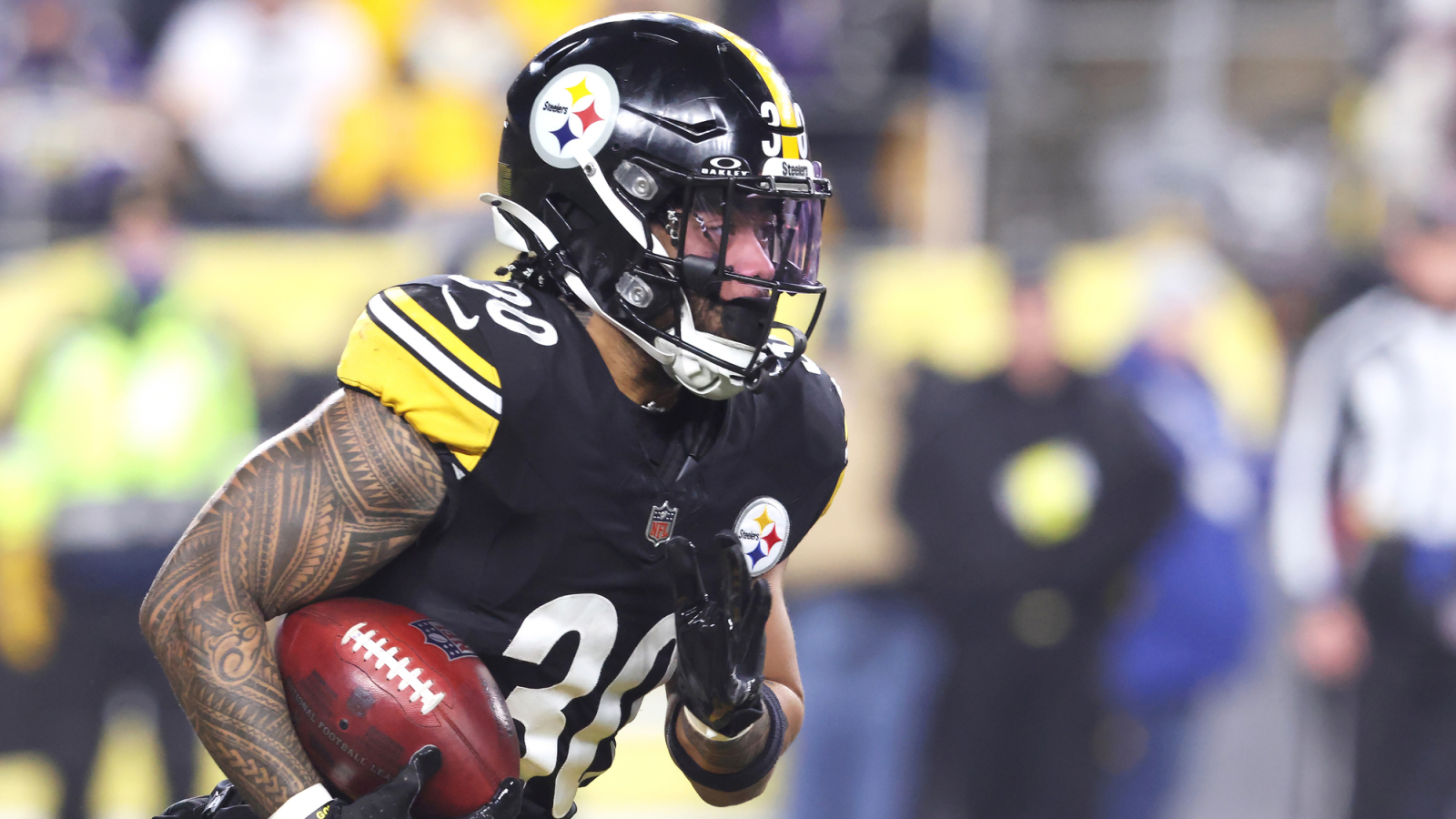
The Colts kept finding ways to pull the margin back toward one point, and their third-quarter push was the moment Pittsburgh needed another decisive response. Warren supplied it with a 50-yard rushing touchdown. Unlike the earlier screen, this was an unmistakable demonstration of his value as a runner: patience, acceleration and the ability to finish once a lane opened.
He ended the game with 101 rushing yards on 15 carries, plus six receptions for 87 yards. Twenty-one touches produced 188 scrimmage yards and two touchdowns. Those are not merely impressive totals for a running back; they describe a player who contributed in two different phases of the same offense while handling the highest-leverage plays. His 82 rushing yards after contact underline that the production was not all created by untouched running lanes.
The historical comparison is unusually stark. According to NFL research, Warren became the first Steelers player to combine a touchdown run of at least 50 yards with a touchdown reception of at least 80 yards in one game. The last NFL player to accomplish that same double was Herschel Walker in 1986. Warren's day was exceptional even by the standards of an explosive modern league.
Yet the more consequential development is less about the record book than the depth chart. McCarthy entered the year with a plan to use Warren and Rico Dowdle as complementary options. Dowdle's toe injury created extra opportunities, and Warren has used those opportunities to make a persuasive case for being the first name called. The answer need not be to eliminate a two-back rotation. It should be to preserve Warren's access to the touches that have generated the greatest value.
That is a meaningful step in a career that began without the security of being drafted. Warren arrived in Pittsburgh in 2022 as an undrafted player, developed into a reliable contributor, and built toward a 1,000-yard rushing season in 2025. The archival image accompanying this section is from January 2026, not Sunday's Colts game; it captures the longer climb behind the latest performance.
When Dowdle returns, the Steelers can still use him to share workload and protect Warren's legs over a long season. But treating the split as a fixed percentage would ignore the evidence of the first five games. Warren is showing that the offense should be built around his strengths rather than simply distributing carries evenly.
Rodgers and Freiermuth made the big plays count

Warren supplied the electricity, but the Steelers still needed a functioning passing game around him. Rodgers delivered one: 22 completions on 31 attempts, 235 passing yards and three touchdown throws. Two of those scores went to tight end Pat Freiermuth, who finished with five catches for 44 yards. The second Freiermuth touchdown, from 17 yards out in the fourth quarter, helped put meaningful distance between Pittsburgh and Indianapolis.
Rodgers has now thrown at least three touchdowns in three consecutive games. That does not erase every concern about a veteran quarterback in his 22nd NFL season, particularly when the offense has experienced protection problems. It does show that the Steelers can still get productive, efficient quarterback play when the surrounding pieces create manageable situations. Warren's ability to win with a short reception was a particularly useful example of how those pieces can support one another.
The Colts' side of the box score illustrates the difference between moving the ball and finishing possessions. Daniel Jones passed for 267 yards, and Indianapolis found enough openings to threaten repeatedly. Yet kicker Spencer Shrader was asked to make five field goals, and the Colts scored only one touchdown. Tyler Warren contributed seven catches for 83 yards and their rushing score, but those gains could not consistently be converted into seven-point possessions.
Pittsburgh did not dominate every down. It simply punished the Colts more decisively when the chance appeared. The 80-yard reception and 50-yard run accounted for 130 yards on two snaps; Freiermuth's scoring catches gave the offense answers on shorter fields and in the red zone. Indianapolis could keep reducing the deficit, but the Steelers had a response ready whenever the game tightened.
There was also an encouraging contribution from rookie receiver Germie Bernard, who caught six passes for 80 yards. His involvement mattered because Pittsburgh's passing game cannot rely entirely on a running back and one tight end. The best version of this attack spreads defensive attention across several threats, making the short throw to Warren harder to anticipate and the middle of the field more dangerous for defenders.
What Pittsburgh must prove when the explosive plays disappear
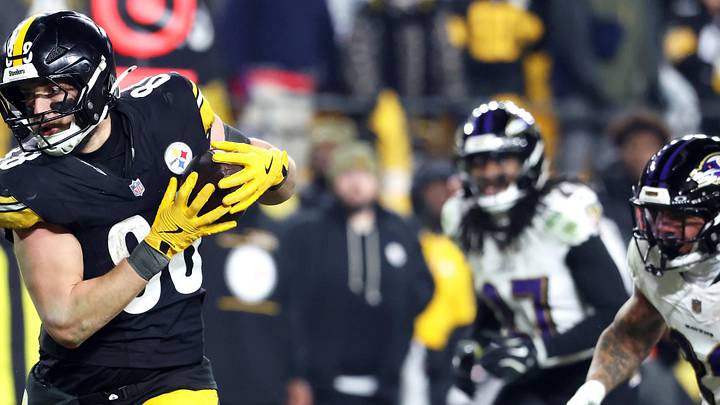
One of the risks of a spectacular individual performance is that it can conceal a less comfortable team question: what happens when the 80-yard catch is tackled after eight yards and the 50-yard run ends at the line of scrimmage? Pittsburgh's victory showed an offense with game-breaking ability, not an offense that can assume those breakaways will appear every Sunday.
The Steelers have reasons to be optimistic beyond Warren. Freiermuth remains a reliable scoring option, and Rodgers has repeatedly found the end zone through the air. Their connection is not a brand-new discovery; it was part of Pittsburgh's passing-game structure before this season, as the archival January 2026 photograph in this section illustrates. The task now is to make that familiarity productive even against defenses that prioritize taking away Warren's space.
Receiver availability could complicate the plan. Roman Wilson exited the Colts game with a hand injury, while Ben Skowronek left with a calf problem. Their immediate outlook requires follow-up rather than speculation. But the potential loss of options matters for an offense already leaning heavily on Warren and Freiermuth, and it makes Bernard's useful afternoon more significant. Depth is not a headline when the stars are scoring from midfield; it becomes one when a future opponent successfully takes those explosives away.
Defensively, Pittsburgh also gave itself a chance by limiting Indianapolis running back Jonathan Taylor to 45 rushing yards on 15 attempts. That kept the Colts from establishing a dependable ground-game counterweight to Jones' passing. Still, the five Indianapolis field goals are a reminder that Pittsburgh allowed drives to reach scoring range. Against a more efficient red-zone opponent, that kind of bend-without-breaking formula can become dangerous.
The next test comes on the road against Tampa Bay. The Steelers enter it at 3–2 with proof that their offense can create sudden points and with a more difficult personnel choice at running back. A sustainable attack would use Warren as the featured playmaker, maintain a complementary role for Dowdle when healthy, and keep Rodgers' shorter and intermediate targets involved enough that defenses cannot sell out to stop one man.
That is the distinction between a memorable Sunday and a blueprint. Warren has made the argument for his role emphatically. Pittsburgh's next challenge is to turn the argument into a repeatable offensive plan.

Warren's 188-yard performance was a turning point because it arrived with variety and timing: a catch-and-run that erased a poor start, then a rushing touchdown that restored control when Indianapolis threatened. The Steelers did not simply give him a larger workload. They found different ways to make the same player decisive.
McCarthy still has to manage Dowdle's return, Rodgers' workload and a receiving group dealing with injuries. But the most important offensive question has shifted. Pittsburgh no longer needs to wonder whether Warren can handle a featured role. It needs to decide how much of its game plan should run through the player who just supplied more than half of its yards in a win.
Shop GOATIFY NFL and American football shirts, hoodies and stickers.
















