

Lamar May Return vs. Bills — Ravens Have a 48–0 Second-Half Problem
GOATIFYThe Baltimore Ravens have spent three games waiting for Lamar Jackson to return. Now they have an even more uncomfortable question: what happens if their two-time MVP comes back and the problems remain? Head coach Jesse Minter believes Jackson could be in a better position to face Buffalo on Sunday, November 1, but Wednesday's practice will offer a clearer answer. Meanwhile, Baltimore has been outscored 48–0 in the second halves of its last two games, Derrick Henry's rushing production has stalled, and the offensive line has another injury concern.
At 4–3, the Ravens are still very much alive in the AFC race. Yet the 35–13 loss to Cincinnati exposed a team that cannot simply wait for one quarterback to make everything function again. Jackson's health matters enormously; so do the decisions being made around him.
Jackson Is Getting Closer — but Wednesday Matters More Than Optimism

Jackson's absence began with a high left ankle sprain suffered against Tennessee on October 4. He missed the subsequent meetings with Atlanta, Cleveland and Cincinnati. The timeline matters because Baltimore initially hoped the injury would not keep him out for long; three missed starts later, there is still no firm announcement that he is ready for full-speed football. A player can make progress in rehabilitation without being ready to escape pressure, plant off an injured leg or accelerate away from a defender.
There was genuine encouragement last week. Jackson returned to limited practice work, and Baltimore listed him as questionable before the Bengals game. That did not become a start. The Ravens ruled him out on Saturday, leaving Tyler Huntley to handle another division matchup. Afterward, speculation surfaced that the team had been surprised by Jackson's inability to play. Minter pushed back on the strongest version of that suggestion, describing an evaluation that continued after Friday's limited work. A difference between hope and medical clearance is not, by itself, evidence of a dispute between quarterback and coaches.
Minter's latest assessment was cautiously positive. He said Jackson had been working hard and could be in a decent position, but made Wednesday the important checkpoint. That is more informative than a headline claiming he will definitely start in Buffalo. The Ravens still need to see how the ankle responds to movement and practice demands, and they must judge whether their offense can use Jackson's full range of skills rather than a compromised version of them.
For Baltimore, that last point is decisive. Jackson is not simply a pocket passer who can stand in place and distribute the ball. His ability to threaten the edge changes defensive spacing, creates hesitation for linebackers and gives the running game an extra dimension. If he cannot run, cut or plant with confidence, a nominal return could remove the very advantages the Ravens need most. Protecting him from an avoidable setback also matters beyond one Sunday.
Buffalo enters the matchup at 5–1, making this a difficult opponent against which to test a recovering quarterback. The responsible decision is not necessarily the most popular one: if Jackson is ready to play his game, Baltimore should welcome him back; if he is not, another week of caution may be more valuable than forcing an incomplete comeback.
A 13–0 Lead Became 35 Unanswered Points — and the Warning Is Bigger Than Huntley

For a half against Cincinnati, the Ravens looked like a team capable of winning without Jackson. They controlled the ball for more than 22 minutes before the break, built a 13–0 lead and forced the Bengals to play from behind. That opening should have been a platform for a controlled, low-risk finish. Instead, Baltimore surrendered five consecutive touchdown drives and lost 35–13. The shift was so complete that the first half now feels like evidence of what the team could do, not what it could sustain.
Huntley is an easy target because he is replacing a superstar. But his numbers complicate a simple blame story. He threw for a career-high 298 yards against Cincinnati, and Baltimore moved the ball effectively early. The offense's failure to score after halftime still demands explanation, but a defense allowing five straight touchdowns cannot be excused by pointing at the backup quarterback. Game management, adjustments and execution all belong in the discussion.
The deeper pattern is alarming. Baltimore has gone scoreless after halftime in each of its last two games, while its opponents have combined for 48 points in those periods. A single bad quarter can be dismissed as a matchup problem; repeated second-half shutouts suggest something the next opponent can study. The Ravens must find answers when defenses change coverages, pressure packages and run fits after the break. They also need drives that consume time even when explosive plays disappear.
Huntley has provided enough moments to keep the offense credible, including a comeback win in Atlanta, but the team has averaged only 17.7 points in his three starts. That is a meaningful drop from the standards Baltimore expects with Jackson. It is also an invitation to avoid a false choice between criticizing Huntley and pretending Jackson's absence is irrelevant. Both statements can be true: the backup has limitations, and the rest of the roster should be better equipped to manage them.
Jackson's return would give Baltimore more options on third down and in broken plays. It would not automatically repair missed tackles, communication errors, stalled drives or an inability to adjust after halftime. The Bengals game was a reminder that quarterback talent can elevate a team, but cannot play every position or make every sideline decision.

Derrick Henry's Numbers Expose the Real Cost of Baltimore's Blocking Problems

The most revealing offensive number might not belong to a quarterback. Derrick Henry managed 58 rushing yards against Cleveland and only 45 against Cincinnati, when he averaged a season-low 2.6 yards per carry. Those totals are difficult to square with Baltimore's identity as a team built to punish defenses on the ground. If the Ravens cannot create efficient early-down runs, every third down becomes more predictable, and the entire offense loses the physical foundation that should help a backup quarterback.
Jackson's absence has an obvious effect. Defenders do not need to account for the same quarterback keepers, option reads or sudden escapes, so they can direct more attention toward Henry. But the explanation cannot stop there. The offensive line has been unsettled, and rookie guard Vega Ioane left the Bengals game with a knee injury. Minter said the club was still assessing the problem, with another update expected Wednesday. The team also has been working Cam Jurgens into the line after his arrival and recovery from concussion protocol.
The trouble extends beyond the five linemen. Veteran blocking tight end Durham Smythe suffered a season-ending Achilles injury earlier in October. Nick Vannett and younger players have had to absorb work that often goes unnoticed until a running play breaks down. On outside runs, one missed seal can force Henry to change direction before he builds speed. On inside concepts, poor coordination at the point of attack can turn a promising gap into a collision behind the line.
Minter's public assessment focused on finding plays that suit the personnel actually available. That is the right framing. A coaching staff cannot simply demand that replacement blockers execute the full menu exactly as the original lineup would. It can narrow the playbook, use formations that disguise intentions, and call complementary concepts that punish defenders for attacking the same gap repeatedly. There is no guarantee those adjustments will produce instant success, but they are more actionable than waiting for an injured player to return.
Henry still offers the kind of finishing power that can turn a competitive fourth quarter into a win. To use it, Baltimore must keep games close, create cleaner first contact and stop placing its offense in obvious passing situations. A healthy Jackson would help open those lanes. A healthier, better-coordinated blocking unit is just as important to keeping them open.

Minter Wants Leaders to Step Forward — Buffalo Will Test Whether Anyone Answers
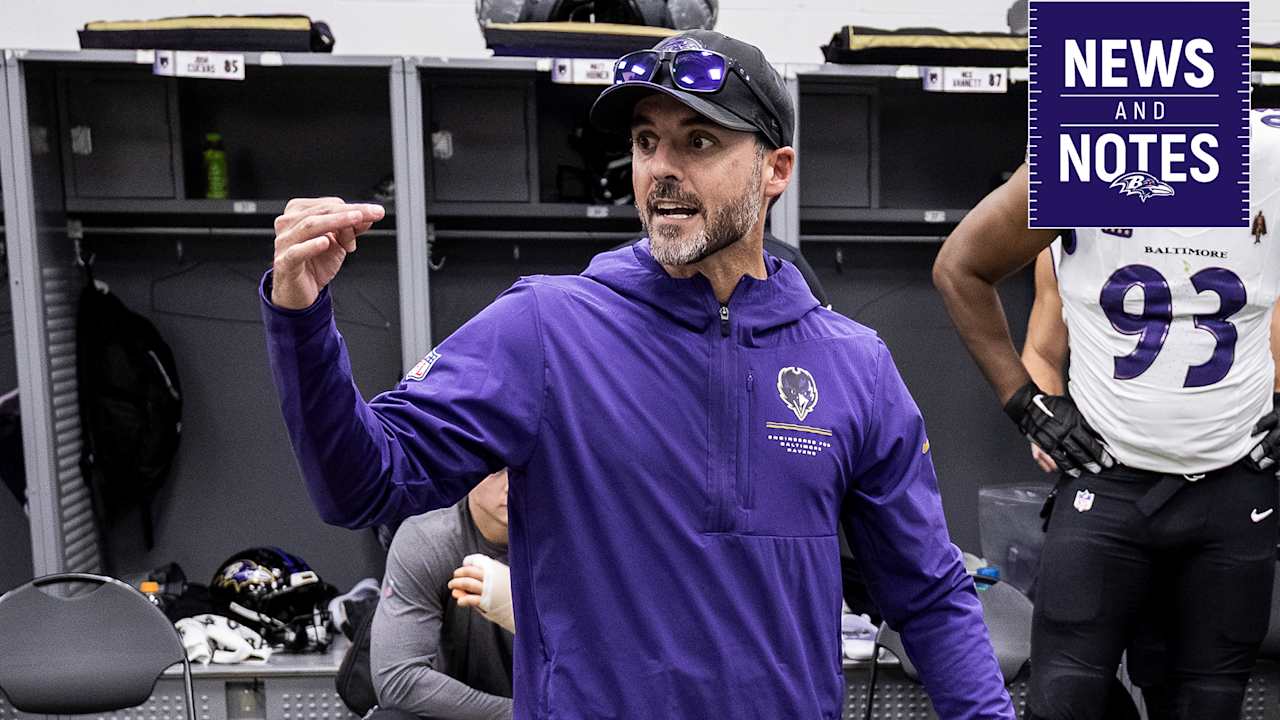
Minter's most telling comments after the Cincinnati loss were not about the ankle. He questioned who would bring the Ravens together when a game started slipping away. He did not name a single culprit, and his point was broader than a demand for louder speeches. Teams need players who can steady teammates after a bad series, communicate adjustments and keep frustration from spreading from one unit to another. Baltimore had too few visible answers when the Bengals seized control.
That challenge becomes more complicated when established leaders are injured or struggling with their own performances. A veteran who is not playing at his usual level may hesitate to address the rest of the team. Minter argued that leadership sometimes requires setting personal frustration aside. It is a sensible standard, but one that must be matched by coaches taking responsibility for tactical decisions. Players can demand sharper execution; coaches must also give them a plan they can execute when the original approach fails.
The Bills game offers a harsh test of both. Buffalo is 5–1 and has the talent to punish a defense that repeatedly loses its shape. Baltimore cannot assume a first-half lead will survive without changes. It needs to defend sustained drives, avoid giving up easy field position and find ways to score after opponents have made their own adjustments. If Jackson starts, the Ravens should still prioritize manageable situations rather than ask him to manufacture miracles on every snap. If Huntley starts, the rest of the team must resist treating his presence as permission to lower expectations.
The standings add urgency without making the season a referendum on one game. At 4–3, Baltimore remains within reach of its division rivals, but a third straight defeat would shrink its margin for error. The AFC North is competitive, and the Ravens cannot keep wasting strong opening stretches. A loss in Buffalo would not eliminate them, just as a victory would not prove every underlying issue solved. What matters is whether their response shows a repeatable way to win.
Wednesday's injury report will answer only part of the question. The more important evidence will arrive when Baltimore faces adversity in the second half. Does the offense adjust? Does the defense stop a run of scoring drives? Does someone on the sideline change the emotional temperature before the game gets away? Jackson can transform the Ravens' ceiling when healthy, but the team's floor depends on much more than No. 8.
Baltimore has two related problems, not one. Jackson's ankle determines who can start against Buffalo; the Ravens' late-game execution determines whether that starter has a realistic chance to win. Minter's optimism offers hope, but the 48–0 second-half deficit across two games, Henry's difficult rushing stretch and the uncertainty along the line demand practical changes. A healthy MVP can be the difference between a good offense and a dangerous one. He should not have to be the difference between a functioning football team and a collapse.
Shop GOATIFY NFL and American football shirts, hoodies and stickers.

















